• University
  • News and events

Virtual exchange brings together young people from Europe and Africa: DigiTREE helps participants recognise misinformation and act responsibly online

July 16, 2026

The ability to distinguish reliable information from misleading content is becoming one of the most important skills in today’s world. AI-generated images, manipulative messages and misinformation spreading on social media require not only digital skills, but also critical thinking.

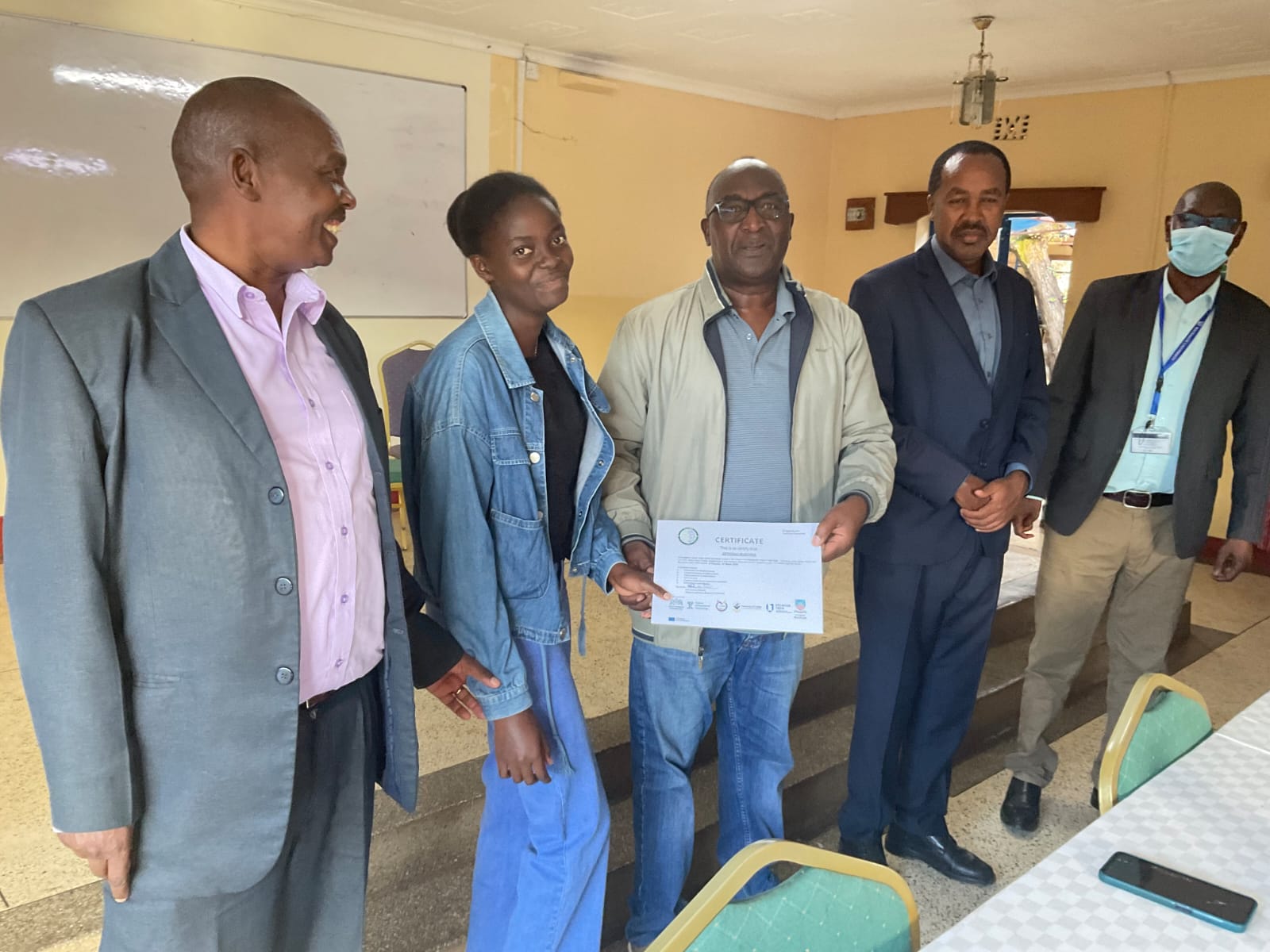
The DigiTREE project is funded by the Erasmus+ programme and involves Vilnius Gediminas Technical University (VILNIUS TECH). This international virtual exchange initiative brings together young people from Europe and Africa, giving them an opportunity to learn, discuss and work in multicultural teams without travelling to another country.

The project goes beyond teaching participants how to use digital tools. They learn to assess media content critically, recognise misleading or manipulative information, check the reliability of sources and communicate responsibly online. They also develop intercultural communication, teamwork and English-language skills.

International experience through virtual exchange

The DigiTREE consortium consists of six higher education institutions: VILNIUS TECH, Riga Technical University, Cyprus University of Technology, Machakos University in Kenya, the University of Lusaka in Zambia and the University of Botswana.

The virtual exchange programme lasts six to eight weeks. During this time, participants explore critical media consumption, fact-checking, misinformation detection and the creation of media literacy campaigns.

Although the activities take place online, participants do much more than work through learning materials independently. They take part in discussions, complete practical tasks, share experiences from their countries and cultures, and develop projects together in international teams.

The virtual format allows young people living on different continents to work closely together over several weeks. By comparing media habits and media environments in different countries, participants can see how social, cultural and personal contexts shape the way the same content is understood.

VILNIUS TECH students and secondary school students joined the activities

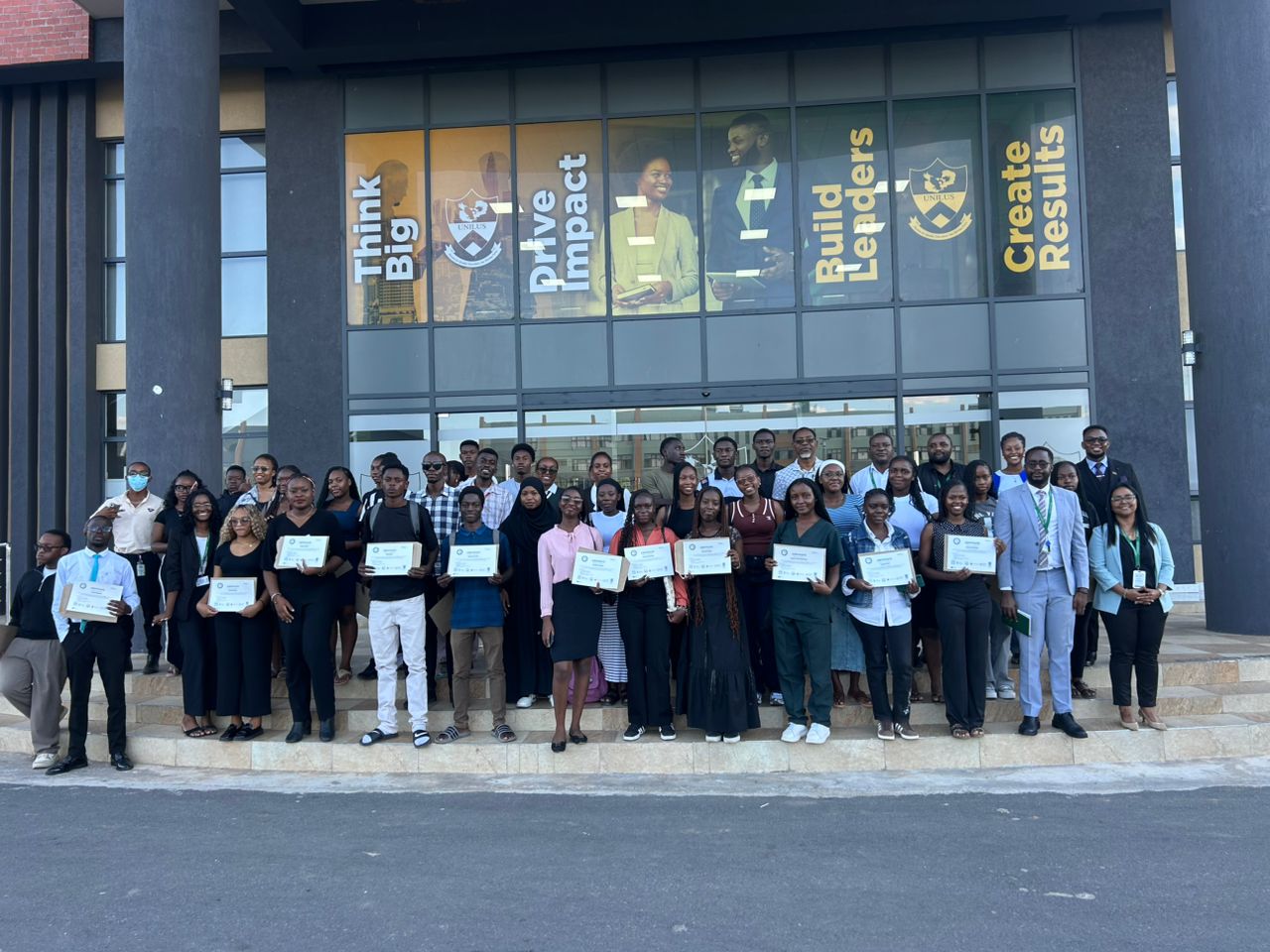
Since the start of the project, four virtual learning cycles have been completed, involving around 800 young people from universities and schools across Europe and Africa.

A total of 94 first-year VILNIUS TECH students have taken part in the project. The virtual exchange also involved 54 participants from the university’s remote learning platform, Ateities inžinerija (Future Engineering).

The school pupils represented Klaipėda Baltija Gymnasium, Klaipėda Vyturys Progymnasium, Universa Via International School, Kaunas Jonas Basanavičius Gymnasium, and Kaunas Steponas Darius and Stasys Girėnas Gymnasium.

This allows young people to develop media literacy skills before starting university or at the beginning of their university studies. Students and school pupils can immediately put theory into practice by working with young people from other countries, taking part in discussions and completing tasks together.

Results show an improved ability to assess information

Before and after the training, participants completed self-assessment surveys that helped measure changes in their digital, media literacy and intercultural skills.

At the beginning of the third learning cycle, 67% of respondents said they were able to recognise misleading information in images and videos. After the training, this figure increased to 92%.

Participants also became more confident when communicating online. The share of respondents who said they could clearly express their ideas on digital platforms increased from 75% to 86%, while the share of those who felt aware of their rights and responsibilities as online communicators rose from 74% to 91%.

When assessing the benefits of the project, 87% of participants in the third cycle said they had improved their digital skills, while 86% reported stronger soft skills.

Participants particularly valued the opportunity to communicate with young people from other countries, learn how to verify information, recognise fake news and assess online content more critically. Practical tasks, games and discussions were also rated positively, as they helped participants explore complex topics in an engaging way.

More than simply using technology

In the DigiTREE project, media literacy is understood as more than the technical ability to use digital platforms. Participants learn to consider who creates media content, why it is created, how it may be used to influence audiences, and what responsibilities each person has when consuming and sharing information online.

Young people apply their new knowledge by developing media literacy campaigns and creating responsible digital content. In this way, virtual exchange becomes not only a form of learning, but also a practical environment that helps young people make more informed and responsible choices in a constantly changing digital world.

Galerija
Related news

Global News: what universities around the world are working on
The world of science moves fast - and we are part of it. "Global News" opens a window into what our partners around the world are working on: what research they are conducting, what ideas they are developing, and what kind of future they are creating today. ASIA National Sun Yat-sen University, Taiwan National Sun Yat-sen University (NSYSU) has opened the Joint Semiconductor Technology Laboratory, which will become one of the university's most important centres for innovation and technological development. Around 800 million Taiwanese dollars (approximately 23 million euros) are being invested in the creation of the laboratory. The modern centre will carry out semiconductor manufacturing, packaging, testing, and material analysis activities - developing and improving technologies used in the production of chips and other electronic components. One of the most important features of this centre is the large-scale semiconductor packaging and testing laboratory established in cooperation with the global technology company "ASE Group." The laboratory will focus on three main areas: development of new devices, research into technical properties, and advanced material analysis. The laboratory is expected to attract more than 5,000 students, researchers, and industry specialists annually, and during its first decade of operation it is expected to help train more than 1,200 highly qualified experts. This initiative is important not only for Taiwan, but also for the global technology market. As demand for chips continues to grow, the university aims to contribute to the preparation of new specialists and closer cooperation between science and business. In this way, NSYSU strengthens its position as one of the world's leading centres of innovation and semiconductor technologies. https://drive.google.com/drive/folders/1LUX9L7iny2bnrLGHD7LOQusrGZm_MCVy POSTECH, South Korea As POSTECH approaches its 40th anniversary, the university is not only reviewing its achievements, but also preparing for a new phase of development - "POSTECH 2.0," referred to as the university's second founding stage. Its goal is not to follow already existing scientific directions, but to create new ones and become a leader in areas such as artificial intelligence, quantum technologies, and biotechnology. The most important part of this transformation is the belief that talented people are the university's greatest asset. POSTECH is actively working to attract top-level researchers from around the world and provide them with conditions that allow them to focus entirely on bold and innovative scientific research. Professor Youngjoon Choi, who recently joined the university, is conducting advanced research on graphene-based quantum materials. It is expected that this work will help create more stable qubits - the core elements of quantum computers required for next-generation quantum technologies. Meanwhile, Professor Luke Lee leads interdisciplinary research on brain waves and non-invasive sound therapies. He is also developing K-BIGHEART, a new international biomedical innovation research centre. SOUTH AMERICA University of Sao Paulo, Brazil The university's Faculty of Architecture and Urbanism is strengthening its international leadership role in design research by presenting the new international publication "Community (&) Design: Material, Spatial, and Social Encounters." In this publication, prominent international scholars explore how design can encourage human connection, community spirit, sustainability, and the creation of a more inclusive future in different countries around the world. An important role in this publication is played by Professor Maria Cecilia Loschiavo dos Santos - a FAUUSP professor who is one of the book's editors. Together with Tom Bieling and Wolfgang Jonas, she wrote the publication's introduction. The professor's internationally recognized research in social design, sustainability, and urban culture was essential in shaping the publication's interdisciplinary and socially responsible direction. This further strengthens FAUUSP's role as an important global centre for critical design research. This achievement also reflects the university's broader international recognition. In the 2025 Times Higher Education Latin America University Rankings, the university was recognized as the best university in Ibero-America and is consistently ranked among the world's leaders in higher education. https://link.springer.com/book/10.65272/978-88-6977-546-8 Pontificia Universidad Catolica del Peru, Peru University researchers are leading an international research consortium investigating the deteriorating condition of the western Amazon - one of the planet's most important ecosystems. The "AndesFlux" project includes a network of four measurement towers located across three regions of Peru. Here, scientists measure in real time the exchange of carbon dioxide (CO2), water vapor, and methane between the forest and the atmosphere. Researchers Eric Cosio and Norma Salinas found that the loss of large and old trees in the Amazon is accelerating. In addition, at certain times the forests no longer function as a carbon-absorbing ecosystem and instead begin releasing CO2 into the atmosphere themselves. These studies are extremely important for the entire region because the water evaporated by Amazon forests sustains more than one-third of South America's water cycle. For this reason, changes in the condition of the Amazon may have a direct impact on water security even in cities such as Lima. "AndesFlux" is part of the global "AmeriFlux" network and collaborates with research institutions from the United Kingdom, the United States, France, and Germany. EUROPE Instituto Superior Tecnico, Portugal The Lisbon-based university continues to strengthen its international role by developing strategic partnerships, participating in European university alliances, implementing international mobility programs, and carrying out joint research projects. One important example of this direction was the International Staff Week and International Day organized in 2026. The event brought together participants from 23 countries and became another opportunity to strengthen cooperation with partners in Europe, Africa, and South America, who all shared experience and examples of best practice in higher education. International activities also significantly expanded during 2023-2025, when "Tecnico" coordinated the Erasmus+ capacity-building project I-MAT (Innovative Mobility Attracting Tools for Latin America). This project, implemented together with international partners including VILNIUS TECH, aimed to strengthen international mobility opportunities and cooperation between higher education institutions in Latin America through innovative and digital solutions. https://tecnico.ulisboa.pt/en/news/campus-community/iday-2026-brought-together-the-tecnico-community-and-representatives-from-international-universities/ Hellenic Mediterranean University (HMU), Greece The university is becoming one of the strongest examples of higher education in Greece due to its achievements in research, innovation, and internationalization. In the field of research, as many as 19 HMU lecturers and researchers - around 10 percent of the entire academic staff - were included in Stanford University's list of the top 2 percent of scientists worldwide. The university received a 4-star QS Stars rating, confirming the high quality of its studies, research, and management. Such an evaluation is especially significant for a university that is regional and only established in 2019. In the field of innovation, HMU participates in the European research infrastructure projects EMERGE and "InfraChip," is a partner in the European university alliances ATHENA and HEROES, and contributes to the implementation of the Erasmus Mundus master's program EMINENT. In terms of internationalization, the university is also demonstrating significant growth. During the 2024-2025 academic year, more than 1,000 international mobility participants arrived at HMU, while in 2025-2026 their number exceeded 1,200. According to these indicators, the university ranks between 4th and 5th place among 25 public higher education institutions in Greece. HMU coordinates two virtual exchange programs, 12 blended intensive programs, and organizes the "ATHENA Colloquial Talks" discussion series, which involves more than 120 researchers from around the world. The university's thirteenth International Week attracted as many as 420 participants. KTH Royal Institute of Technology, Sweden The "Human Protein Atlas" is one of the world's most advanced scientific initiatives aiming to map all proteins in the human body. This project helps scientists better understand the development of diseases and create more precise treatment methods - from cancer to neurodegenerative diseases. The project is led by Professor Mathias Uhlen from KTH Royal Institute of Technology. In the latest version of the project, artificial intelligence plays an especially important role - it is used for protein structure analysis, evaluation of genetic mutations, and identification of disease markers in blood samples. These technologies allow faster and more accurate diagnosis of diseases such as cancer, Parkinson's disease, and amyotrophic lateral sclerosis (ALS), often even without invasive procedures. Scientists hope that the combination of artificial intelligence and biomedical research will in the future allow not only early-stage disease detection, but also personalized treatment tailored to each patient. https://www.kth.se/en/om/stod-kth/initiativ-att-stodja/stotta-forskning/ai-lyfter-human-protein-atlas-till-nasta-niva-1.1404382  
More
Alumni success stories: from internships in the USA to founding their own startups
The success stories of our alumni and researchers, now spread across the globe and speak for us. Their journeys are a continuation of our story. Their achievements were shaped not only by the knowledge gained at the university, but also by the opportunities they took advantage of during their studies, which included scholarships and internships abroad. Internship and exchange programs in the United States (USA) are strategically important for VILNIUS TECH, as they contribute to increasing the university's international visibility and improving the quality of studies as well as research. These programs also strengthen the university's reputation: participation in exchanges with US academic institutions demonstrates the university's openness and international credibility. This helps attract talented students, lecturers, additional funding for projects and other joint initiatives. Interships at NASA VILNIUS TECH is particularly proud that every year students leave for internships at the National Aeronautics and Space Administration (NASA) in the United States. Students work on a wide range of projects at various facilities and divisions. This includes anything from developing satellite systems to creating sensors capable of monitoring astronauts' health in space. This type of experience opens doors to the world's leading technology companies and inspires them to create their own innovations. Below are the experiences and achievements of several alumni who completed internships at NASA. Associate Professor Dr. Laurynas Mačiulis, who studied Aviation Mechanical Engineering at the Antanas Gustaitis Aviation Institute (AGAI) and later earned his doctoral degree there, worked at the Ames Research Center in 2012, analyzing thermodynamics, flight dynamics, and heat transfer processes. Today, he leads the Lithuanian space and defense technology company Astrolight and shares his experience with the younger generation at AGAI. [caption id="attachment_123152" align="alignnone" width="300"] Doc. dr. Laurynas Mačiulis/ Photo from personal archive[/caption] Another Aviation Mechanical Engineering student, Vytenis Buzas, also went to the Ames Research Center in 2012. He analyzed advanced nanosatellite propulsion systems and their applications for orbit maintenance and payload recovery. Today, Vytenis is the co-founder and CEO of the unmanned defense systems manufacturer UDS. [caption id="attachment_117195" align="alignnone" width="300"] Vytenis Buzas/ Photographer J. Stacevičius[/caption] Thanks to Laurynas Mačiulis and Vytenis Buzas, Lithuania became a spacefaring nation. They initiated and led the project of Lithuania's first satellite, LituanicaSAT-1, in 2014 and also co-founded the space technology company NanoAvionics. [caption id="attachment_123175" align="alignnone" width="300"] „Online media“ photo / Laurynas Mačiulis and Vytenis Buzas, the creators of the first Lithuanian satellite, Lituanica SAT-1[/caption] Lukas Jakas, who studied Aviation Mechanical Engineering at AGAI, completed an internship at the Ames Research Center in 2017. Most of his time there was spent conducting phased microphone array tests. He currently works as a freelance engineer, providing 3D modeling, design-for-manufacturing, project development, and related services to companies in the US market. [caption id="attachment_123154" align="alignnone" width="300"] Lukas Jakas/ Photo from personal archive[/caption] Julija Semenenko, Julija Semenenko, who studied Engineering Informatics at the Faculty of Fundamental Sciences (FMF), went to NASA for an internship in 2016. Together with her team, she developed a mobile application for satellite monitoring that allows users to view all satellites orbiting Earth in real time. [caption id="attachment_123144" align="alignnone" width="300"] Julija Semenenko/ Photographer VILNIUS TECH[/caption] Narūnas Kapočius, a Telecommunications Engineering student at the Faculty of Electronics, went to the Ames Research Center in 2017. There, he contributed to the CHOMPTT 3U CubeSat space technology project and worked on CAD design, electronics development (PCB), data processing software, engineering simulations, and testing. He currently serves as Senior Engineering Project Manager at the cloud optimization platform Cast AI. [caption id="attachment_123156" align="alignnone" width="300"] Narūnas Kapočius/ Photo from personal archive[/caption] Justina Gineikytė, who studied Bioengineering at FMF, completed her internship in 2019 at the Ames Research Center's Nanotechnology Center, in the Biosensors Laboratory. Together with her team, she worked on developing a sensor designed to measure human hydration levels. She now works as a microfluidics engineer at the biotechnology startup Atrandi Biosciences, founded by scientists who returned to Lithuania from abroad. The company recently secured a new USD 25 million investment from Lux Capital and other venture capital funds. [caption id="attachment_123150" align="alignnone" width="300"] Justina Gineikytė/ Photo from personal archive[/caption] Paulina Draugelytė, a graduate of the Aerospace Engineering Master's program at AGAI, contributed during her 2024 internship to the transformation of NASA infrastructure into modern unmanned aircraft systems (UAS) research and flight training facilities. Her input also benefited scientific mission planning and other initiatives. These efforts included programs such as Smart Mobility, FireSense, ACERO, UTM, ATM-X, PAAV, and others. She is currently the co-founder and Chief Technology Officer (CTO) of a stealth startup. [caption id="attachment_123160" align="alignnone" width="300"] Paulina Draugelytė/ Photo from personal archive[/caption] Scholarship from the Baltic-American Freedom Foundation Another exceptional opportunity to gain professional experience in world-class companies is through a scholarship from the Baltic-American Freedom Foundation (BAFF), which enables participants to undertake internships at various US businesses, corporations, and organizations. Through these opportunities, students expand their professional networks and gain firsthand experience of American culture and lifestyle. One of the participants was Dr. Agnė Vaiciukevičiūtė, an alumna of the Faculty of Business Management, who took advantage of this opportunity in 2019. At the time, she was pursuing doctoral studies and completed a one-year internship at the Center for European Policy Analysis (CEPA) in Washington, D.C. In addition, Dr. Agnė Vaiciukevičiūtė taught at VILNIUS TECH for nearly ten years, served as a member of the Senate, worked as Vice Minister of Transport and Communications of Lithuania, and currently serves on the Vilnius City Council. [caption id="attachment_123138" align="alignnone" width="253"] Dr. Agnė Vaiciukevičiūtė/ Photographer  LR Susisiekimo min. nuotr.[/caption] In 2016, Civil Engineering alumnus Dr. Vytautas Tumulėnas also completed an internship in the USA, working as a BIM/VDC Engineer at Skanska. He now works at SRP Projektas, a transport infrastructure development company, where he serves as Head of the BIM Department. [caption id="attachment_123172" align="alignnone" width="300"] dr. Vytautas Tumulėnas/ Photo from personal archive[/caption] Another alumnus of the Faculty of Civil Engineering, Dr. Povilas Dabrila, gained VDC professional experience during an internship at Skanska in 2024. He continues his research activities at VILNIUS TECH and serves as an advisor at the Lithuanian Armed Forces Defence Staff. Povilas is also the founder of the construction process analysis company ReframeBIM. In addition, he has been pursuing the rank of lieutenant through the Junior Officer Command Training Program (JKVM) for the past three years. [caption id="attachment_123170" align="alignnone" width="300"] Dr. Povilas Dabrila/ Photographer A. Jaunius[/caption] Fulbright Program Scholarships and international internships are not only created for students but also for experienced researchers. The Fulbright Program is one of the world's most prestigious academic exchange and scholarship programs, funded annually by the United States to support researchers in conducting studies and carrying out professional projects. Recipients include Nobel Prize winners, heads of state, renowned scientists, artists, and entrepreneurs. VILNIUS TECH can proudly say that two of its researchers have received this unique opportunity. The first was Professor Emeritus Dr. Habil. Gintaris Kaklauskas from the Faculty of Civil Engineering, who completed an internship at the University of Illinois Urbana-Champaign in 1996. There, he carried out the project "An Inverse Physical Modeling Method for Cracked Reinforced Concrete in Tension Using Experimental Data from Reinforced Concrete Beams." The university offered him a permanent position, but the professor says he always wanted to live in Lithuania and work at his Alma Mater. [caption id="attachment_123142" align="alignnone" width="300"] Prof. habil. dr. Gintaris Kaklauskas/ Photographer VILNIUS TECH[/caption] In 2025, Associate Professor Dr. Skirmantė Mozūriūnaitė from the Department of Urban Design at the Faculty of Architecture was awarded this prestigious scholarship. She went to the Massachusetts Institute of Technology (MIT) to prepare a scientific monograph manuscript entitled Rebuilding Sustainable and Smart Cities After the War. [caption id="attachment_123166" align="alignnone" width="300"] Associate Professor Dr. Skirmantė Mozūriūnaitė/ Photographer S. Bernotas[/caption]
More