A city that adapts to water

November 4, 2026

Climate change is transforming urban planning around the world. Increasingly intense rainfall, more frequent extreme weather events and the growing urban heat island effect are forcing cities to look for new solutions to manage excess water while also creating a higher-quality living environment. With that being said, Gabriela Sokolovskaja, a graduate of the VILNIUS TECH Master’s programme in Architecture, suggests looking at this problem from a different perspective: perhaps it is not water that should be adapted to the city, but the city that should be designed according to natural water processes.

She explored this idea in her final thesis, “From utopia to prototype: water as a driver of sustainable urban transformation”, in which she analysed how rainwater could be one of the key elements shaping the city of the future rather than being a problem.

“What prompted me to analyse this topic was the increasingly relevant problem of surface water management in the context of climate change. However, I was interested in a broader question – why do we first shape the city and only then decide where water should flow within it? In my work, I tried to reverse this logic: instead of adapting water to the city, to shape the city’s structure according to natural water processes. In this way, water became not a technical problem, but a tool for urban transformation,” the author explains.

The path from utopia to prototype mentioned in the title reflects an effort to test theoretical ideas in a real urban environment. According to G. Sokolovskaja, urban utopias have often emerged throughout history as responses to various social problems – from sanitation crises to technological changes. Therefore, in this work, utopia became a means of rethinking established urban planning logic, while the prototype made it possible to test these ideas in a specific area.

“Since water itself is a dynamic element that depends on terrain and climate, it became a means of transferring this theoretical idea into urban planning. The prototype is a way of testing it within the real urban fabric of Vilnius. By analysing the terrain and the movement of surface water, it became clear that water behaves very differently in different parts of the city. This led to one of the most important conclusions of the work – there cannot be a single universal model. Therefore, I developed different principles of urban formation for different hydrological and urban situations,” says the VILNIUS TECH graduate.

According to her, climate change is transforming beyond urban infrastructure, also affecting the very logic of planning. The city is increasingly understood as more than a fixed structure, but rather a system capable of adapting to constantly changing environmental conditions.

“Intense rainfall, heatwaves and droughts are the factors increasing the importance of green spaces, permeable surfaces, water storage and infiltration. In my work, I wanted to go a step further and ask whether the logic of water could shape not only individual spaces, but the urban structure itself,” the author says.

The research also used GIS and terrain analysis tools, which made it possible to model the movement of surface water and identify areas where it accumulates. These analyses helped provide a better understanding of natural processes and became the basis for developing different urban planning principles for different areas of the city.

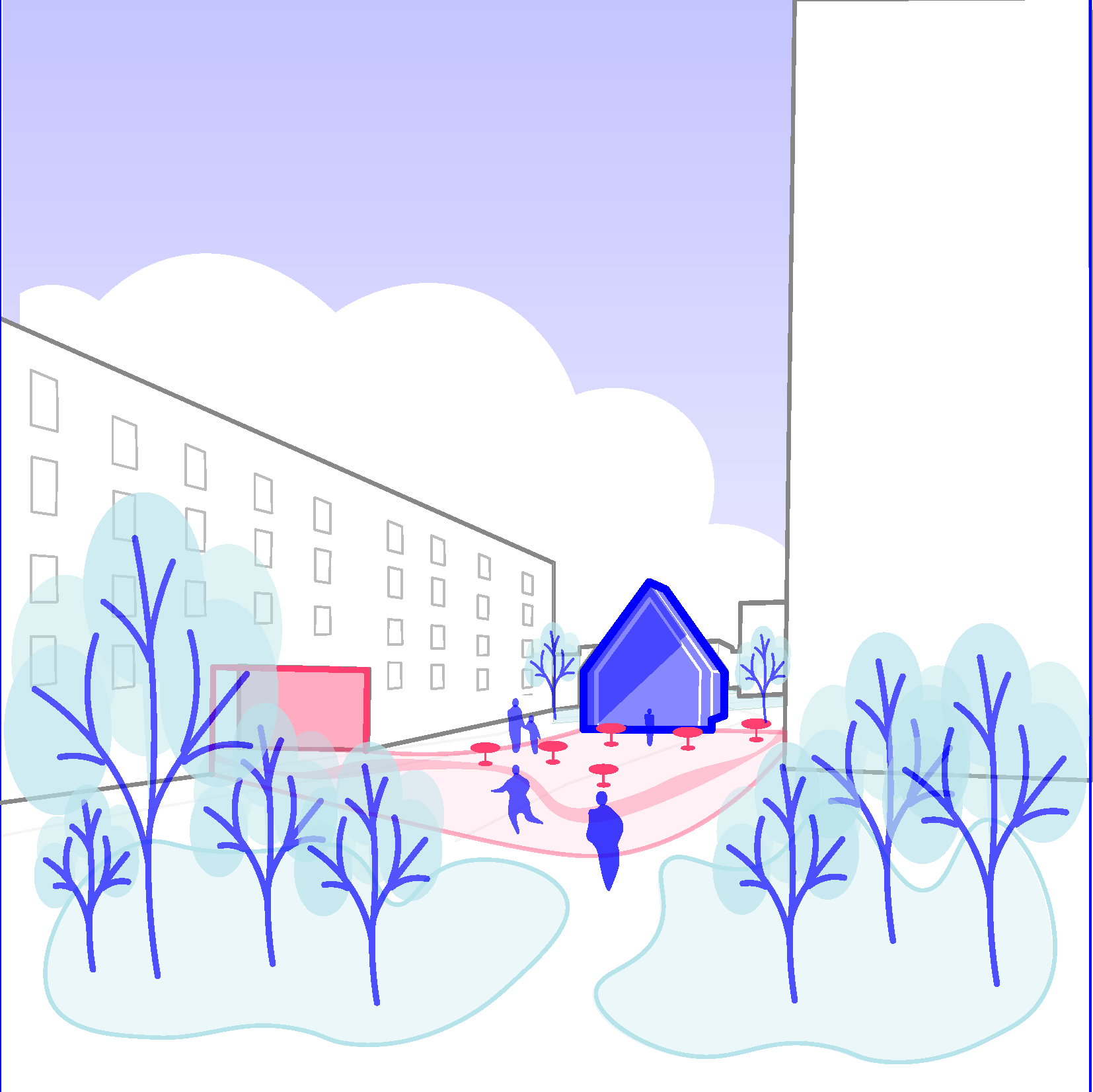
In the imagined fragment of the city, rainwater would not be hidden underground. On the contrary, it would become a visible part of urban spaces and an element of the urban structure. In some areas, water would be collected and infiltrated in sunken green spaces, while elsewhere it would flow through open channels. Such a system would not only help manage excess water generated during heavy rainfall, but would also create new public spaces, recreational areas and pedestrian connections.

“In the detailed fragment, this logic even influences the city’s functions: cultural and recreational activities are concentrated around slower, absorbent spaces, while retail, offices and more intensive programmes are located near active channels that carry water away. In this approach, the movement of water organises not only infrastructure but also urban life,” G. Sokolovskaja explains.

According to her, the benefits of such a model would extend beyond more effective surface water management. At the same time, green spaces would be created, the microclimate would be improved, pedestrian connections would be strengthened and new public spaces would emerge. “This dual impact is particularly important to me – an investment in climate change adaptation also becomes an investment in the everyday quality of urban life,” she says.

The VILNIUS TECH graduate is convinced that in the cities of the future, water should become a more visible and integral part of the urban structure. “If we have to make space for water in the city anyway, I wonder – why could that space not also be a high-quality public area? In that case, infrastructure becomes part of the city’s landscape as well as its identity,” the author reflects.

In her vision, Vilnius twenty years from now would not be radically different, but rather go through a gradual change. Small absorbent green spaces, water corridors and retention nodes could eventually connect into an integrated system allowing the city to adapt to the challenges of climate change. In this way, the city would grow not against natural processes, but alongside them.

Galerija

Related news

Lithuania’s technological readiness assessed: the weakest link surprised even the index creators
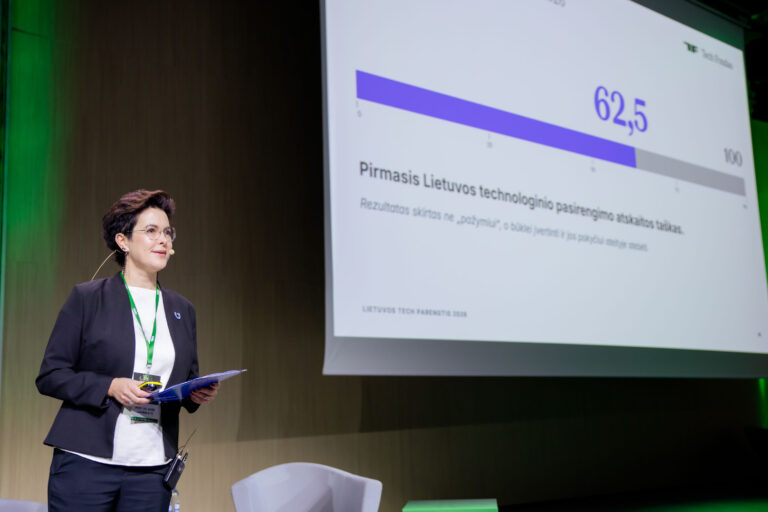
Lithuania's technological readiness has been evaluated at 62.5 out of 100 points. However, according to the creators of this pilot index, this number is not a grade given to the state. It is a baseline that will allow tracking whether Lithuania will be better able to nurture tech talent, strengthen resilience, and turn scientific knowledge into market-ready products in the future. Behind the overall score lies an uneven picture. The cybersecurity and information resilience dimension scored 71 points, talent and future competencies scored 64.6, while the potential for innovation and science commercialization reached just 52 points. The 19-point gap between the highest- and lowest-rated dimensions revealed Lithuania's uneven technological readiness. The pilot "Lithuanian Tech Readiness 2026" index was presented at the "Security Code" (Saugumo kodas) conference, organized by the news portal Lrytas, by Prof. Dr. Indrė Lapinskaitė, Director of the Dynamic Management Institute at VILNIUS TECH. The Index Consists of 45 Indicators Lapinskaitė asked the audience whether Lithuania is prepared for a technological future. In her view, most people would choose the third answer: "I don't know." The speaker admitted she did not know either until she and her team began developing the index, analyzing data, and looking for answers. It turned out that a country's technological readiness cannot be measured by just one or two indicators. Standalone metrics—such as the scale of R&D investments, the number of startups, or cybersecurity indices—do not provide a complete answer. Therefore, technological readiness was evaluated as a system of three interrelated dimensions. The first dimension is talent: Lithuania needs people capable of developing, implementing, and applying technology. The second encompasses the state's ability to operate securely and remain resilient in a technological environment. The third is commercialization—the ability to turn created knowledge and technologies into end products and economic value. "Technological readiness depends on all three dimensions combined and their mutual interaction," emphasized the Director of the Dynamic Management Institute at VILNIUS TECH. Each of the three dimensions was allocated 15 indicators, making a total of 45 indicators for the index. Their selection was based on three evaluation principles: advancement, adaptability, and foresight. The goal was to assess where Lithuania stands today, how it responds to changes, and what future potential it is creating. The selected indicators were evaluated by 40 experts across various sectors and fields of expertise. 35% of the evaluators represented higher education and research, 25% came from the public sector, another 25% from associations and the innovation ecosystem, and 15% represented business. The experts were asked to individually assess the importance of each indicator within a specific dimension and establish the benchmark for high readiness. The results of the three sub-indices were then combined into an overall technological readiness index for Lithuania. 62.5 Points – Not a Grade for Lithuania Following the calculations, the "Lithuanian Tech Readiness 2026" index reached 62.5 out of 100 points. I. Lapinskaitė admitted that this number surprised even the creators of the index, but stressed that this result should not be viewed as a final grade for Lithuania. "This result is not a grade for Lithuania. It is the initial reference point from which we will now be able to observe and assess the changes in technological readiness in the future," the professor said. The index is not intended to compare Lithuania with other countries or to create an international ranking. Its purpose is to monitor the domestic state of affairs and its progress over time. Therefore, the first result is significant not only for the overall score, but also for the disparities between its three constituent areas. The talent sub-index scored 64.6 points. In this area, experts highlighted the problem of continuity along the tech talent pipeline, which is particularly acute in its early stages. "Early STEM education is becoming a kind of bottleneck for the entire technology pipeline," I. Lapinskaitė quoted one of the experts. The speaker’s message regarding this dimension was clear: the development of talent and competencies required for a technological future must be strengthened as early as school. The highest-rated dimension was cybersecurity and information resilience, scoring 71 points. Nevertheless, even here, experts noted an important difference between formal compliance and actual resilience. According to I. Lapinskaitė, it is not enough to have plans, measures, and procedures. The essential question is whether and how all of this will work when facing a real threat. "True resilience is demonstrated in practice, not on paper," she summarized. The commercialization sub-index scored 52 points. This is the lowest of the three results, and its low score also surprised the index creators, according to I. Lapinskaitė. Experts in this field pointed out a striking gap between what Lithuania can create in terms of knowledge and technology, and what it actually manages to convert into products, exports, or investments. "It is not enough to create knowledge—we must be able to convert it into economic value," said the Director of the Dynamic Management Institute at VILNIUS TECH. This is where it becomes most evident why technological readiness cannot be judged in isolation. Even with ample knowledge and technological solutions, overall readiness depends on whether they make it all the way to the market. Combining the results of all three sub-indices and expert insights revealed three strategic directions: First, educate and develop, ensuring the country has a cohesive talent pipeline. Second, protect, ensuring that readiness is real, not just formal. Third, commercialize, shortening the path from scientific results to the market. "Technological readiness is not just a collection of separate measures lumped together. It is the ability of the entire chain to function together as one," I. Lapinskaitė said. The professor reiterated that the presented index is a pilot project. Nevertheless, it already reveals the system's strongest and weakest links, enabling future tracking of where and how fast Lithuania is moving forward. The First Step – A Cybersecurity Model Technological resilience comes down to our decisions, the people we educate, and the competencies we invest in. What can we do in Lithuania today so that Lithuania's technological readiness scores higher next time? VILNIUS TECH has established the "Tech Fund" (Tech Fondas), aligning its role with three directions: The first is technological talent, as professionals are required to build and apply technologies. The second is technological resilience, ensuring that knowledge created in universities solves real-world challenges in Lithuania. The third is technological breakthrough, helping laboratory innovations turn into market-ready products. The Tech Fund is taking its first concrete step in cybersecurity. A model is being developed where students, together with academic supervisors and business mentors, will solve real-world organizational challenges. The goal over the next five to ten years is to improve this index score. The Tech Fund will contribute through talent, cyber resilience, and technological breakthroughs. "The most important question is no longer what our result is today, but whether we will be better prepared next time," concluded Prof. Dr. I. Lapinskaitė.
More
Join the International RobotHack 2026 Hackathon!
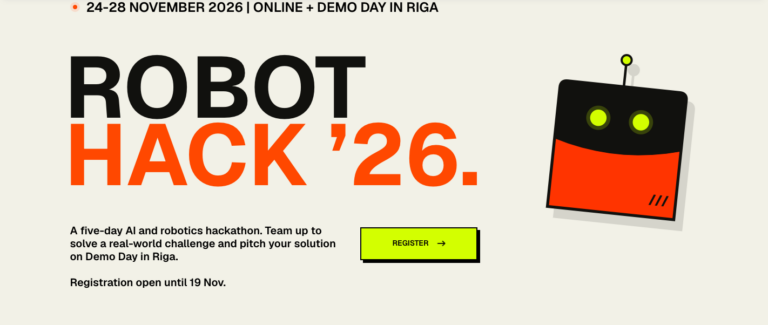
The international AI and robotics hackathon “RobotHack 2026” will take place on 24–28 November, bringing together students, technology enthusiasts and professionals from various fields to develop innovative solutions to real-world challenges. VILNIUS TECH students are invited to put their ideas into action, gain practical experience and compete for a total prize pool of €8,000. Registration is open until 19 November. RobotHack 2026 offers students an opportunity to apply their knowledge in practice, collaborate with people from different backgrounds and explore innovative solutions using artificial intelligence, robotics and automation technologies. This year's hackathon will focus on three main challenge areas: Logistics – developing smarter and more efficient solutions for moving goods, resources and autonomous systems. Humans + Robots – exploring technologies that improve interaction and collaboration between people and robots. Smart Cities – using artificial intelligence, robotics and connected technologies to address urban and public-sector challenges. Open to students from all academic backgrounds The hackathon is not limited to engineering or IT students. Participants from design, business, creative disciplines and other fields are equally welcome. No prior robotics experience is required. Curiosity, creativity and a willingness to collaborate are what matter most. Each team must include at least one student enrolled at a higher education institution in the European Union. Five days of innovation and expert mentoring RobotHack 2026 will take place in a hybrid format, combining online activities with in-person events in Riga, Latvia. The hackathon will kick off on 24 November at the Transport and Telecommunication Institute (TSI) in Riga. The opening event will also be livestreamed. From 25 to 27 November, participants will take part in online workshops, teamwork activities and mentoring sessions with experts. Optional in-person laboratory visits will be available on 26 November. The hackathon will conclude on 28 November with an in-person Demo Day at Riga Technical University (RTU), where teams will present their solutions. Register by 19 November Participation is free of charge, and the total prize pool is €8,000. Don't miss this opportunity to turn your ideas into practical solutions, connect with like-minded innovators and contribute to the development of future technologies! Registration closes on 19 November.
More