The Journal of Environmental Engineering and Landscape Management is a peer-reviewed journal for the publication of original research on the environment with an emphasis on changes caused by human activities and international research towards sustainability.
New issue of the VILNIUS TECH scientific journal Journal of Environmental Engineering and Landscape Management (Vol 30 No 4), the editor-in-chief Assoc. Prof. Dr. Raimondas Grubliauskas presents the most prominent themes and relevance of research papers.
Quality management of Zarrineh Rud river for agricultural irrigation using QUAL2K simulation model
Researchers Armin Jalalzadeh, Hamid Reza Rabieifar and others from Azad University (Iran) are investigating the quantitative and qualitative parameters of the Zarrineh Rud River in north-western Iran and their seasonal variations. The river is one of the main water supply arteries of Lake Urmia and accumulates various pollutants (drowning, nitrates, ammonium, phosphates, BOD) along its route. In this study, the authors used the QUAL2K model to estimate the daily load on the river. The results show that the water quality of this river has deteriorated during the study period, particularly as a result of pollutant inputs from the agricultural sector, drainage systems, industrial wastewater treatment plants, and urbanized and rural areas.
Spatiotemporal changes of the habitat quality and the human activity intensity and their correlation in mountainous cities
Huiqing Han, Yingjia Zhang, Yue Liu, Xin Yu, and Junwen Wang, researchers at Guizhou Institute of Technology (China), investigate the impact of urbanisation on the quality of natural habitats. The main objective is to assess the changes in habitat quality and human activity intensity in Guizhou Province, located in the upper part of the Yangtze River and the Pearl River, as well as in mountainous cities, concerning the different terrain gradients. Data from 2000, 2010 and 2020 are analysed using the Integrated Ecosystem Assessment Model and ArcGIS remote sensing software. The researchers note a negative correlation between habitat quality and the intensity of human activities. It varies according to the slope gradient, with steep slopes favouring the conversion of farmland to forest or natural vegetation protection areas. The results show that overall habitat quality in Guiyang has declined while human activity intensity has increased. This study has important implications for ecological-environmental planning and regulation of human activities in upland urban areas.
Performance analysis of different geotextile materials in extensive roof garden designs
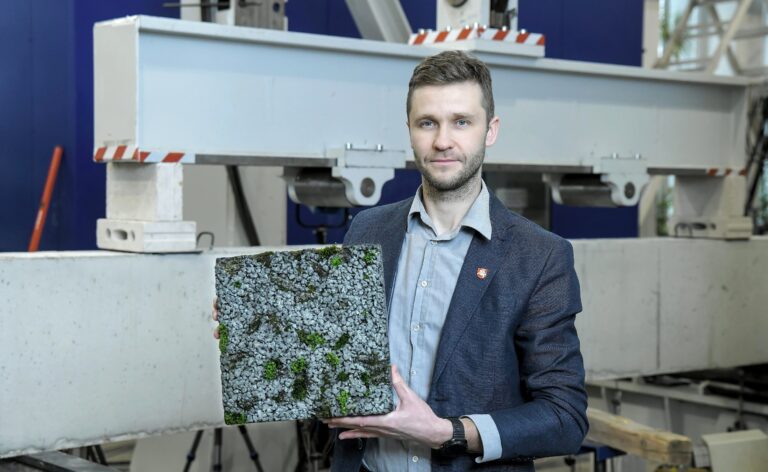
Co-authors Ozlem Akat Saracoglu, Handan Cakar and others from Turkey address the subject of rooftop gardening, which not only enhances the aesthetics of the city but is also a design approach that contributes to the solution of problems caused by climate change. In this study, the filtration performance of different geotextile materials was investigated based on the extensive roof garden model. The studies related to the research were carried out as an open-field pot experiment at Ege University Bayindir Vocational School. Crassula ovata from succulent group plants were used as plant material. Three filtration materials were tested as filter layers: glass fibre, raw cotton, and polypropylene fabric. Various statistical analyses were applied to determine the effectiveness of the filtration materials in extensive roof garden applications. According to statistical significance levels, it can be said that the use of polypropylene fabric as filtration material would be more advantageous compared to alternative geotextile materials.
Performance analysis of different geotextile materials in extensive roof garden designs
A team of researchers from Diponegoro University (Indonesia) and Aarhus University (Denmark) explores the decomposition of agricultural waste (cattle manure) and methane production. In this study, the process performance was investigated under various anaerobic processes and with different dry matter mixing ratios. The substrates investigated gave a positive effect on methane production by up to 50%, respectively, compared to the control reactor. The low concentrations of volatile fatty acids and ammoniac nitrogen, the stable methane production and the neutral pH values of all digested slurries indicate that tofu is a suitable ingredient to increase methane production.
Construction of urban wetland ecological landscape planning model based on MSPA analysis method
Shengnan SUN, Shan LI, Jiefang TANG, and Jinle SU (China) present the findings of a study on an urban wetland ecological landscape-planning model based on the Morphological Spatial Pattern Analysis (MSPA) method. At present, the biodiversity of the urban artificial ecosystem is severely lacking, so improving the biodiversity of the urban green space system has become an important task in the design of urban green spaces. The main components of the urban wetland ecological landscape are analysed in this paper: density, aggregation index, and dispersion index mean fractal dimension, landscape segmentation, shape index, occurrence index and Shannon diversity index. The input data from the 3D model is used to complete the wetland ecological landscape-planning model. The simulation results showed that the accuracy of the ecological landscape-planning model is high.
Construction of nitrification model with nitrifying coal ash in aerobic treatment of high-strength wastewater
Fang LIU Xin ZHAO, Yujin PAN, and Xiaomin HU from China in their study aim to ensure good nitrogen deposition and stable nitrogen removal efficiency from wastewater. This study was carried out in a nitrifying coal ash system using the Monod model. The results obtained by the researchers showed that changes in pH, temperature and dissolved oxygen concentrations reduced the difference between the experimental data and the simulated results and improved the accuracy of the Monod model by up to 5%.
For the treatment of inorganic wastewater, the results indicated that the modified Monod model is capable of effectively removing ammonium compounds, especially for the treatment of high ammoniacal nitrogen. The ammonium removal rate was about 40% lower for the organic wastewater treatment and the average COD was 173.19 mg/l.
Application neural network approach for the estimation of heavy metal concentrations in the Inaouen watershed
In a paper by Rachid El Chaal and Moulay Othman Aboutafail from Ibn Tofail University (Morocco), the researchers describe how a multilayer neural network (MLPNN) trained by the Broyden-Fletcher-Goldfarb-Shanno (BFGS) quasi-Newton backpropagation method has been used to estimate the concentrations of the heavy metals aluminium (Al), lead (Pb), copper (Cu) and iron (Fe).
The following statistical indicators were used to evaluate the performance of the neural network stochastic models: the test of the correlation plots and residuals, as well as the Sum of Squared Errors (SSE); the Mean Error (MBE) and the Coefficient of Determination (R²). The results show that the predictive models developed by the Artificial Neural Network (ANN) method are quite effective due to the efficiency of the BFGS algorithm and the convergence speed. The architectural network [16-8-1] (16 for the number of variables in the input layer, 8 for the number of hidden layers, and 1 for the number of variables in the output layer) gave the best results. Overall, the authors describe that a non-linear relationship was found between the estimated physicochemical properties and the heavy metal content of the surface water in the province of Taza.
VILNIUS TECH publishes
16 peer-reviewed university journals: eight of them are in the field of physical sciences and technology, five in the social sciences, and three are multidisciplinary. All journals are published using the Open Access model. As of 2018, all articles are published under the CC-BY 4.0 licence, allowing the academic community worldwide to access and use VILNIUS TECH's content without any charge.
Please note that when considering publishing in scientific journals, searching for a journal independently or receiving an invitation from a journal, it is essential to check the credibility of the journal, as the rise of open-access publishing has also led to the development of a form of fraud, known as 'predatory publishers' or 'predatory journals'. We invite readers and authors to remain vigilant. Authors are urged to be cautious and to check information before submitting their manuscripts, even to a well-known publication and publisher. For more information on how to choose the right journal to publish your articles and how to assess the credibility and international recognition of the publisher and the journal, please read
here.
For information on specific topics, we invite you to use the VILNIUS TECH
subscription databases (
e.g. environmental engineering). Currently, the VILNIUS TECH community has access to 34 licensed databases. The databases include e-books, scientific articles, conference proceedings, standards, statistical, analytical and other information relevant to research and studies. Access: the content of all databases can be accessed from a personal computer connected to the VILNIUS TECH computer network via
VPN. When connecting to the VPN service,
two-factor authentication (i.e. confirmation via the mobile application or a call) is additionally required to ensure security.