ATHENA Summer-Fall: Mobility Opportunities for Students and Staff

April 30, 2024
The ATHENA European University Alliance, which includes VILNIUS TECH, presents an extensive list of Blended Intensive Programs (BIP) for the summer and fall of 2024, aimed at both students and staff.
 
We invite you to familiarize yourselves with and participate in the upcoming events organized by members of the ATHENA European Universities Alliance!
FOR STUDENTS
  • Solution Design – August 2024
 
Students from all fields of study are invited to participate in the summer school, which offers the opportunity to tackle real-world problems and learn the nuances of solution design. Participants will work in international teams alongside experienced professors and experts.

Students from all academic disciplines are invited to participate in the summer school. Here, they will explore holistic design thinking, including problem identification, formulation, and analysis, as well as develop skills in creating solutions that incorporate technical, sustainable, biological, economic, sociological, artistic, and other perspectives. The program includes hands-on activities such as prototype creation and solution modeling, fostering both teamwork and inter-team discussions.

Physical mobility: 26th August – 6th September 2024
Virtual Mobility: 19-21st August 2024
Where: University of Maribor, Slovenia
ECTS: 3
Application: apply here before 30th June 2024
Additional information: click here
  • ICT in Precision Agriculture – August 2024
We invite students interested in the application of technology in agriculture to join our summer school, which focuses on the use of information and communication technologies (ICT) in agriculture. Precision agriculture represents an innovative farming approach that utilizes ICT to enhance efficiency and reduce resource wastage. The application of these technologies in precision agriculture enables farmers to monitor plant growth and soil conditions in real-time, leading to better decision-making and increased yields.

This summer school will feature lectures, practical sessions, demonstrations, and field trips to farms to deepen participants' understanding and knowledge of precision agriculture.

Physical mobility: 26-30th August 2024
Virtual Mobility: 2-6th September 2024
Where: Hoče, University of Maribor, Slovenia
ECTS: 3
Application: apply here before 13th May 2024
Additional information: click here
Contact: ipa@um.si
  • Sustainable Logistics: Theoretical Heroes Tackle a Real Green Challenge – September 2024
Today's world requires highly skilled, environmentally conscious, adaptable, and socially savvy professionals capable of addressing future challenges. We invite you to join our summer school and become a hero equipped to tackle real sustainability challenges.

The summer school welcomes students from all academic disciplines interested in sustainability, logistics, and Industry 4.0. Participants will have the opportunity to gain theoretical knowledge in logistics planning and analysis, optimization of material flows and layouts, and the implementation of systems and technologies in logistics to enhance Industry 4.0 logistics.

Physical mobility: 2-10th September 2024
Virtual Mobility: 27-29th August 2024
Where: Celje, University of Maribor, Slovenia
ECTS: 3
Application: apply here
Additional information: click here
  • 4th International Summer School, Organisation, Management & Society – September 2024
This summer school aims to familiarize students with the interdisciplinarity of organizational sciences, which is essential for successful organizational management. The summer school will cover topics such as organization and organizing; human resources and educational systems and their interactions with green and digital transformations; information systems and their interactions with green and digital transformations; digitization, artificial intelligence, and management.

During the summer school, students will participate in interactive practical workshops, lectures, and case study presentations. There will also be organized visits to Slovenian organizations and tours of selected Slovenian cities, providing opportunities to network and visit significant cultural and educational institutions.

Physical mobility: 2-7th September 2024
Virtual Mobility: 26th August & 13th September 2024
Where: Kranj, University of Maribor, Slovenia
ECTS: 3
Application: apply here before 26th June 2024
Additional information: click here
Contact: erasmus.fov@um.si
  • Interactive Geriatric Palliative Care – September 2024
This summer school aims to enhance the understanding of palliative care for the elderly and reduce cultural differences among nursing students. During the summer school, nursing students will have the opportunity to participate in simulations addressing geriatric patient scenarios and use virtual reality technologies to tackle challenges in emergency medicine. They will also interact with elderly individuals. Additionally, students will engage in workshops, visit social care institutions, and participate in social activities.
Physical mobility: 16-20th September 2024
Virtual Mobility: 12-13th September 2024
Where: University of Maribor, Slovenia
ECTS: 3
Application: apply here before 1st May 2024
Additional information: click here
  • 3rd International Summer School, Sustainability in International Business – September 2024
As sustainability becomes an increasingly important direction in business activities, this summer school aims to introduce and deepen students' knowledge of sustainability, sustainable development, and international business. It focuses on integrating sustainability dimensions (economic, social, environmental) into international business practices to achieve economic well-being and positive impacts on nature and society.
Physical mobility: 9-14th September 2024
Virtual Mobility: 6th September 2024
Where: University of Maribor, Slovenia
ECTS: 3
Application: apply here before 24th June 2024
Additional information: click here
Contact: intsummschool.feb@um.si
  • French Language and Culture Summer School
This French language and culture program focuses on teaching the French language and providing a unique cultural experience for students who aim to learn French and understand the country's identity. Students will have the opportunity to explore the rich history, art, and cuisine of Orleans through excursions and other summer school activities.
Location: Orléans, France
Dates: 2 weeks or 4 weeks programme:
  • 1728th June 2024
  • 112th July 2024
  • 17th June to 12th July 2024
Registration fees:
  • 2 weeks: 550€
  • 4 weeks: 1000€
Registration: here
The deadlines to register are:
  • Until May 24th for a start on June 17th 2024
  • Until June 7th for a start on July 1st 2024
More info: here

FOR STAFF

  • International Week – Global Perspectives: Fostering Internationalisation in Higher Education – May 2024
This program aims to assist university staff in finding the best ways to integrate international aspects into various university operations, from administrative structures to enhancing student mobility. During Staff Week, employees will participate in interactive sessions and collaborate to examine methods for integrating internationalization across the entire higher education ecosystem. Additionally, participants will have the opportunity to network with colleagues from various backgrounds, exchange best practices, experiences, and perspectives.
Where: University of Vigo, Spain
When: 6-10th May 2024
Registration: here
More info: here

Other ATHENA opportunities:

“ATHENA Talks” and “ATHENA Alumni Talks” – regular online scientific conversations with leading scientists and ATHENA alumni from around the world. Wide range of topics from physics, semiconductors, biomaterials to policy making & internationalization. A new topic & speaker is announced each week on ATHENA website & Facebook page.
For funding opportunities for VILNIUS TECH staff and students, please contact the International Relations Office, email: rasita.martise@vilniustech.lt

Regarding participation in events organized by VILNIUS TECH, please contact organizers.

What is the ATHENA European University?

VILNIUS TECH is part of the ATHENA European University Alliance, which constantly offers mobility and development opportunities for students and staff. The ATHENA alliance partners are universities in ten European countries (Greece, Italy, Poland, Lithuania, Portugal, Slovenia, Spain, France, Germany, and Ukraine).

Stay in tune with ATHENA news – sign up for the newsletter, follow ATHENA on social media and regularly check our website for more.

Related news

University of the future: dialogue between the past and the present
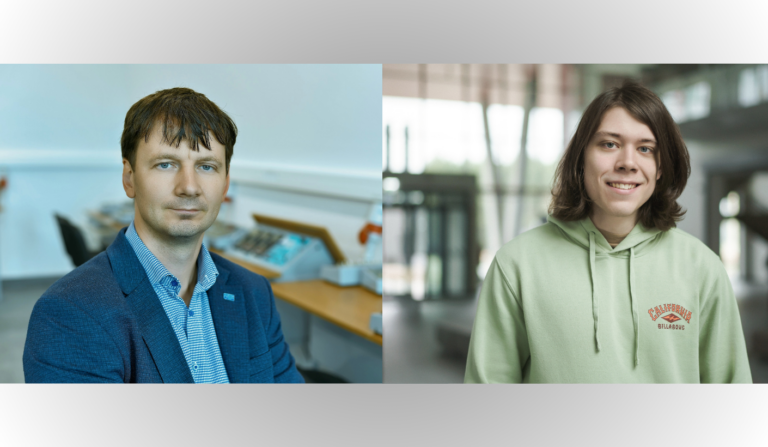
How does the role of a university change when viewed from two different perspectives: that of a former student who has now become a lecturer, and that of a current student just beginning their academic journey? How does university appear to someone who started there as a student and today teaches others, and how is it perceived by a student only taking one’s first independent steps in life? Representatives of the VILNIUS TECH Faculty of Electronics - Prof. Dr. Andrius Katkevicius from the Department of Electronic Systems and electronics engineering student Nojus Balciunas - are two different generations taking a fresh look at today's university and its future. Prof. Dr. Andrius Katkevicius, Department of Electronic Systems, Faculty of Electronics How has your view of the university changed from your student years to now as a lecturer? My perspective has changed significantly over time. When I studied electronics engineering at the Faculty of Electronics, I only saw a small part of university activity - mostly the teaching process. At that time, the university was associated with lectures, laboratory work, practical classes, and exams. During my bachelor's studies, I naively believed that successfully passing all exams was enough to secure a future in engineering career. Practice showed that in order to become a professional in your field, it is necessary to do extra work and actively participate in the chosen area of electronics, deepen your knowledge independently, and continuously improve yourself. Only during my master's studies did I begin to clearly understand that active scientific work is also carried out at the university. Today, after completing all stages of higher education and gaining pedagogical and scientific experience, I see the university as a multifaceted institution encompassing a wide range of activities and opportunities - from educating first-year bachelor's students to carrying out scientific and commissioned projects with local as well as international partners. How are student generations and their relationship with learning changing? Today's students are more focused on practical benefits and quick results. They have much broader and faster access to information, so they are increasingly less limited to material presented during lectures. At the same time, however, they face challenges related to information overload and evaluating information quality, especially when many answers can be obtained through artificial intelligence. There is a growing need for practical learning, understanding how knowledge is applied in real contexts, and seeing the value of studies in future professional activities. Students' expectations toward lecturers are also changing - dialogue, feedback, and a clearly structured learning process are increasingly valued. Although some students lack patience for long-term and consistent work, they are also more open to new technologies, digital tools, and flexible forms of learning. This encourages lecturers to constantly review and update their teaching methods. If you could compare the university from your student years with the current one, what has changed the most? One of the most noticeable changes is the study and research environment. A few years ago, after moving into new facilities, a modern and well-designed infrastructure was created, which clearly focused on study quality, scientific research, and collaboration. This environment not only improved technical possibilities but also changed the academic culture and daily work at the university. Fundamentally, the understanding of the university's role has changed - from an institution mostly focused on the study process, the university has become a much more active center for science, innovation, and project-based activities. Today, the university creates opportunities for students to participate in scientific, applied, and international projects, something that was previously less visible or accessible. Another important change is the advancement of learning tools and technologies related to digitalization as well as the application of artificial intelligence. Today, students have access to advanced digital learning platforms, virtual laboratories, simulation tools, and AI-based support systems that can help analyze, model, and deepen their knowledge. This fundamentally changes the learning process - from passive absorption of information to active, independent, and individualized learning. What should universities do differently today to better prepare students for the future? Universities should enhance the connection between studies and real practical experience even more, so that students can more clearly understand how acquired knowledge will be applied in professional activities. This includes closer cooperation with businesses and scientific partners, project-based learning, and involving students in applied and scientific projects as early as possible. It is important to develop not only subject-specific competencies but also general abilities - critical thinking, independence, responsibility for the learning process, and the ability to adapt to constantly changing technologies. Universities should encourage students to learn throughout life, experiment, make mistakes, and learn from experience, while also providing a suitable academic environment, which encourages that.   Nojus Balciunas, 3rd-year Electronics Engineering Student, Faculty of Electronics How would you describe the university and the significance of studies? For me, the university is first and foremost a community. Members of the VILNIUS TECH community are very warm and supportive people who constantly encourage participation in various activities organized both within and outside the university. Studies at VILNIUS TECH are an extremely significant stage of life. I can acquire not only academic knowledge but also practical skills, while developing critical thinking, independence, and responsibility. Of course, it is also a kind of transition into adult life, but even more importantly, it is a stage of growth, self-improvement, and self-discovery. I believe this is one of the most important periods in life. What expectations do you currently have for the university, and are they different from what you imagined before starting your studies? When I started studying at the university, I expected to gain more practical experience during lectures, but I soon realized that opportunities to gain such experience are provided beyond lectures. The university offers various additional activities, programs, and internships that students can join to deepen their knowledge and become more involved in practical activities. These opportunities are one of the university's greatest advantages - it provides space to grow, improve, and shape your own study path. What experiences or skills gained during studies are the most valuable? I believe the most important acquired skills are the so-called soft skills: being proactive, the ability to present your work and ideas, adapt to new environments, and respond quickly to changing situations. How do you imagine the university of the future - what should be different there compared to today? It is difficult to imagine the university of the future being very different from what it is now. Of course, laboratories and the equipment in them will become even more modern over time, but even today it is clear that VILNIUS TECH is constantly updating, expanding, and implementing the latest technologies. However, I believe that in the future laboratories will become even more open, giving students more opportunities to independently work on projects and implement their ideas outside of study hours. What motivates you the most today to study and improve yourself? What motivates me the most is my love for electronics and the desire to understand things I do not yet understand. And there are still very many such things.
More
Photography Exhibition "Leaving My Body" by Ieva Mizgeraitė
We invite you to visit the photographic exhibition "Leaving My Body" by VILNIUS TECH alumna Ieva Mizgeraitė. This collection is a journey through a woman's inner world – through the body, emotions, self-discovery, and the attempt to look at oneself from the outside. In her work, the photographer explores a body that does not always conform to society's expectations, situations beyond our control, the masks we see around us and sometimes put on ourselves, as well as the constant demand to be strong, equal, and always ready. “Each project was born from a specific emotion – from the noise and dialogue in my mind that arose at that moment. Searching for answers, I left my body and looked at everything from the outside – through the states of my models, their poses, gazes, and bodies. I understood that when you look at yourself from the outside, emotions become temporary. Inner dilemmas that once seemed permanent begin to dissolve,” the photographer says about the concept behind the exhibition. The exhibition brings together anger, resistance, masks, expectations, and freedom. These are not merely personal themes – they are experiences familiar to many women. The photographer says that she captures not faces, but psychological states. For her, photography has become a way of self-discovery and self-reflection – a form of meditation that helps her step away from the noise of the outside world and better understand what truly matters. The author works predominantly in black and white. She has been professionally active in photography since 2025. The exhibition "Leaving My Body" is an introduction to a deeper journey, which is planned to be presented in Gallery A of the library in November 2026.   The exhibition is on display in the foyer on the second floor of the Central Library.
More