
ATHENA Summer-Fall: Mobility Opportunities for Students and Staff

June 6, 2024
The ATHENA European University Alliance, which includes VILNIUS TECH, presents an extensive list of Blended Intensive Programs (BIP) for the summer and fall of 2024, aimed at both students and staff.
 
We invite you to familiarize yourselves with and participate in the upcoming events organized by members of the ATHENA European Universities Alliance!
 
FOR STUDENTS
  • VILNIUS TECH PhD summer school – July 2024
Hosted by the VILNIUS TECH University, this PhD Summer School, which will be happening on 8-12 July, 2024, offers a unique opportunity for doctoral students in technological, natural, social, and humanities sciences to engage in cutting-edge research and explore new perspectives in their fields of study.
 
VILNIUS TECH PhD Summer School, is an annual event that aims to provide doctoral candidates with unique professional and personal development opportunities. It focuses on the key competencies required to achieve the best results beyond general doctoral students’ training. It is an intercultural, international and exceptional interdisciplinary one-week course with international speakers from highly ranked European universities. The doctoral summer school creates a stimulating learning experience of long-lasting value for future professional careers.
 
Physical mobility: July 8-12th 2024
Where:  VILNIUS TECH
ECTS: 6
Application: apply here before June 24th 2024 
Additional information: here
  • Summer school “Introduction to Technical communication” – June-July 2024
Technical communication is focused on the user of services or products and is an essential and transversal competence. Moreover, it is a professional area that is booming globally, most notably because of the digital and technological context of today’s world, and the need to inform the users in a clear way in order to create more value in products/services.
This BIP focuses on a general approach to Technical Communication, with a balanced program between theory and practice of approximately 30 contact hours, in a laboratory environment. The first part of the week comprises 4 core workshops offered by experienced national and international technical communicators; in the second part of the week, the participants will be assigned a hands-on project, and will have to create documentation for a real product.
This course is aimed at students who like to make themselves understood in a clear and unambiguous way. No matter what their background is.
 
Physical mobility: July 1-5th 2024
Virtual lecture: June 26th 2024
Where:  ISCAP- Porto Accounting and Business School, Porto, Portugal.
ECTS: 3
Application: apply here before 15th June 2024
Additional information: here 
  • Solution Design – August 2024
Students from all fields of study are invited to participate in the summer school, which offers the opportunity to tackle real-world problems and learn the nuances of solution design. Participants will work in international teams alongside experienced professors and experts.
 
Students from all academic disciplines are invited to participate in the summer school. Here, they will explore holistic design thinking, including problem identification, formulation, and analysis, as well as develop skills in creating solutions that incorporate technical, sustainable, biological, economic, sociological, artistic, and other perspectives. The program includes hands-on activities such as prototype creation and solution modeling, fostering both teamwork and inter-team discussions.
 
Physical mobility: 26th August – 6th September 2024
Virtual Mobility: 19-21st August 2024
Where: University of Maribor, Slovenia
ECTS: 3
Application: apply here before 30th June 2024
Additional information: click here
  • Sustainable Logistics: Theoretical Heroes Tackle a Real Green Challenge – September 2024
Today's world requires highly skilled, environmentally conscious, adaptable, and socially savvy professionals capable of addressing future challenges. We invite you to join our summer school and become a hero equipped to tackle real sustainability challenges.
 
The summer school welcomes students from all academic disciplines interested in sustainability, logistics, and Industry 4.0. Participants will have the opportunity to gain theoretical knowledge in logistics planning and analysis, optimization of material flows and layouts, and the implementation of systems and technologies in logistics to enhance Industry 4.0 logistics.
 
Physical mobility: 2-10th September 2024
Virtual Mobility: 27-29th August 2024
Where: Celje, University of Maribor, Slovenia
ECTS: 3
Application: apply here
Additional information: click here
  • 4th International Summer School, Organisation, Management & Society – September 2024
This summer school aims to familiarise students with the interdisciplinarity of organizational sciences, which is essential for successful organizational management. The summer school will cover topics such as organization and organizing; human resources and educational systems and their interactions with green and digital transformations; information systems and their interactions with green and digital transformations; digitization, artificial intelligence, and management.
 
During the summer school, students will participate in interactive practical workshops, lectures, and case study presentations. There will also be organized visits to Slovenian organizations and tours of selected Slovenian cities, providing opportunities to network and visit significant cultural and educational institutions.
 
Physical mobility: 2-7th September 2024
Virtual Mobility: 26th August & 13th September 2024
Where: Kranj, University of Maribor, Slovenia
ECTS: 3
Application: apply here before 26th June 2024
Additional information: click here
Contact: erasmus.fov@um.si
  • 3rd International Summer School, Sustainability in International Business – September 2024
As sustainability becomes an increasingly important direction in business activities, this summer school aims to introduce and deepen students' knowledge of sustainability, sustainable development, and international business. It focuses on integrating sustainability dimensions (economic, social, environmental) into international business practices to achieve economic well-being and positive impacts on nature and society.
 
Physical mobility: 9-14th September 2024
Virtual Mobility: 6th September 2024
Where: University of Maribor, Slovenia
ECTS: 3
Application: apply here before 24th June 2024
Additional information: click here
Contact: intsummschool.feb@um.si
  • French Language and Culture Summer School
This French language and culture program focuses on teaching the French language and providing a unique cultural experience for students who aim to learn French and understand the country's identity. Students will have the opportunity to explore the rich history, art, and cuisine of Orleans through excursions and other summer school activities.
 
Location: Orléans, France
Dates: 2 weeks or 4 weeks programme:
  • 1728th June 2024
  • 112th July 2024
  • 17th June to 12th July 2024
Registration fees:
  • 2 weeks: 550€
  • 4 weeks: 1000€
Registration: here
The deadlines to register are:
  • Until May 24th for a start on June 17th 2024
  • Until June 7th for a start on July 1st 2024
More info: here
 
Other ATHENA opportunities:
 
“ATHENA Talks” and “ATHENA Alumni Talks” – regular online scientific conversations with leading scientists and ATHENA alumni from around the world. Wide range of topics from physics, semiconductors, biomaterials to policy making & internationalization. A new topic & speaker is announced each week on ATHENA website & Facebook page.
 
For funding opportunities for VILNIUS TECH staff and students, please contact the International Relations Office, email: rasita.martise@vilniustech.lt
 
Regarding participation in events organized by VILNIUS TECH, please contact organizers.
 
What is the ATHENA European University?
VILNIUS TECH is part of the ATHENA European University Alliance, which constantly offers mobility and development opportunities for students and staff. The ATHENA alliance partners are universities in ten European countries (Greece, Italy, Poland, Lithuania, Portugal, Slovenia, Spain, France, Germany, and Ukraine). 
 
Stay in tune with ATHENA news – sign up for the newsletter, follow ATHENA on social media and regularly check our website for more.

 

Related news

Building a more resilient hospital: Santaros clinics and VILNIUS TECH bring together their expertise
How can a hospital ensure that it continues operating and providing patient care even during an emergency? How can its buildings and essential engineering systems be protected, and its infrastructure adapted to new threats? Seeking answers to these questions, Santaros Clinics is taking another step towards strengthening its emergency preparedness. On 11 November 2026, it signed a cooperation agreement with Vilnius Gediminas Technical University (VILNIUS TECH). The university and the hospital are bringing together the expertise of researchers, engineering specialists and medical professionals to strengthen the resilience of the hospital’s infrastructure and ensure continuity of operations, even under the most challenging circumstances. A hospital’s emergency preparedness involves more than ensuring that medical staff are ready to treat a larger number of patients. It is equally important to maintain the capacity to provide medical care if electricity or water supplies are disrupted, or buildings and engineering systems are damaged. This is particularly relevant for large hospitals, whose operations depend on numerous interconnected technological and infrastructure systems. Prof. Tomas Jovaiša, Director General of Santaros Clinics, emphasises that emergency preparedness is an ongoing process that requires not only anticipating potential threats but also identifying ways to mitigate their impact. “A hospital must not become another institution in need of assistance during an emergency. It must be a pillar of support for the state. One hundred per cent security is neither possible nor achievable. However, it is our responsibility to do everything we can to ensure that the hospital continues operating even under emergency conditions. We prepare systematically, assess potential threats, test our readiness and look for new solutions. We recognise that the expertise of hospital staff alone is not enough to overcome every challenge. That is why we are bringing together researchers and engineering experts to strengthen the resilience of our infrastructure in a systematic way. Our cooperation with VILNIUS TECH is another concrete step in this direction,” says Prof. T. Jovaiša. Research expertise to strengthen hospital resilience VILNIUS TECH Rector Prof. Dr Romualdas Kliukas notes that strengthening infrastructure resilience has become an integral part of a country's preparedness for crises. “Geopolitical developments are fundamentally changing the way new buildings are designed and accelerating the introduction of resilience measures in existing infrastructure. Today, this is not merely an engineering issue, but also a priority for public safety, crisis preparedness and national resilience. The role of experts in civil engineering, electronics and environmental engineering, as well as civil protection specialists and researchers, is becoming increasingly important. The university’s mission is to share knowledge with society and strengthen the country’s defence and security. Cooperation with Santaros Clinics will provide an opportunity to share our expertise in civil engineering, civil protection and other fields, as well as the experience gained from our partners in Ukraine. We will propose practical solutions that could help protect human lives and the country’s most sensitive infrastructure in the event of disasters. In the future, this pilot project could become a standard applicable to hospitals across Lithuania,” says VILNIUS TECH Rector Prof. Dr Romualdas Kliukas. [caption id="attachment_136133" align="alignnone" width="2560"] R. Kliukas and T. Jovaiša[/caption] Through their cooperation, Santaros Clinics and VILNIUS TECH will seek to assess which engineering and technological solutions could help strengthen the resilience of existing buildings and critical infrastructure. One of the key issues is how to better protect treatment areas where the rapid evacuation of patients may be difficult or even impossible due to their medical condition. The partners will also explore ways to adapt existing underground premises for providing medical care during emergencies. Particular attention will also be given to the reliability and protection of essential engineering systems. A hospital’s ability to continue operating depends on the uninterrupted supply of electricity, water and medical gases, as well as on the functioning of ventilation and other systems. It is therefore important to assess not only the safety of individual facilities but also the resilience of the entire infrastructure to potential disruptions. The principles of resilience are also to be incorporated into the planning of new infrastructure, ensuring that potential threats are taken into account at the design stage. From Research to Practical Engineering Solutions The cooperation agreement provides for opportunities to conduct joint research and experimental development, develop and test technological and engineering solutions, organise expert consultations and implement joint projects. VILNIUS TECH’s laboratories and research infrastructure enable specialists to assess the resilience of various structures and materials, model their behaviour and develop solutions that can be applied in practice. [caption id="attachment_136137" align="alignnone" width="2560"] J. Valivonis[/caption] “Numerical and experimental research conducted in the university’s laboratories focuses on improving the resistance of high-security buildings and structures to dynamic loads, including blast waves. We are exploring structural solutions and materials that can help ensure the resilience of buildings, other infrastructure facilities and engineering systems to impact, blast loads and similar dynamic effects. Experimental testing and numerical modelling allow us to accurately assess the behaviour of structures and materials, helping us design structural elements and their connections appropriately. We have the necessary laboratories, equipment, expertise and qualified specialists to carry out calculations, expert assessments and structural tests, and to provide the clinics with specific recommendations for improving the safety of existing buildings and engineering structures, as well as for designing new underground high-security buildings and infrastructure facilities,” says Prof. Dr Juozas Valivonis, Head of the Department of Reinforced Concrete Structures and Geotechnics at the VILNIUS TECH Faculty of Civil Engineering. Emergency preparedness is an ongoing process Cooperation with VILNIUS TECH will complement the emergency preparedness measures already being implemented at Santaros Clinics. The hospital regularly updates its emergency response procedures, conducts civil protection exercises, tests the reliability of critical systems and improves staff communication and coordination. Earlier this year, when a red air raid alert was announced, the Santaros Clinics Emergency Management Group assembled within five minutes and began coordinating the planned response measures. A power supply disruption in September also served as a practical test of the hospital’s preparedness: backup power sources maintained the operation of critical systems, while specialists promptly addressed the technical issues that arose. Santaros Clinics also organises practical building protection exercises to assess how facilities can be protected from the effects of blast waves and shrapnel. These exercises help evaluate existing capabilities and identify areas where preparedness needs to be strengthened. The main goal: uninterrupted patient care According to the Director General of Santaros Clinics, all emergency preparedness measures must ultimately be assessed in terms of their benefits to patients and their ability to ensure continuity of hospital operations. “A hospital is one of those institutions that cannot stop functioning. During an emergency, we must not only take care of patients already receiving treatment but also be ready to admit new patients who may need urgent medical assistance. That is why it is important for us to find ways to better protect buildings and essential engineering systems, adapt existing premises and design new infrastructure that is more resilient to threats. This requires more than the knowledge of medical professionals and the hospital’s technical staff – we also need the expertise of researchers and engineering specialists. Our ultimate goal is clear: to ensure that we can continue operating and providing patient care even under the most challenging circumstances,” emphasises Prof. T. Jovaiša. The cooperation agreement between Santaros Clinics and VILNIUS TECH has been signed for a period of five years. Specific joint activities and projects will be planned and agreed upon separately, taking into account the hospital’s needs and the university’s areas of expertise.
More
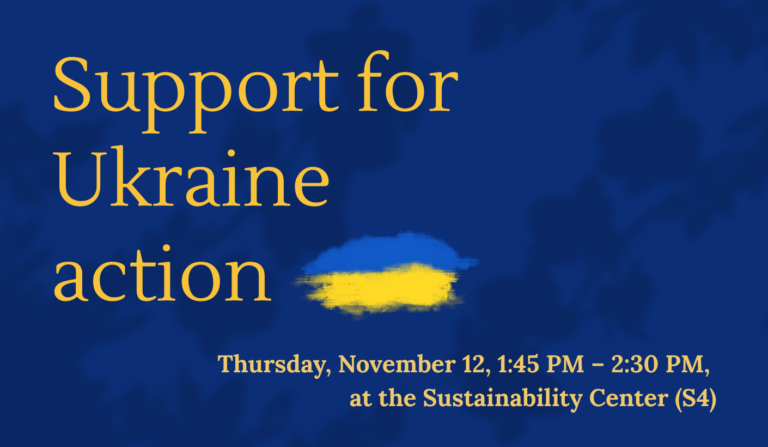
Join us tomorrow: camouflage net weaving workshop, talk, and donation drive in support of Ukrainian soldiers
VILNIUS TECH and the charity and support foundation "Susivieniję gerumui" ("United for Kindness") invite the entire community to attend an event dedicated to collecting in-kind donations for Ukrainian soldiers. The event will also feature a camouflage net weaving workshop, and the head of the foundation, Agnė Jociuvienė, will share insights into the soldiers' daily lives. The event will take place on Thursday, November 12, from 1:45 PM to 2:30 PM, at the Sustainability Centre (Faculty of Environmental Engineering – Building S4, Saulėtekio al. 11, Vilnius). Donated items can be used/second-hand. We encourage you to donate not only on the day of the event, but also before and after! A full list of needed items can be found at the end of this announcement. If donations are gathered in other university departments, we can arrange for their transportation. On weekdays, items can be dropped off at: Building S3, Room 004, 9:00 AM – 12:00 PM Building S1, Room 310/1, 8:00 AM – 4:45 PM If you have any questions or would like to make specific arrangements, please contact: Assoc. Prof. Dr. Ramunė Žurauskienė, tel. +370 631 89130 or Milda Mockūnaitė-Vitkienė, tel. +370 656 85067, milda.mockunaite-vitkiene@vilniustech.lt What items are currently needed? With winter approaching, soldiers fighting for freedom in Ukraine urgently need warm blankets, quilts, sleeping bags, hygiene products, and generators. All of these (and other) items can be gently used—making this a wonderful opportunity not only to support the cause, but also to promote sustainability by decluttering your wardrobes and shelves. In addition to these items, white fabrics for winter camouflage nets are urgently needed. If you have unwanted white curtains, bed sheets/linens, clothing linings, or other lightweight fabrics, please bring them to the designated rooms. You will also be able to continue weaving the net at the Sustainability Centre after the event – until it is completed. These nets are crucial for drone defense, and the white material helps soldiers stay concealed in snowy conditions. During the event, Agnė Jociuvienė, head of the foundation, will share the journey from her personal volunteer efforts to the founding of "United for Goodness" ("Susivieniję gerumui"). She will discuss mobilizing volunteers, weaving camouflage nets, and collecting and transporting aid to Ukraine. We will hear real-life stories about those who provide help and those who receive it—stories covering daily decision-making, the weight of responsibility, and unforeseen situations that could not have been anticipated. This will be more than just a story about providing aid to Ukraine; it is a conversation about civic engagement, volunteering, responsibility, and the choice to step forward rather than stand on the sidelines when someone else is in need of help. How else can you contribute? Financial support for transport: If you cannot donate any of the listed items, you can contribute financially to cover fuel costs for transporting the aid to Ukraine. The foundation's bank details can be found at www.susivienijegerumui.lt. Small purchases: You can purchase coffee, tea, or personal hygiene products—they are inexpensive, yet constantly needed in large quantities! Handmade items: If you knit, crochet, or sew, put your skills to good use by making socks, scarves, gloves, blankets, and other warm items. Spread the word: Invite your family and friends to participate – ask if they have unused items to spare, or simply share this message. Every small step brings a lot of good! Please note that this is an ongoing, long-term campaign. List of Needed Items: Medical supplies: Medicines, bandages/dressings (near-expiry medications are also accepted), adult medical diapers/incontinence pads. Food: Coffee (urgently and constantly needed in large quantities), tea, cookies/biscuits, rusks/crackers, canned meat. Warmth & Clothing: Blankets, sleeping bags, quilts, warm men’s sweaters, T-shirts, thermal/underwear, thick and thin socks, outdoor/camping gear. Hospital clothing for wounded soldiers: Men’s T-shirts, shorts, pajamas, tracksuits, light sweatshirts/hoodies. Footwear: Combat boots, hiking boots, rubber boots (sizes 40–48). They do not need to be brand new, but must be clean and in good, wearable condition. For drone operators: Laptops, tablets, flat-screen TVs. Power & Lighting: Generators, EcoFlow / portable power stations, power banks, flashlights/torches. Tools: Automotive tools, chainsaws, drills, screwdrivers/impact drivers, angle grinders, and similar power tools; shovels, axes, large cooking pots, nails. Appliances: Refrigerators, washing machines, freezers, microwave ovens, electric kettles, etc. Hygiene & Household: Hygiene and cleaning supplies, wet wipes. Home textiles: Bedding and towels (can be used, as long as they are clean). Pet food.
More