• University
  • News and events

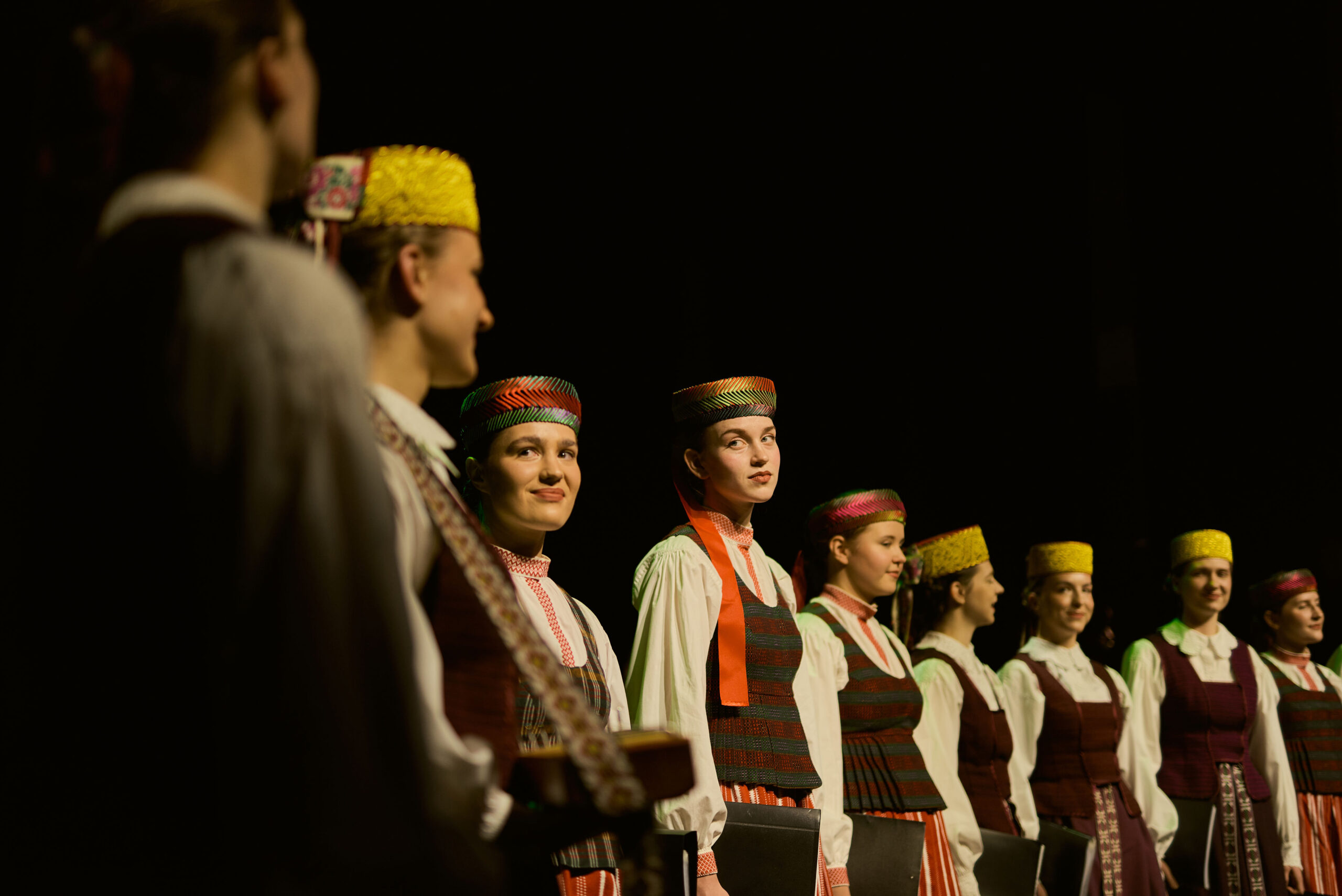
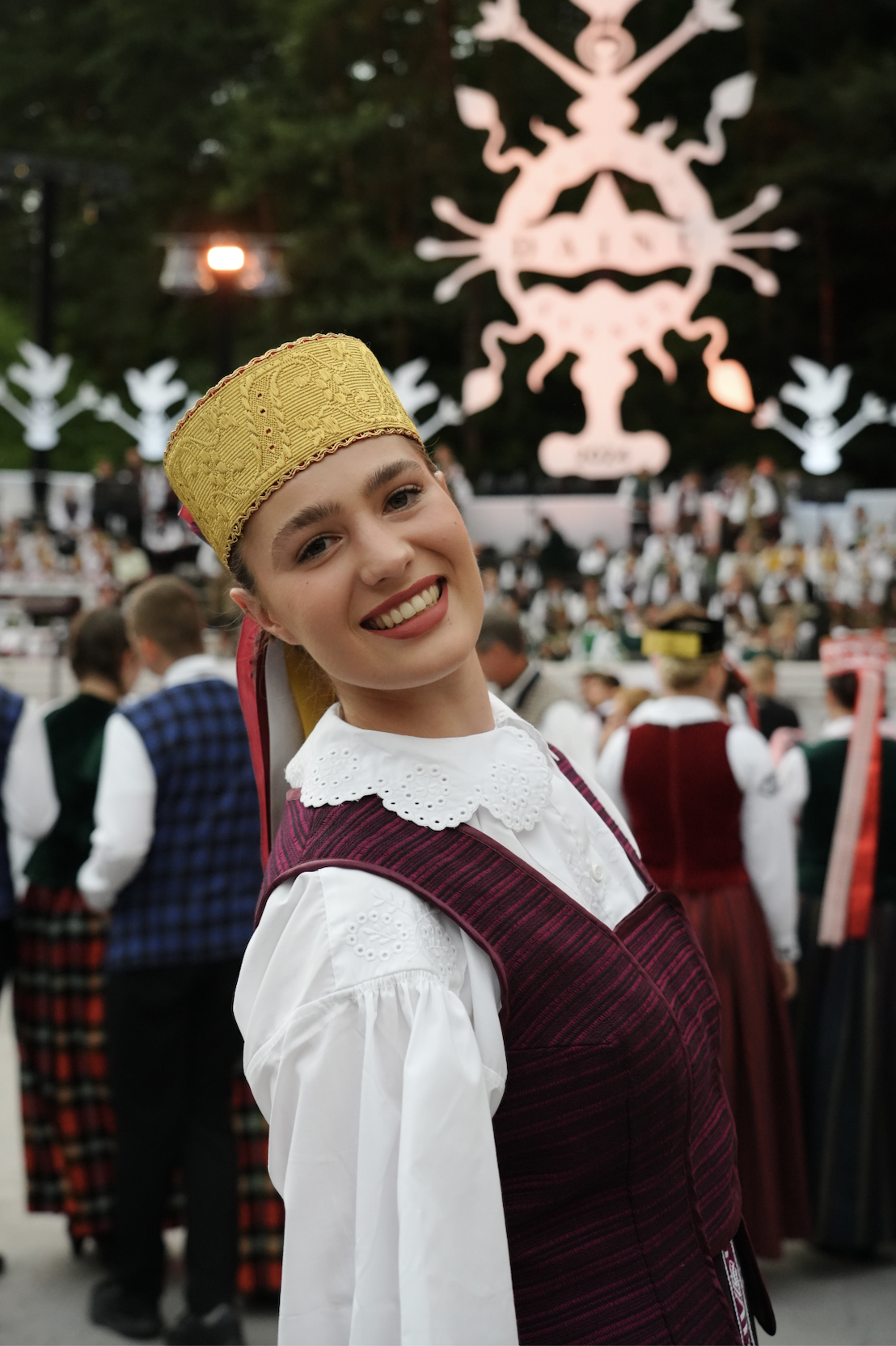
Austėja, a singer in “Vingis”: “Here, I can do more than just listen to folk music – I can become a part of it”

September 8, 2026

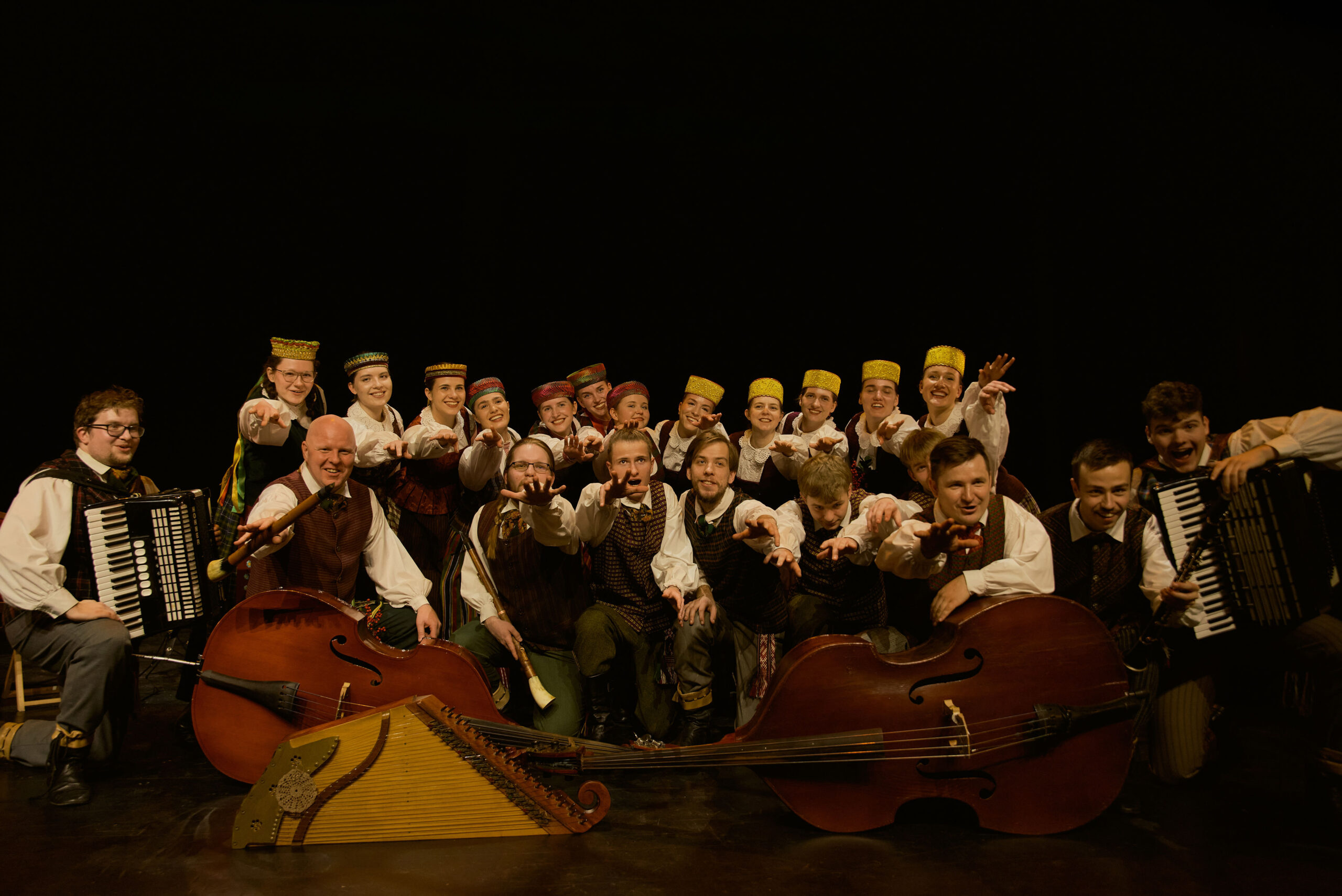
University is about more than just lectures in auditoriums. It is also an opportunity for personal growth and developing your talents through extracurricular activities. That is why VILNIUS TECH invites students to join the academic choir “Gabija”, the theatre studio “Palėpė”, the orchestra, or the song and dance ensemble “Vingis”.

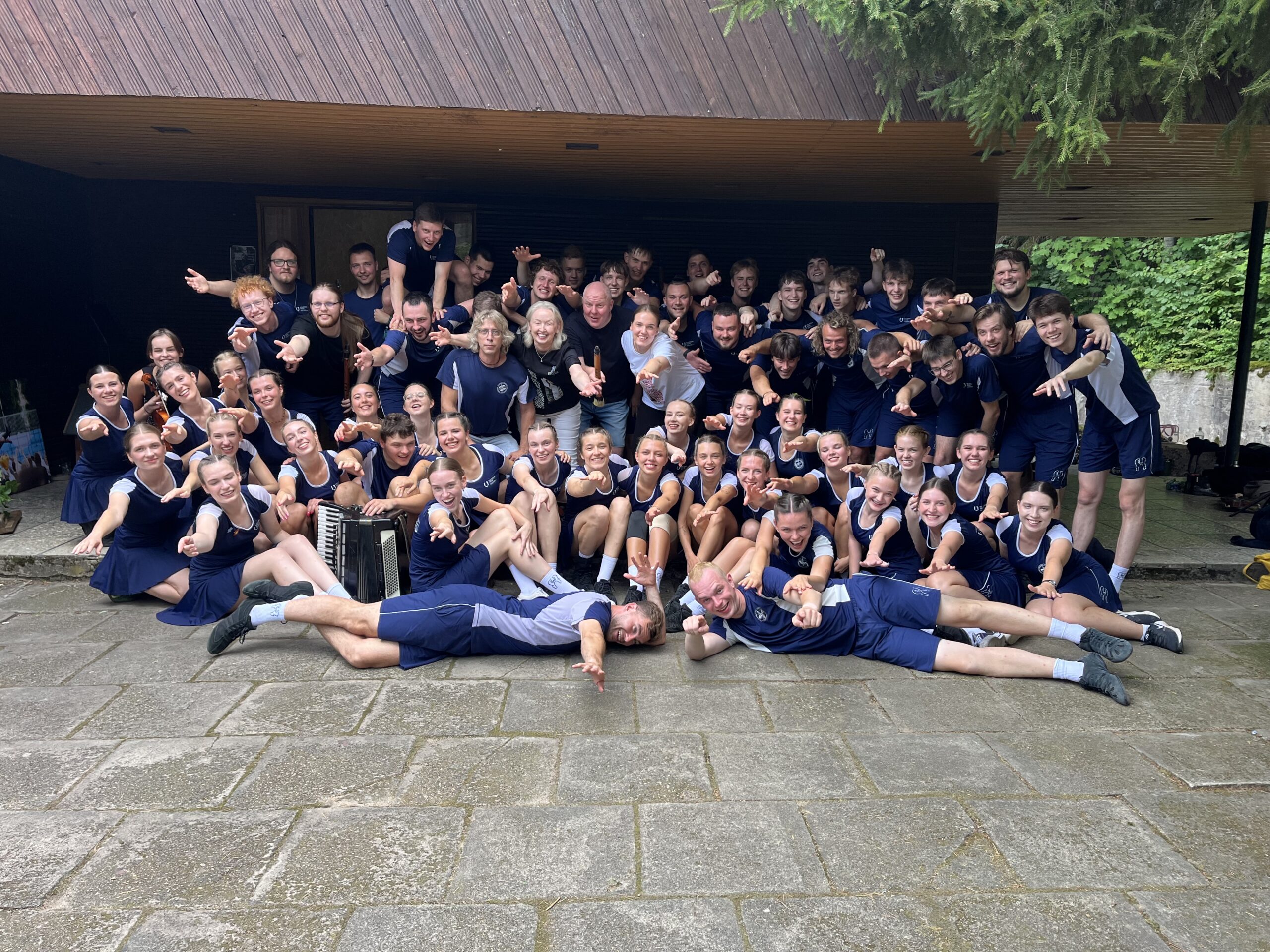
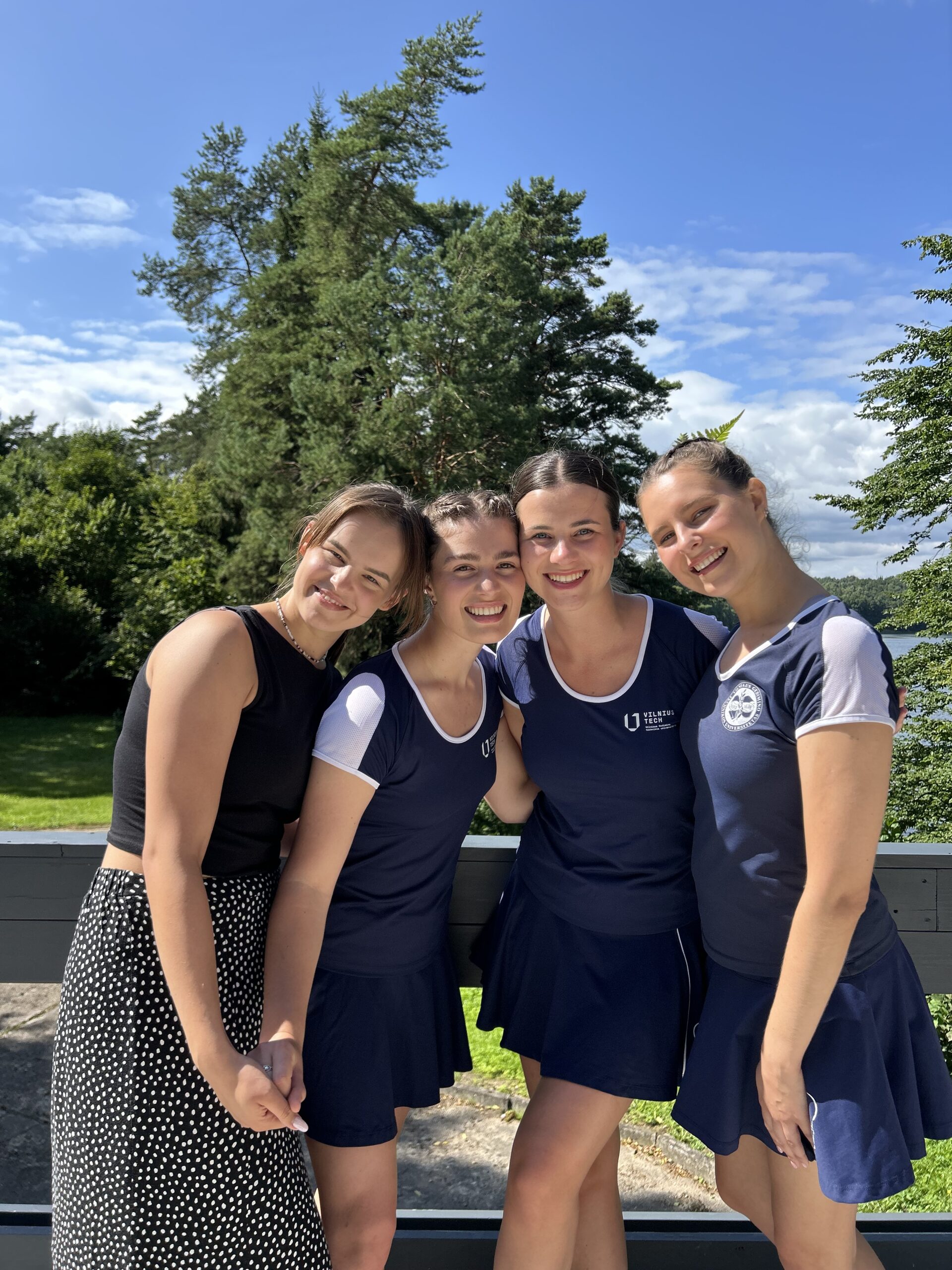
It was in this very ensemble that Austėja Vaikšnoraitė, a fourth-year Event Engineering student at the Faculty of Creative Industries and a vocalist in the group, found not only a new hobby but also friends for life. We invite you to take a closer look at the features, traditions, and unique character of this collective.

– First of all, tell us how you chose this study program and VILNIUS TECH?

– In high school, I was involved in musical activities, but I was afraid to apply directly for an arts degree. I had always wanted to study in Vilnius, so when I decided on engineering, applying to VILNIUS TECH as my first choice was a natural step. I liked the idea that this study program would allow me to gain technical knowledge while staying close to the creative and event management fields. It was here that I discovered a wide variety of non-traditional student activities, including “Vingis”.

– And how did the idea to join “Vingis” come about?

– A friend encouraged me to join. We went to the auditions together—she wanted to dance, and I wanted to sing. It was quite scary at first because I didn’t know what to expect or how things would go. However, as soon as I got there, I realized I was worrying for nothing. I quickly felt right at home, and those initial fears simply vanished.


– Was singing in a folk ensemble a new experience for you? What drew you to try out this specific field?

– Folklore and its motifs in music have always interested me, but I had never engaged with them directly. Before “Vingis,” it was more of an outside interest, but here I was able to experience it up close—not just listening to folk music, but actually becoming a part of it.

Once you feel it up close, you don’t want to let go of the magic it radiates. I think that’s what drew me in the most—the realization that folk music isn’t just a piece we perform on stage. Behind it, there is history, people, emotions, and a very strong sense of community.

– If possible, could you describe the feeling you experience while singing during performances?

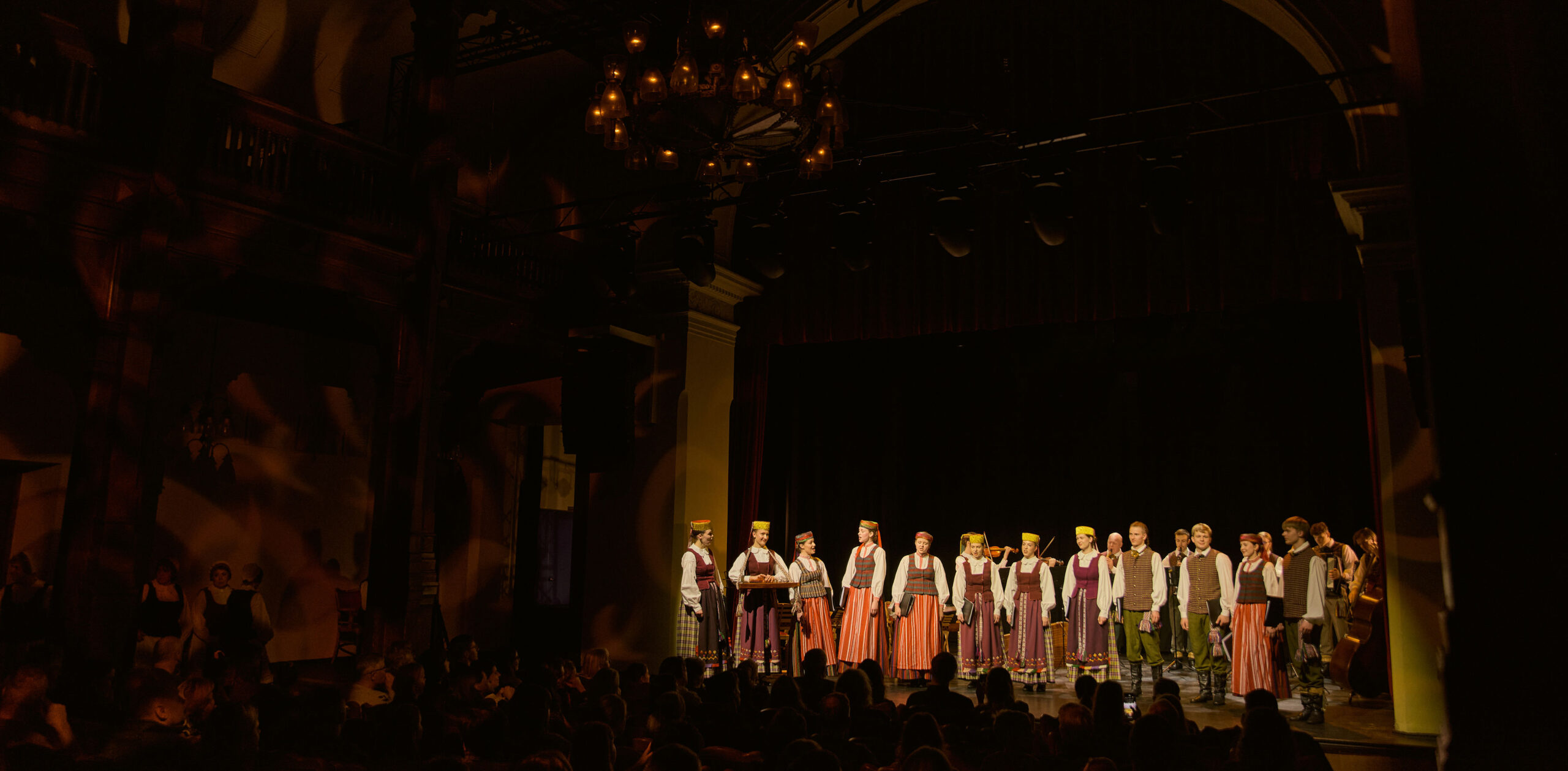
– Every concert is a completely different experience. The sense of responsibility before a performance brings stress and various questions: Will everything go according to plan? Will I make a mistake? Will I mix up the lyrics? However, as soon as the concert begins, that feeling usually disappears. The tension fades away, and a sense of euphoria takes over.

Singing together, listening to one another, and sharing that collective emotion make up for all the hard work and pre-show tension. For me, that specific moment is incredibly important—when you realize you are no longer alone on stage, but part of a unified whole.

I don’t necessarily enjoy just standing on stage for the sake of it, but truly magical things happen up there. And it’s exactly those moments that make you want to come back again and again.

– Participating in any extracurricular activity can bring various benefits. What advantages do you see in singing with “Vingis”?

– I see a lot of benefits from singing and being involved in “Vingis”. Singing develops creativity, active listening, mutual respect, and, of course, musicality. You also learn responsibility—you realize that your preparation and effort impact not only yourself but the entire ensemble.

As a group, “Vingis” provides a very strong social foundation for a young, developing personality. Being here builds courage, discipline, self-confidence, and teamwork skills.

However, in my eyes, the greatest advantage is the people. You meet very different personalities here, but everyone is united by the desire to be together, to create, and to experience something more than just university lectures.

– Tell us, how do your rehearsals go?

– We singers have very few male voices—something we are eagerly looking for during the September auditions—so we usually rehearse all together. We start with vocal warm-ups, which are often a lot of fun and set an energetic tone for the rest of the rehearsal.

We learn the pieces by vocal parts, and eventually, we put everything together. Usually, we can get the foundation of a moderately difficult piece down in a single rehearsal, but the work definitely doesn’t stop there. We polish the piece for at least another couple of weeks, sometimes even months, depending on the scale of the upcoming concert and the number of songs.

Rehearsals aren’t always easy, but they are almost always fun. I think that the ability to work seriously while also sharing a laugh is what really helps maintain such a great atmosphere.

– How do you all get along within the group? Do you have any traditions or rituals before performances or rehearsals? How do you welcome newcomers?

– We are more than just an ensemble; we are one big family—a community that shares its kindness and warmth with absolutely everyone. You can laugh, cry, celebrate, or share a moment of sadness with any member of the group.

We have a lot of traditions and special evening events that bring us even closer together. The season kicks off with a welcome evening for the freshmen, followed the next day by an orienteering game around Vilnius and a potluck party at one of the members’ homes.

In December, we hold an annual review night where we discuss everything we’ve accomplished over the year and elect a new president. In February, we have “Guys’ Night,” where the girls organize the best night of the year for them. In March, it’s “Girls’ Night,” and the guys return the favor, often raising the bar even higher.

In the spring, we have the freshmen initiation, where the new members take the “Vingis” oath and officially become part of our community for life.

We close the season with an incredible camp in Aukštadvaris, where the outside world simply fades away into the silence of the forest. It’s an indescribable experience that you have to feel for yourself—there’s no other way to truly understand it.

We also have a special ritual before every concert: we place our hands on each other’s shoulders and interlock arms. Our director, Rimutė, always shares a few words. These aren’t just formal pre-show pleasantries—she delivers truly meaningful words that inspire us, calm our nerves, and stay with us throughout the entire performance.

We welcome newcomers at the beginning of September, during pre-announced audition dates. The dancers are asked to replicate specific dance moves and are evaluated by the directors. Singers and musicians also showcase their skills and abilities. However, you don’t need to be an expert when you arrive—often, motivation, a willingness to learn, and the desire to become part of our community matter much more.

– That being said, a student’s primary focus is their studies. How do you manage to balance lectures, exams, and, for some, a job, alongside this extracurricular activity?

– Balancing studies with “Vingis” is fairly easy, as long as you don’t have very late evening lectures. Sometimes, you might get an unfavorable schedule for a semester, which means you have to prioritize and juggle your various commitments. But it is absolutely doable.

Once I started working, things got quite a bit more challenging because my chosen profession doesn’t have standard 8-to-5 working hours—that’s just how the event industry works. Work often takes place on evenings and weekends, sometimes overlapping with rehearsals or concerts.

Even if you can no longer participate in the regular activities of “Vingis”, the strong bond with the group remains. After all, once a vingietis (a Vingis member), always a vingietis.

– Is there anything else you’d like to add, or perhaps a message you’d like to share?

– “Vingis” is an essential experience for every student. I’m not exaggerating in the slightest.

I don’t think I would have experienced such emotions, challenges, and moments of euphoria anywhere else. I gained so many social skills here and met incredibly wonderful, genuine people who I can proudly call my friends. And even if they aren’t all close friends, they are people who will never turn their backs on you.

It truly is an all-encompassing experience. For me, “Vingis” isn’t just about singing, dancing, concerts, or rehearsals. It’s about the people, the sense of community, the traditions, the laughter, the occasional tears, the exhaustion, the excitement, and that hard-to-explain feeling of realizing you belong to something much bigger than yourself.

So, if you are a freshman reading this—consider this a personal invitation to join “Vingis” and experience the true, wild, and wonderful student life. It might seem scary at first, and you might not know what to expect, but there is a very good chance that you’ll find people and experiences here that you will cherish for the rest of your life.

And it doesn’t matter if you show up to dance, sing, play an instrument, or just out of sheer curiosity—the most important thing is simply to show

Galerija
Related news

Student Memo: Where to park your car or bicycle, eat, and find your classrooms
When starting your studies, it is not always clear during the first week where you can park your car or bicycle, which building your seminar will be in, or where you can eat or heat up your own food during breaks. To make settling into the academic year easier, we have prepared this memo. Student Car Parking: Students attending lectures at Saulėtekio al. 11 can park their cars in the lot located on Šatrijos Raganos Street. There is no barrier in this lot. How to find the lot: Driving from Saulėtekio al. – going up the hill past the roundabout and the university buildings. Or entering from Pragiedrulių, Mileišiškių sodų, or other streets onto Šatrijos Raganos Street – going down the hill before the roundabout and the university buildings. Students attending lectures on Plytinės Street can park in the lots located there. Students can enter the gated lot by tapping their activated student ID card at the terminal. Entrance to the lots is from Plytinės Street. Antanas Gustaitis Aviation Institute (AGAI) students, lecturers, and students or staff arriving at "Linkmenų fabrikas" can park in all lots. The barrier opens by tapping an activated student or staff ID card at the terminal. There are no dedicated parking lots for students attending lectures at the Old Town Campus (Trakų rūmai). Canteens and Cafes: Saulėtekis Campus: "Maisto imperija" (Building S2, 1st floor) – weighed food (you can build your own plate) – 1.70 € per 100 g, lunch of the day – 7.50 €, snacks, coffee, and other drinks. You can also heat up your own food here. Working hours: Monday–Thursday: 08:00–16:00; Friday: 08:00–15:00. "ARC BISTRO" (Building S3, 1st floor) – a menu consisting of a multi-course selection and daily lunch at a fixed price (up to 10 €), as well as snacks, coffee, and other drinks. Working hours: Monday–Friday: 11:00–15:00. Plytinė Campus (P2, 1st floor): "Confetti" – a menu consisting of a multi-course selection and daily lunch at a fixed price (up to 10 €), as well as snacks, coffee, and other drinks. You can also heat up your own food here. Working hours: Monday–Thursday: 09:00–16:00; Friday: 09:00–15:00. Old Town Campus (Senamiesčio rūmai): "Confetti" (Islandijos str. 3) – a menu consisting of a multi-course selection and daily lunch at a fixed price (up to 10 €), as well as snacks, coffee, and other drinks. Working hours: Monday–Friday: 07:45–15:00. Places where you can heat your own food in microwaves: When using microwaves, please maintain cleanliness, follow safety rules, and respect others: do not put in or heat items with shiny surfaces (e.g., cutlery, aluminum foil, etc.), do not slam the doors or other surfaces, wipe or clean the inside of the microwave or other surfaces (including the kitchenette) if needed, do not cut in line, and do not stop someone else's food from heating without permission, etc. Saulėtekis Campus: In the "Maisto imperija" canteen (Building S2, 1st floor), as well as in the Sustainability Centre (Building S5), and the 5th and 6th-floor kitchenettes in Building S6. Plytinė Campus: In the "Confetti" cafe (Building P2, 1st floor). Old Town Campus: In the Faculty of Architecture's 2nd and 3rd-floor kitchenettes (at the end of the corridor). AGAI: In the 2nd-floor kitchenette of the old building (near the Dean's office). It is planned that microwaves will also be available in the new building in the future. Linkmenų Campus: In the 2nd-floor kitchenette at "Linkmenų fabrikas". Library: Room 119, 1st floor. You can also make tea/coffee here. Places to leave your bicycle: Saulėtekis Campus: At special bike racks near the entrance to Building S2, and in the Central Building parking lot. Plytinė Campus: In the two designated bicycle shelters in the courtyard between buildings P1 and P2. Old Town Campus: At special bike racks near the entrances to each building. AGAI and Linkmenų Campus: At special bike racks near both departments. Library: At special bike racks near the entrance. Department/Building Abbreviations: Saulėtekis Campus (Saulėtekio al. 11, Vilnius): S1 Central Building (Administration, International Studies Centre, International Relations Office, etc.) S2 Classroom Building S3 Educational Building (Faculty of Civil Engineering, Faculty of Business Management) S4 Classroom Building (Faculty of Environmental Engineering, Sustainability Centre, Food Laboratory) S5 Educational Building (Faculty of Environmental Engineering, Sustainability Centre, Food Laboratory) S6 Laboratory Building (Faculty of Fundamental Sciences, Information Technology and Systems Centre, Academic Support Centre, etc.) S7 Laboratory Building Plytinė Campus (Plytinės str. 25, Vilnius): P1 or P Laboratory Building P2 Educational Building (Faculty of Electronics, Faculty of Mechanics, Faculty of Transport Engineering) P3 Educational Building Linkmenų Campus (Linkmenų str. 28, Vilnius): L1 Building (Institute of Building Materials) L2 Building (Road Research Institute) L3 Building L4 Building L5 Educational Building (Linkmenų fabrikas) L6 Educational Building (Antanas Gustaitis Aviation Institute) Old Town Campus (Trakų str. 1, Vilnius): T1 or T Educational Building (Faculty of Architecture) T2 Educational Building (Faculty of Creative Industries) T3 Educational Building T4 Educational Building T5 Educational Building Old abbreviations that might still appear in some contacts: SNR – Senamiesčio rūmai (Old Town Campus) SRK-I – Saulėtekio rūmų pirmas korpusas (Saulėtekis Campus First Building) SRK-II – Saulėtekio rūmų antras korpusas (Saulėtekis Campus Second Building) SRL – Saulėtekio rūmų laboratorinis korpusas (Saulėtekis Campus Laboratory Building) SRL-II – Saulėtekio rūmų antras laboratorinis korpusas (Saulėtekis Campus Second Laboratory Building) MAC – Saulėtekio centriniai rūmai (Saulėtekis Central Building) AGAI TLK – Antano Gustaičio Aviacijos instituto Treniruoklių ir laboratorijų korpusas (Antanas Gustaitis Aviation Institute Simulator and Laboratory Building). Other Addresses: Kyviškės Airfield: Lakūnų str. 7D, Kyviškės Sports and Art Centre: Saulėtekio al. 28, Vilnius Library: Saulėtekio al. 14, Vilnius Lithuanian Maritime Academy: I. Kanto str. 7, Klaipėda. Thematic Reading Rooms in Faculties: Architecture and Creative Sciences Reading Room (Trakų str. 1, T1, 1.15, Vilnius) Technology and Management Sciences Reading Room (Saulėtekio al. 11, S1, C03, Vilnius) Mechanics, Electronics, and Transport Sciences Reading Room (Plytinės str. 25, P2, 179, Vilnius) Maritime Sciences Reading Room (I. Kanto str. 7, Klaipėda)
More
Pritzker Prize-winning architect Shigeru Ban to visit Vilnius: When Architecture Becomes a Source of Support for People
On September 22, Shigeru Ban, one of the most prominent figures in contemporary architecture and a Pritzker Architecture Prize laureate, will deliver a public lecture in Vilnius. The Japanese architect views architecture as a means of helping people affected by natural disasters, conflicts, and humanitarian crises. This will be Shigeru Ban’s first visit to Lithuania—he will be a guest at Vilnius Gediminas Technical University (VILNIUS TECH), where he will deliver a presentation in English titled “Balancing Architectural Works and Social Contributions.” During the lecture, the architect will share more than thirty years of experience, covering both innovative architectural design and humanitarian work. In 1995, the architect founded the nongovernmental organisation “Voluntary Architects’ Network,” which assists people affected by disasters. That same year, he became a consultant to the United Nations High Commissioner for Refugees (UNHCR). For his creative work and social contributions, the architect has received numerous international awards, including the 2014 Pritzker Architecture Prize. Shigeru Ban is one of the world’s most renowned architects: the Centre Pompidou-Metz in France, the Mt. Fuji World Heritage Centre, and the Oita Prefecture Art Museum, are just a few of the many he has designed that have gone down in the history of world architecture. Paper tubes, wood, and architecture that builds resilient communities—this is the innovative direction of the creator, which is something we all desperately need in today’s world. The lecture is organised by the VILNIUS TECH Faculty of Architecture community in collaboration with the Embassy of Japan in Lithuania. A question-and-answer session will follow the lecture. The lecture will take place on September 22 at 12:00 p.m. in Auditorium T2 209 at VILNIUS TECH, Trakų g. 1, Vilnius. Attendance is free, but please inform about your participation by filling out this registration form. The event will be held in English. Photography may take place during the event. If there are any further questions, please contact agne.vete@vilniustech.lt Photos: Architect Shigeru Ban Mount Fuji World Heritage Center, 2017, Shizuoka, Japan. Photo: Hiroyuki Hirai.  Pompidou-Metz Center, 2010, Metz, France. Photo: Didier Boy de la Tour.  Cardboard Cathedral, 2013, Christchurch, New Zealand. Photo: Brigit Anderson.
More