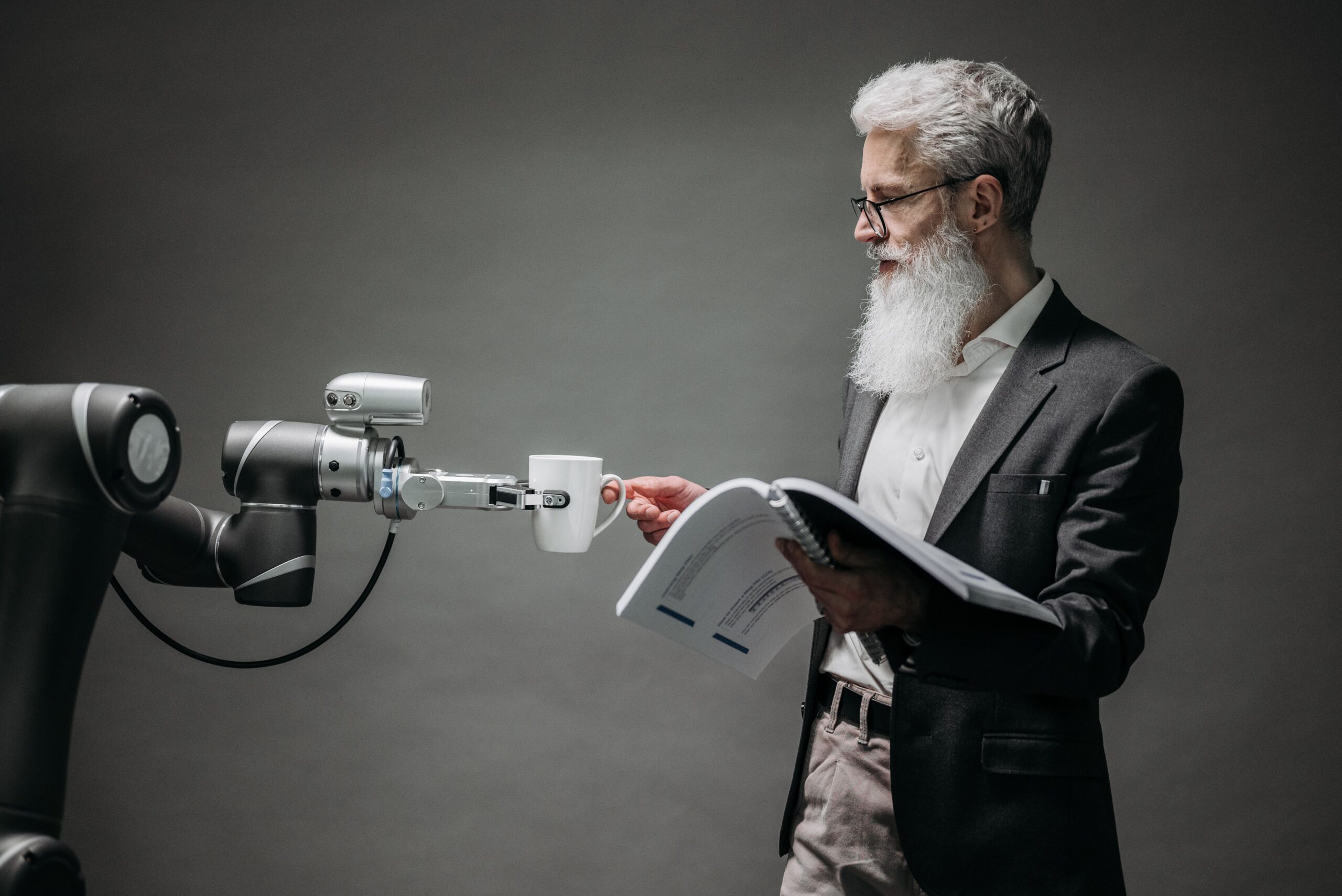
Artificial intelligence (AI) is transforming the job market. Technologies are taking over an increasing number of routine tasks: generating content, analysing data, planning projects, and supporting business decision-making. Yet there are still areas where technology cannot replace people – inspiring teams, managing conflicts, making decisions in uncertain situations, or bringing people together around a common goal. That is why leadership is no longer seen as a quality reserved for managers but has become one of the most essential competencies for the future.
This trend is also highlighted in the latest report by the World Economic Forum (WEF), which predicts that around 39% of the skills currently required in the labour market will change by 2030. Among the fastest-growing competencies are not only technological skills but also analytical thinking, resilience, creativity, leadership, and the ability to motivate others. In other words, the more tasks technology takes over, the more valuable uniquely human skills become.
These developments are reshaping not only the labour market but also the way future leaders are educated. While management education once focused primarily on theories and specialised knowledge, today’s programmes increasingly emphasise the ability to solve complex problems, think strategically, collaborate in teams, and make decisions in constantly changing environments. As a result, universities are seeking new learning models that enable students to develop these competencies not only in the classroom but also by addressing real organisational challenges.
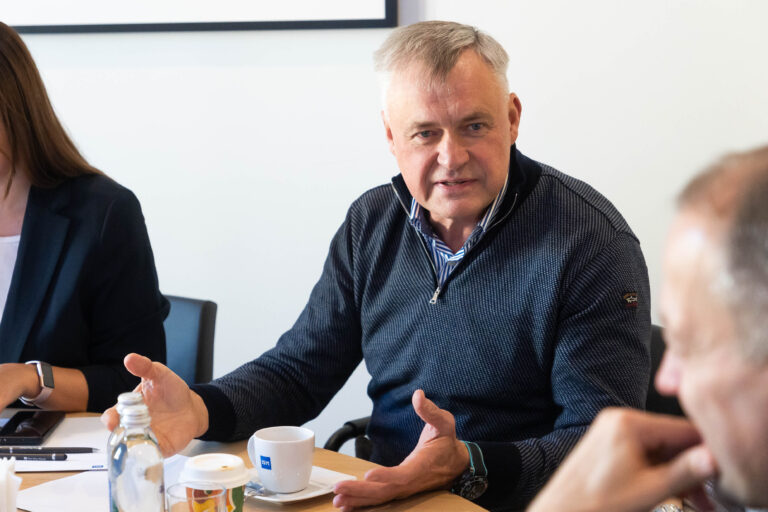
„Leadership and management are not competencies that can be mastered simply by reading textbooks. They are developed by tackling real-life situations, working in teams, making decisions, and learning through practical experience. That is why our goal is to ensure that students encounter real organisational challenges while they are still studying,“ says Dr Laima Jesevičiūtė-Ufartienė, Associate Professor at the VILNIUS TECH Faculty of Business Management and Head of the Bachelor’s programme in Organisational Strategy and Leadership.
From the classroom to real organisational challenges
This philosophy forms the foundation of the VILNIUS TECH Bachelor’s programme Organisational Strategy and Leadership. Students go beyond classroom learning by analysing real-life business and public sector cases, visiting companies, meeting industry leaders, and developing solutions to genuine organisational challenges.
The programme is built around problem-based learning (PBL), allowing students to apply theoretical knowledge in practice from the very beginning of their studies. They develop strategic thinking, organisational analysis, decision-making, teamwork, and change management skills—competencies that are highly valued across both the private and public sectors.
„It is important for us that students not only understand management theories but also know how to apply them in real-life situations. Throughout their studies, they continuously work on practical cases, solve organisational problems, and learn to make well-founded decisions,“ explains the programme leader.
International Experience Beyond Student Exchange
International projects are another key element of the programme, giving students the opportunity to collaborate with peers from other countries while tackling real business challenges.
One example is the international MICENE (Meetings, Incentives, Congresses and Events – Next Evolution) project, where students worked in multinational teams, addressed organisational challenges, and explored AI-powered learning tools.
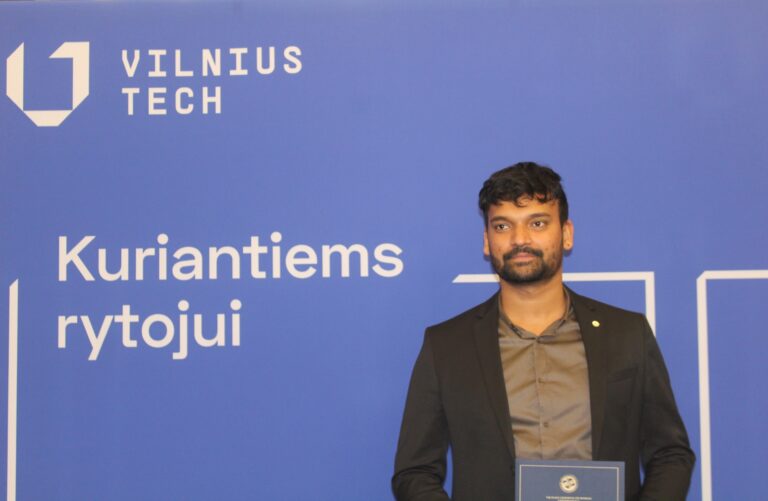
One of the participants, student Mark Kazakevič, says the project broadened his understanding of business.
„Participating in the MICE project gave me valuable experience that I will definitely be able to use in the future. First, I learned what the MICE industry is, how such events are organised, how many partners are involved, and what responsibilities each of them has. Working in an international team also helped me better understand people from different countries, their cultures, and their approaches to work. I truly enjoyed the project and would recommend everyone to take advantage of opportunities like this. It’s an excellent way to gain new knowledge, valuable international experience, and build meaningful connections,“ he says.
According to Dr Jesevičiūtė-Ufartienė, experiences like these help students develop not only professional expertise but also intercultural communication, collaboration, and leadership skills that are increasingly valued in the global labour market.
Academic projects that become professional experience
Student projects are not confined to university coursework. Throughout the programme, students apply research methods and data analysis tools to solve real organisational challenges and present their findings at academic and professional conferences.
Already in their second year, students demonstrate their ability to conduct qualitative research and present their results to both academic and business audiences.
Barbora Bakutytė, a student in the Organisational Strategy and Leadership programme, recalls participating in the scientific-practical conference Business Issues Through the Eyes of Future Professionals 2026.
„Together with my classmates, we presented a paper titled ‘Evaluating Employee Motivation in Remote Work’. We wanted to participate because it was a great opportunity to put the knowledge we had gained during our studies into practice, present our work, and learn from other speakers. The entire process—from analysing the topic and writing the paper to presenting it at the conference—was an extremely valuable experience. I am convinced that the knowledge, teamwork skills, and public speaking experience I gained will benefit me not only in my future studies but also in my professional career. The conference was exceptionally well organised, and I am very grateful to have had the opportunity to take part,“ she says.
Tomorrow’s organisations will need leaders, not just specialists
Today’s organisations are looking for people who can do more than perform their assigned tasks. They need professionals who understand the broader organisational context, can unite teams, drive change, and think strategically. That is why the programme places strong emphasis not only on management but also on leadership, organisational behaviour, strategic management, project management, business analytics, and decision-making.
„Our goal is to educate people who are capable not only of adapting to change but also of driving it. Future leaders will need much more than professional expertise—they will have to inspire people, make decisions in complex situations, and create long-term value for organisations,“ concludes Dr Jesevičiūtė-Ufartienė.