Core values and a professional team: Alvyde Palaimaite’s path to the top of European marketing

July 20, 2026

Entrepreneurship, leadership, continuous growth, and the ability to adapt to a constantly changing environment are today inseparable from a successful career. The story of VILNIUS TECH alumna Alvyde Palaimaite shows that the courage to try, creative problem-solving, and connections formed during studies can become a strong foundation for an international career.

Today, Alvyde holds a responsible position at the European Marketing Confederation and vividly remembers her first lessons in her parents’ business as well as through the experience of the student representation. We speak with Alvyde about her professional transformation, the teachers who believed in her, and the modern specialist’s need for constant change.
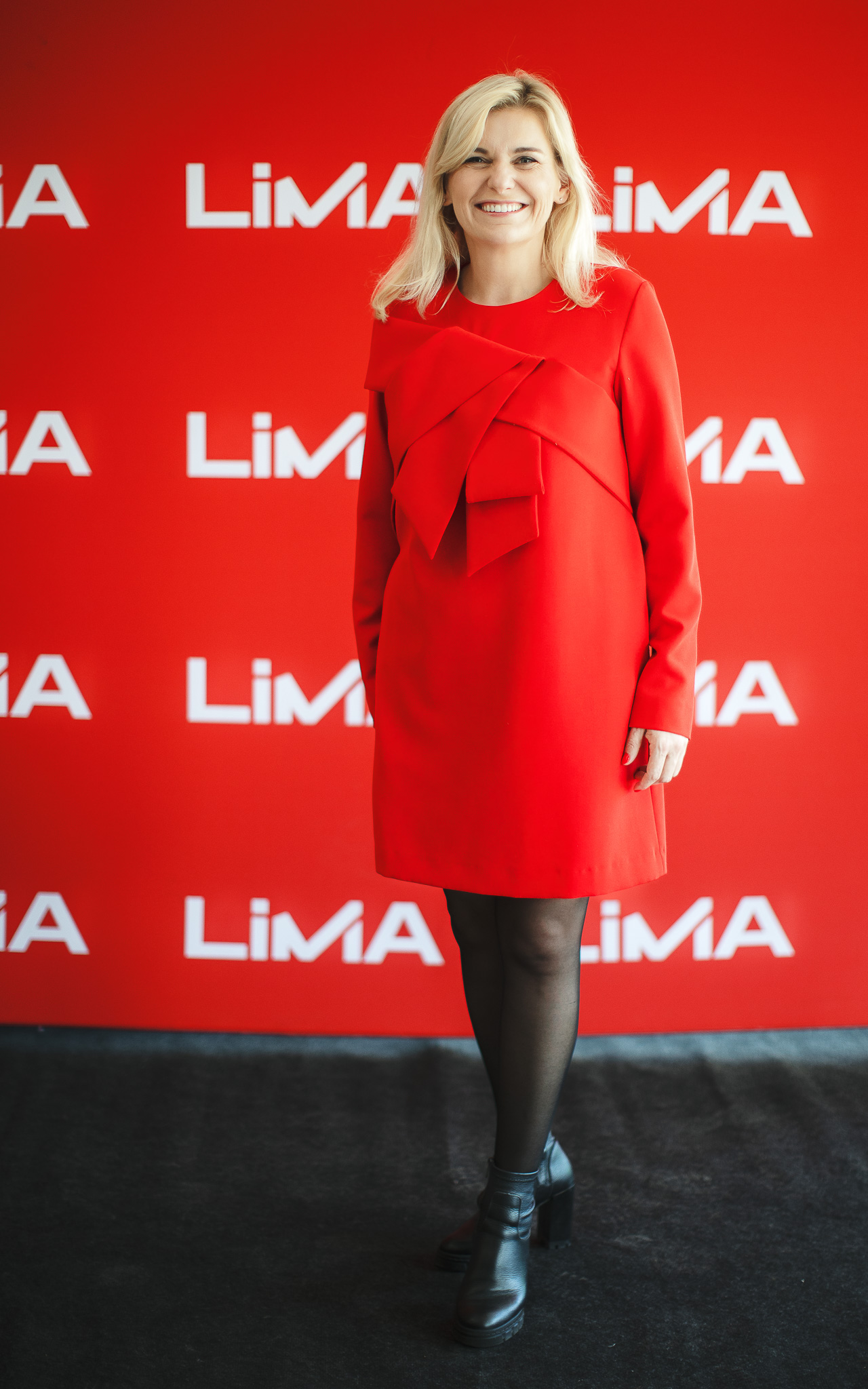
Alvydė Palaimaitė

Alvydė Palaimaitė

Alvyde, let’s briefly go back to your student years. You completed a bachelor’s degree in International Relations Management and later a master’s degree in International Business at VILNIUS TECH. Why did you choose these studies and this university?

From an early age, I observed and contributed to my parents’ small business, so I realized quite early that one day I would want to also create my own. In 2004, when choosing my studies, I understood that modern business requires not only managerial but also technological knowledge. That is why I chose VILNIUS TECH, which offered the opportunity to combine these fields.

How do you remember your student years today?

I am a very active person, so I quickly got involved in both my study group and the student representation. I especially enjoyed the team in the student representation as we were full of meaningful ideas. Although we had a minimal budget, we still managed to implement many wonderful projects. Even then, I realized that with a good team nothing is impossible!

What knowledge, skills, or values acquired at university do you consider the most important in your professional work today?

The knowledge and practice in management, economics, technology, and finance acquired during my studies were also useful when I started working. The university taught me how to search for information, systematize it, and solve problems creatively. These skills are still valuable today.

Alvydė Palaimaitė

Alvydė Palaimaitė

Interestingly, during my bachelor’s studies I focused on institutional management, choosing the field of international relations management. In my second year, I became marketing manager of the student representation, and during my master’s studies I chose international business. At the time, I did not expect or plan that I would work in this field in the future. While finishing my master’s studies, I created the international startup Beta.lt, which I successfully sold. Then I started looking for meaningful projects and got involved in the non-governmental sector: I led the Lithuanian Marketing Association (LiMA) for 8 years, and now I serve as Executive Director of the European Marketing Confederation.

Both my parents’ example and my studies showed that the most important thing is to believe in what you do, work consistently, and never give up, because there are no situations without solutions. I am a dedicated person, and a strong value base is very important to me, so I am glad that my experience allows me to choose meaningful projects. Of course, wherever you go, the most important thing is the team. I am extremely happy that I met so many wonderful people at the university with whom I still keep in touch, collaborate, and support each other.

How did your first steps after graduation look? Was it difficult to enter the labor market?

While representing the student organization, I actively contributed to organizing Career Days, so I was already noticed by potential employers during my studies. Because of this, after graduation I did not need to look for a job myself – several companies participating in the events offered me positions. However, I chose to work in a newly established marketing and communication company because, aiming to create my own business in the future, I wanted to see closely how a company is built and learn from real situations and others’ experience.

Alvydė Palaimaitė

Alvydė Palaimaitė

What is your relationship with the university today?

During my studies I met many excellent lecturers and fellow students, some of whom I still communicate with today. One of the most significant experiences was working with my bachelor’s and master’s thesis supervisor, Assoc. Prof. Dr. Asta Radzeviciene. Her highest-level professionalism, attention to quality, sincerity, and ability to reveal a student’s potential – sometimes believing in them more than they believe in themselves – led not only to excellent results but also to a long-term friendship. She was and remains an example of a personality of a great lecturer and mentor for me. For many years, through LiMA, we were partners of VILNIUS TECH, and today I actively contribute to the university community as an alumna.

You are the Executive Director of the European Marketing Confederation. Alvyde, what decisions or experiences were essential in reaching your current position?

For eight years I represented the European Marketing Association (EMC) and was a member of its board. Three years ago, I became EMC Vice President, and last year I became Honorary Member. Throughout these years, together with the team, we significantly contributed to the organization’s growth, created and implemented various projects. Therefore, it is especially meaningful for me to return to the organization and become part of its administration, as this role will allow me to further develop initiatives more effectively, strengthen member growth, and contribute to the advancement of the marketing profession internationally.
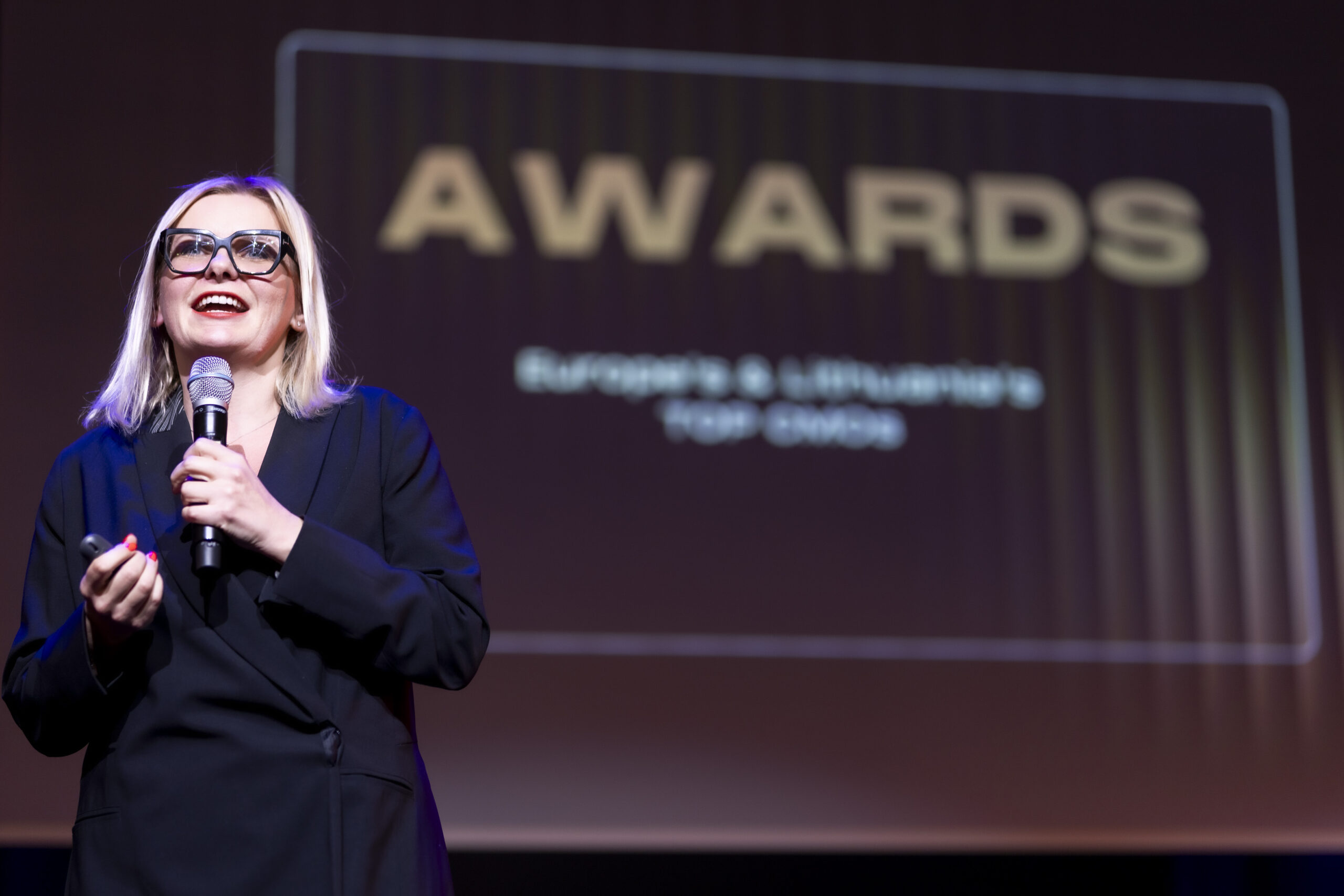
Alvydė Palaimaitė

Alvydė Palaimaitė

How do you evaluate current marketing trends, and how will they change in the future?

Artificial intelligence (AI) is influencing the marketing and advertising sectors, so those who can effectively use AI tools in their work will gain the greatest advantage. This will not only increase efficiency but also strengthen the role of marketing within organizations and create even greater value for consumers.

What skills are becoming especially important for young professionals today?

In the age of artificial intelligence and digitalization, critical thinking, creativity, values, curiosity, and continuous learning are more important than ever. It is said that today’s students will change about five professions during their lifetime, so I encourage everyone to choose what they like, learn a lot, and pursue their dreams.

Prepared by: Kristina Lazickiene

Related news

Photography Exhibition "Leaving My Body" by Ieva Mizgeraitė
We invite you to visit the photographic exhibition "Leaving My Body" by VILNIUS TECH alumna Ieva Mizgeraitė. This collection is a journey through a woman's inner world – through the body, emotions, self-discovery, and the attempt to look at oneself from the outside. In her work, the photographer explores a body that does not always conform to society's expectations, situations beyond our control, the masks we see around us and sometimes put on ourselves, as well as the constant demand to be strong, equal, and always ready. “Each project was born from a specific emotion – from the noise and dialogue in my mind that arose at that moment. Searching for answers, I left my body and looked at everything from the outside – through the states of my models, their poses, gazes, and bodies. I understood that when you look at yourself from the outside, emotions become temporary. Inner dilemmas that once seemed permanent begin to dissolve,” the photographer says about the concept behind the exhibition. The exhibition brings together anger, resistance, masks, expectations, and freedom. These are not merely personal themes – they are experiences familiar to many women. The photographer says that she captures not faces, but psychological states. For her, photography has become a way of self-discovery and self-reflection – a form of meditation that helps her step away from the noise of the outside world and better understand what truly matters. The author works predominantly in black and white. She has been professionally active in photography since 2025. The exhibition "Leaving My Body" is an introduction to a deeper journey, which is planned to be presented in Gallery A of the library in November 2026.   The exhibition is on display in the foyer on the second floor of the Central Library.
More
Built a global career: VILNIUS TECH alumna encourages students not to be afraid of engineering
What should you study if you're equally interested in the humanities and the sciences? VILNIUS TECH alumna Katažina Andrukonytė knows this dilemma well. Today, she leads international teams and advises on some of the world's largest energy and infrastructure investments, but when she graduated from school, she had no clear idea which path to choose. „A few setbacks, staying proactive, and choosing the right study programme helped me discover a career that I truly enjoy and find meaningful. If I could give future students just one piece of advice, it would be this: don't be afraid to choose engineering,“ she says. [caption id="attachment_122573" align="alignnone" width="1536"] Katažina Andrukonytė[/caption] Based in Finland, Andrukonytė leads a team at AFRY that works on projects financed by international financial institutions. She coordinates complex energy and infrastructure projects across Europe, Asia, Australia, and other regions, while advising banks, investment funds, governments, private investors, and project developers on investments worth hundreds of millions of euros. Yet more than twenty years ago, she was simply another school graduate trying to decide what to study. Engineering wasn't the original plan „At school, I was equally interested in the humanities and the sciences. I explored several study options, including law. To be honest, engineering wasn't my dream. After I wasn't admitted to my first-choice programme, I decided to study engineering instead—and looking back, it was one of the best decisions I've ever made,“ she recalls. At VILNIUS TECH, she completed a Bachelor's degree in Environmental Engineering Technologies, followed by a Master's degree in Environmental Engineering and Management. Later, encouraged by her employer, she also earned a Master's degree in Building Energy Engineering. „What surprised me most was how quickly employers started recruiting engineering students. I had barely started my master's studies before companies were already competing to hire us,“ she says with a smile. Finding the right specialisation While studying, Andrukonytė realised that environmental engineering offers a wide range of career opportunities. She also understood the importance of identifying an area where she could apply her knowledge in practice. The turning point came when the company where she was already working encouraged her to specialise in energy engineering. „My employer was looking for specialists in the energy sector and suggested that I continue my studies in Building Energy Engineering. They even covered my tuition because qualified professionals were in such high demand. That's how I found the field I wanted to build my career in,“ she explains. Today, she believes this approach can benefit many young people: first gain a broad engineering education that opens multiple career paths, then discover the area you are most passionate about. More than a degree Although the studies were challenging, Andrukonytė believes they gave her a strong professional foundation. „There was certainly plenty of mathematics and physics, but engineering is much more than formulas. The difficult subjects are simply part of the learning process—you have to work through them,“ she says. For her, however, the greatest value of studying at VILNIUS TECH lay beyond the classroom. „The university offered countless opportunities to get involved in projects, competitions, international summer schools, and exchange programmes. I made the most of them. During my studies, I had the chance to study and complete internships abroad six times. I visited the Czech Republic, Denmark, Italy, South Korea, Finland, and Sweden. Those experiences showed me just how many doors an engineering education can open,“ she says. Engineering opens doors around the world Today, Andrukonytė lives in Finland with her family and works for AFRY, one of Europe's leading engineering, design, and consulting companies, employing around 19,000 specialists in more than 40 countries. For the past 15 years, she has worked on international energy and infrastructure projects, advising banks, investment funds, project developers, and investors. Her work brings together professionals from many different fields, including engineers, financial experts, investors, municipal authorities, and international organisations. „Over the past few years, we've seen growing investment in biomethane, hydrogen, renewable energy, hybrid energy systems, energy storage, district heating, power generation, and decarbonisation projects. Technical expertise is essential, but so are communication, negotiation, and project management skills. My role is to bring together specialists from different backgrounds and help them work as one team. That's why I always say engineering isn't only for people who love numbers. There is plenty of room for people with strong communication and interpersonal skills as well. Energy is a global industry, and if you're a skilled engineer, your expertise will be valued anywhere in the world.“
More