October 24 marks International Climate Action Day, with a tree often serving as its symbol. By absorbing carbon dioxide and storing carbon, forests help regulate the climate, sustain the water cycle, and provide a home for thousands of life forms. Therefore, deforestation and forest conservation are urgent issues not only for nature enthusiasts: the growing use of wood in manufacturing poses a challenge to both the climate and scientists.
One way to reduce deforestation is the reuse of wood waste and the manufacturing of materials from other agricultural residues. Lithuanian researchers are currently studying artificial wood made from wheat, straw, hemp, and other cultivated crops. Could the technology they are developing become an eco-friendly alternative to conventional timber?
Giving Waste a Second Life
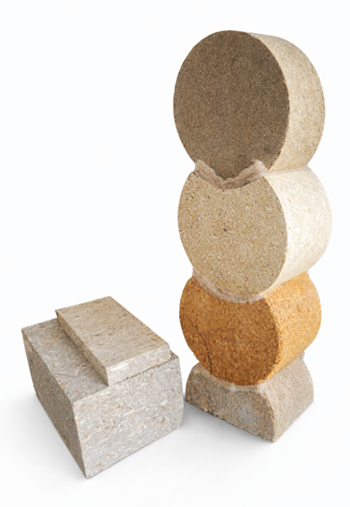
Artificial wood is a material formed from wood or other plant-based particles bound together using a binder.
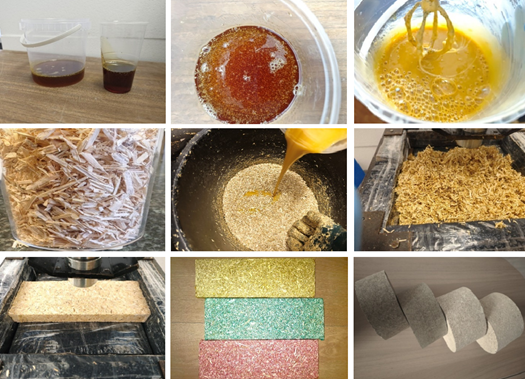
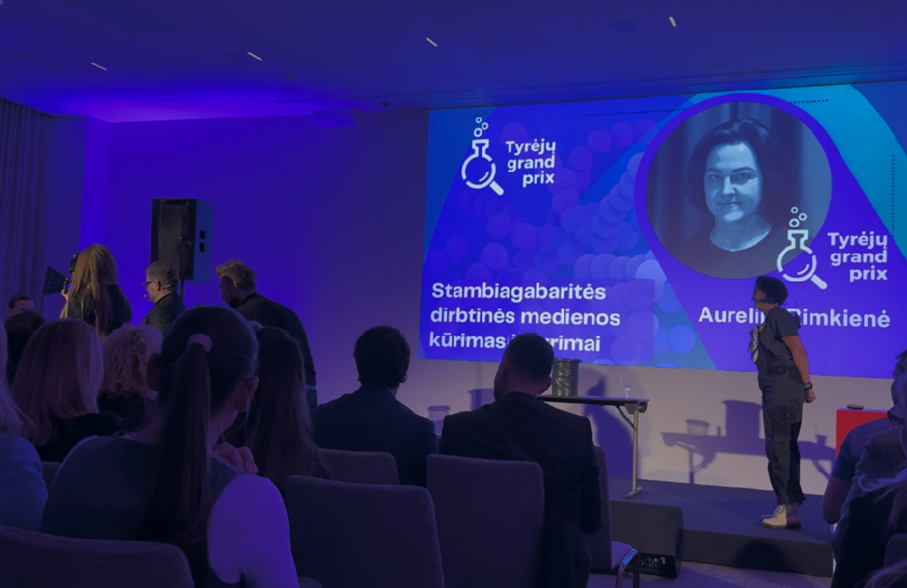
“The artificial wood we are developing is based on conventional wood manufacturing principles: by utilizing wood particles, including wood waste, we can form large-dimension products. The primary distinction of our technology is that no external heating is required during product shaping: the binder cures through an exothermic chemical reaction that releases heat. This eliminates the energy consumption typically required for external heating. If heat is generated by burning fossil fuels—such as natural gas, coal, or wood—CO₂ is emitted; thus, lower heat demand can help reduce emissions that drive climate change,” explains Aurelija Rimkienė, a researcher at the Faculty of Civil Engineering at VILNIUS TECH.
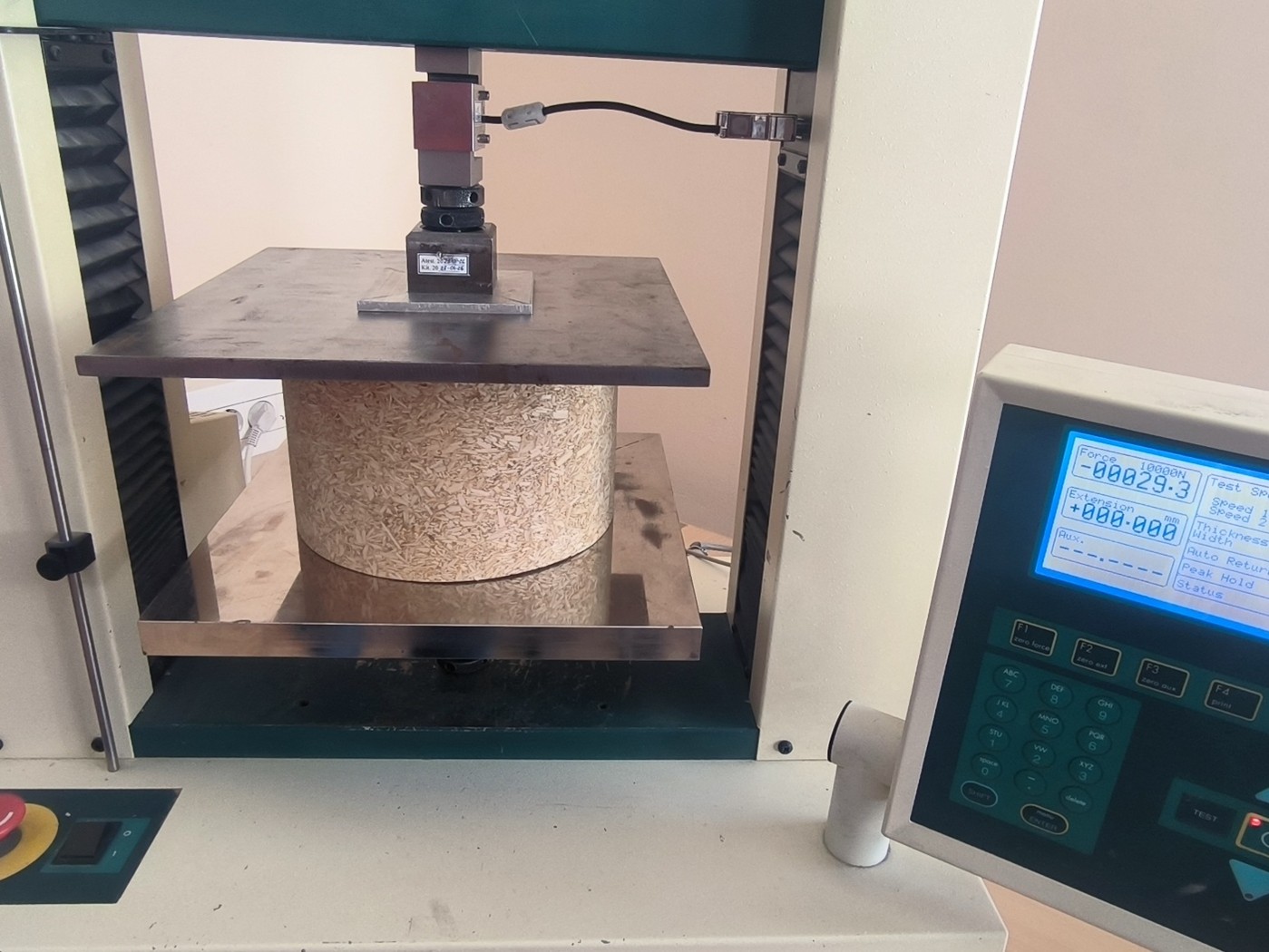
In the future, this material could be used to manufacture furniture, interior elements, structural building components, and custom-shaped items. This gives wood waste a second life. The research team continues to investigate ways to make the material more resistant to rain, sunlight, and temperature fluctuations so that it can be used outdoors as well as indoors.
Furthermore, artificial wood can replace many conventional materials used for building envelopes. It can be used to produce logs, beams, blocks, and various finishing elements. Artificial wood also holds a significant advantage over natural timber because additives can be introduced into the mixture during production to enhance its performance—for example, making it fire- and water-resistant, or granting it diverse shapes, dimensions, and colors.
How Plant Waste Can Help Fight Climate Change
One of the greatest advantages of artificial wood is its potential to reduce carbon dioxide emissions—a goal of utmost priority for VILNIUS TECH researcher A. Rimkienė and her colleagues working on climate change mitigation.
Nearly any cultivated or wild plant and its parts can be utilized in the production of artificial wood. In Lithuania, such wood could be manufactured from locally grown wheat, barley, oats, rye, triticale, rapeseed, and corn straw, as well as agricultural processing residues (e.g., chaff), wood processing residues (branches, crooked stems, offcuts, shavings, sawdust, etc.), fibrous plant stalks (flax, hemp), various grasses, seaweed, dried fallen leaves, and more.
“In Lithuania, where wheat is the predominant crop, large volumes of straw are generated. Farm machinery also collects crop residues, making them easy to use for biofuel, compost, animal bedding, and similar purposes; however, such uses release methane and/or carbon dioxide. Meanwhile, by utilizing straw in the production of artificial wood, carbon compounds are sequestered in a solid state within the material for 25 to 100 years. This delays their release into the atmosphere as CO₂ and, compared to the anaerobic decomposition of straw, also prevents methane formation,” explains the researcher.
Nevertheless, although wheat straw is generated in the largest volumes in Lithuania, a single hectare yields only 3–5 tons. When seeking to sequester larger amounts of carbon, cultivating industrial hemp would be more advantageous, yielding an average of 6–10 tons of dry biomass per hectare annually, with carbon making up roughly 45–50% of the plant’s dry weight.
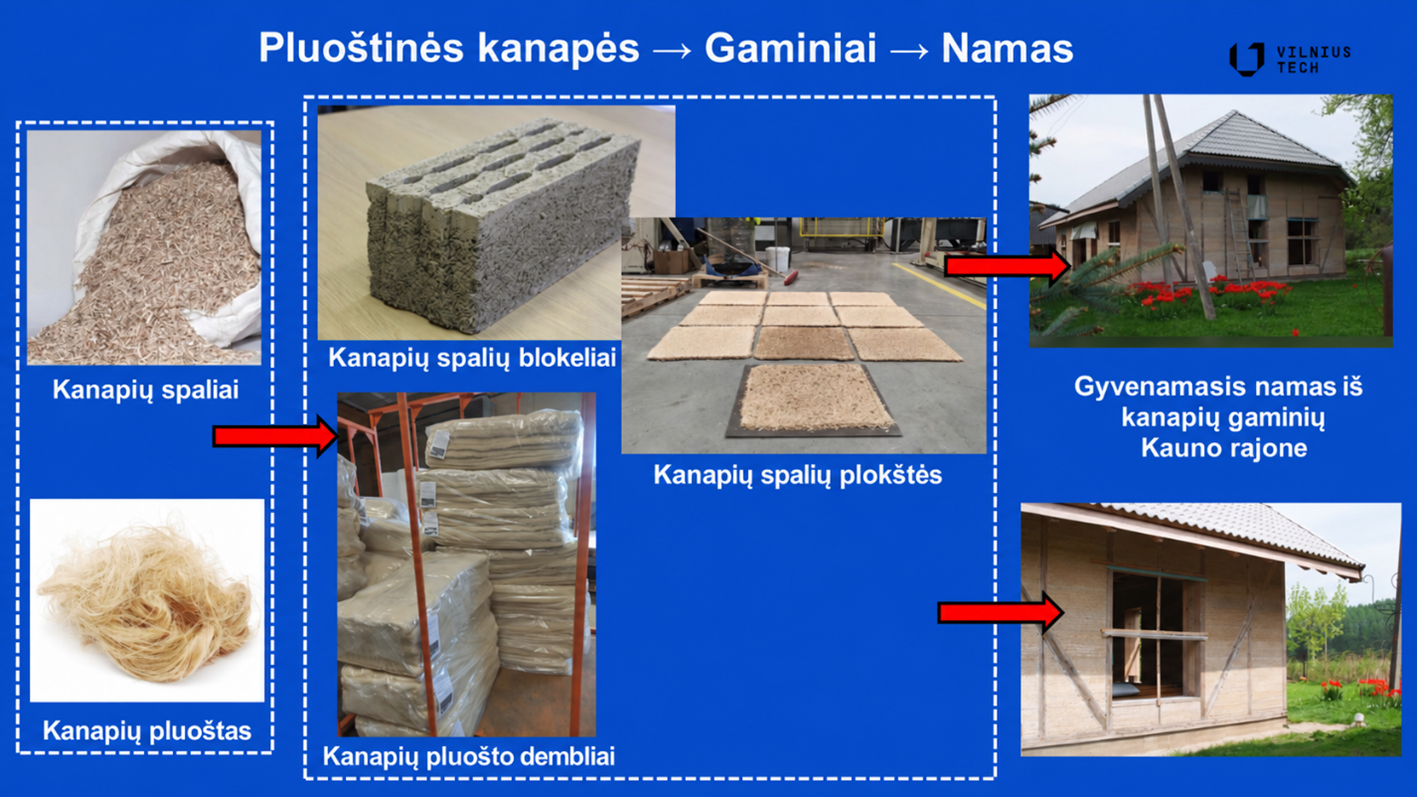
Another advantage is that organic binders derived from renewable raw materials—or those in which fossil-based components are partially substituted—can be used instead of synthetic chemical adhesives. Their benefit lies in reducing the dependency on fossil feedstocks. In the Laboratory of Thermal Insulating Materials and Acoustics, researchers use different binders, such as cornstarch and bio-based polyurethane, to bind various plant-based raw materials, including wood waste, hemp shives (hurds), and barley straw.
By adjusting the raw materials, binders, and manufacturing conditions, materials with varying densities, strengths, and moisture resistance can be obtained. Lighter composites can be formulated for thermal insulation, while denser, stronger variants can be used for boards, furniture components, or non-load-bearing structural elements.
Prolonged Wood Utilization – Less Need for Deforestation
In the fight against climate change, what matters is not only what raw materials we use, but also how long the resulting products remain in service. The technology developed by Lithuanian researchers allows wood waste to be transformed into new, large-dimension products, thereby reducing the demand for virgin timber and preserving the value of harvested wood for longer.
“As trees grow, they sequester carbon dioxide from the atmosphere, and that carbon remains stored in the wood and wood-derived products. Instead of burning waste immediately, we can repurpose it to manufacture durable new goods, thereby extending the carbon storage period. Therefore, we associate the potential of this material with longer wood life cycles, reduced demand for virgin resources, and the ability to delay the release of carbon back into the atmosphere,” explains A. Rimkienė.
Once a wood-based product reaches the end of its service life, the primary goal would be to recycle or repurpose it. One viable recycling path is shredding the material to use it as raw feedstock for new products, such as large-scale engineered timber. This curtails the need for newly felled wood and extends carbon storage in end products.
“While conventional timber requires felling forests, manufacturing this alternative would likely require no additional land, as it would make more efficient use of existing fields, residual agricultural crops, and other wood waste. Nevertheless, artificial wood faces challenges competing with conventional timber because logging is currently not subject to any direct pollution tax,” the researcher notes.
Researchers Prepare for the Next Stage
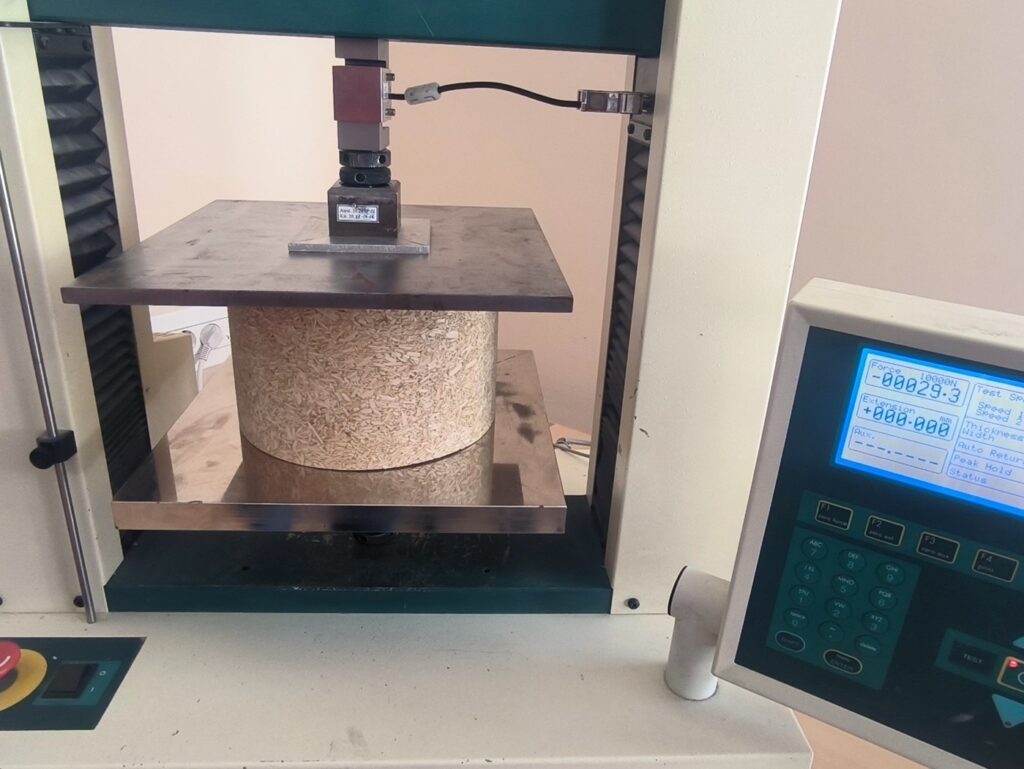
The artificial wood developed from plant waste by VILNIUS TECH researchers is undergoing further studies to assess its properties, durability, application potential, and life-cycle environmental impact—from raw material preparation to product reuse, recycling, or final disposal. Meanwhile, the team has already filed a patent application for a reinforced artificial wood composite made from organic waste and a polyurethane binder, as well as a method for manufacturing structural building components.
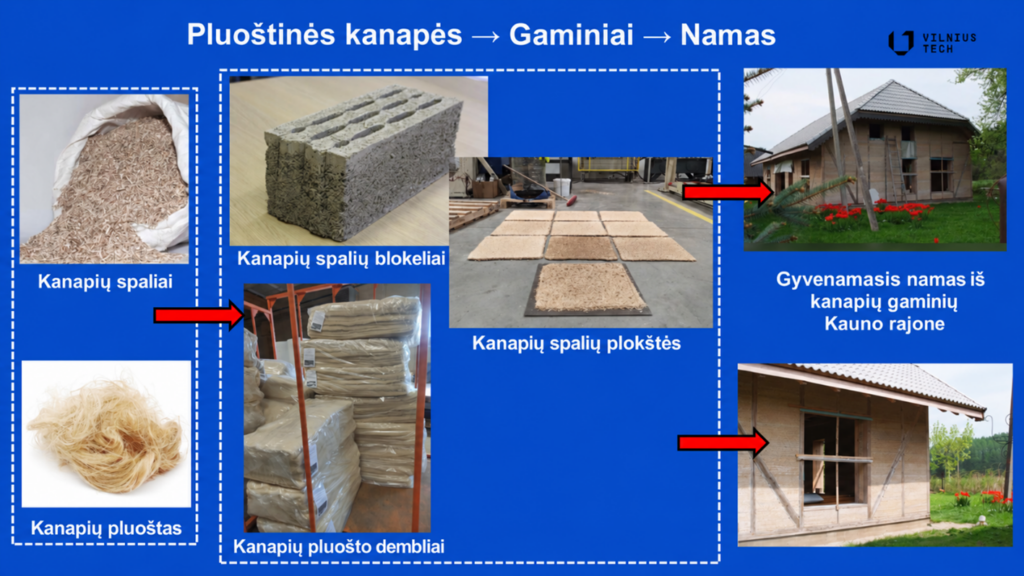
The patent application describes a material composed of hemp shives, polyurethane, and fiberglass reinforcement, which can be formed into large-scale building products.
“Representatives of the construction sector have already shown an interest in these materials. This encourages us to continue improving their properties, investigating their long-term durability, and seeking opportunities to move from laboratory prototypes to practical applications,” says researcher Aurelija Rimkienė.
Galerija