Dr. Dey’s model for more economical and safer construction

November 9, 2023
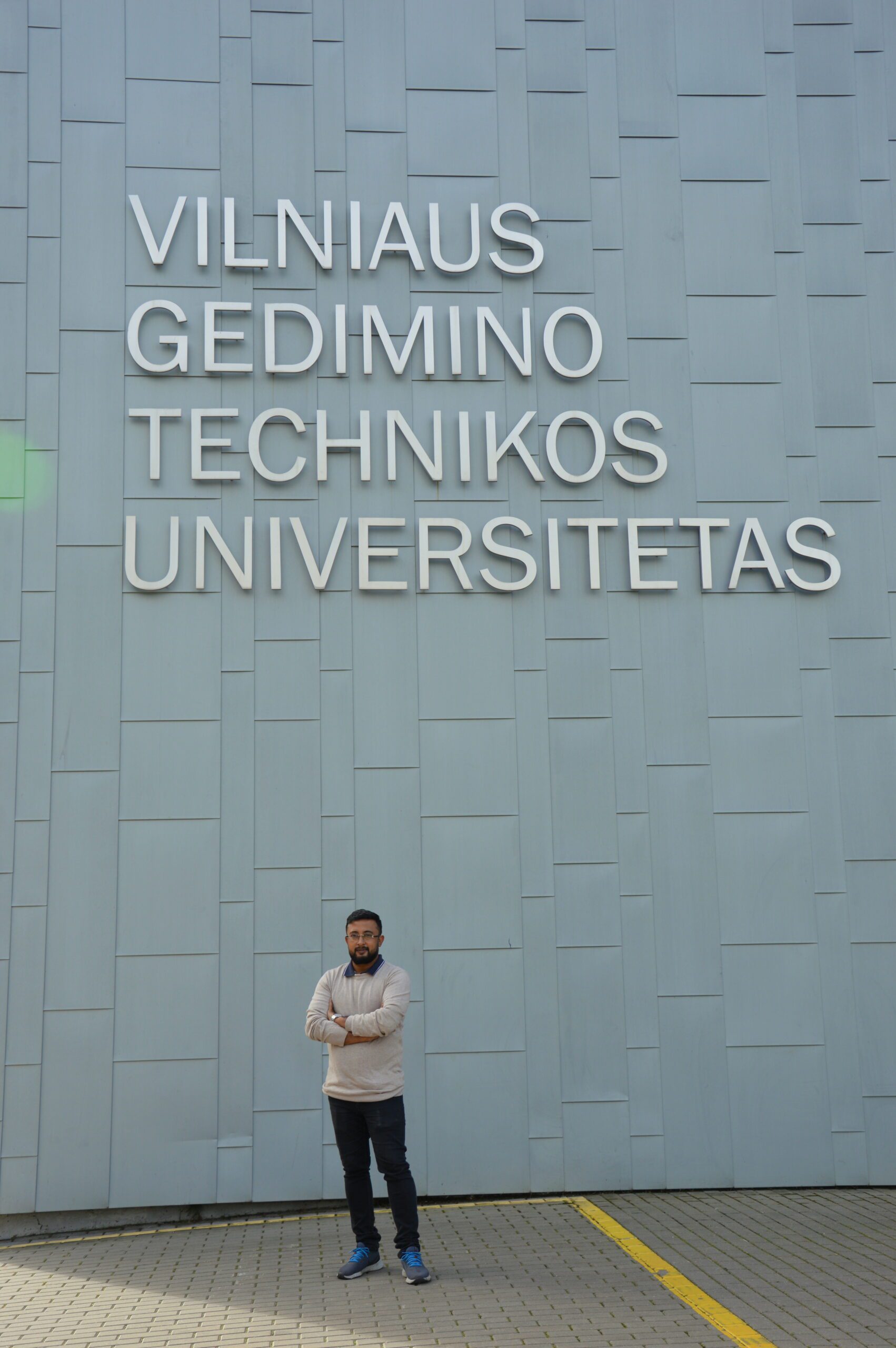
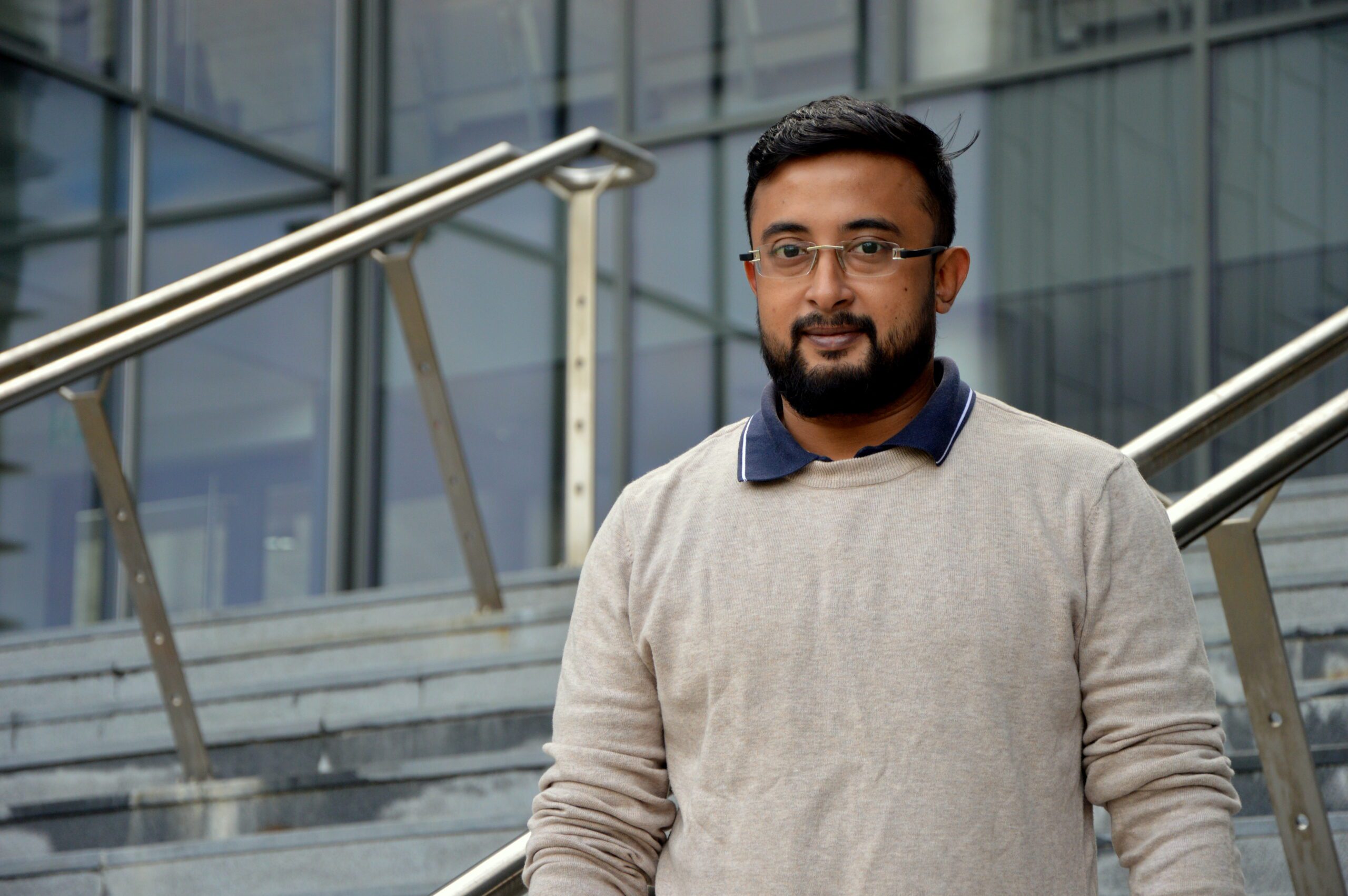
The construction industry is one of the world's most important and evolving industries. With the increasing demand for sustainability and longevity, researchers are constantly looking for innovative solutions and technologies to improve the industry. One of such scientists is Dr. Alinda Dey, who came from India to study at the Faculty of Civil Engineering of Vilnius Gediminas Technical University (VILNIUS TECH).
 
Created a new model
 
This autumn, A. Dey defended his doctoral dissertation at VILNIUS TECH University, where he researched the interaction of reinforcement and concrete. According to him, such analysis is important because these are the two most popular construction tools in the world. However, because we cannot see the processes happening inside them, we cannot predict the behaviour of concrete, which can later lead to cracks or deformation.
 
"My goal was to create a mathematical model that examines the relationship between stress and strain, the phenomenon of concrete and reinforcement connection. The model I developed will help predict when this will happen, where cracks may appear, their size, the distance between two cracks, and whether the structure will become unstable.This is the priority of my work – to predict the problems," explains Dr. A. Dey, summarizing the essence of his scientific work.
 
Dr. A. Dey used a variety of sensors and devices to investigate what was happening inside the reinforcement. 
 
"It's very delicate because you have to cut the reinforcement, install the devices, which have their own wear and tear, glue them together, cast them and put the concrete inside. Once the concrete has hardened, it has to be immersed in water. This must be done very carefully to prevent the devices from getting wet, as the gap cannot receive moisture. It is then placed in the device, a load is applied to it and the devices provide data because they are connected to computers and adaptors that record everything," the VILNIUS TECH researcher details the process.
 
New tool to help designers create safer structures
 
The model and findings of Dr. A. Dey's work can change the way buildings are designed in the future. Although a number of other models already exist, they are not sufficiently accurate or precise, so as a doctoral student, together with his supervisor, Prof. habil. Gintaras Kaklauskis, Dr. A. Dey saw the need to develop a new model that could be used by a wide range of companies and organizations, thus creating a significant tool for designers and contributing to safer construction.
 
"My model anticipates problems, which will help people to make creative decisions in a timely manner to prevent cracks, reduce vibrations and ensure structural stability. These problems can be avoided if the design is based on our proposed model, which is also very cost-effective. Such a project is relevant to society – it would ensure more economical, safer, and longer-lasting construction. The lifetime of the structure could be extended by 50-100 years," says Dr. A. Dey.
 
Interviewed and photographed by Milda Mockūnaitė-Vitkienė, Internal Communication Project Manager.

Galerija
Related news

From car enthusiast to well-paid engineer: Dominykas turned his passion into a career
A lifelong fascination with cars, a desire to understand how complex systems work, and a curiosity to find better engineering solutions led Dominykas Eičinas to study Automotive Engineering at VILNIUS TECH. After completing both his bachelor's and master's degrees, he now works as a vehicle engineer and enjoys the fact that his passion has become a well-paid profession. Asked why he chose to study Automotive Engineering after graduating from school, Dominykas says the decision was inspired by his childhood interest in technology. [caption id="attachment_122203" align="alignnone" width="2560"] Dominykas Eičinas[/caption] "My father competes in karting races, so from an early age I was fascinated by cars. I built them out of LEGO, constantly taking things apart and putting them back together. I still remember that when I was about ten years old, I built an independent car suspension from LEGO pieces. It was surprisingly realistic, complete with driveshafts and a differential. Looking back, I think that was probably the moment my engineering mindset began to develop," recalls the VILNIUS TECH alumnus. Dominykas admits that not every STEM subject came easily to him at school. Physics was not his strongest subject, and mathematics also required considerable effort. However, that did not prevent him from successfully enrolling in the Automotive Engineering programme. "The most important thing is the willingness to learn and to work consistently. Results come with dedication and effort," he says. The best part: seeing ideas become reality During his studies, the most memorable experience for Dominykas was the practical coursework and designing with SolidWorks. Although he had first encountered the software at school, it was only at university that he truly discovered its full potential. "At first, it seemed incredibly complicated, but our lecturers explained how to use it during classes. That's when I realised it was a creative tool—you can design almost anything you can imagine. What impressed me even more was the moment when a vehicle model (or any other design) created on a computer became a real product," he says. [caption id="attachment_122207" align="alignnone" width="2560"] Faculty of Transport Engineering[/caption] He also enjoyed laboratory work, where students could observe changes in vehicle parameters, perform measurements, and analyse real engineering data. A Master's degree as a competitive advantage After completing his bachelor's degree, Dominykas decided to continue with a master's programme. His decision was driven not only by a desire to deepen his professional knowledge but also by the goal of becoming more competitive in the labour market. He began actively looking for a job a few months before graduation and received an offer quite quickly. Today, he works as a vehicle engineer at a company specialising in van conversions and the design of customised vehicles. Together with his colleagues, he develops a wide range of minibuses—from school and intercity transport to premium business-class vehicles. "Every project is different. Clients' needs are constantly changing, so no two working days are ever the same. We are always looking for new solutions, discussing ideas as a team, and creating custom projects," he explains. Demand for engineers continues to grow According to Dominykas, Automotive Engineering graduates have little difficulty finding employment, and even those without previous work experience can expect a competitive salary. [caption id="attachment_122205" align="alignnone" width="2560"] Faculty of Transport Engineering[/caption] "I believe the demand for transport engineers will only continue to grow. This profession opens up many career opportunities, and the knowledge you gain allows you to work not only in the transport sector but across many areas of engineering. Automotive Engineering graduates are sought after in vehicle design, manufacturing, component development, product engineering, and many other engineering companies. And if you manage to turn your hobby into your profession, as I did, every working day becomes enjoyable," he says. A passion for virtual motorsport Even after work, Dominykas never strays far from cars. For many years, he has been passionate about virtual motorsport. "My father races karts, so cars have always been an important part of our family. I even have a photo of myself at around four years old, gripping the steering wheel of a racing simulator in front of a computer screen, already 'racing'. Real-life motorsport requires a huge financial investment, while virtual racing allows me to experience much of the same excitement at a fraction of the cost," he says. While studying at VILNIUS TECH, he and several like-minded students founded the university's virtual racing team, Automotive Engineers by VILNIUS TECH University. "The team was established in 2022 and competes in various virtual motorsport championships. Since then, we've reached the podium several times and have even won a number of races. It's great to see that the project is still going strong and that new students continue to join the team," he says. Dreaming of the world's leading automotive brands Even while finishing school, Dominykas dreamed of working for one of Germany's major automotive manufacturers. That ambition was one of the reasons he chose to study in English at VILNIUS TECH. Although working for companies such as Volkswagen, BMW, or Porsche remains a future goal, he has not given up on that dream. "For now, I'm very happy in Lithuania. Life sometimes has a way of leading you down the right path. We'll see what the future brings," he says.
More
VILNIUS TECH and Taiwan Continue Cooperation in Science and Technology
A meeting was held at VILNIUS TECH with the Representative of the Taiwanese Representative Office in Lithuania, Constance Hsueh Hong Wang, Executive Director of the Science and Technology Division Prof. Shun-Fen Tzeng, and Head of the Economic Division Sabir Chien. According to VILNIUS TECH Rector Romualdas Kliukas, cooperation with Taiwanese universities is built on a long-term partnership and mutual scientific benefit. Through joint projects carried out over many years, VILNIUS TECH researchers have had the opportunity to conduct significant scientific research. The Taiwanese Representative Office reaffirmed its support for the ongoing initiatives of VILNIUS TECH and its partner universities in Taiwan, particularly in the fields of semiconductors, biotechnology and cybersecurity, as well as for cooperation in developing the activities of the ChipsC²-LT Competence Centre. "The main goal of this cooperation is to nurture young talent in the semiconductor field. Semiconductor technologies are the foundation of Taiwan's success, and we are eager to share this experience. This partnership will serve as a springboard for further cooperation, opening up opportunities for Lithuanian students to undertake internships in Taiwanese laboratories and work with state-of-the-art scientific equipment," said Constance Hsueh Hong Wang, Representative of the Taiwanese Representative Office in Lithuania, during the visit. VILNIUS TECH also invited the Taiwanese Representative Office to join the initiative of establishing an endowment fund. According to Assoc. Prof. Dr Artūras Medeišis, Dean of the Faculty of Electronics, this would give the partnership between the two institutions a long-term strategic dimension and create sustainable value for future generations. Long-Term Cooperation with Taiwan VILNIUS TECH has been cooperating with some of Taiwan's leading universities since 2011. In recent years, the most intensive research collaboration and academic exchange have taken place with the following institutions: National Cheng Kung University (NCKU); National Taiwan University of Science and Technology (Taiwan Tech); National Sun Yat-sen University (NSYSU); National Taipei University of Technology (TaipeiTech). VILNIUS TECH aims to continue its successful cooperation through joint seed grant programmes for collaborative research with TaipeiTech, Taiwan Tech and NSYSU. Over the past two years, more than 30 researchers have jointly implemented 13 collaborative research projects and produced publications in the fields of microelectronics, artificial intelligence, sensors and biosensors, biomechanics and biomedical engineering, robotics and virtual reality, environmental engineering, cybersecurity and process automation, technology commercialisation, and innovation management. Between 2023 and 2026, VILNIUS TECH welcomed 24 incoming exchange students from Taiwan. During the same period, 40 staff members participated in teaching or training mobility visits, while 44 VILNIUS TECH students studied or completed internships at Taiwanese universities. In cooperation with NSYSU, the VILNIUS TECH Faculty of Electronics currently offers two double-degree Master's programmes. The VILNIUS TECH delegation included Rector Romualdas Kliukas, Dean of the Faculty of Electronics Assoc. Prof. Dr Artūras Medeišis, Head of the Department of Computer Science and Communications Technologies Prof. Dr Vaidotas Barzdėnas, Chief Specialist at the Strategic Partnership Centre Jūratė Jurginytė, and Director of the International Relations Office Aleksandra Sokolova. The meeting was also attended by Vytautas Jankauskas, Advisor for Science and Innovation at the Ministry of Foreign Affairs of the Republic of Lithuania.
More