
A lifelong fascination with cars, a desire to understand how complex systems work, and a curiosity to find better engineering solutions led Dominykas Eičinas to study Automotive Engineering at VILNIUS TECH. After completing both his bachelor’s and master’s degrees, he now works as a vehicle engineer and enjoys the fact that his passion has become a well-paid profession.
Asked why he chose to study Automotive Engineering after graduating from school, Dominykas says the decision was inspired by his childhood interest in technology.

Dominykas Eičinas
“My father competes in karting races, so from an early age I was fascinated by cars. I built them out of LEGO, constantly taking things apart and putting them back together. I still remember that when I was about ten years old, I built an independent car suspension from LEGO pieces. It was surprisingly realistic, complete with driveshafts and a differential. Looking back, I think that was probably the moment my engineering mindset began to develop,” recalls the VILNIUS TECH alumnus.
Dominykas admits that not every STEM subject came easily to him at school. Physics was not his strongest subject, and mathematics also required considerable effort. However, that did not prevent him from successfully enrolling in the Automotive Engineering programme.
“The most important thing is the willingness to learn and to work consistently. Results come with dedication and effort,” he says.
The best part: seeing ideas become reality
During his studies, the most memorable experience for Dominykas was the practical coursework and designing with SolidWorks. Although he had first encountered the software at school, it was only at university that he truly discovered its full potential.
“At first, it seemed incredibly complicated, but our lecturers explained how to use it during classes. That’s when I realised it was a creative tool—you can design almost anything you can imagine.
What impressed me even more was the moment when a vehicle model (or any other design) created on a computer became a real product,” he says.
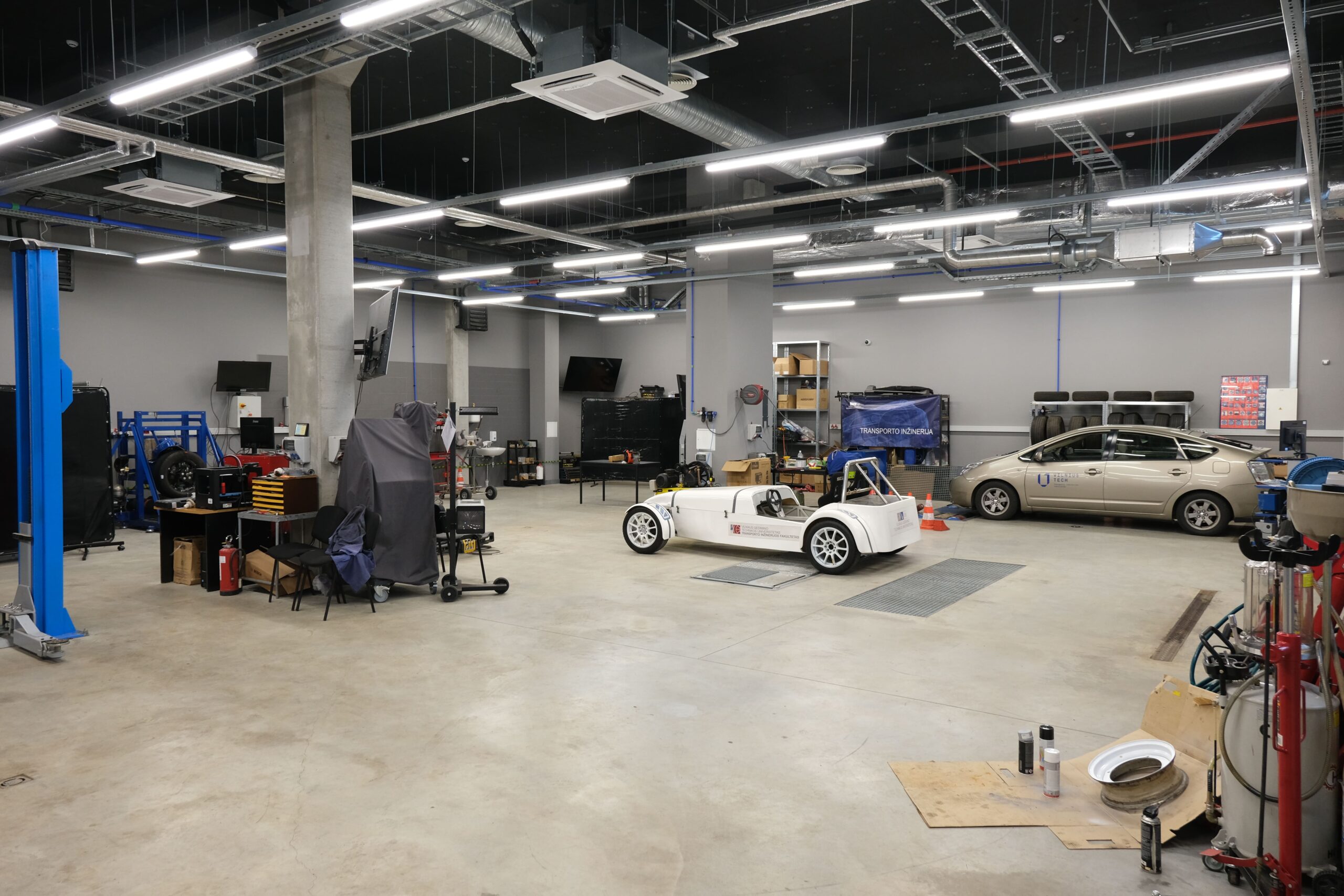
Faculty of Transport Engineering
He also enjoyed laboratory work, where students could observe changes in vehicle parameters, perform measurements, and analyse real engineering data.
A Master’s degree as a competitive advantage
After completing his bachelor’s degree, Dominykas decided to continue with a master’s programme. His decision was driven not only by a desire to deepen his professional knowledge but also by the goal of becoming more competitive in the labour market.
He began actively looking for a job a few months before graduation and received an offer quite quickly. Today, he works as a vehicle engineer at a company specialising in van conversions and the design of customised vehicles. Together with his colleagues, he develops a wide range of minibuses—from school and intercity transport to premium business-class vehicles.
“Every project is different. Clients’ needs are constantly changing, so no two working days are ever the same. We are always looking for new solutions, discussing ideas as a team, and creating custom projects,” he explains.
Demand for engineers continues to grow
According to Dominykas, Automotive Engineering graduates have little difficulty finding employment, and even those without previous work experience can expect a competitive salary.
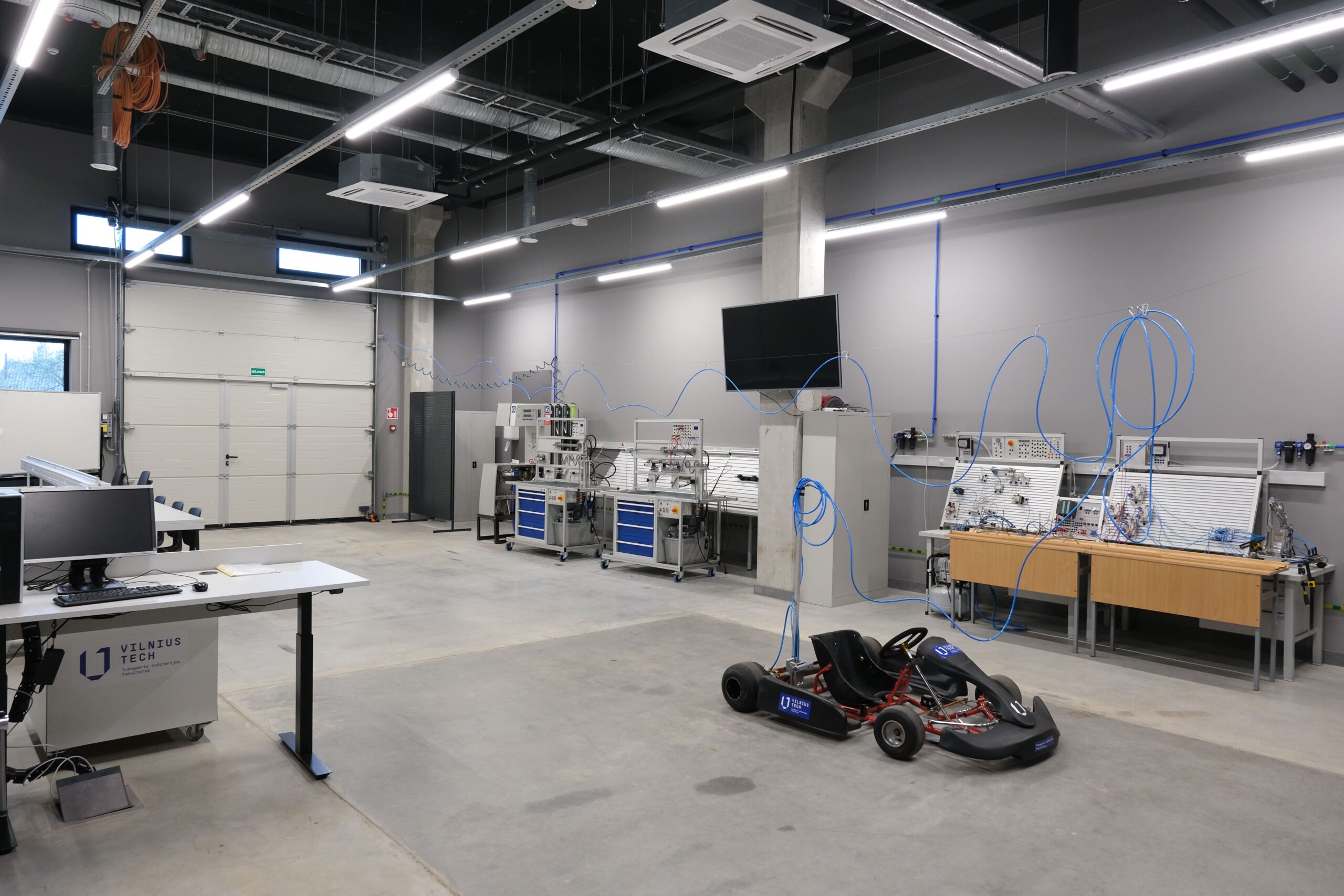
Faculty of Transport Engineering
“I believe the demand for transport engineers will only continue to grow. This profession opens up many career opportunities, and the knowledge you gain allows you to work not only in the transport sector but across many areas of engineering. Automotive Engineering graduates are sought after in vehicle design, manufacturing, component development, product engineering, and many other engineering companies.
And if you manage to turn your hobby into your profession, as I did, every working day becomes enjoyable,” he says.
A passion for virtual motorsport
Even after work, Dominykas never strays far from cars. For many years, he has been passionate about virtual motorsport.
“My father races karts, so cars have always been an important part of our family. I even have a photo of myself at around four years old, gripping the steering wheel of a racing simulator in front of a computer screen, already ‘racing’. Real-life motorsport requires a huge financial investment, while virtual racing allows me to experience much of the same excitement at a fraction of the cost,” he says.
While studying at VILNIUS TECH, he and several like-minded students founded the university’s virtual racing team, Automotive Engineers by VILNIUS TECH University.
“The team was established in 2022 and competes in various virtual motorsport championships. Since then, we’ve reached the podium several times and have even won a number of races. It’s great to see that the project is still going strong and that new students continue to join the team,” he says.
Dreaming of the world’s leading automotive brands
Even while finishing school, Dominykas dreamed of working for one of Germany’s major automotive manufacturers. That ambition was one of the reasons he chose to study in English at VILNIUS TECH. Although working for companies such as Volkswagen, BMW, or Porsche remains a future goal, he has not given up on that dream.
“For now, I’m very happy in Lithuania. Life sometimes has a way of leading you down the right path. We’ll see what the future brings,” he says.