From geography textbooks to laser technologies, from childhood building-block bridges to professional product design – the path to mechanical engineering can be highly diverse. The stories of Silvija, a student at the VILNIUS TECH Faculty of Mechanics, and Deividas, an alumnus, reveal that a successful start in this field doesn’t require dreaming of an engineering career from a young age or being a physics olympiad champion.
From a Love for Geography to Mechanical Engineering
Silvija laughs that she knew almost nothing about mechanical engineering in school. Even in the twelfth grade, she was convinced she would study geography.
“I really liked geography; it was the top choice on my list. I knew almost nothing about mechanical engineering and didn’t really even know what it was,” she recalls. “However, that very ignorance became one of the main reasons to try it. I thought it would be interesting to go into something I knew little about. I wanted something new, something that would broaden my horizons.”
Today, Silvija is deeply immersed in her mechanical engineering bachelor’s studies, having chosen a specialization in renewable energy. For nearly a year and a half, she has been working at one of the largest laser technology companies in Lithuania “Light Conversion”. There, she contributes to the assembly, testing, and quality control of various components, as well as the preparation of technical documentation.

Although she didn’t choose advanced (A-level) physics in high school and didn’t study chemistry at all, this wasn’t an obstacle at the university: “In my first year, it was a bit scary when the professors asked who had taken the national physics exam, and almost the entire lecture hall raised their hands. But they truly explained everything from the basics, so it wasn’t as difficult as I thought.”
Today, she encourages other high school graduates not to fear the stereotypes surrounding this science and to let go of any preconceived notions.
“If even a part of you thinks it would be interesting—you have to try. Mechanical engineering is definitely not a dry or boring science,” says the student.
Early Engineering Attempts – Starting in Childhood
For Deividas Bajorūnas, on the other hand, the choice was much clearer right from childhood. He remembers that engineers always seemed to him like people who could create almost anything.
“In the movies, an engineer was a person who achieved great things with limited resources. That fascinated me,” says Deividas.
As a child, he loved constructing bridges out of building blocks and building various structures, and those around him constantly noticed his strong spatial reasoning. According to the young engineer, this definitely contributed to his decision.
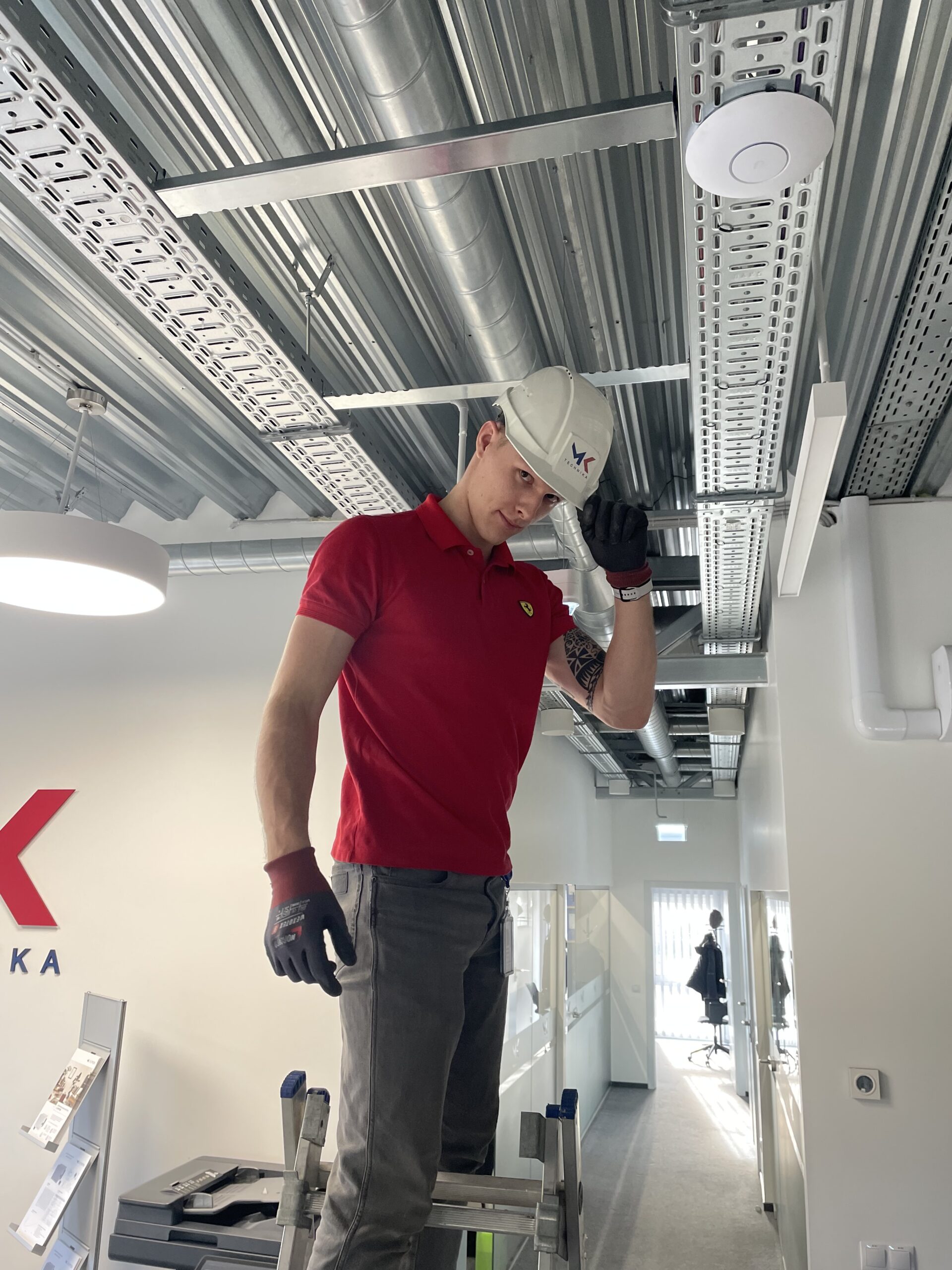
Today, Deividas holds both bachelor’s and master’s degrees in Mechanical Engineering and has been working as a design engineer at the company “MK technika” for three years. He designs, optimizes, conducts inspections, and contributes to design solutions.

According to him, one of the greatest strengths of mechanical engineering studies is the incredibly broad spectrum of knowledge it provides.
“The university taught us more than just design. We studied electrical engineering, fluid mechanics, materials science, and the use of measuring instruments. Even in everyday life, I still get to use that knowledge,” Deividas explains. “However, the most important thing, in my opinion, wasn’t the specific subjects, but the critical thinking that was developed. The university cultivates an engineering mindset. You start thinking about the conditions under which a product will operate, which materials are suitable, how it can be assembled and repaired, and what its ergonomics are.”
Received Job Offers While Still Studying
Both Silvija’s and Deividas’ stories share one common feature: they both started working during their studies.
Silvija got her job at the laser company after an acquaintance from the Student Representation offered her his recently vacated position: “I thought—why not? I wanted to test myself.”
The student shares that today at work, the things she learned at university come in handy—drafting, design knowledge, spatial reasoning, and an understanding of how various mechanisms work, as these are an integral part of her daily routine.
Meanwhile, Deividas gained his first experience during an internship at an optics company, where he manufactured optical lenses: “Because their production had strict requirements and the lenses themselves are extremely fragile, the work had to be done with immense care, precision, and diligence. If you missed the required tolerances or didn’t get the roughness right, the lens had to be thrown away, and you had to start over. But it was one of the first jobs where my engineering education proved useful.”
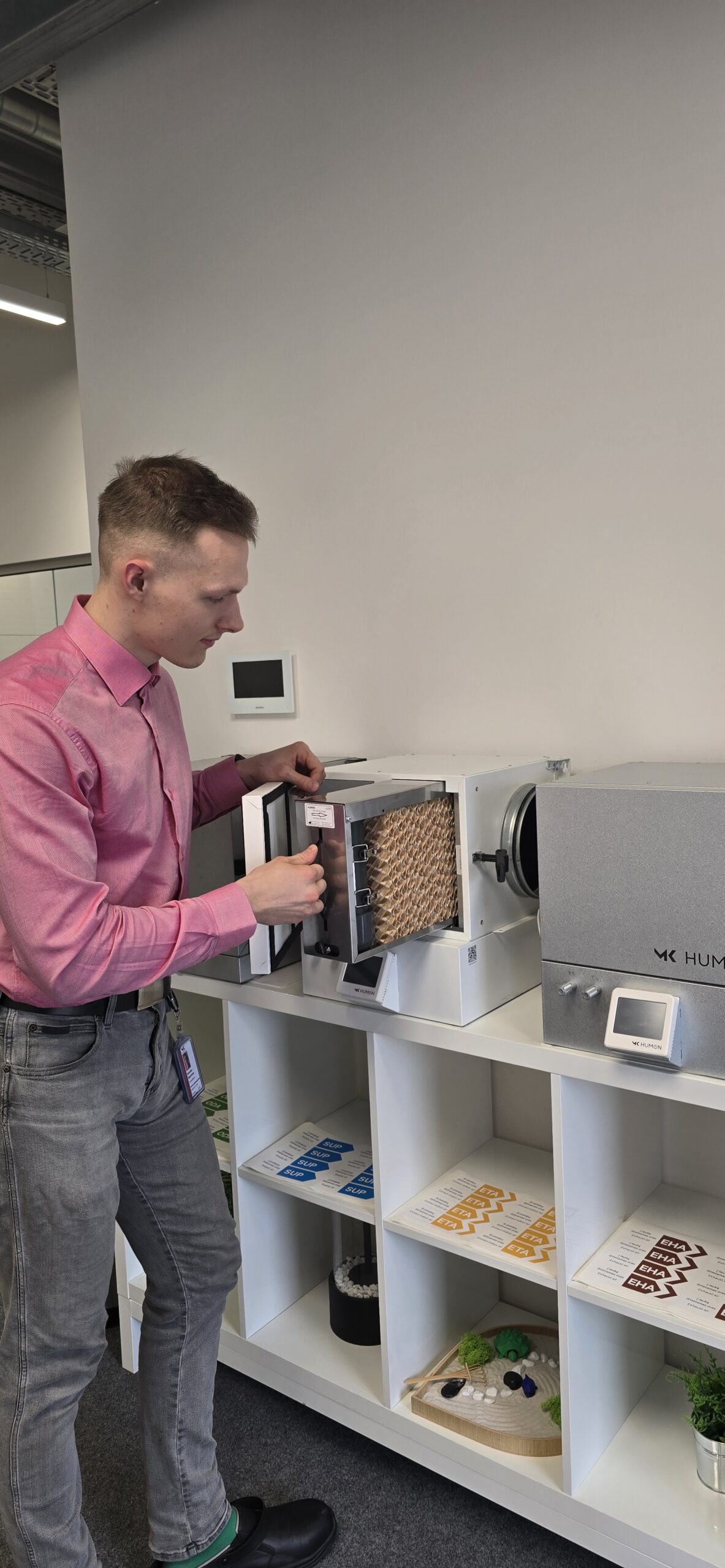
When asked what excites them most about their work, both interviewees unhesitatingly mention creativity and the opportunity to see a tangible result. For Silvija, the most important thing is that the work isn’t monotonous—she can communicate with colleagues and solve arising challenges, while at the same time working independently.
Deividas, meanwhile, says he feels the greatest pleasure when he can see the product he designed in real life. According to him, design work allows for the combination of technical and creative thinking. “Sometimes I even draw various options on paper, fold paper models, or go for a walk to find a solution. The technical part is easier to figure out, but making the product aesthetically pleasing—that’s much harder. However, the absolute best feeling in life is being able to touch and see how the object you designed comes together in reality.”
It’s Not Just About Numbers in Engineering
Although mechanical engineering is often associated solely with technical skills, both interviewees emphasize that soft skills, which they acquired during their studies, are equally important.
“The university taught me independence and problem-solving. During your studies, there isn’t a single template for how to do everything—you have to find your own way to solve challenges and get the work done,” says Silvija.
Her involvement in the Student Representation also had a major impact on her. She says that this is where she blossomed as an individual, had the opportunity to expand her circle of like-minded people, and learned a crucial lesson that also helps at work: when you need help or advice, don’t be afraid to ask your colleagues.
Deividas highlights the importance of communication and leadership: “In projects, I often had to take the initiative myself, ask the important questions, and guide the team, because one of the most vital things in engineering is knowing how not to get lost in problems. Also, attention to detail and the ability to gather information, as this helps prevent future mistakes.”
A Field Where There is Definitely No Shortage of Work
Both interviewees agree—one of the greatest strengths of mechanical engineering is the endless career opportunities.
“It’s a very broad field. There are many different manufacturing and tech companies, so there’s certainly no shortage of job opportunities. Furthermore, employers value your motivation—even if you don’t have much experience and your CV doesn’t perfectly match the criteria, if you show that you’re curious and willing to learn, getting a job becomes much easier,” says Silvija.
Deividas agrees: “Mechanical engineering provides a vast wealth of knowledge. It requires a lot of effort, but with such knowledge, you will definitely find your place in the world.”
Silvija also encourages girls not to be afraid of this field, which was once considered “masculine,” and to boldly choose engineering studies. “No one is going to ask, ‘What are you doing here?’ Professors are often actually happy to see more and more girls in the lecture halls. If you have curiosity and desire—everything is absolutely possible!”
You can find more information about studies at the VILNIUS TECH Faculty of Mechanics here: https://vilniustech.lt/en/faculty-of-mechanics/
Galerija