Some engineers feel satisfied simply by building things that work, while others want to understand why they work and, more importantly, how they could benefit the planet. The VILNIUS TECH mechanical engineering researcher Surya Rajendran arrived in Lithuania from India to study and never quite left. He’s now turning some of the world’s most stubborn waste problems into a research focus with real-world potential.
How to break and how to fix
Surya’s path to engineering began at home, watching his father carry out household repairs. „I would watch him fix things and try to understand what was wrong and how he found a solution,“ he recalls. That early curiosity about how things break and how they can be fixed became the foundation of his later career. When it came time to choose the bachelor’s studies, Mechanical Engineering felt like a natural continuation of a conversation Surya has been having with the world since childhood.
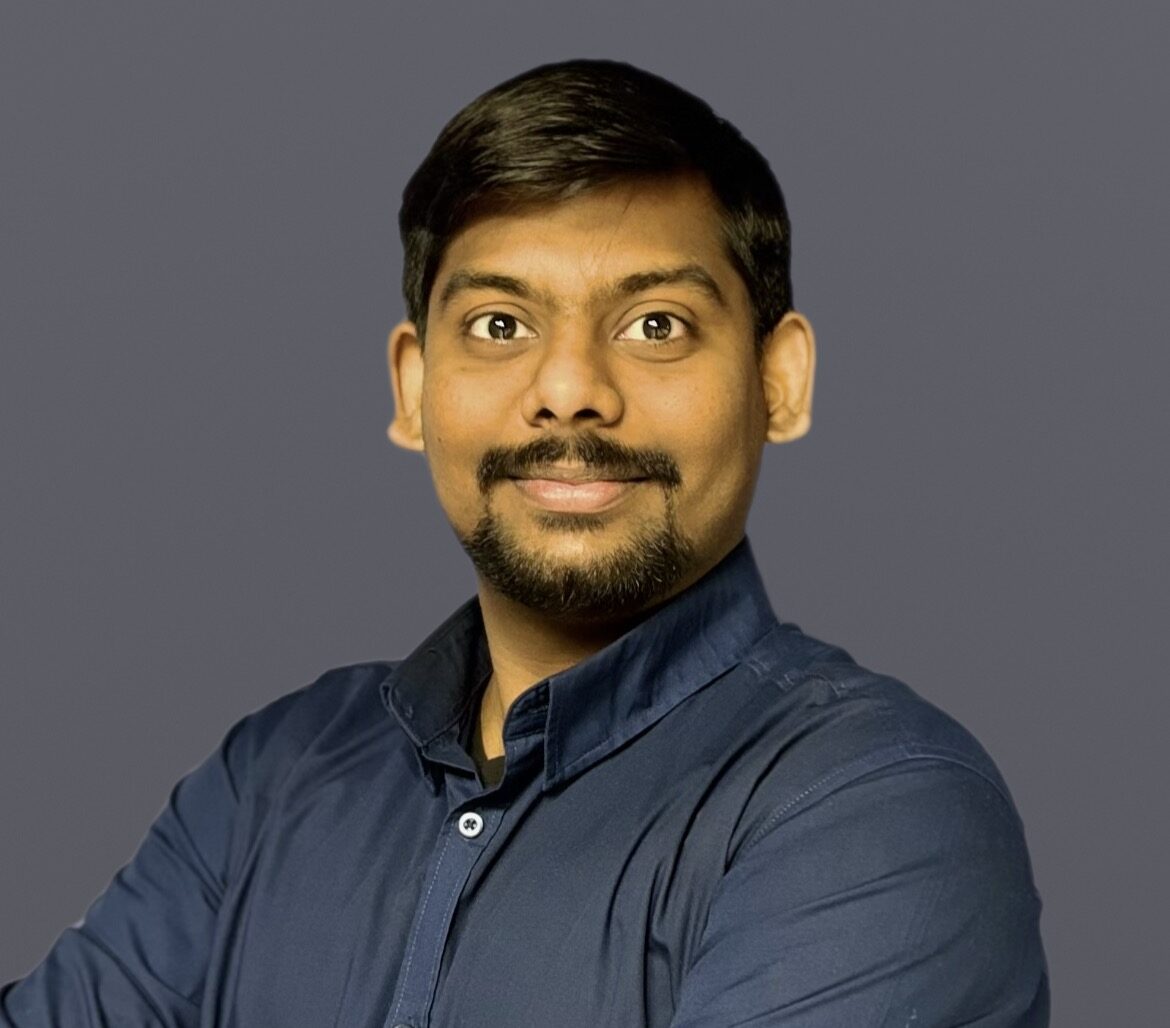
Surya Rajendran
After a three-year diploma course in Mechanical Engineering in India, Surya decided to pursue a degree abroad. Choosing VILNIUS TECH was both a practical and an intellectual decision. The tuition fees were similar to what he would have paid in India, and the opportunity to get to know the European way of life won out. „I wanted to experience a new environment and challenge myself outside my comfort zone,“ Surya recalls. He felt excited to experience the European environment, meet people from different countries, and learn about the European way of engineering.
The philosophy of engineering
It was during his diploma studies in India that Surya first encountered the idea that engineering could address environmental problems, not just mechanical ones. A professor introduced him to waste recycling, and a new thread began to form. By the time he arrived at VILNIUS TECH, that thread had become a research direction. He shared his ideas with Professor Kristina Bazienė, who became Surya’s mentor. „She guided me in different ways and helped me understand how I could begin developing my interests into research,“ he recalls. „That support gave me confidence to look beyond regular engineering practice.“
While most graduates would have turned toward industry after finishing their master’s degree, Surya turned toward the laboratory. „I do not enjoy doing the same routine tasks every day,“ he explains. „I like learning new things, exploring different ideas, and understanding why a problem happens and how it can be solved better.“ Research, for him, is not an academic detour but a direct expression of the kind of thinker he is.
A rethinking of waste as a resource
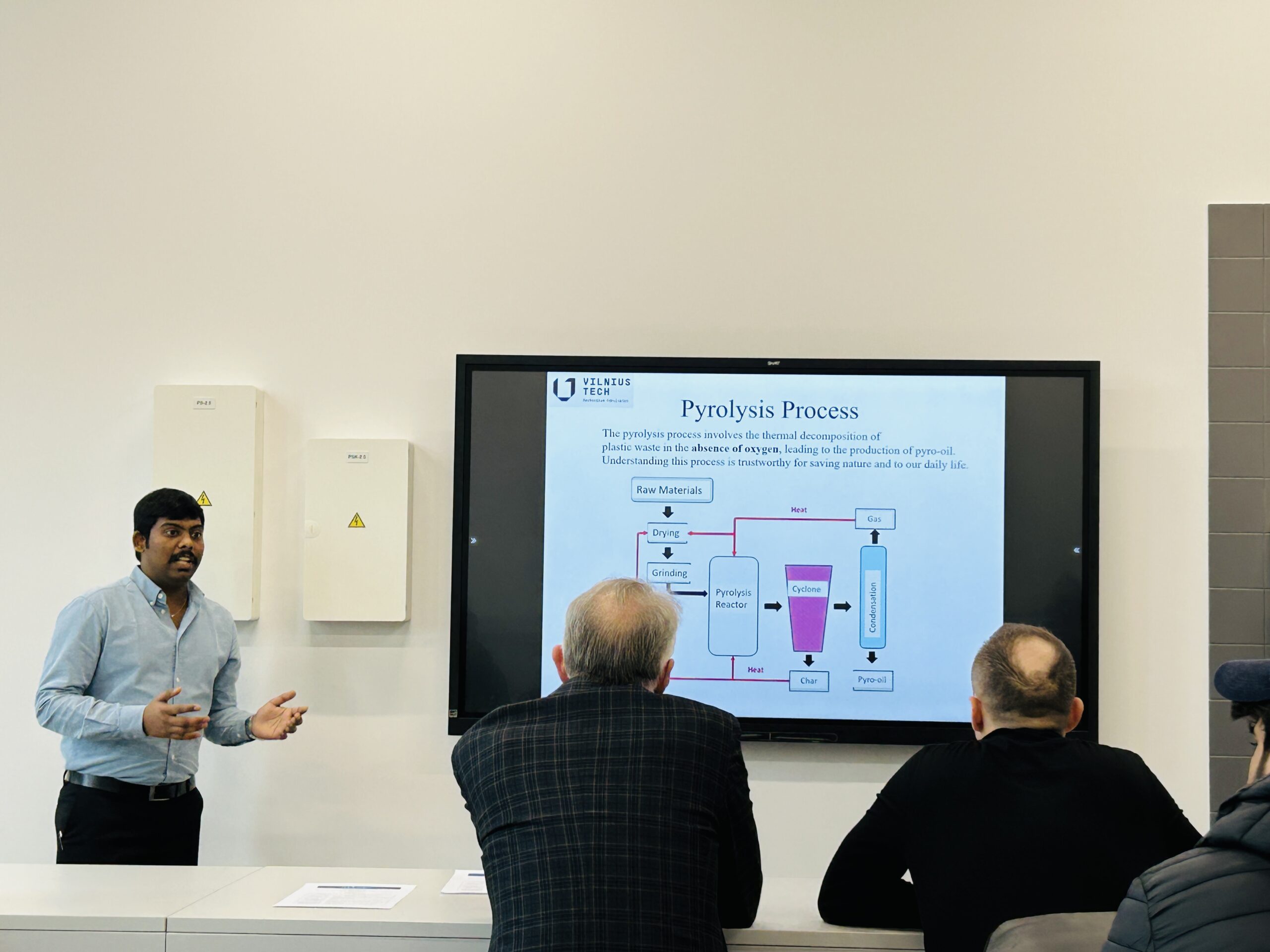
Surya’s focus has settled on pyrolysis – a thermal process that breaks down materials under controlled conditions in the absence of oxygen. The specific challenge he is working on frustrates conventional recycling: what do you do with plastics and other waste materials that simply cannot be processed through standard methods? Surya’s research explores whether these materials can be converted through pyrolysis into useful outputs: fuel, oil, gas, or solid residue with potential applications in energy production or chemical processing.
Surya Rajendran
„Instead of seeing waste only as something to dispose of, engineering can help recover value from it,“ Surya explains. The goal is not incremental improvement to existing systems, but a rethinking of waste as a resource – one that could eventually support small-scale, community-level energy resilience. He envisions a future where municipalities can manage difficult waste streams locally, reducing dependence on landfills and external energy sources.
From studying to researching
The transition from student to researcher was not without its anxieties. „When I first joined the research environment, I was a little nervous,“ Surya admits. But he has managed to see that nervousness as a useful tool, something that keeps him careful and focused rather than something to be overcome. He describes noticing, during his studies, that he had sometimes explored topics more deeply than his peers – a small signal, but one that pointed him in the right direction.
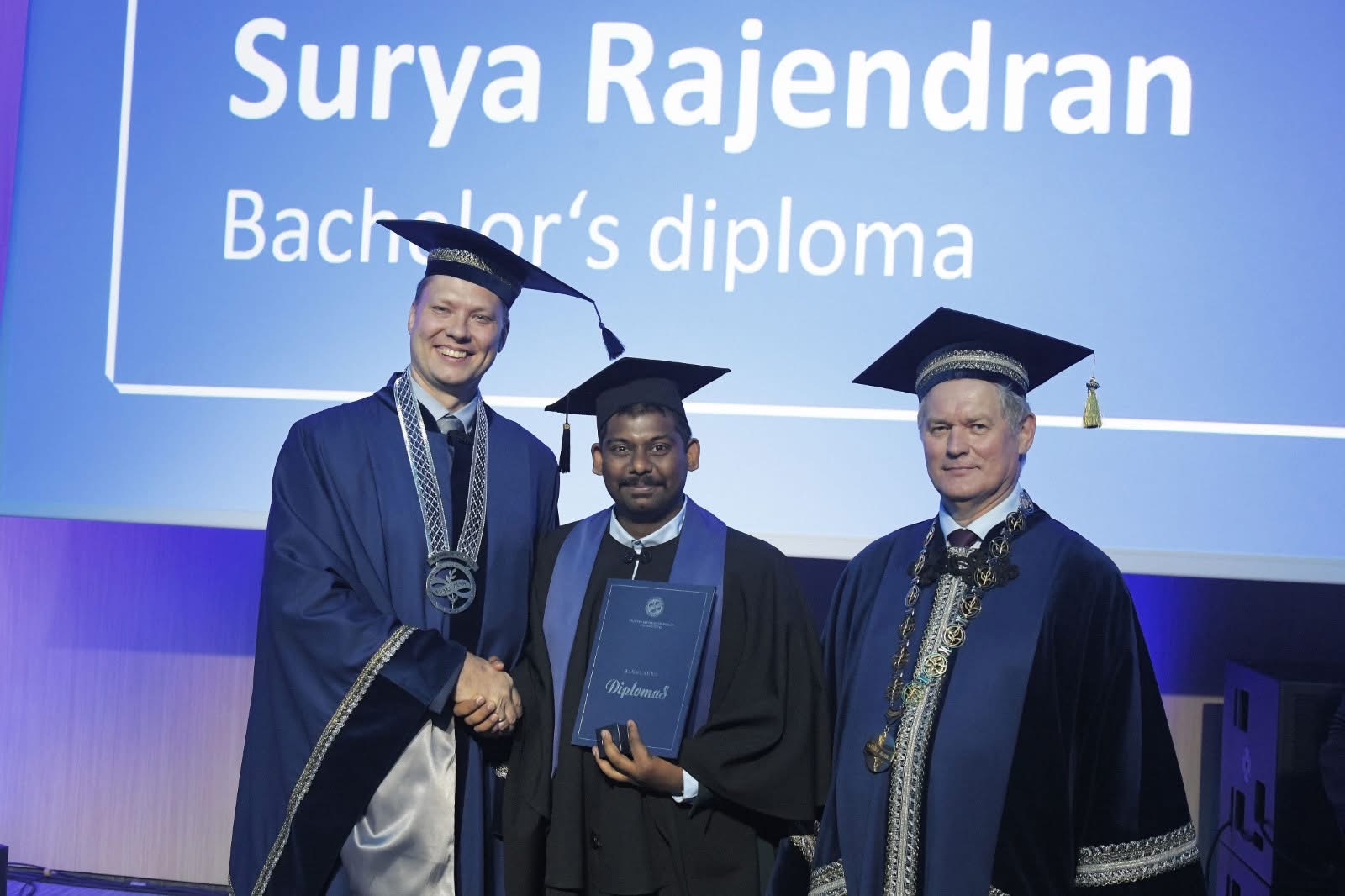
Surya speaks warmly about the international environment at VILNIUS TECH, the friendships that crossed language and cultural barriers, and the experience of building an independent life far from his family. „Lithuania has given me many valuable opportunities,“ he says. „Living here has helped me experience a new culture, meet people from different backgrounds, and build confidence in myself.“
A dream for the future: a pilot plant
Surya would like to see a future that connects research, teaching, and industry – not as separate tracks, but as three reinforcing parts of the same vocation. He plans to pursue a PhD and hopes to teach eventually. „I believe teaching is not only about giving information, but also about encouraging students to be curious, think independently, and look for solutions.“
Surya also wants to see the technologies he is studying move from the laboratory into practical use – whether through research partnerships, industry collaboration, or, one day, a pilot plant.
To other students weighing a similar path, he wishes patience: „You don’t need to know everything before starting. Research is a learning process, and it is normal to feel unsure at the beginning. What matters most is being willing to learn, being patient, and not being afraid to ask questions.“