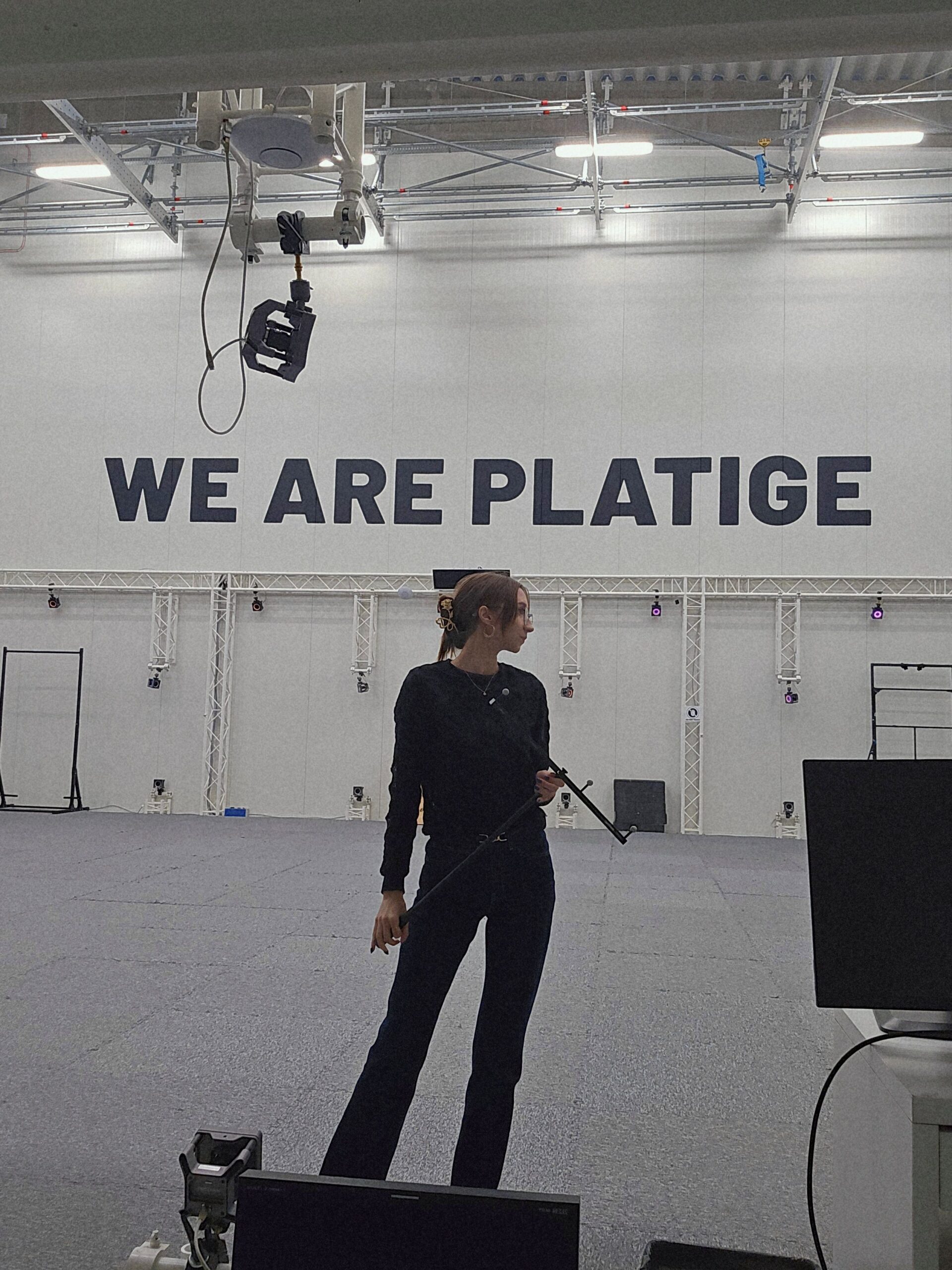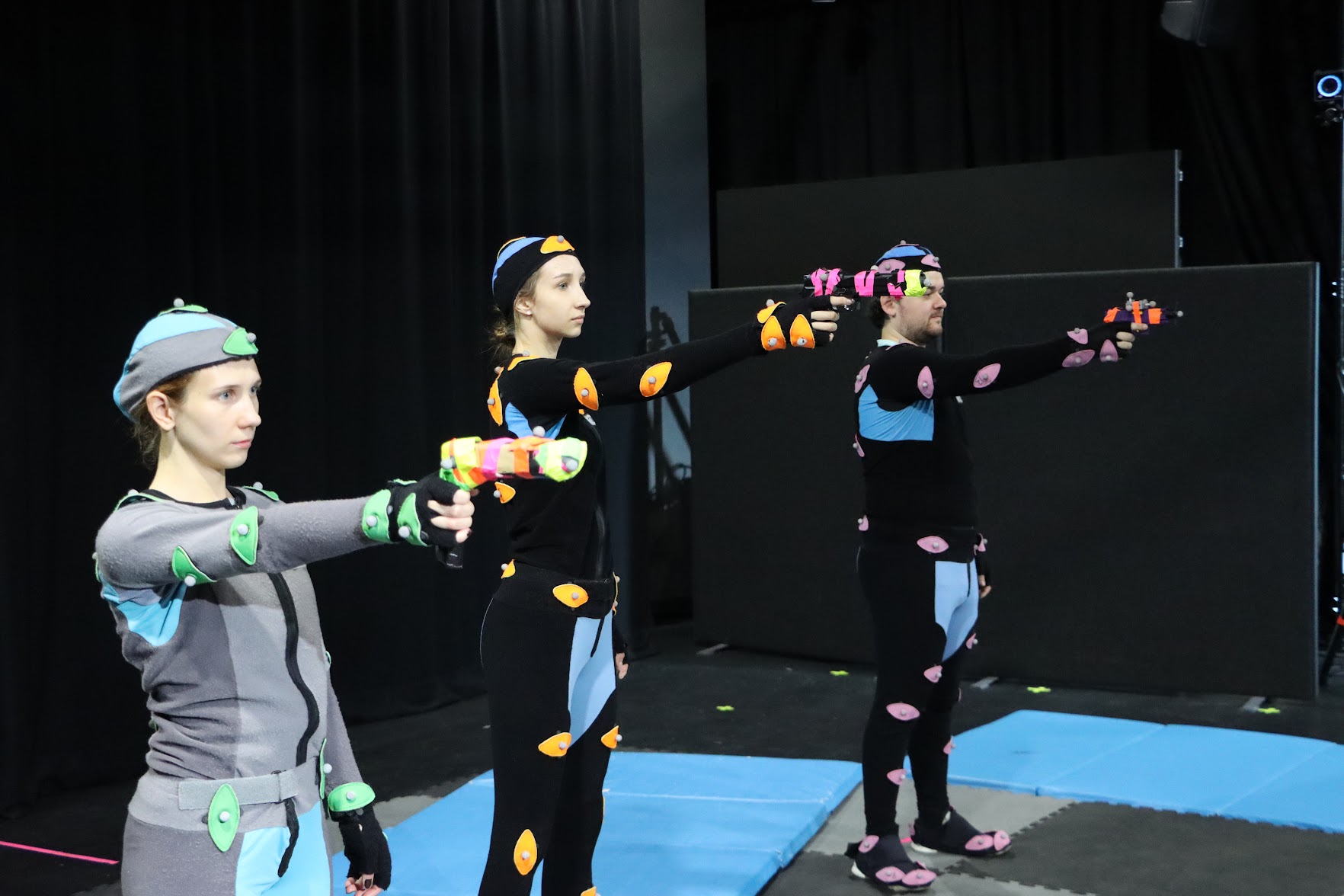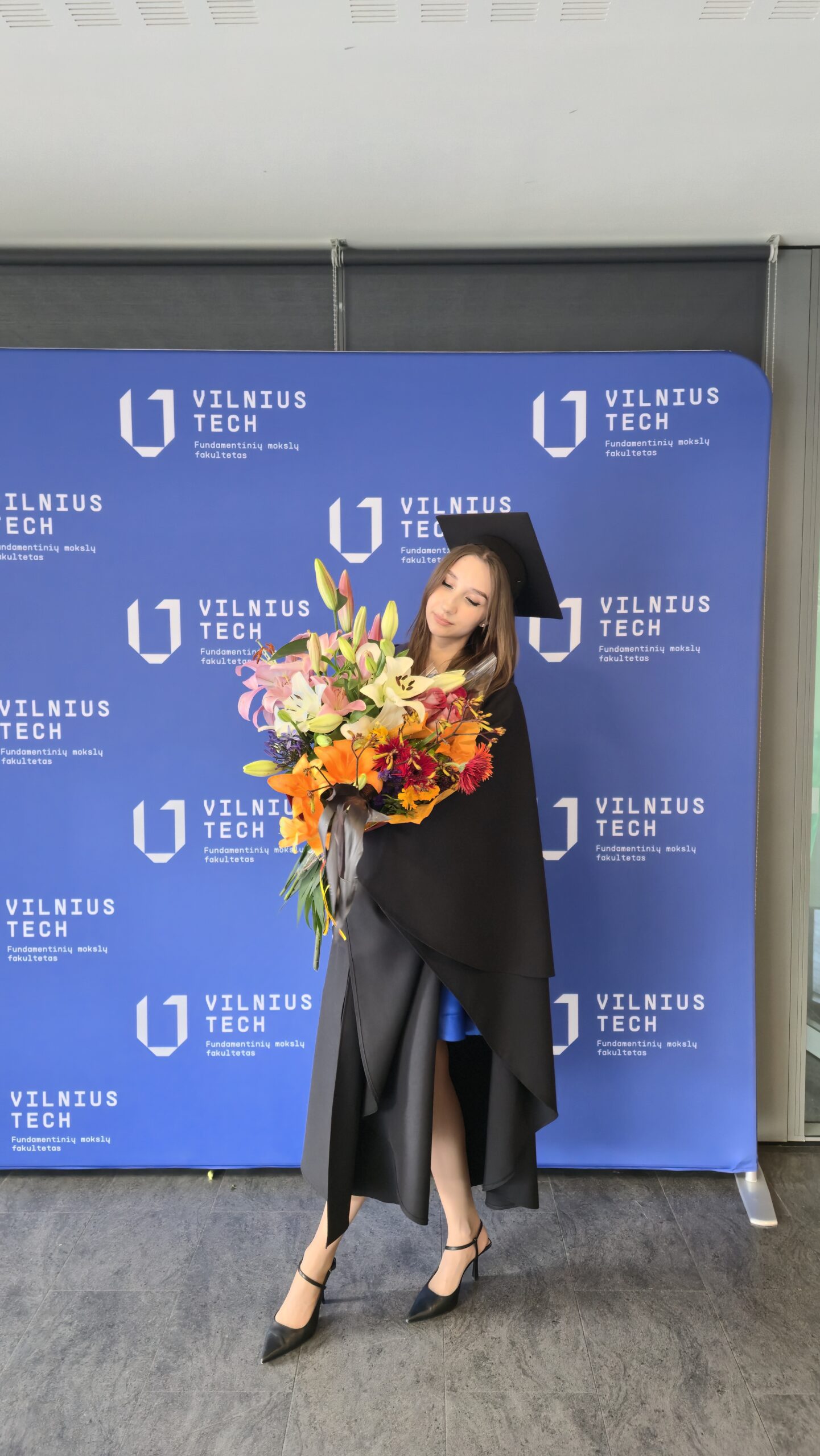
For many Lithuanians, working in the world’s largest companies still often seems out of reach. However, Gabija Mineikytė’s courage proves that anything is possible. The young woman completed an internship at Platige, one of the most renowned gaming visual effects studios in Poland, which has created animations for games like The Witcher 4, Call of Duty: Black Ops 7, and Tomb Raider: Catalyst. Following this, she worked on a world-first scientific project testing modern motion capture technologies.
“You can achieve a lot on your own, but it can be an emotionally exhausting process. I had quite a few moments where I thought maybe I was simply dreaming and wanting too much. The opportunities to get into companies where I could expand my knowledge and meet more professionals in this field weren’t simply handed to me, especially since I chose a rather niche direction,” says Gabija.

The Email That Changed Her Life
Today, Gabija is a motion capture technician. However, she began her journey as a creator after watching an online tutorial about motion capture technologies. She was so fascinated by them that she started deepening her knowledge independently. After graduating from high school, Gabija chose to pursue a degree in the Multimedia and Computer Design study program at the Faculty of Fundamental Sciences at Vilnius Gediminas Technical University (VILNIUS TECH).
Burning with the desire to gain as much knowledge as possible, the student chose her internship placement very carefully, making her path to one of the best animation companies read like a Hollywood script. To get in, she didn’t have to compete with other candidates or wait for an offer to fall from the sky—she simply had to dare to ask.
“I really like talking about this because I am very proud of it. I found a very large and famous animation studio in Poland called Platige, which specializes in animation and has a separate motion capture department, which was exactly what I was interested in.
I found their email address online and decided to contact them, even though they weren’t looking for interns at the time. Still, I wrote them an email: ‘Hello, my name is Gabija Mineikytė, I am very interested in motion capture technology…’ and so on. It was a classic cold email—without filling out any applications, I just wrote that I was deeply interested in the field and asked for a chance. Even if it meant staying in the background and fetching coffee, I still desperately wanted that opportunity,” she shares.

A month later, just as she had given up hope, she received an invitation from the company’s HR to discuss the internship and speak with the entire motion capture (MoCap) team.
“It was a huge ‘wow’ moment. After the interview, they invited me to come for a month to see how multimedia production is created using these technologies, and how to work with much more advanced systems and a larger team. When I saw it all in person, I realized: yes, I want to be here, and I want to do this for many years to come,” Gabija says.
That is how the young woman from Klaipėda ended up in a studio that creates visual effects and animation not only for the most famous video games, but also for series like The Witcher, Vikings, Love, Death & Robots, films like Wonder Woman, Melancholia, and other major cinema studio projects. During her internship, Gabija herself contributed to the trailer of one of the most anticipated video games coming out in 2027—the tomb raider Lara Croft’s Tomb Raider: Catalyst.
The motion capture specialist also had the unique opportunity to participate in a filming day that lasted more than fifteen hours. “It was incredibly difficult because, physically and emotionally, I had to be actively involved the entire time, learning and helping. The team really wanted me to take as much as possible away from this experience, so they treated me like a true colleague.”

“At the end of the internship, I was chatting with their HR representative and asked why they replied to me—I was really curious to know. She said that after reading my email, she immediately called the team and said: ‘Please, you have to take this girl. She wants to learn so badly, give her a chance,’” Gabija recalls.
After receiving her bachelor’s degree this June, Gabija is continuing her career in the Netherlands. Impressed by the VILNIUS TECH alumna’s work and accumulated experience, Canadian scientist Dr. Carlos Vilchis invited her to join his project. This project will research which camera tracking technologies are the best and most stable.
Connections with Professors and Endless Opportunities to Grow
Although Gabija learned a lot on her own, she notes that information on the internet or help from artificial intelligence alone is not enough—to become a professional, university studies are essential.
“Neither the internet nor artificial intelligence will replace the university because we, as humans, need genuine connections with other people, and no technology will ever substitute that. This kind of connection helps us grow as individuals and professionals, because the professors and specialists who teach us have already achieved what we aspire to achieve, and we need their guidance,” says the VILNIUS TECH alumna.
“In school, we were taught to follow the rules. But the university teaches us not only how to write or complete tasks, but also how to live. It would take many years for that understanding to come naturally,” she adds.
Gabija continues, emphasizing that the university is also crucial for building valuable connections. In her case, that person was geometric modeling professor Dr. Rokas Semėnas, who helped her step out of her comfort zone when she was most afraid to do so.
“I only really started enjoying learning once I got to university. It brings together people who know why they are there and what they are striving for. Getting into university isn’t that simple, so most students already have at least a general direction and goals, and they can find like-minded peers. And now, four years later, I realize that networking is one of the most important things in a career.”

Another crucial aspect of creating animation is the required equipment and technologies, which students can learn to use during their studies. As a result, graduates of the Multimedia and Computer Design program enter the job market already possessing extensive practical experience, and some even begin their careers while still studying.
“Students have access to a multitude of resources provided by VILNIUS TECH. We have a professional MoCap studio. A new Foley sound recording lab was also just opened. If a person is interested in animation, games, or creating visual effects, it is the perfect space to experiment.
We also have a virtual production studio where you can work with video projections and other advanced technologies. Additionally, we can use the LED wall located at the LinkMenų fabrikas. It’s a huge advantage, even if not everyone understands its value. And all of this is open to students,” lists Gabija, who herself landed a job at the Multimedia and Computer Design Laboratory during her studies.
“However, our faculty’s greatest strength is the professors who work in the industry and know how to use these technologies professionally. Students often only see a professor in the lecture hall and think: ‘Do I like them or not?’ But they forget that this is an expert in their field, from whom you can learn beyond just the lectures.
If a professor sees initiative and potential, it often opens up even more opportunities—they might invite you to contribute to projects or provide useful contacts,” the young woman notes.
You can find more about studying at the VILNIUS TECH Faculty of Fundamental Sciences here: https://vilniustech.lt/en/international-students/study-programmes/undergraduate-and-integrated-studies/#list-of-programmes
Galerija