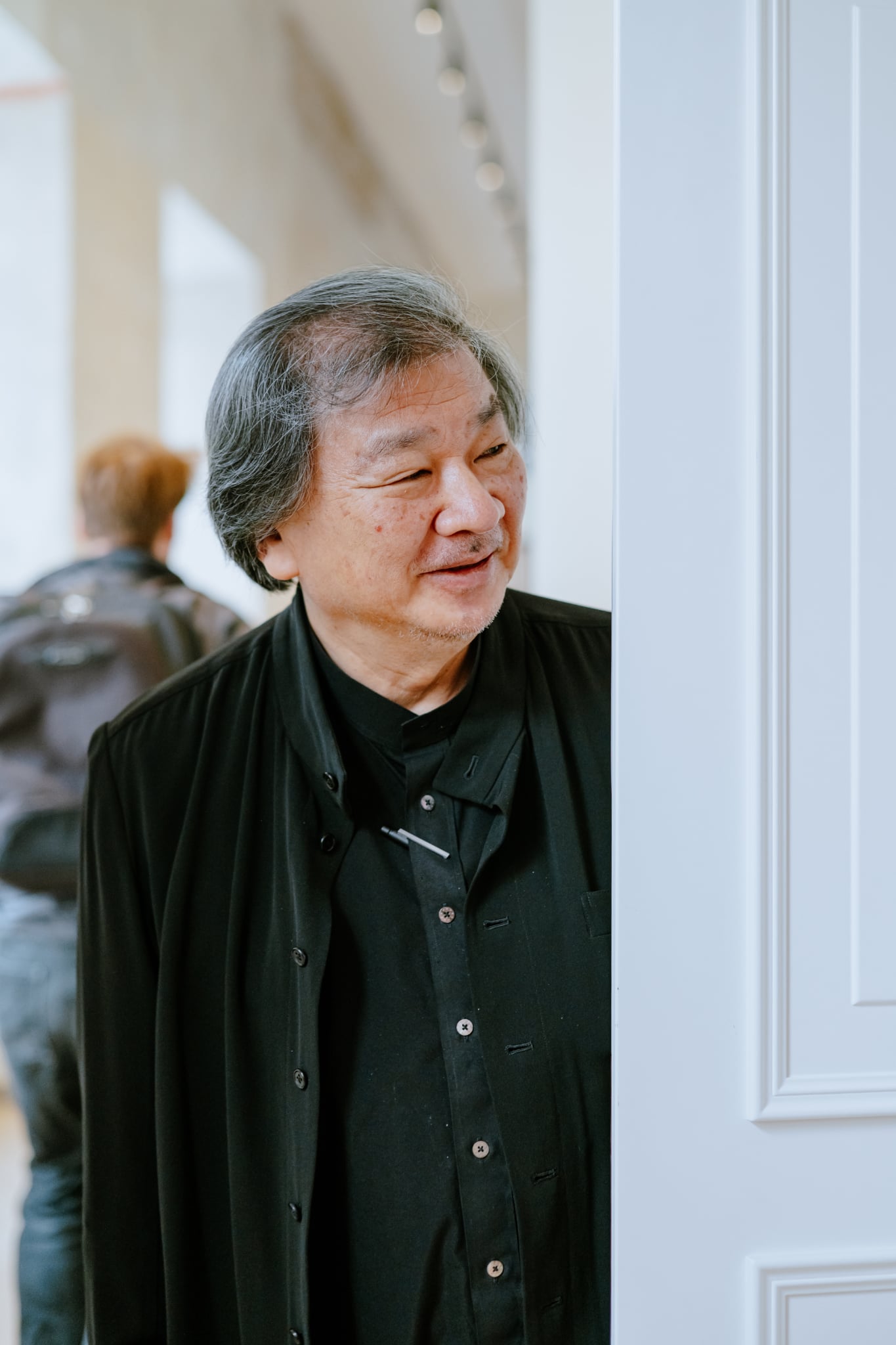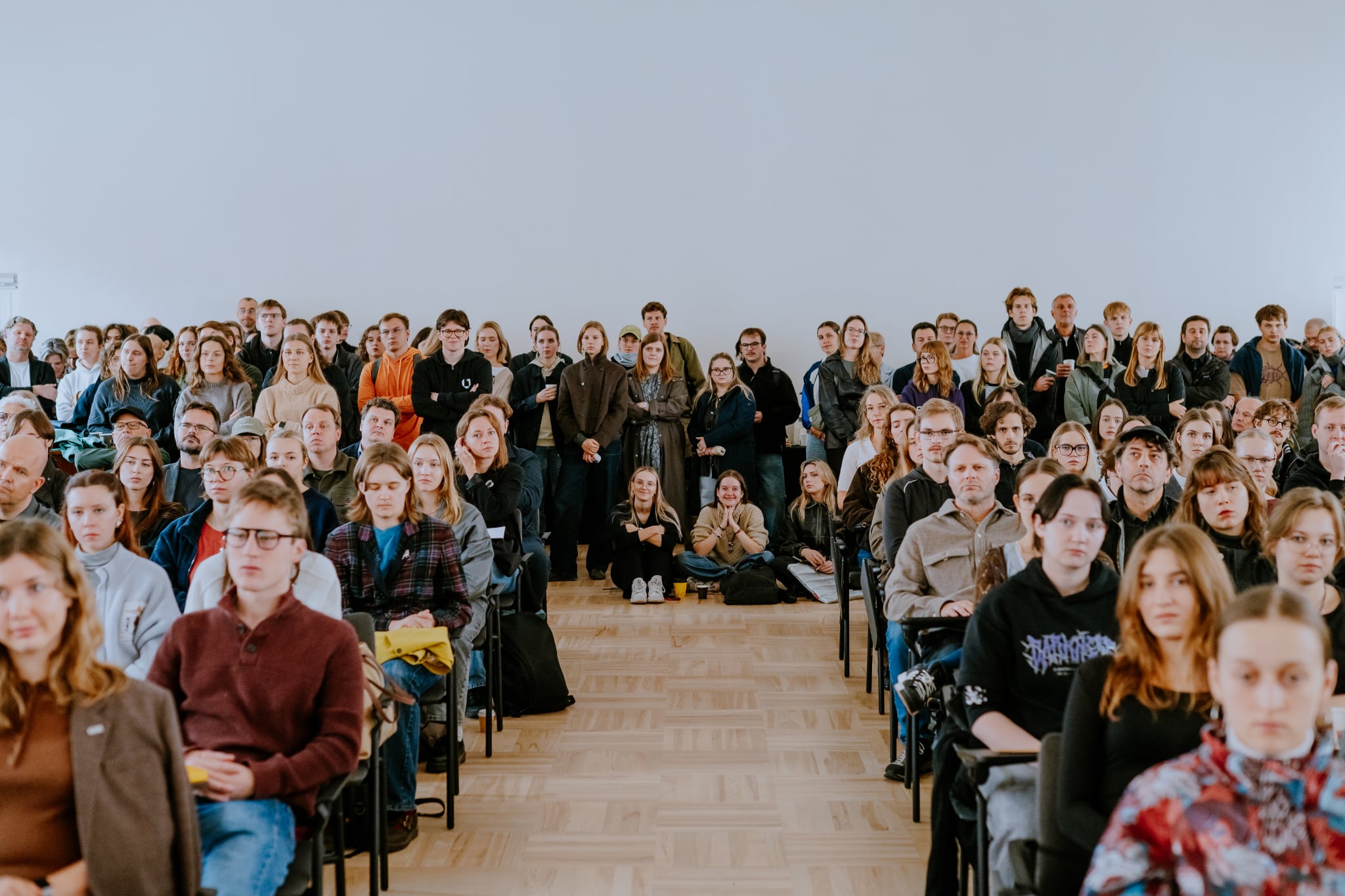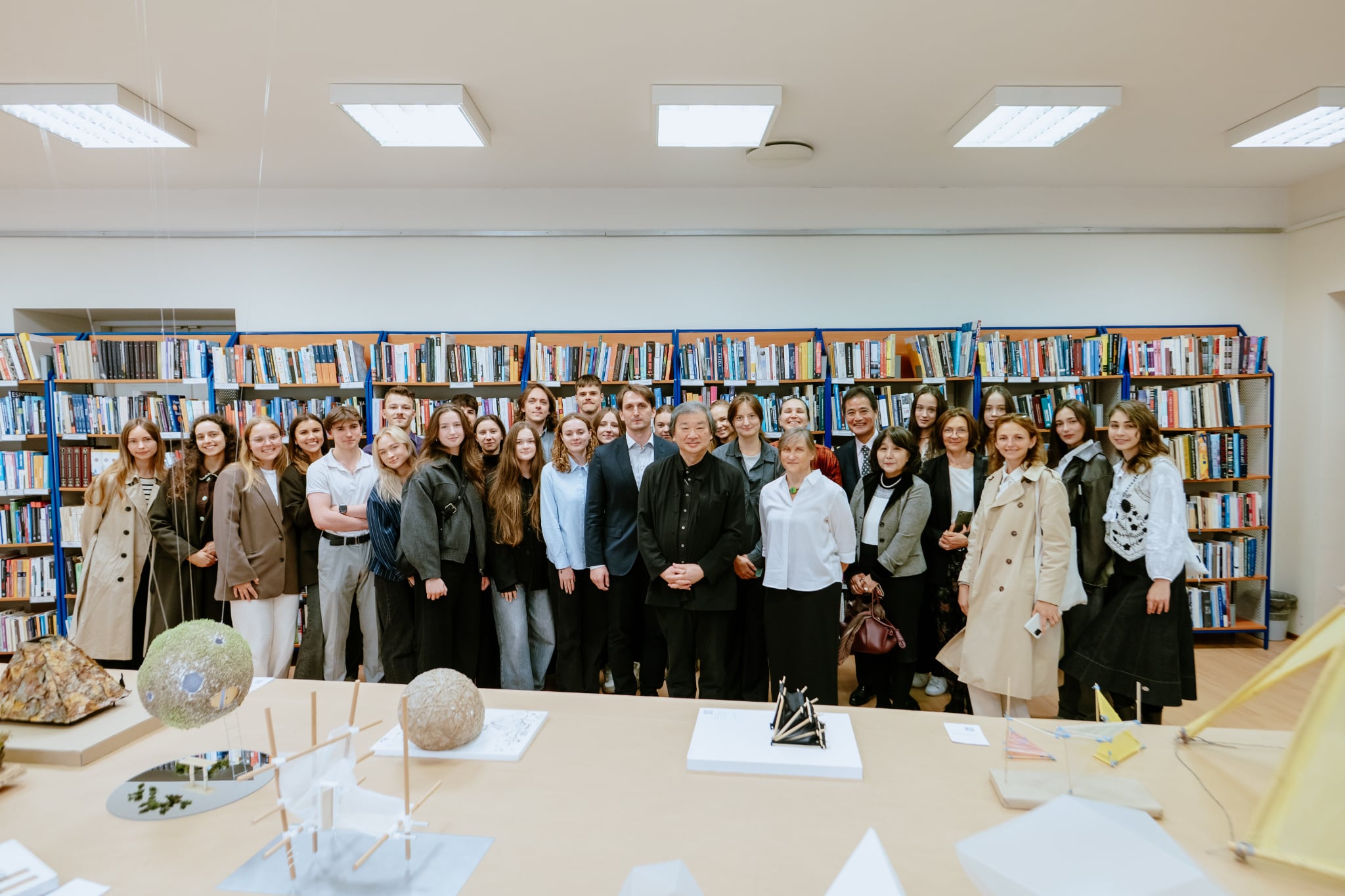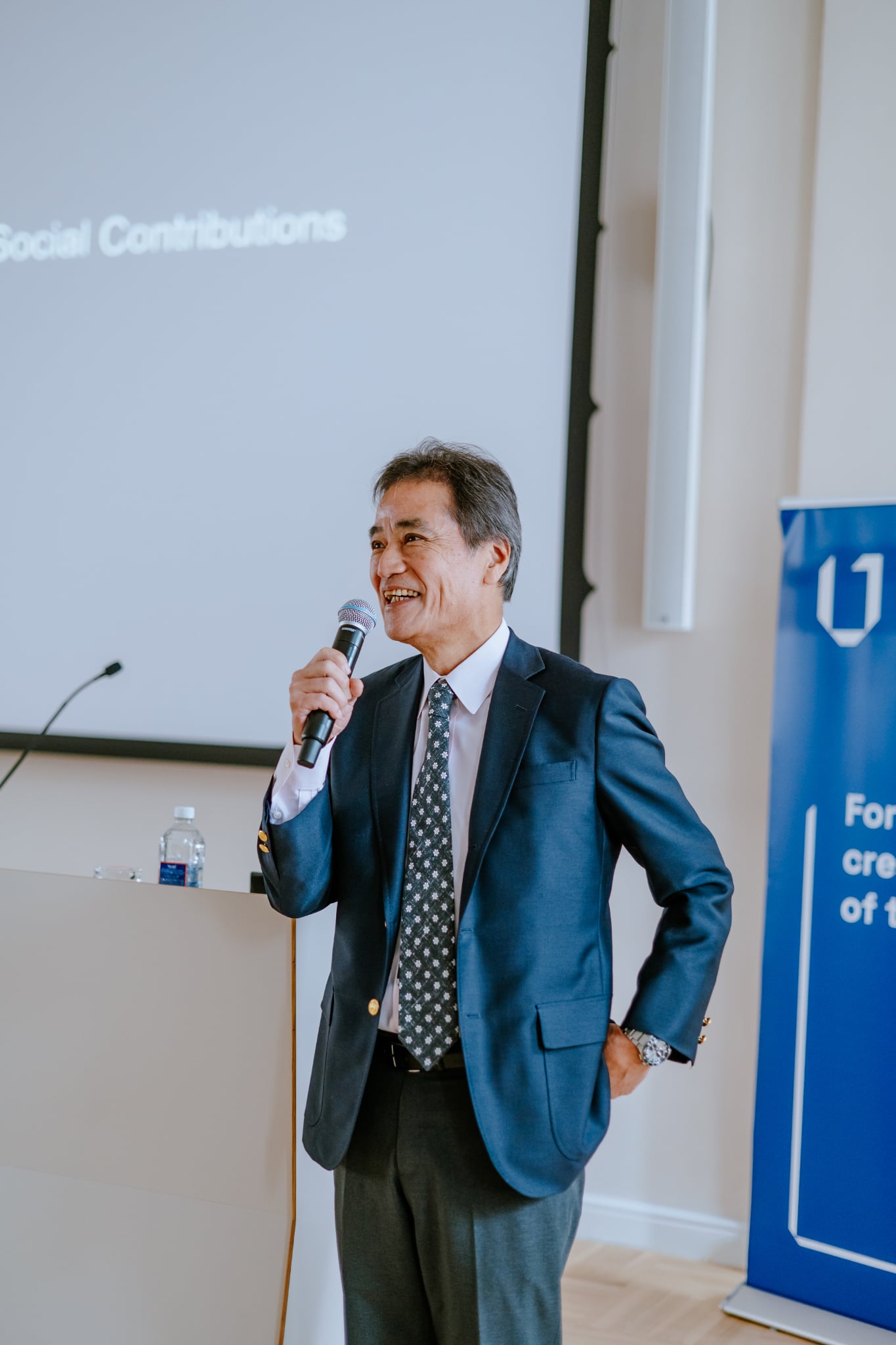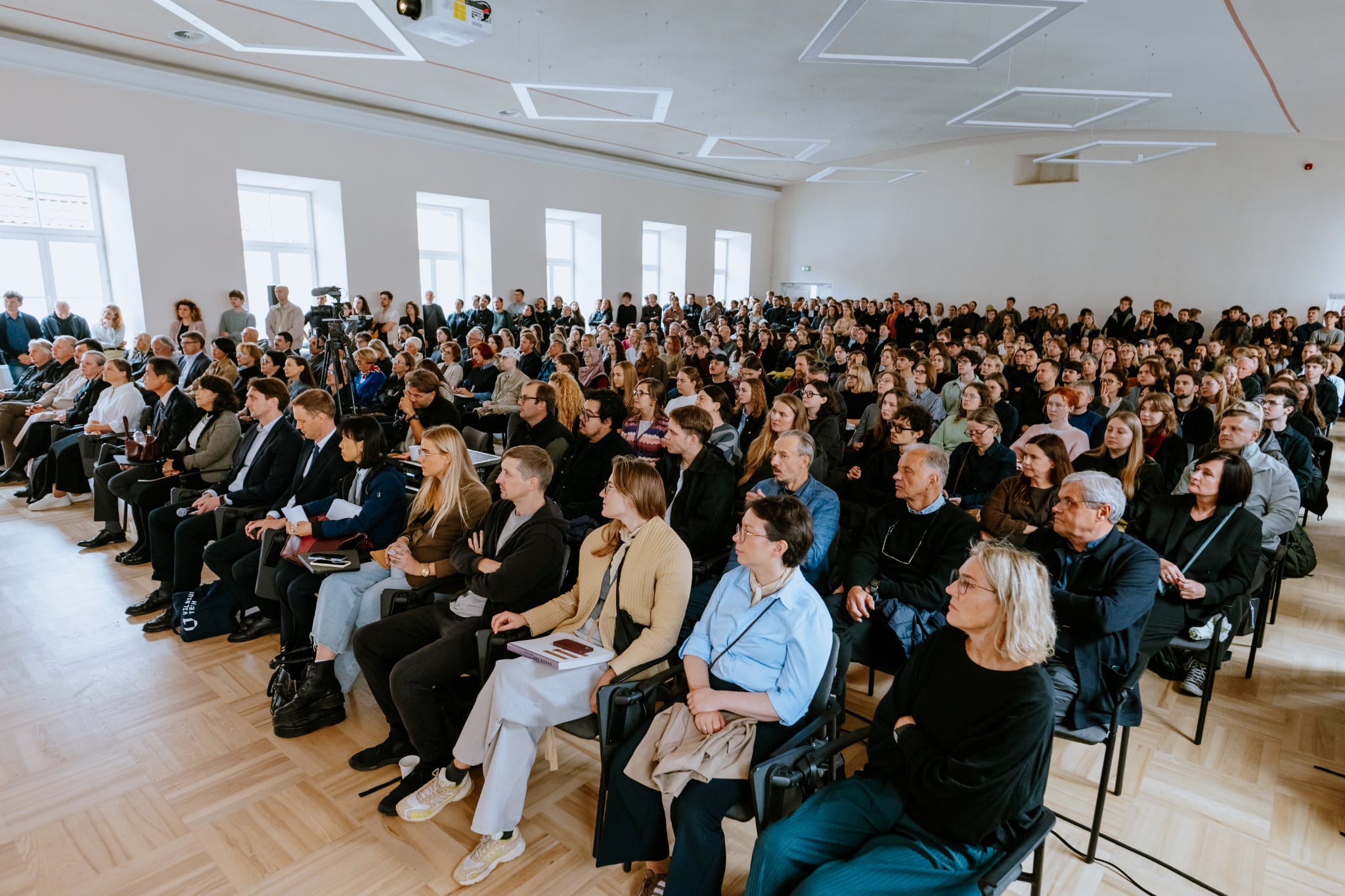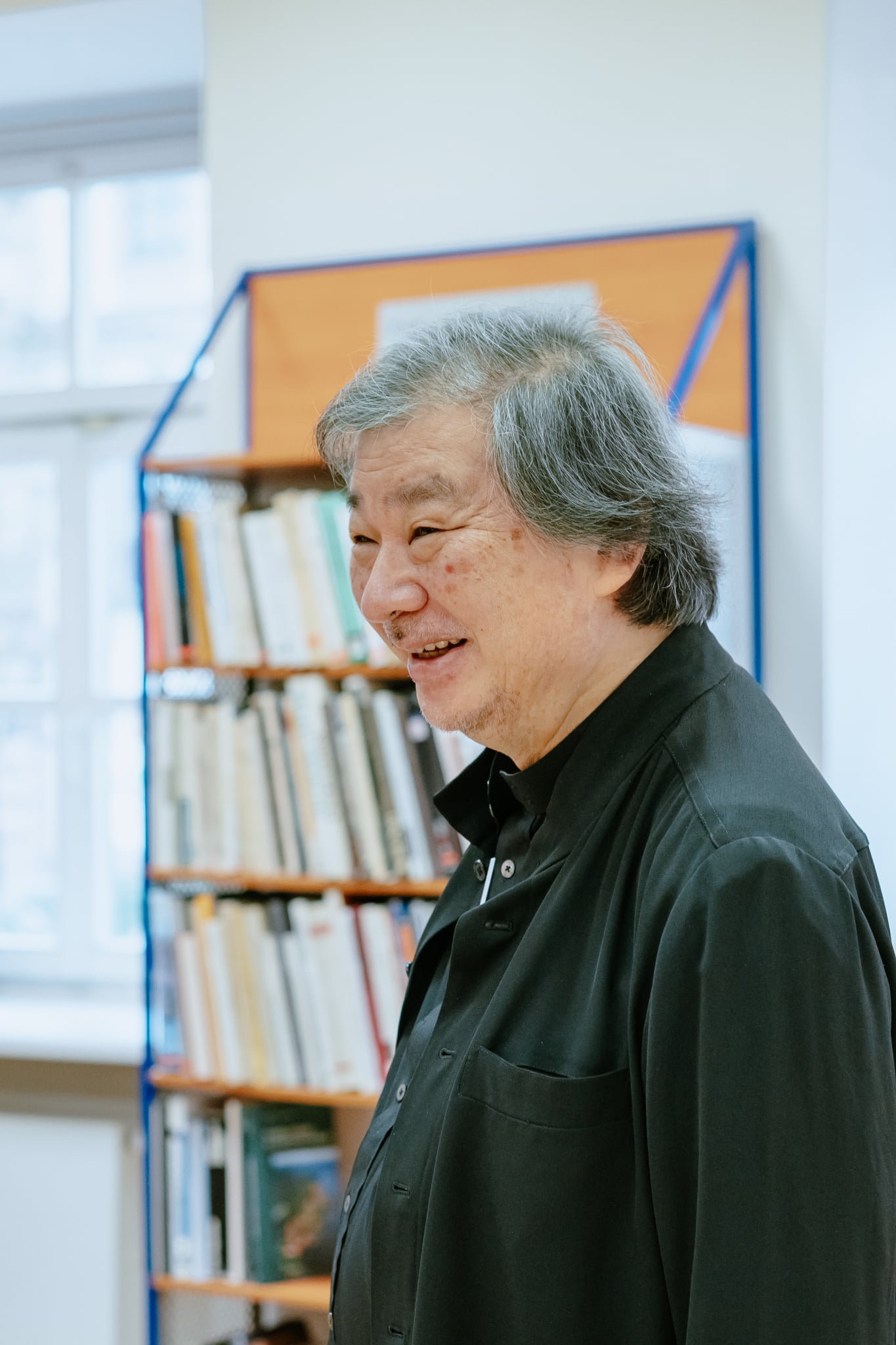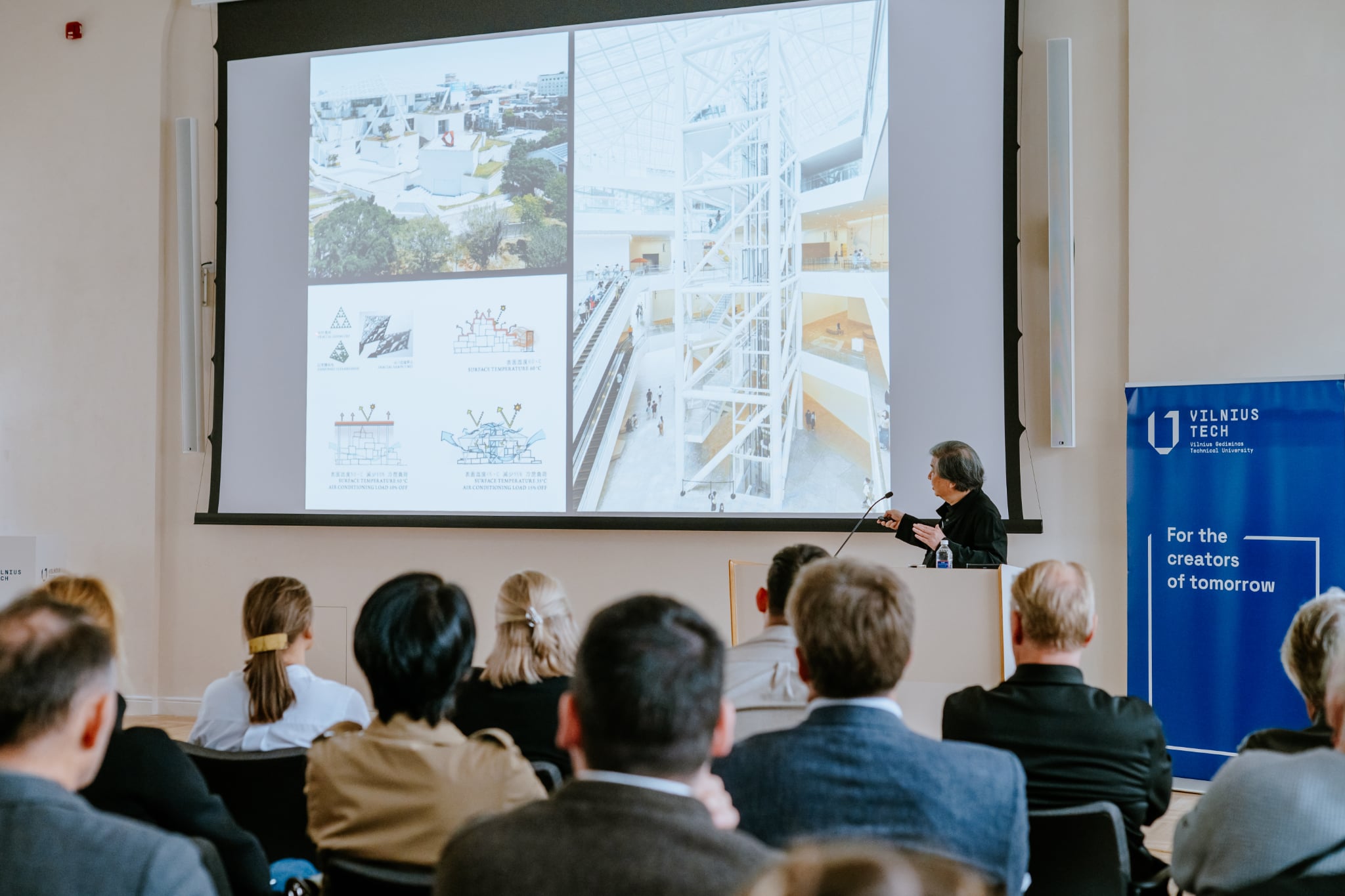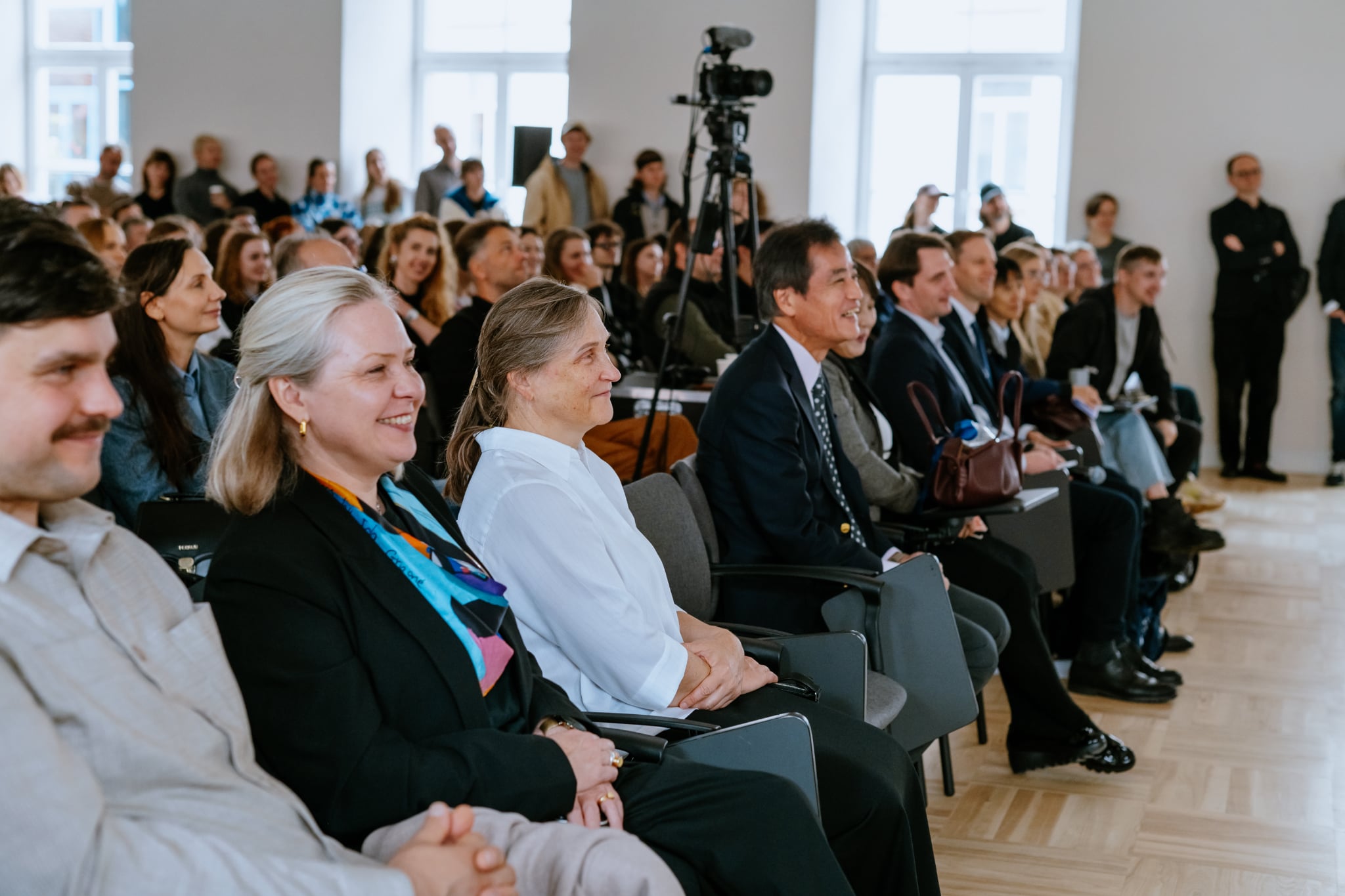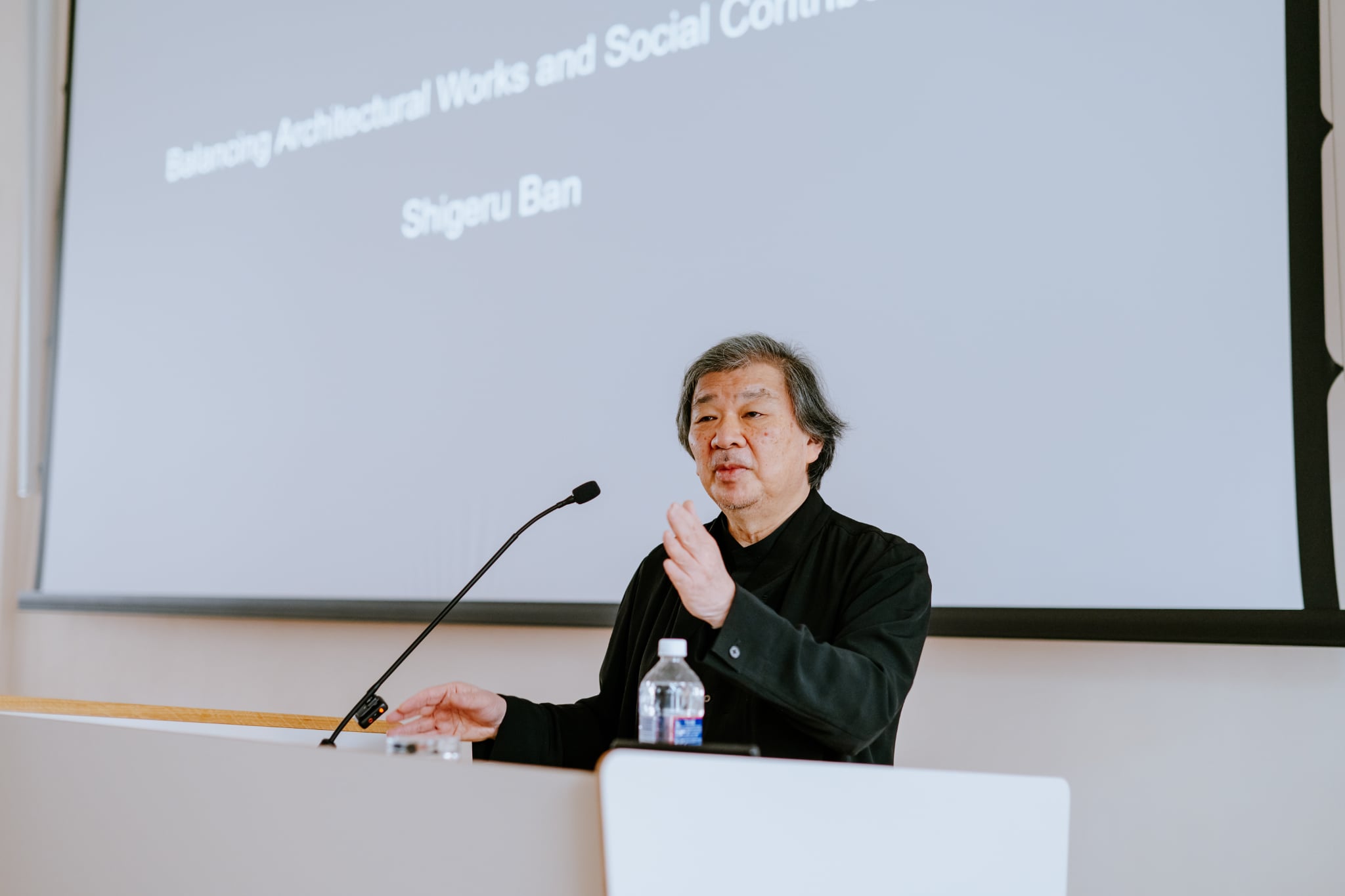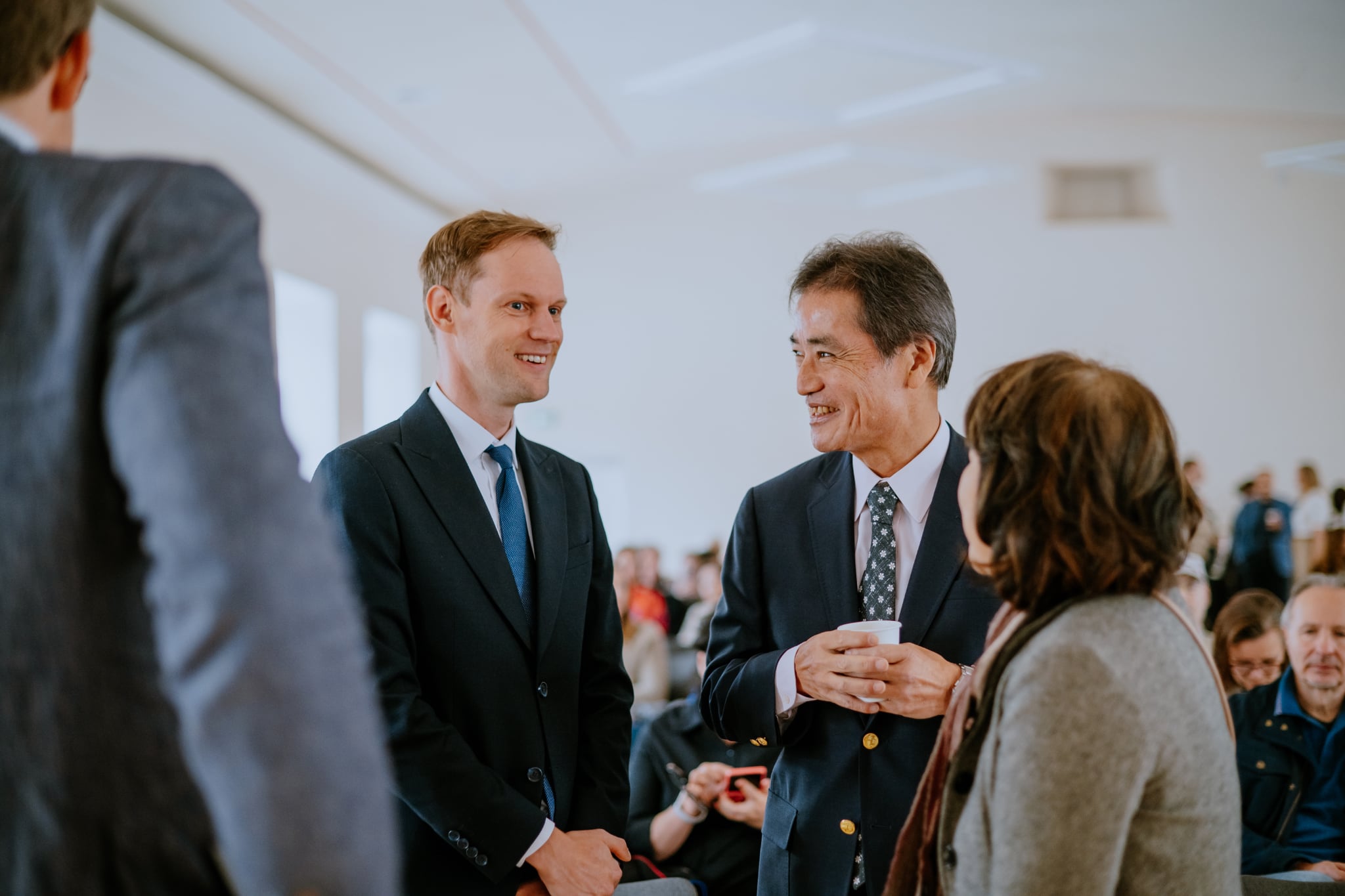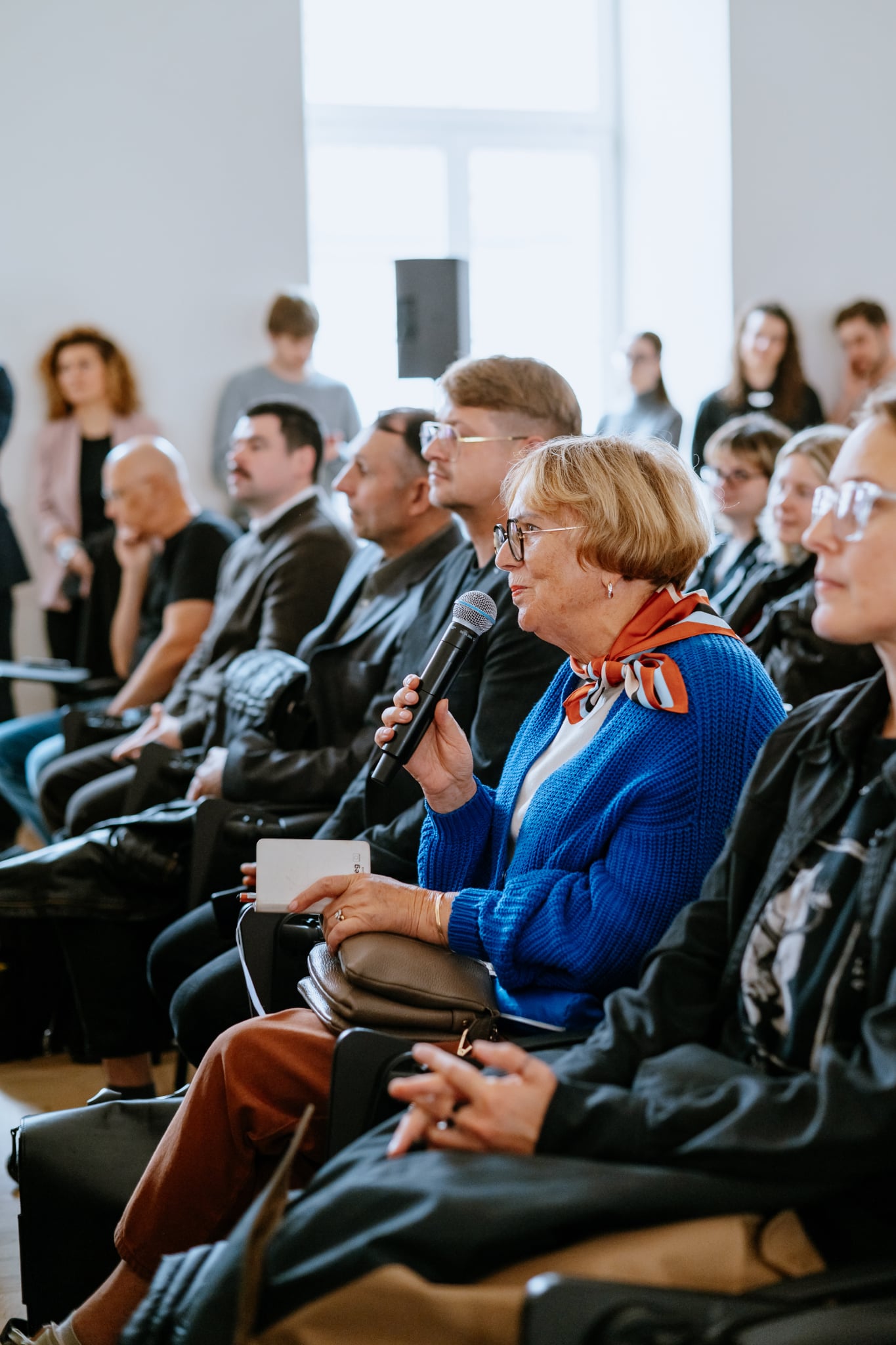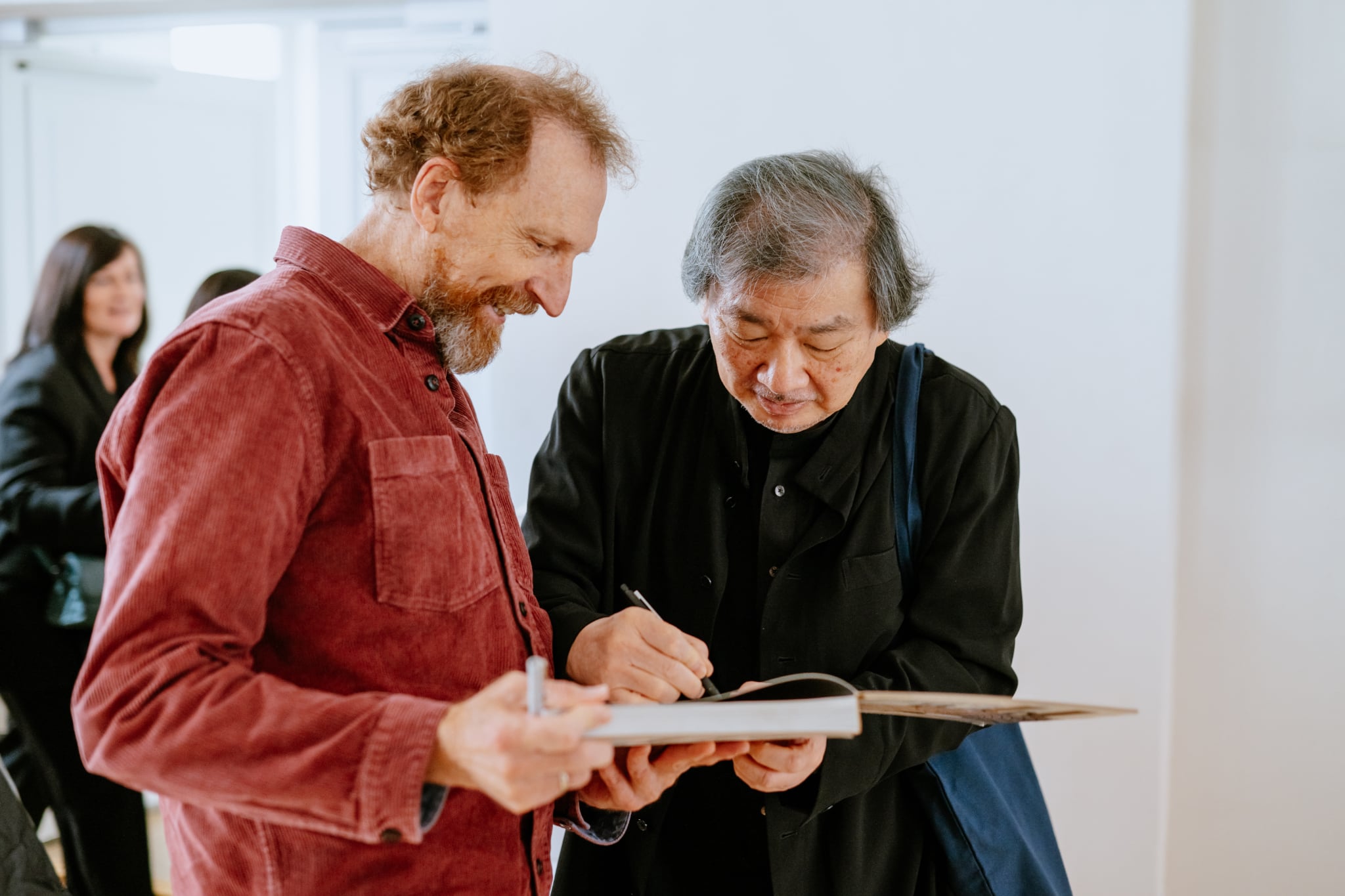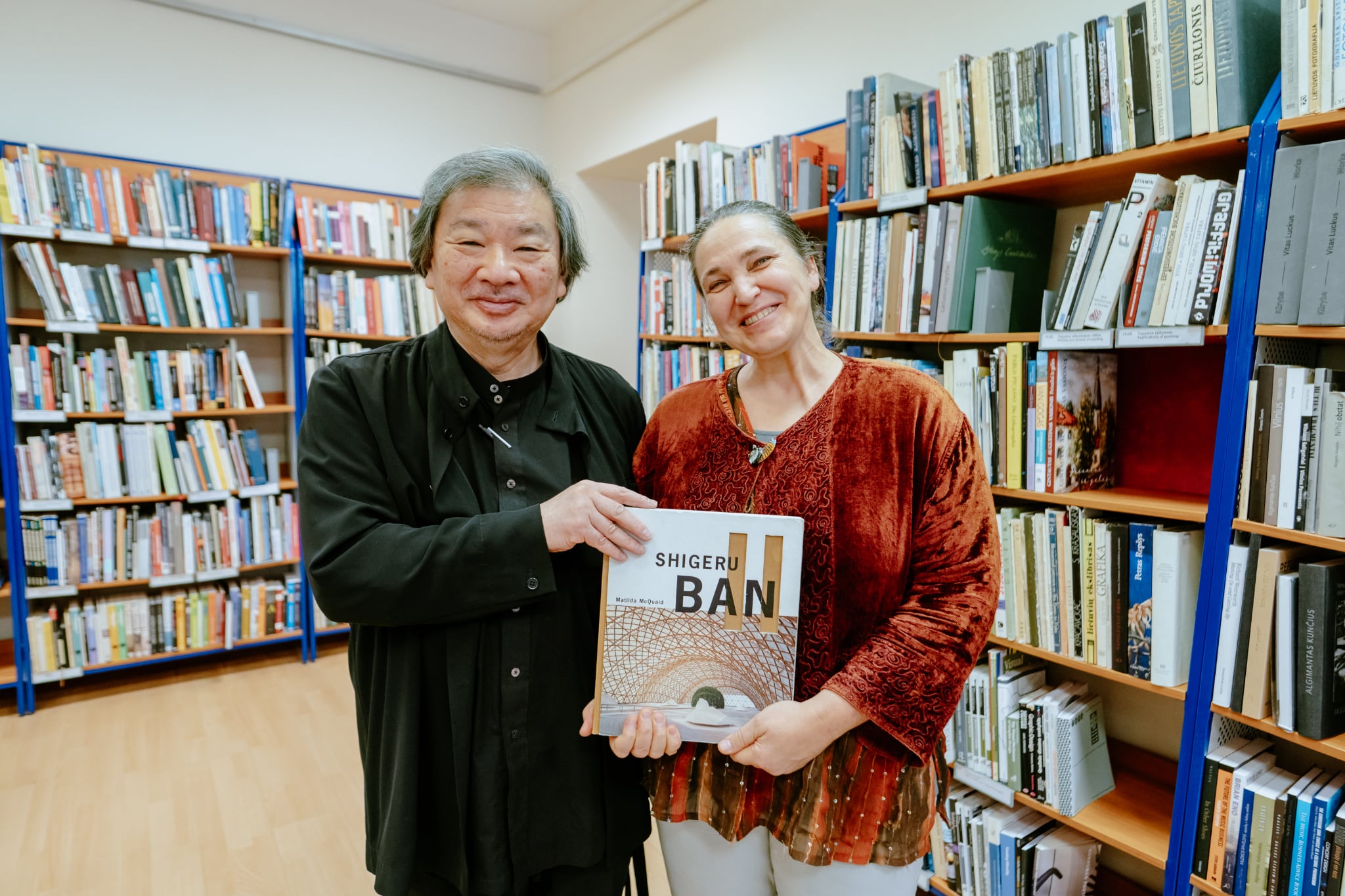
On September 22, the Faculty of Architecture at VILNIUS TECH hosted an open lecture by Shigeru Ban, one of the world’s most renowned architects and a Pritzker Prize laureate. Visiting the Baltic states for the first time, the Japanese architect recounted his colorful career story, in which only one thing remains constant: the desire to help people and the belief that an architect has a greater power than simply fulfilling a client’s wishes. He also invites us to look at building materials and regulations from a fundamentally different perspective.
“Where’s the giraffe?” That was the question architect Shigeru Ban heard when the client came to inspect the nearly completed building. The giraffe had been drawn in the sketches presented during the project proposal—simply to help convey a better sense of the space’s scale. But the client understood differently and declared she would not accept the building until the giraffe was there.
“She was very disappointed that there was no giraffe. This is no joke. It’s a true story. I spent all my money making the giraffe, and only then was I able to complete the project,” the architect shared, although the Nicolas G. Hayek Center is certainly not remembered primarily for giraffe being there.
Shigeru Ban describes his experiences and discoveries in exactly this way: he lightens the most complex topics with humor and the absurdities of life, while discovering very serious architectural problems in simple, everyday situations. He began his lecture with a confession that marked a decisive turning point in his career:
“I was very disappointed in my profession as an architect. Historically, architects have worked for the privileged, who used buildings to show their power. I wanted to use my knowledge to serve the public, even people who had lost their homes due to disasters.”
Form-finding, not form-making
For many, Shigeru Ban’s work is associated with paper tubes and is held up as an example of sustainable architecture. However, when he began his experiments in 1985, there was little discussion of this around the world, and his goal was not to become a “green architect”—at the time, he was simply looking for a cheaper alternative to wood.
Throughout his career, he has paid special attention to understanding the properties of materials, prioritises local materials, and strives to use as little as possible while achieving as much as possible: “ Form-finding, not form-making. It is essential to understand the properties of a material so that we can find the right form—one that creates as much space as possible while using as little material and energy as possible.”
Shigeru Ban never asks, “Which material is the most prestigious?” but rather, “What do we have here?”—after all, in a crisis situation, we’ll use whatever is at hand, and more expensive materials aren’t necessarily accessible to everyone; often, by getting to know cheaper alternatives better, we can achieve unexpected results.
The joint — the most interesting element
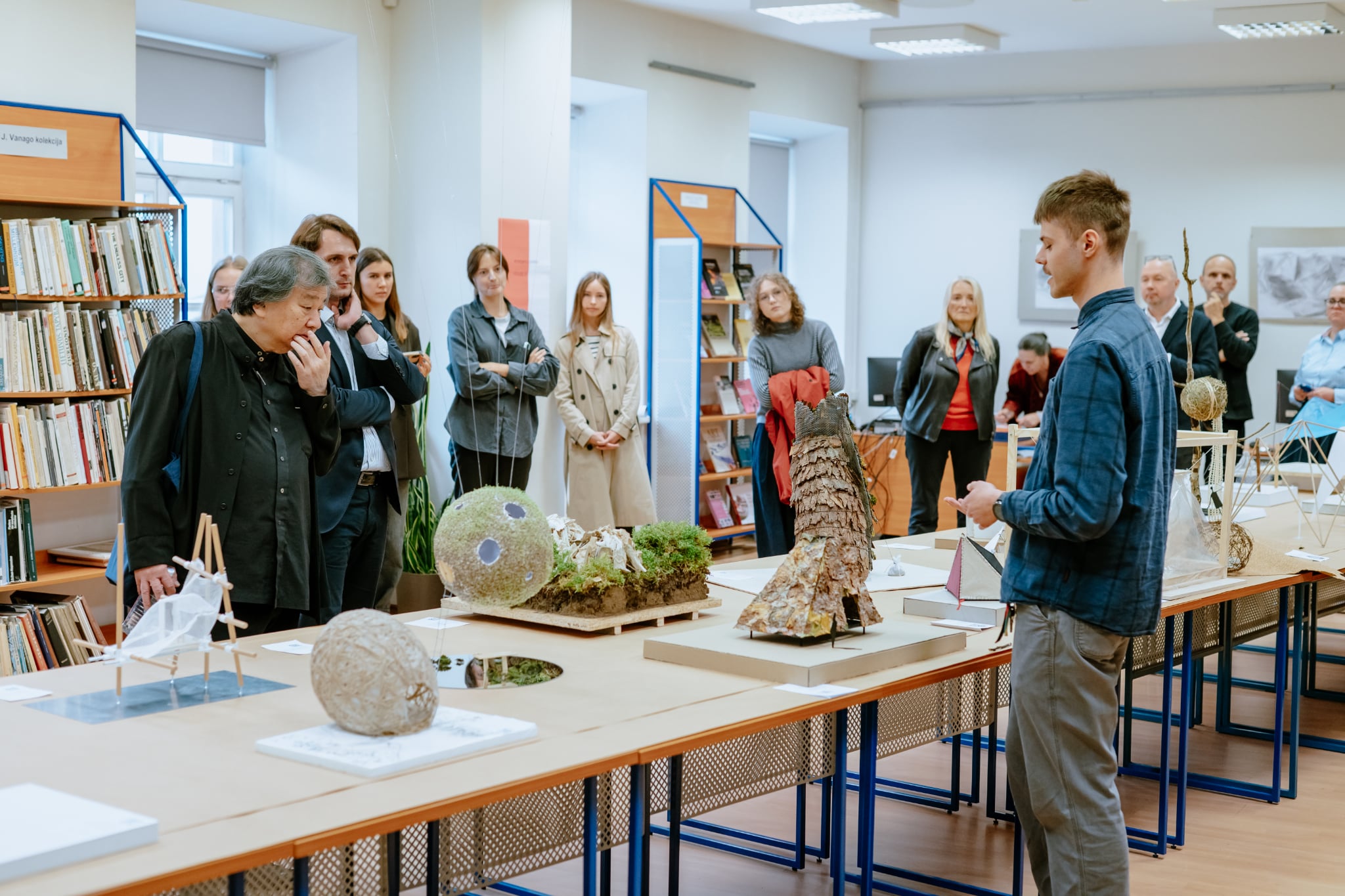
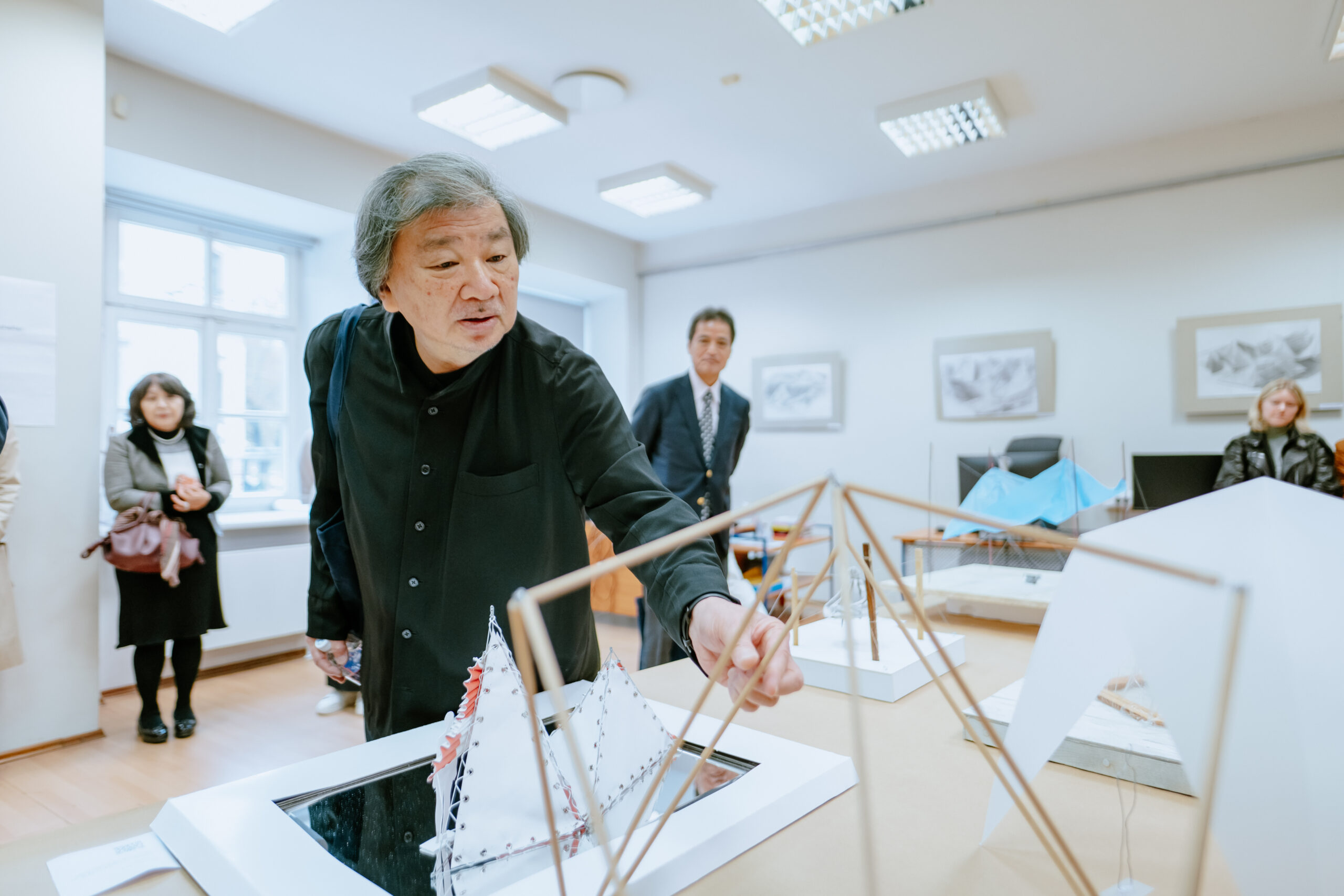
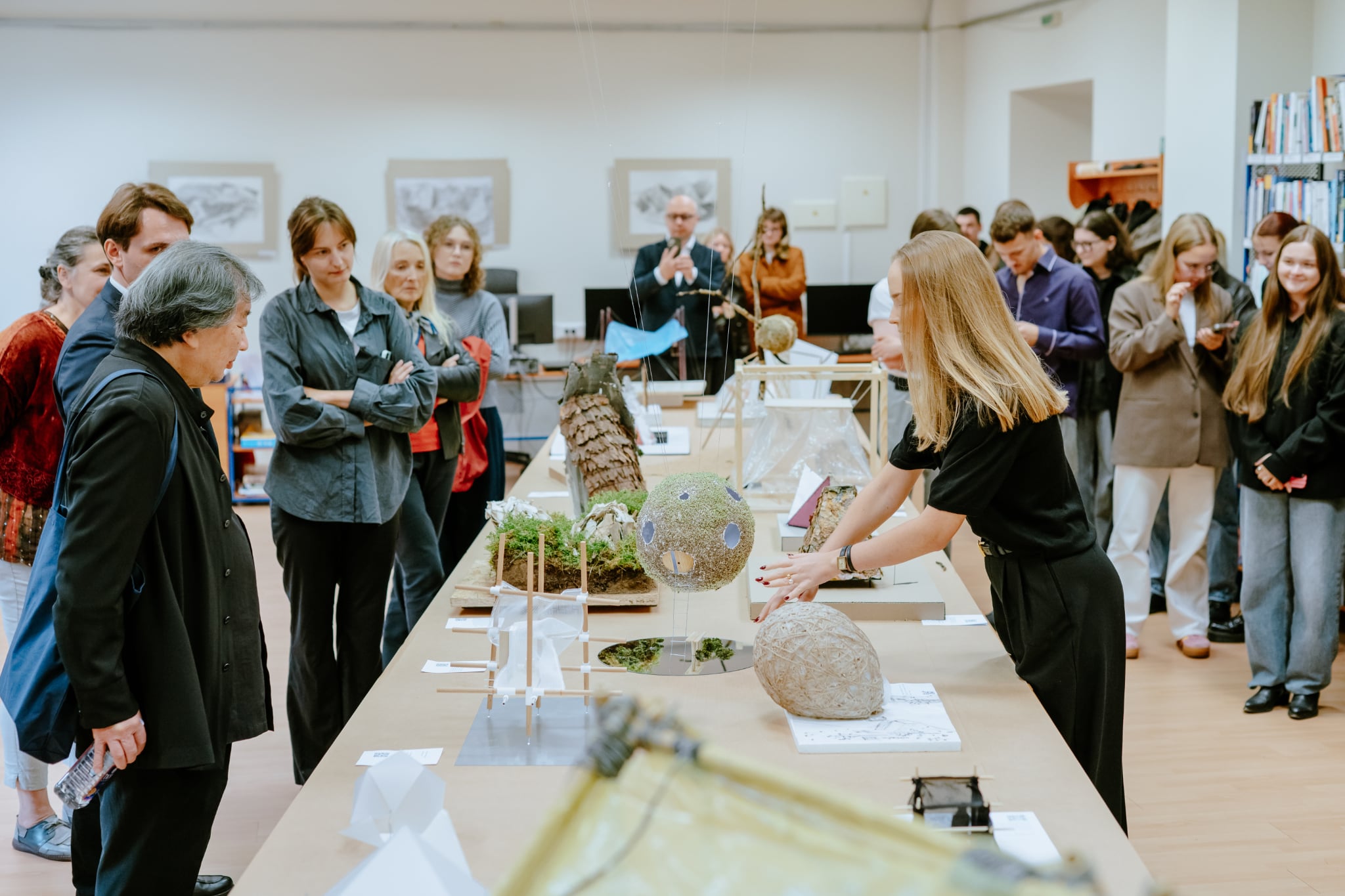
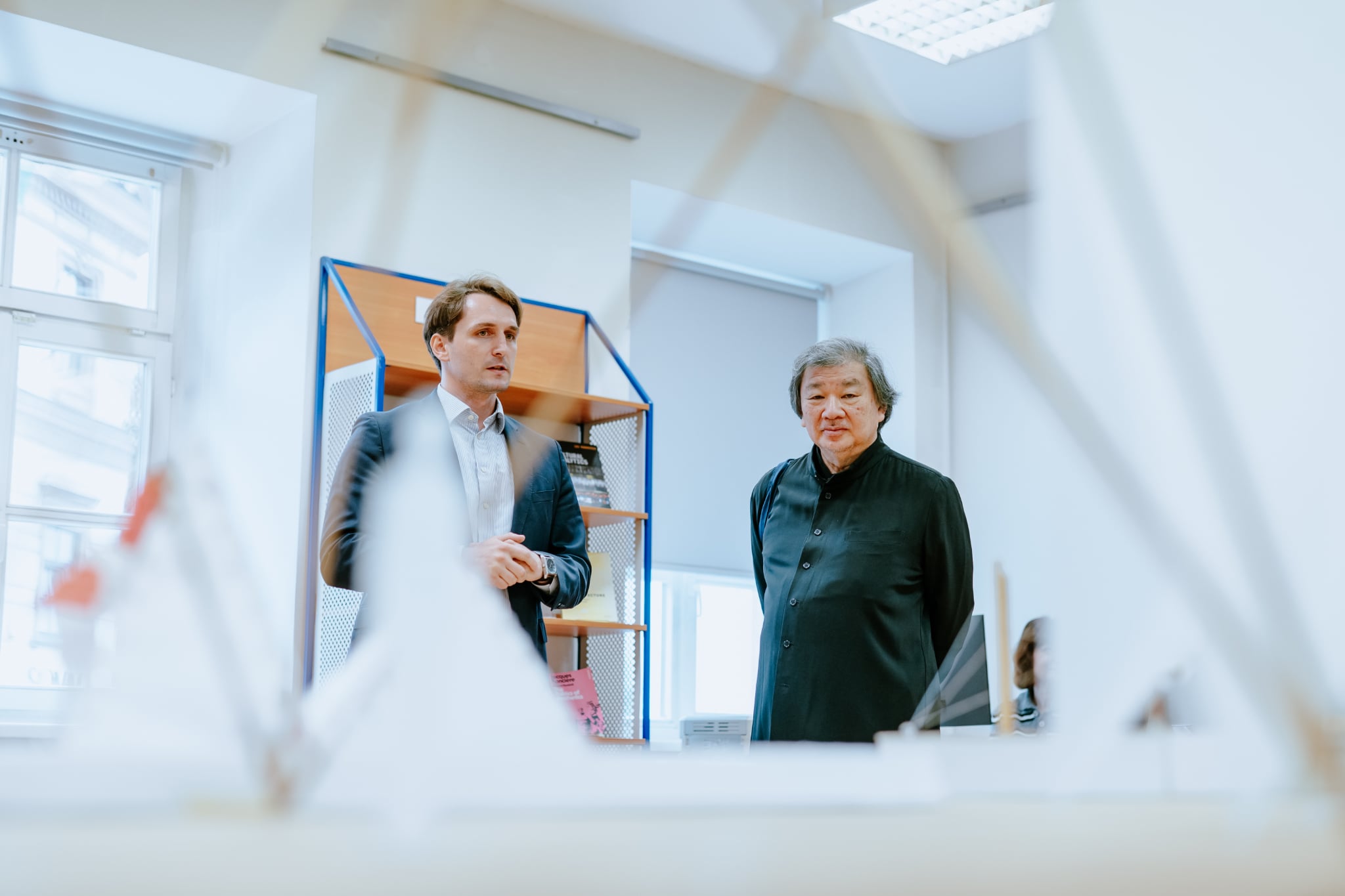
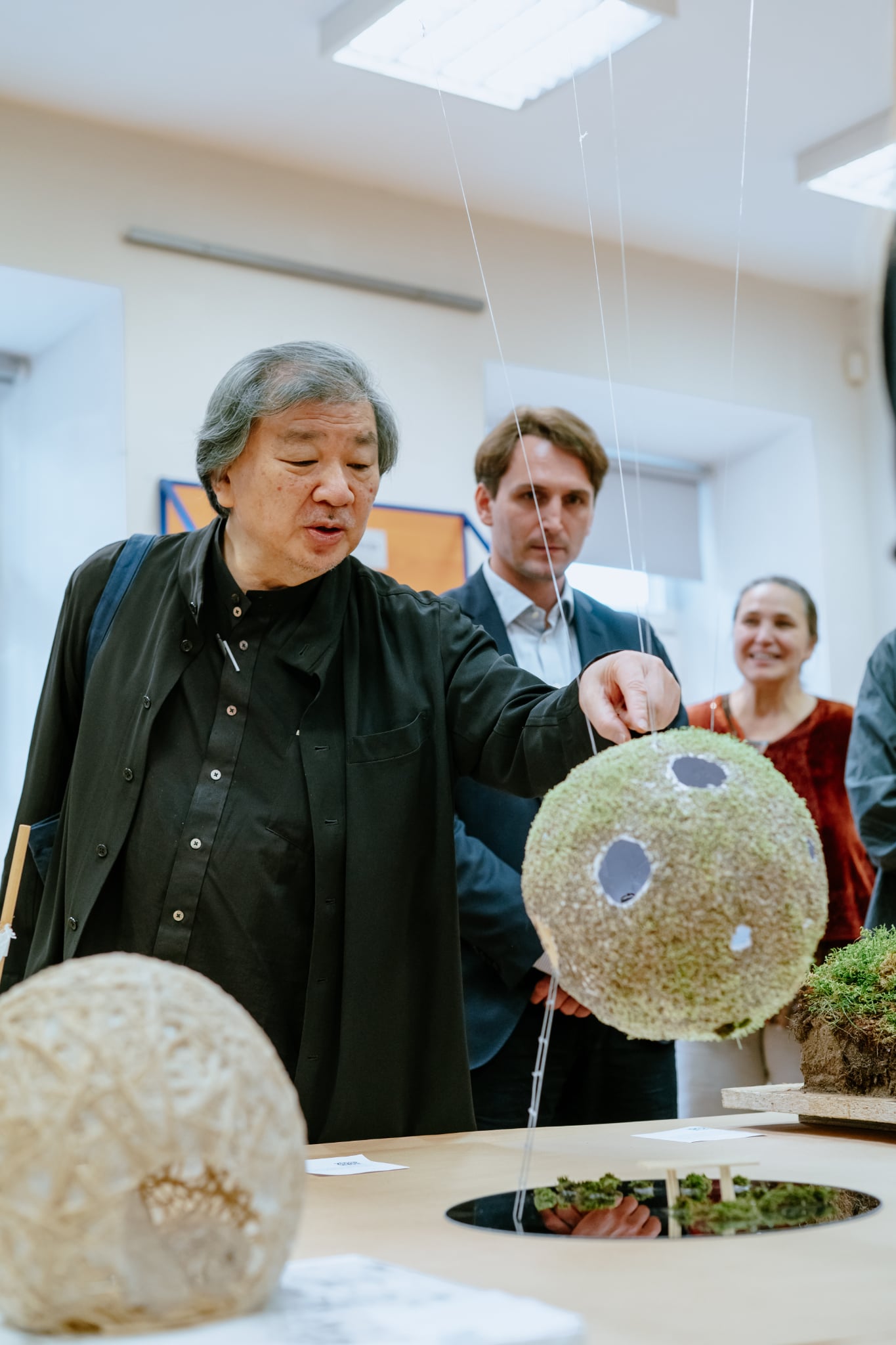
During his visit, the architect attended a review of the “Experimental Architecture” module for architecture students at VILNIUS TECH (led by architects I. Davulytė and Assoc. Prof. Š. Petrauskas).
In this intensive course, the students explored the issue of housing for people affected by disasters. They sought solutions that would allow disaster victims to quickly and easily assemble shelter using local materials.
The Maestro shared his insights with the students, emphasising first and foremost the resilience of spatial structures to changing environmental conditions and the importance of structural joints.
“The most interesting part of a spatial structure is the joint—make sure to devote enough time to it,” he advised the VILNIUS TECH students. It is precisely these structural solutions and joints that are among the most expressive elements of an architect’s creative work.
The Power and Responsibility of the Architect
“Earthquakes don’t kill people. Collapsed buildings do. That is the architect’s responsibility,” says Shigeru Ban. However, he also points out that architects have more projects to do when a city needs to be rebuilt. Still, he urges us to consider that people need somewhere to live until the projects are completed.
The architect is convinced that we have more power than just paper and a pencil—he himself traveled to Geneva, to the United Nations office, even though no meeting had been scheduled—because he was disturbed by what he saw at a refugee camp in Rwanda. Fortunately, he met a German architect responsible for building shelters, and over time, the project in Rwanda became one of many helping people around the world.
After disasters around the world, it is common practice to suggest people to stay in a single large space, such as a sports hall, but Shigeru Ban strongly disagrees with this and emphasises the importance of ensuring dignity: “Privacy is one of the fundamental human rights.” This is how a simple partition system made of paper tubes and fabric was born—a system that continues to evolve and helps people in different situations.
What is temporary, and what is permanent?
“Even a concrete structure, if it’s built to make money, is temporary. After 30 or 40 years, such a building may have to be torn down so that a more profitable one can be built in its place. But a paper building, if people have grown to love it, can remain,” says the architect.
In Kobe, Japan, after an earthquake, he designed temporary shelters which foundations were made from beer crates filled with sand, and walls were made from paper tubes. Admittedly, the architect and his team were disappointed when they approached a local brewery for the crates and received empty ones without any beer. But people lived there for more than a year.
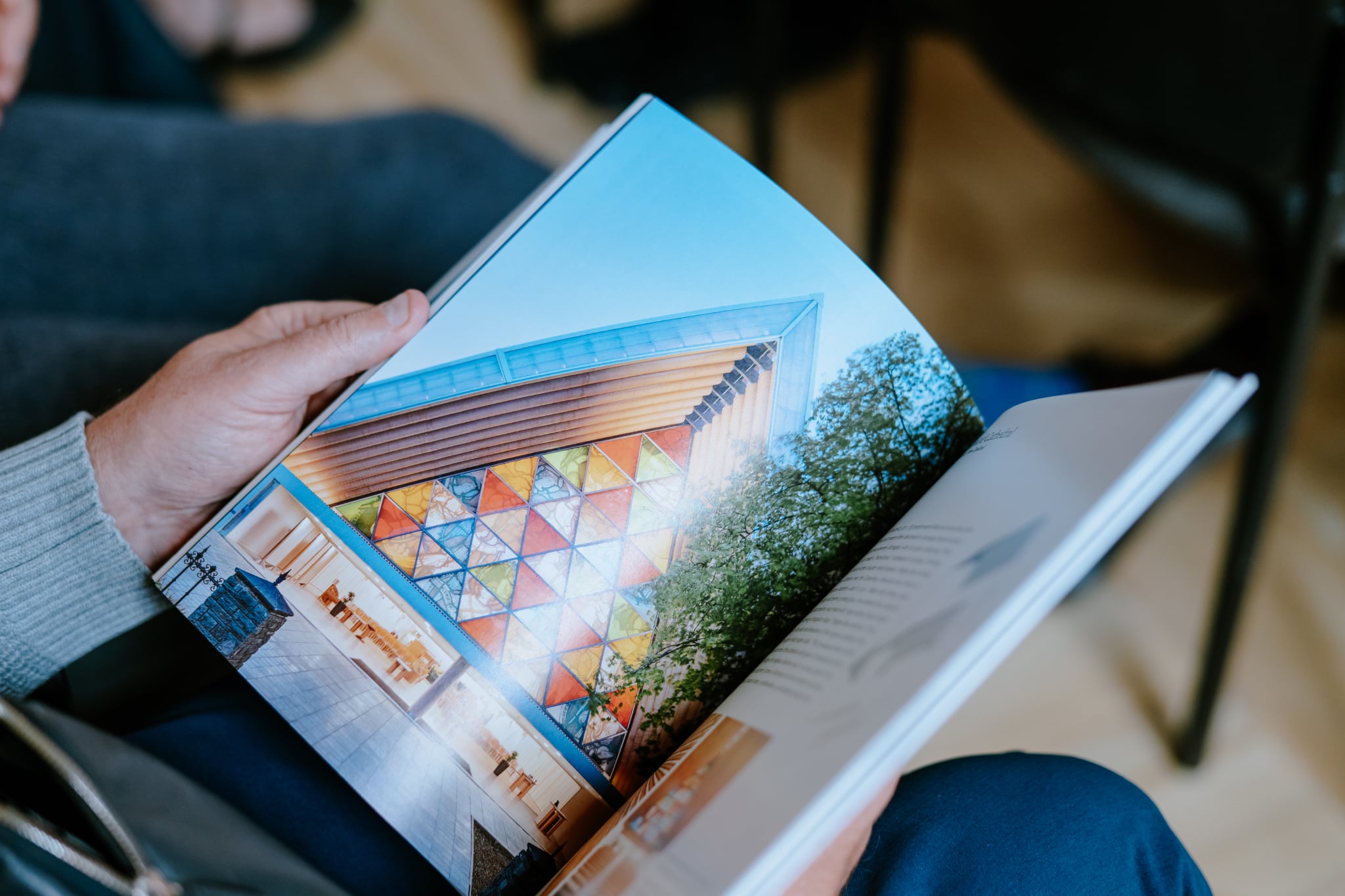
Using paper tubes and wood, he also built a 700-seat church in New Zealand after the brick church collapsed following the 2011 earthquake. The house of worship was meant to be temporary, but the church—which has become a symbol of hope and the city’s rebirth—still stands and attracts tourists.
Challenges in Ukraine
When Russia’s full-scale invasion of Ukraine began in 2022, Ban saw images in the news that he had already seen in other parts of the world. His team, together with volunteers from Poland, Ukraine, Slovakia, Berlin, and Paris, began manufacturing partitions for evacuation centres and distributing portable stoves for heating during power outages.
Together with Ukrainian partners, they are even working on one of their most ambitious projects—a hospital spanning approximately 25,000 square meters, built from locally produced cross-laminated timber and compliant with European Union building regulations.
As the architect explained, the city’s mayor is deliberately pursuing this approach so that, once the war ends, Ukraine will build according to standards befitting its future in Europe.
Shigeru Ban’s architecture is a language capable of addressing people’s most critical and urgent needs through creativity, intellect, and empathy. Perhaps in some situations there is a shortage of materials, while in others there is a lack of support, investment, or political will, but the architect will likely always say, “Let’s try.”
Shigeru Ban is one of the most influential contemporary Japanese architects; he was awarded the Pritzker Architecture Prize in 2014, received the Praemium Imperiale in 2024, and was honored with the American Institute of Architects (AIA) Gold Medal in 2026. He is an advisor to the United Nations High Commissioner for Refugees (UNHCR) and the founder of the nongovernmental organisation Voluntary Architects’ Network.
More about the architect: https://shigerubanarchitects.com/
Architect Shigeru Ban’s lecture in Vilnius was organised by the Faculty of Architecture at VILNIUS TECH and the Embassy of Japan in Lithuania.
Photos: Rimgaudas Barauskis
Galerija