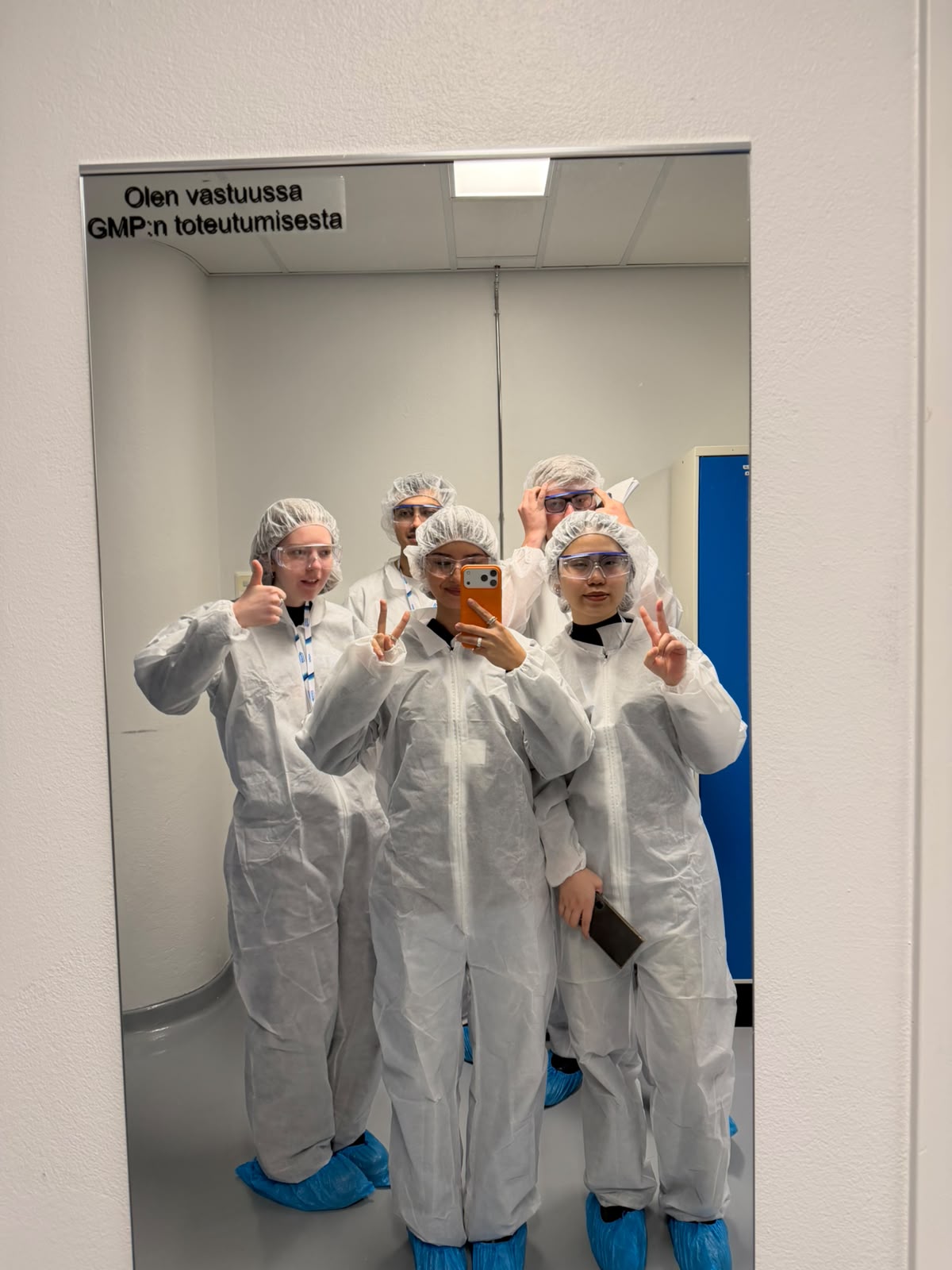
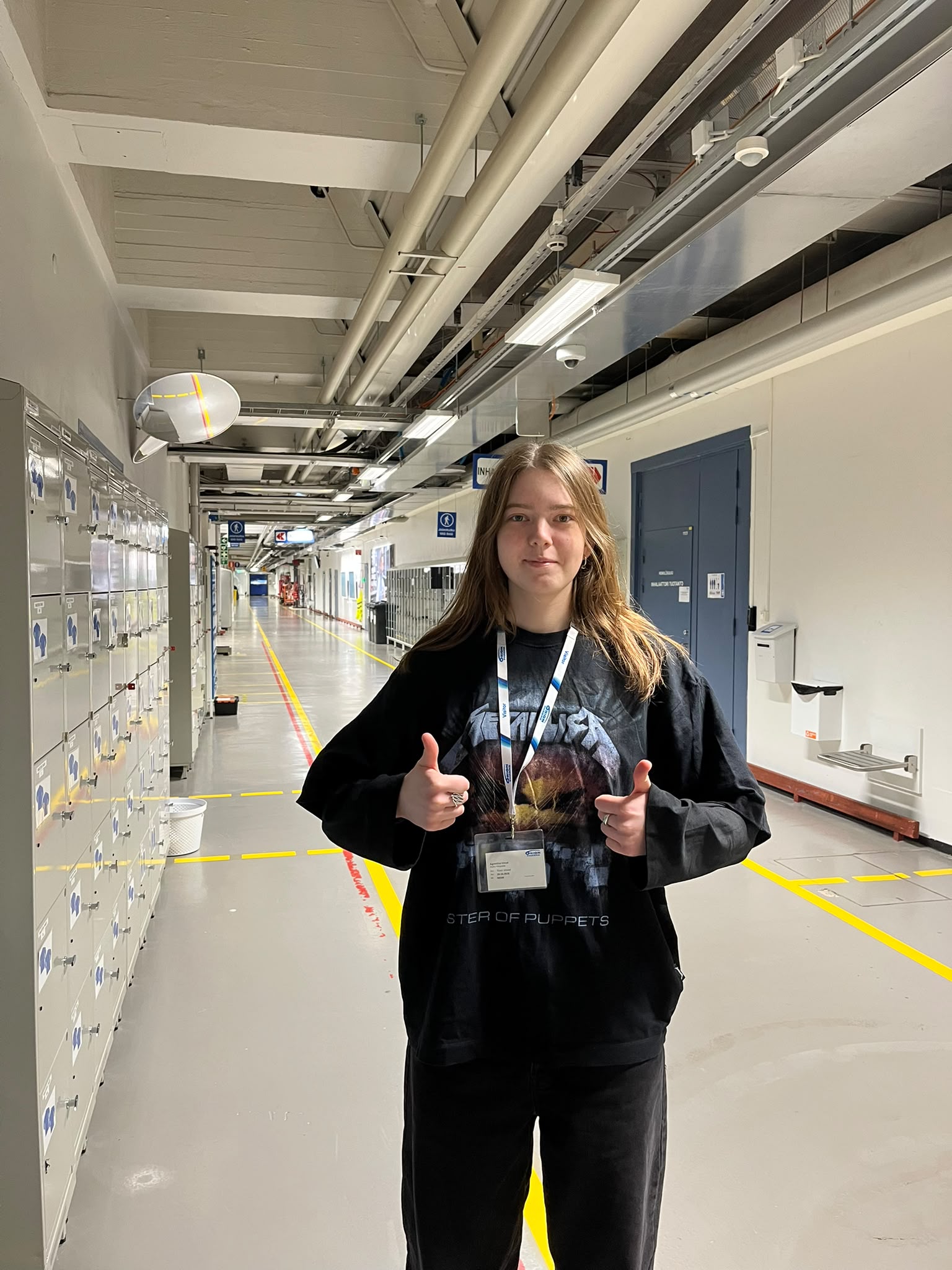
Inside a laboratory with one of the strictest security levels, three VILNIUS TECH industrial product design students, dressed in protective suits, are getting a behind-the-scenes look at a Finnish pharmaceutical plant. This activity is part of the Product Development Project (PdP) programme at Aalto University. For the third consecutive year, VILNIUS TECH students have joined this project, which is coordinated at the university by the VILNIUS TECH “LinkMenų fabrikas”.
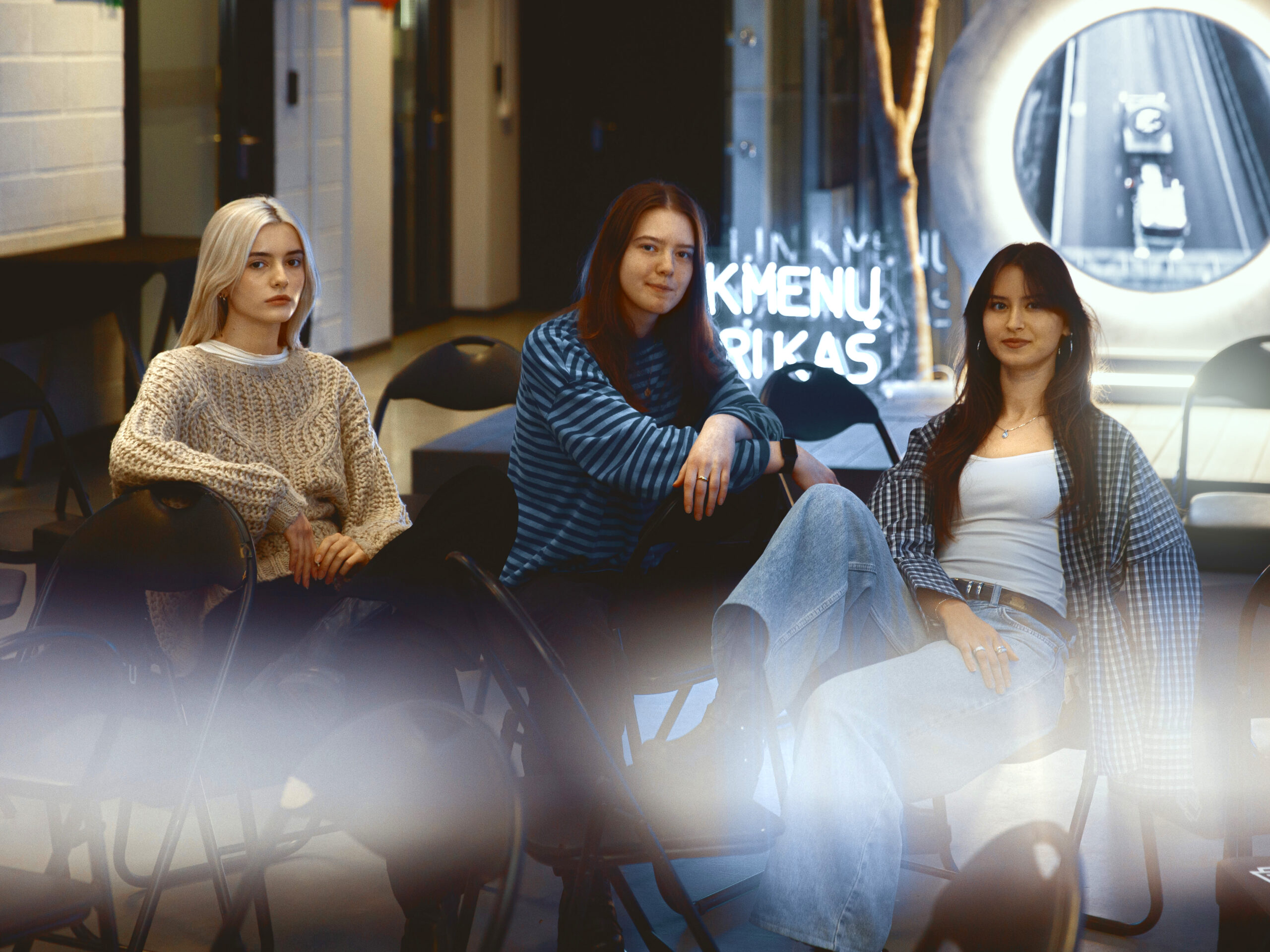
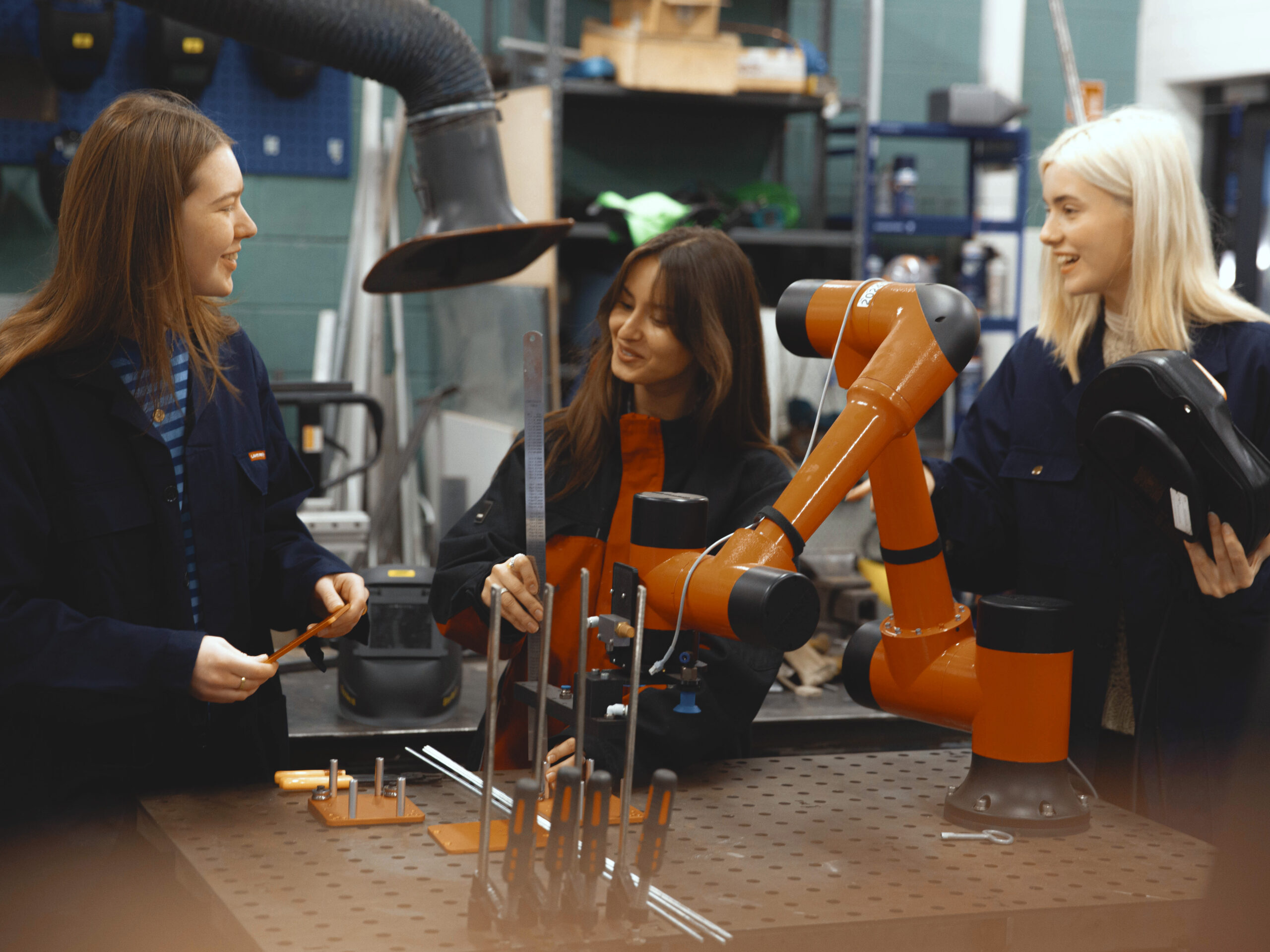
This year’s “LinkMenų fabrikas” PdP team consists of three third-year industrial product design students: Magda, Agnieška, and Skaistė. They accepted the challenge to join the programme and spend nine months working alongside Aalto University students to solve a problem for “Orion Pharma”, a company that manufactures medicines for both humans and animals.
The “Orion Pharma” Challenge: Developing an Automated Solution for Ejecting Medicine Ampoules
According to the PdP participants, employees in one of the company’s laboratories currently have to use physical force to push a large number of medicine ampoules from metal trays onto a conveyor belt, which then moves the ampoules into a quality control device. This repetitive task requires continuous physical effort and places a significant strain on the staff.
“Therefore, our team’s goal is to create a solution that automates the ejection of the ampoules. The solution needs to be functional, integrate seamlessly into the laboratory environment, avoid disrupting daily operations, and require no changes to existing production processes,” explains team member and VILNIUS TECH student Skaistė Aleksevičiūtė.
Support from VILNIUS TECH Alumni and the Research Process
The team is currently conducting benchmarking research, analysing various information sources, and communicating with the owners of the challenge. Rokas Bagdonas, Head of the Prototyping Laboratory at VILNIUS TECH “LinkMenų fabrikas”, is an international lecturer for the PdP programme who mentors and supports the VILNIUS TECH student team.
According to him, this year’s challenge is particularly difficult because the designed prototype must not only operate smoothly but also blend imperceptibly into the existing production line while meeting stringent laboratory safety requirements.
“The team is currently in the research phase – both the local students at Aalto University and the international students from VILNIUS TECH are analysing existing market alternatives and their limitations. We have also introduced our students to university alumni who run a company specialising in manufacturing equipment. During their meeting, the students were able to gain a better understanding of the operational specifics of production lines and equipment,” says Rokas Bagdonas.
Although the team still has a long journey ahead, with the final presentation of the solution taking place in Helsinki in May 2027, the students have already completed the first part of the programme, which concluded with a visit to Aalto University.
An Intensive Sprint: How to Build a Prototype in Six Hours
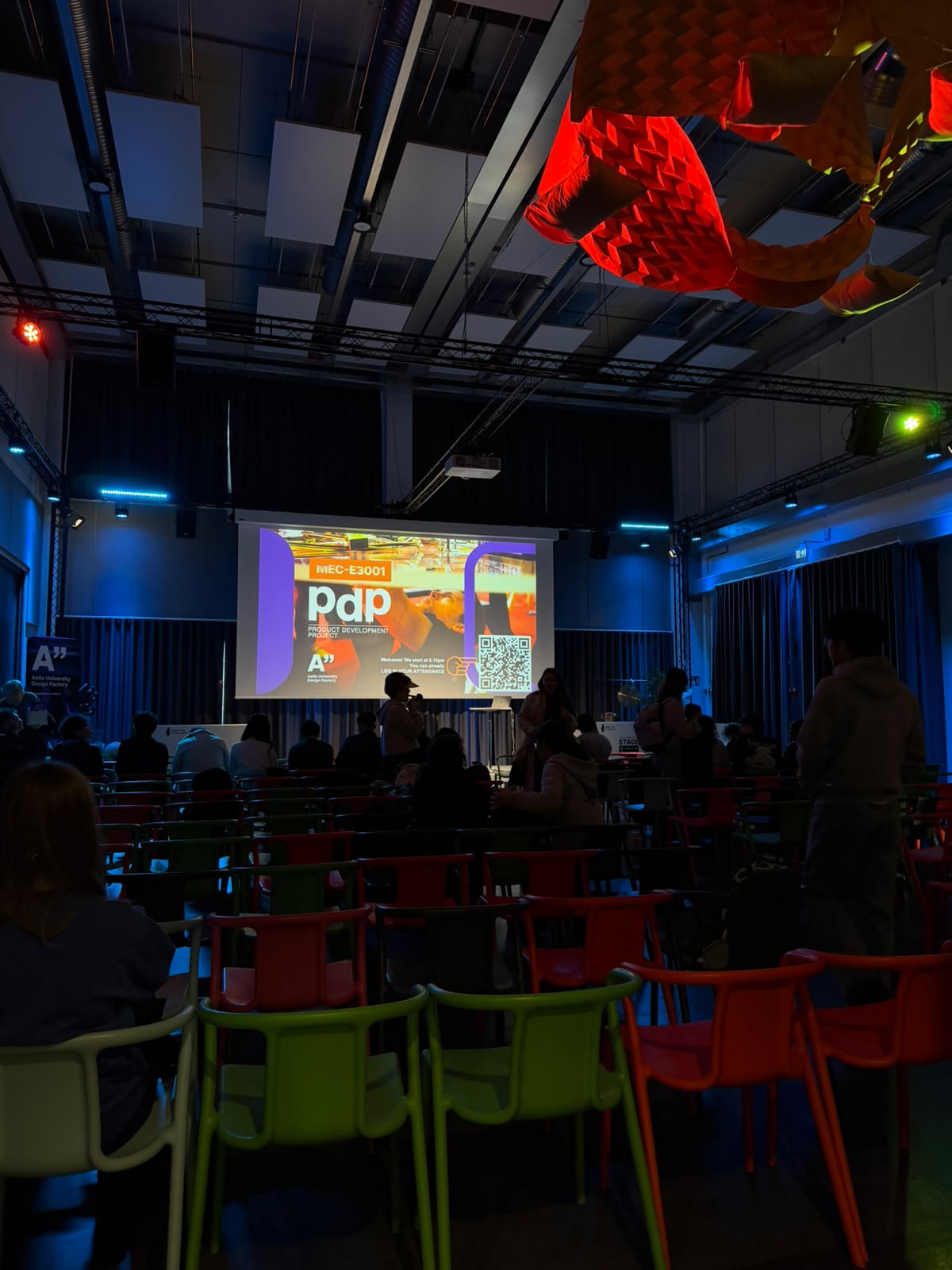
During the first week of October, Aalto University hosted a PdP sprint designed to simulate the entire PdP experience in just six hours.
“During the sprint, international groups formed teams with other Aalto University students and created simple prototypes while exploring various potential solution alternatives. The teams brought their creative ideas to life and developed their first models – ranging from small cardboard systems to full-scale structures,” says Monika Grinevičiūtė, the PdP programme coordinator at “LinkMenų fabrikas”.
Moving into the second phase of the programme, the teams face weekly lectures, followed by dedicated time for teamwork. In December, Aalto University and international programme lecturers will meet with the teams they supervise to review and assess their progress.
Over 30 Years of the International PdP Programme
PdP is an international programme with a three-decade history, organised by Aalto University in Finland. The core objective of the course is to give students the opportunity to participate in a real product development process, collaborating with actual industry partners. The programme is based on the principle of passion-based learning, which encourages creative problem-solving.
During their participation in the PdP programme, VILNIUS TECH students have already solved challenges for two companies and built two prototypes. One of these is the autonomous mine-detection drone DOLYA, which students developed in response to a challenge from the global aerospace and defence company “Saab”.
Most recently, last year’s team developed a medical device for Helsinki University Hospital (HUS), Finland’s largest healthcare provider. Their invention automated the tracking of diuresis (urine output) – a critical hospital metric that is traditionally monitored manually. The project not only won the PdP ‘Best Team’ award but also successfully started the patenting process.
Galerija