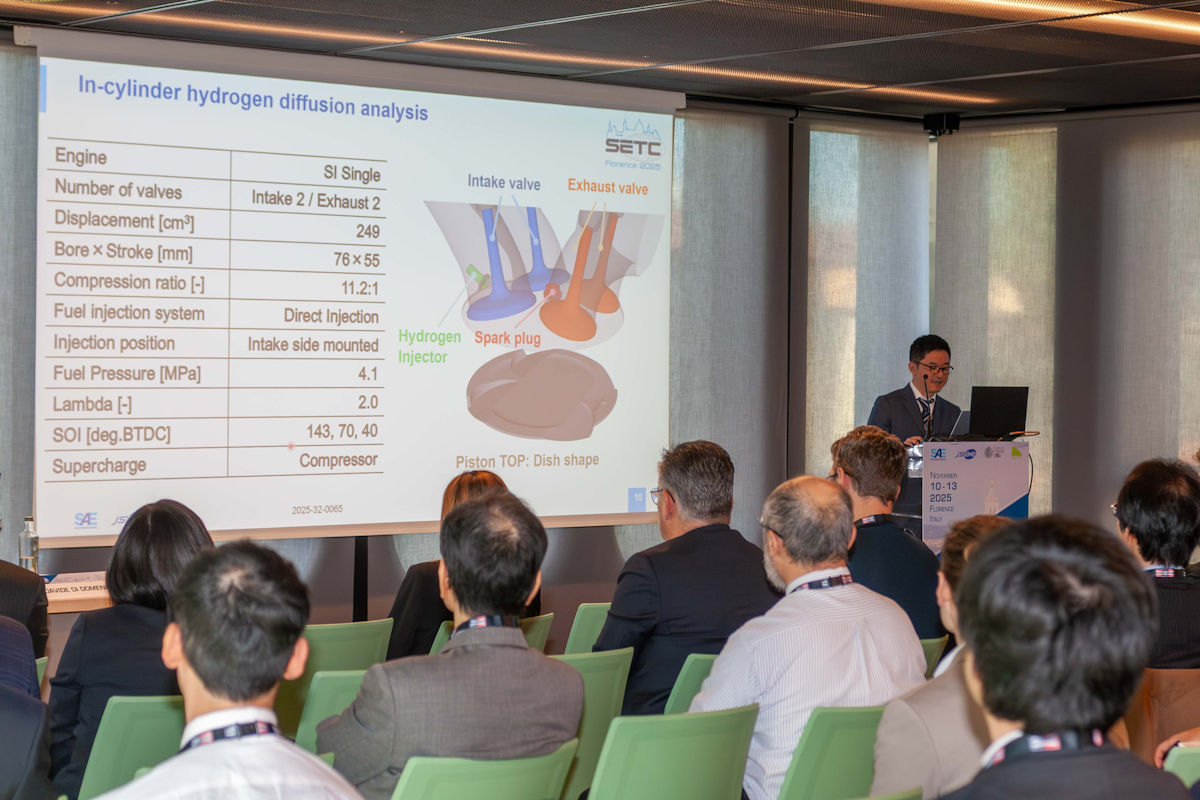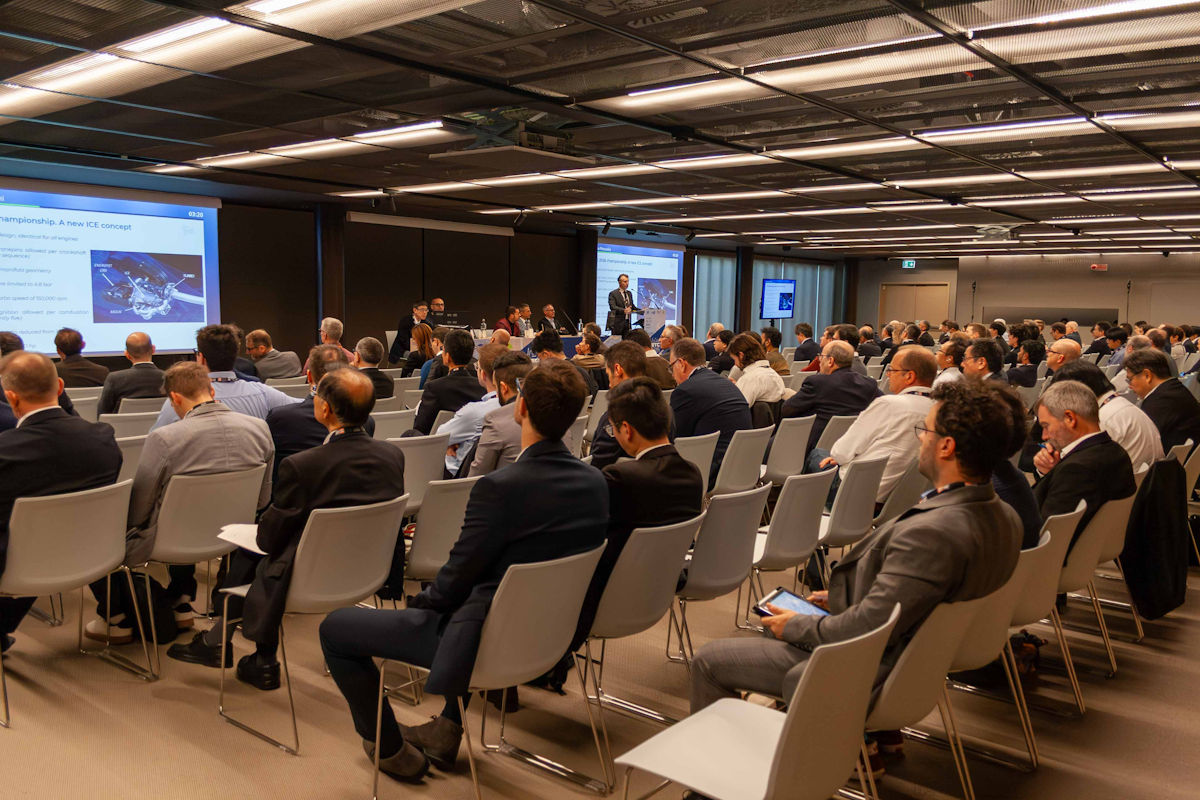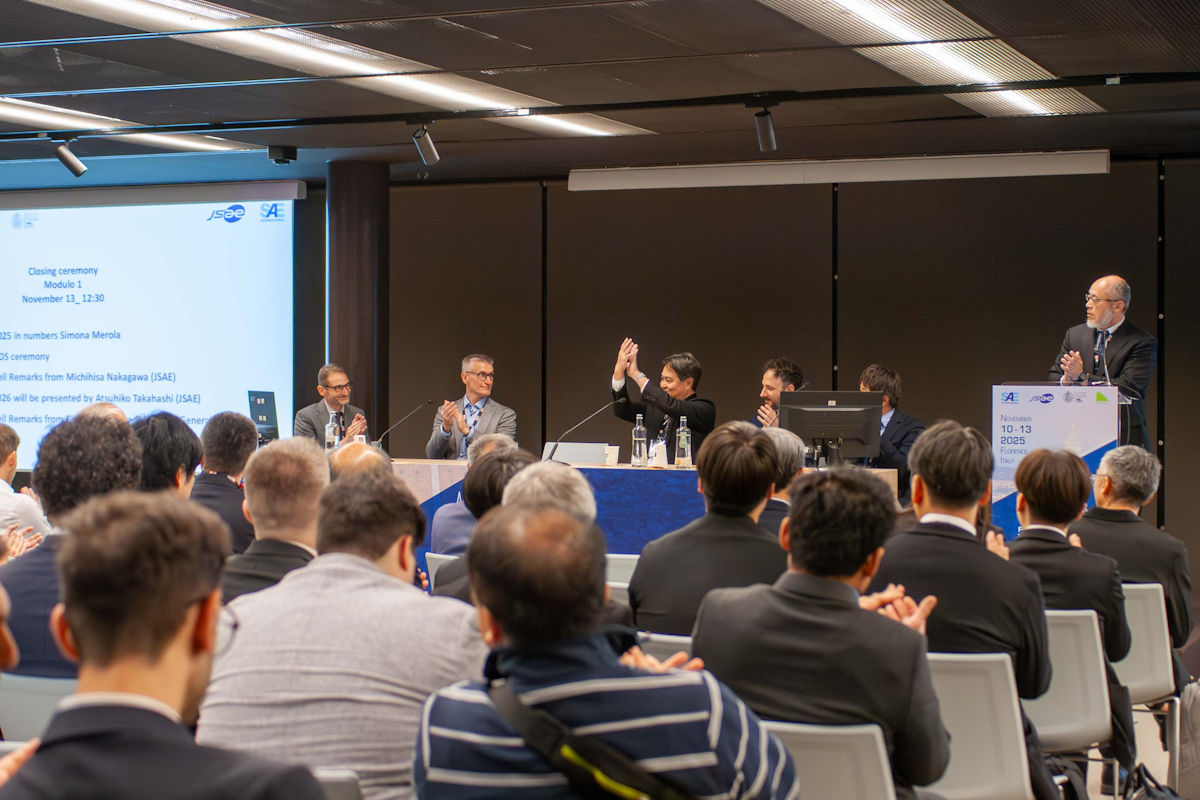
On November 11-13, the 29th international conference "SAE World Congress Experience (WCX). The 20th Small Powertrains and Energy Systems Technology" was held in Florence, the Italian capital of art and culture. This conference, organized by the Society of Automotive Engineering, is on the list of prestigious conferences of VILNIUS TECH. Scientists from the Faculty of Transport Engineering of VILNIAUS TECH, Prof. Saugirdas Pukalskas, Prof. Alfredas Rimkus, Assoc. Prof. Romualdas Juknelevičius, together with their colleague from the Częstochowa University of Technology, Prof. Stanislaw Szwaja presented their findings on the influence of hydrogen on a compression ignition engine using renewable fuels. The results of scientific research were obtained during the implementation of the Mission-Based Science and Innovation Program No. 02-002-P-0001/ R&D project "Use of Green Hydrogen in the Transport Sector" (VANTRA project manager – Saugirdas Pukalskas, 10.13-2024-9 (T24T030464)).
Over 300 scientists, specialists, engineers and experts gathered in Florence, which is better known for the famous artists who created there, such as Giotto di Bondone, Leonardo da Vinci, Dante Alighieri, Raffaello Sanzio, Giovanni Boccaccio, Michelangelo Buonarroti. By the way, Florence is famous not only for its arts, but also for its historical achievements in the field of engineering creativity. It was in this city that engineers E. Barsanti and L. Matteucci presented their invention on June 5, 1853 – "Obtaining Power in an Engine by Exploding Gases", historically the first internal combustion engine, which they patented in England a year later. Enthusiasts of engineering creativity presented a working replica of the first engine at the Palazzo degli Affari, where the conference was held, which aroused great interest among the event participants. Well known international companies presented their works at the conference: Bosch, Pierburg, Brembo, ENI, Aramco, Pirelli, Toyota, AVL, Honda, Suzuki, Ducati, Kawasaki, Kubota, Yanmar, as well as universities and research centers from Graz, Dalian, Florence, Chalmers, Braunschweig, Karlsruhe, Tokyo, London, Hokkaido, Turin, Bologna and Vilnius.
The following sections were at the conference: advanced combustion process, renewable energy and alternative fuels, two-stroke engines, hybrid and electric drives, emissions and environmental impacts, small energy systems, diesel engines, vehicle dynamics and safety, powertrain controls, materials and manufacturing, measurement and simulations.
Top-level executives representing international companies spoke during the plenary sessions. Hideyuki Goto, General Manager of Kubota's Engine Engineering Division, is responsible for engine development as well as new internal combustion engine technologies, including alternative fuels such as hydrogen, HVO (hydrotreated vegetable oil). In his presentation "Without limits, unstoppable engine innovation", he highlighted the importance of environmental impact and discussed opportunities to pave the way for a greener and more sustainable future. Hiroya Ueda, Head of Honda Motorcycle Powertrain Development Division and Chairman of the Hydrogen Small Mobility and Engine Technology Association (HySE), summarized the manufacturers' approach to fundamental research on hydrogen internal combustion engines. Corrado Fittavolini, Project Manager for Biofuels, Biocomponents and Racing Fuels at ENI (Italian: Ente Nazionale Idrocarburi) S.p.A., discussed issues of renewable synthetic fuels, the development of new biofuels and legal regulation.
The conference featured many presentations related to the project “Implementation of Green Hydrogen in the Transport Sector” conducted by scientists from the Faculty of Transport Engineering at VILNIUS TECH. The scientists shared the results of their research and conclusions on the influence of the formation of a hydrogen-fuel mixture in the cylinder on the combustion process, the analysis of the characteristics of hydrogen flame propagation, the influence of intake air heating on combustion, the analysis of the combustion process developing in a hydrogen-HVO dual-fuel system using the chemiluminescence of OH and CH radicals, and the study of the detonation characteristics of hydrogen in a spark-ignition engine at high compression ratios.
The article “Hydrogen-Assisted Renewable Fuels RME and HVO in the Compression-Ignition Engine” was presented and published in the SAE International journal on November 3, 2025 (see link https://doi.org/10.4271/2025-32-0048). The article presents the results of the research conducted during the project. The article presents the research results on performance, thermodynamic parameters, and toxic exhaust emissions from the combustion in a compression-ignition engine fueled optionally by the HVO or the RME (rapeseed methyl ester), both with hydrogen addition. During the study, it was found that hydrogen added in small amounts (not exceeding 7% by volume) does not form the so-called knock originating from hydrogen rapid combustion and is not related to the knock of HVO and RME combustion.
During the conference, the latest techniques of hydrogen use in internal combustion engines were presented. There were announced and presented the latest political, social and economic problems related to the use of green hydrogen, which are faced by car engine manufacturers and fuel supply infrastructure development companies. Recently, the opposition of top managers of car manufacturers to the EU decision to completely stop the production of cars with internal combustion engines from 2035 has been increasingly heard. The managers do not object to the EU's goal to reduce the impact of the greenhouse effect on the environment, but at the same time they claim that the planned deadline would have negative consequences for the currently successfully operating and rapidly developing internal combustion engines and the entire automotive industry. Such a decision, looking at the perspective of the current geopolitical situation, is quite dangerous and could lead to new dependencies. In order to slow down the accelerating global warming, it is necessary to assess the entire life cycle of a vehicle and its carbon footprint, as well as the impact of environmentally neutral, renewable fuels such as synthetic fuels, green hydrogen and HVO.
This opinion was confirmed and strengthened by the results of research published by the conference speakers and the proposed smart solutions, the implementation of which could contribute to the conservation of natural resources and the reduction of pollution. It is likely that even in 2053, when the 200th anniversary of the invention of the internal combustion engine will be celebrated, this engine, which runs on pure green hydrogen and leaves no carbon footprint, will find its place in a sustainable transport and energy system. By the way, Italian engineers E. Barsanti and L. Matteucci tested their first engine using hydrogen.
Galerija