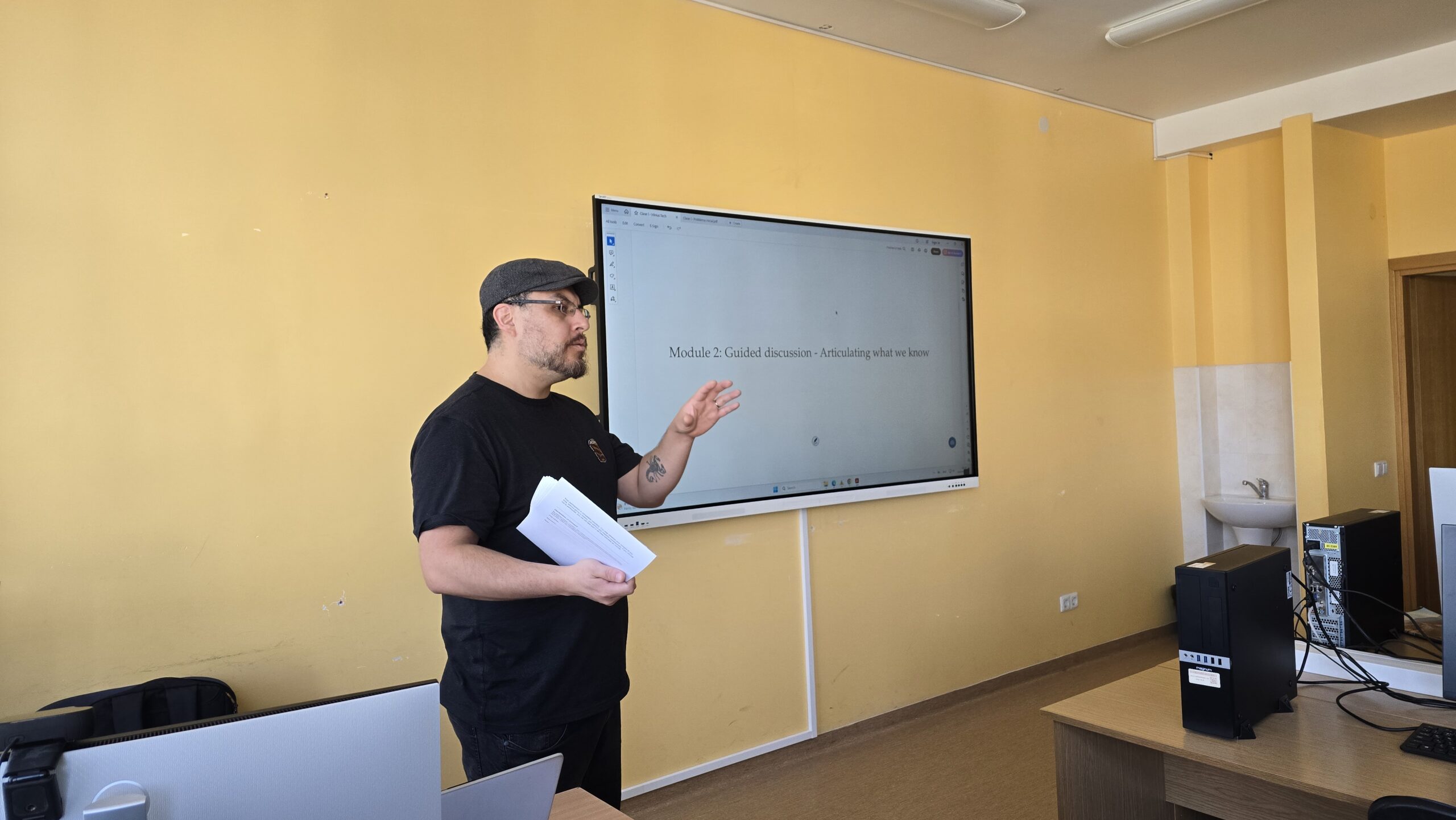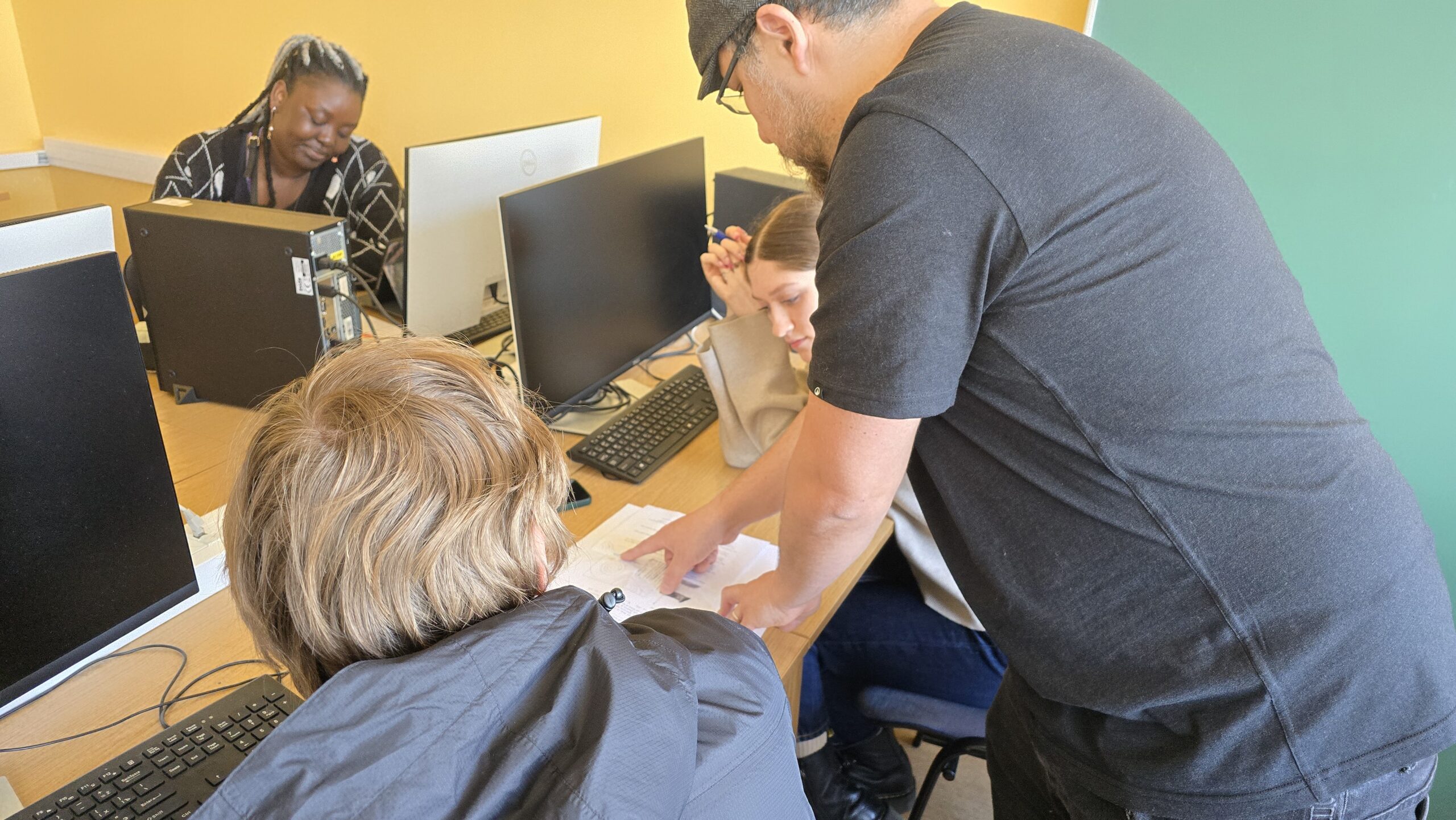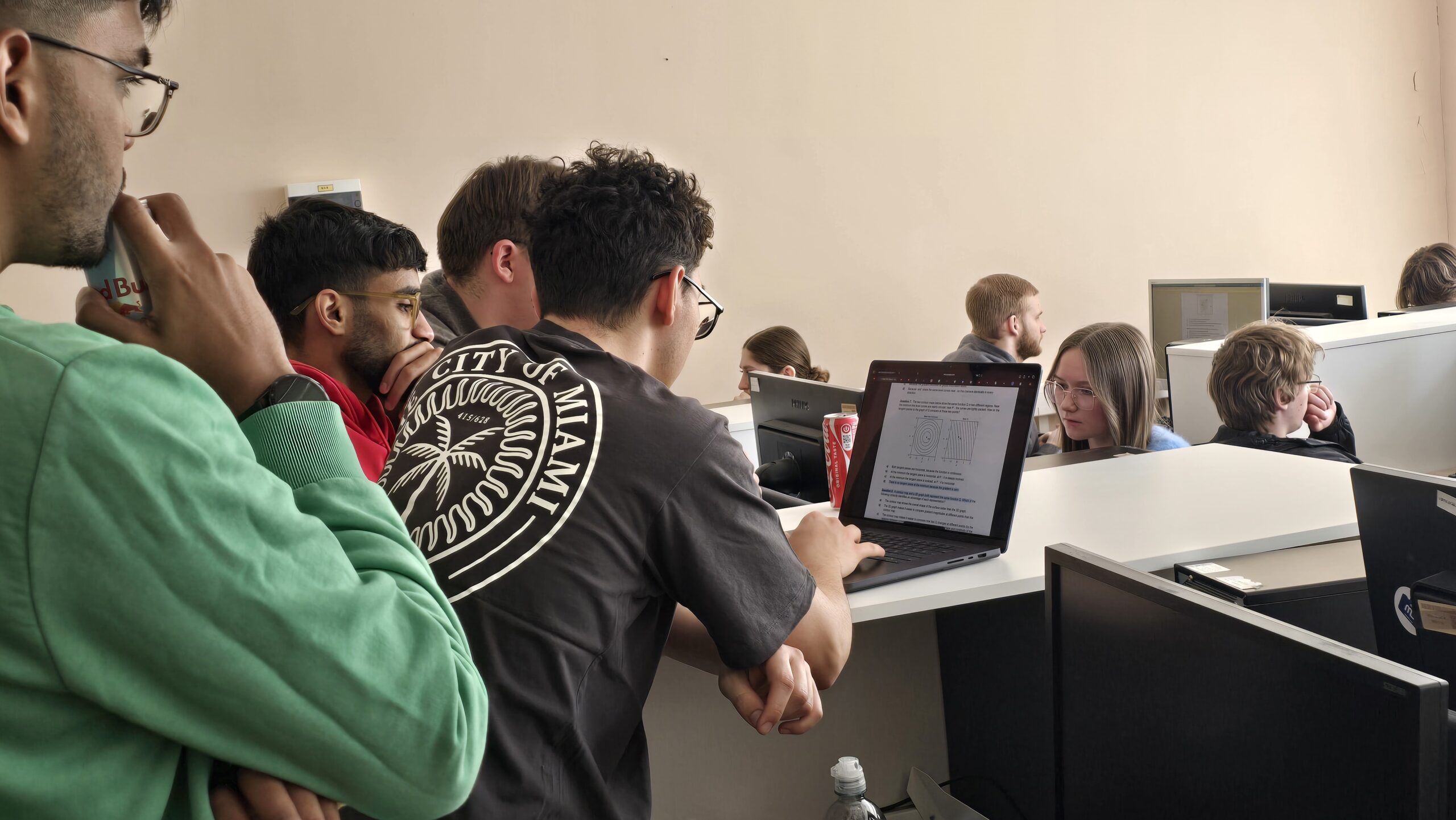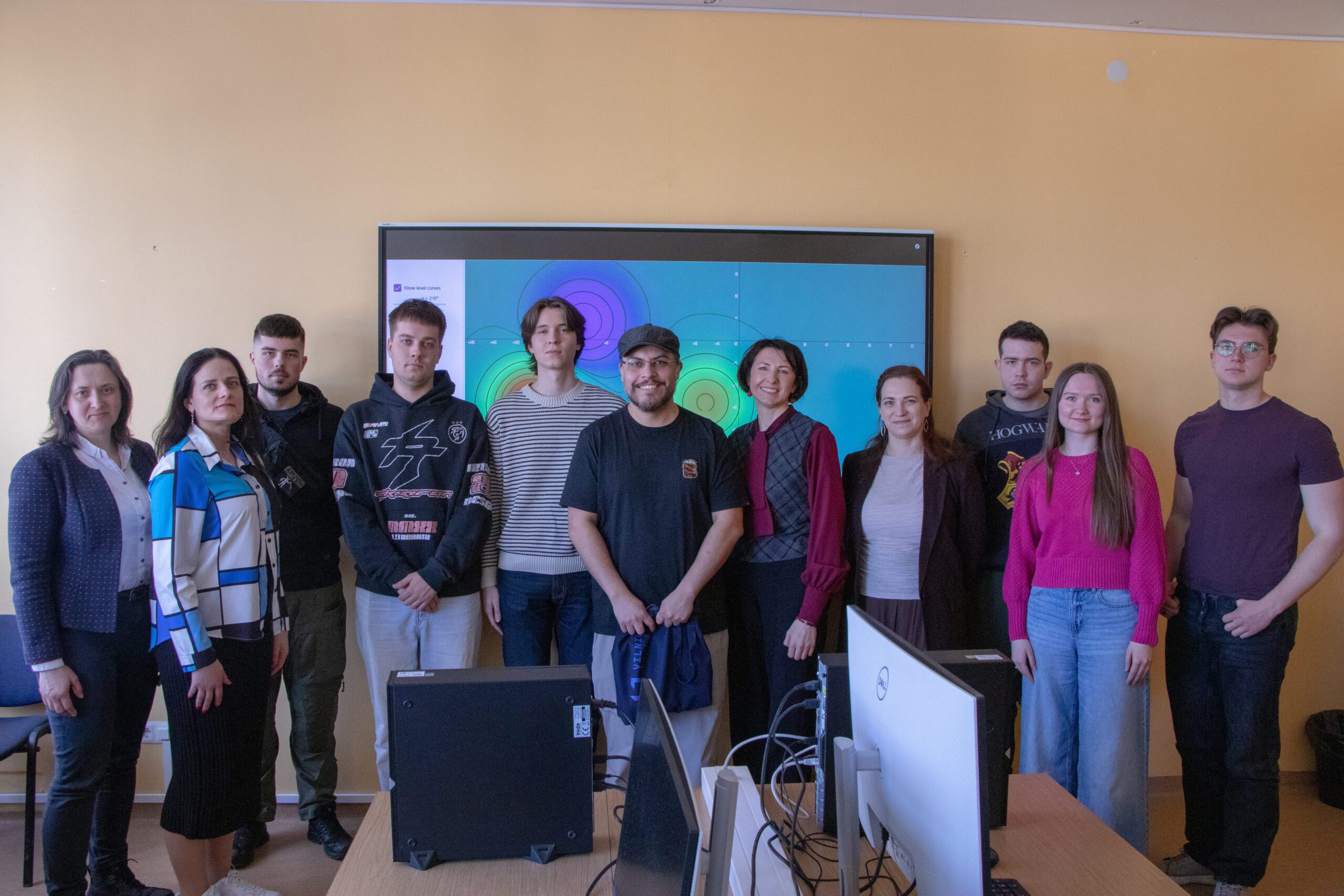
On April 20–24 of this year, the Department of Mathematical Statistics at the Faculty of Fundamental Sciences of VILNIUS TECH hosted Fabian Contreras Barraza, a mathematics lecturer from Universidad Técnica Federico Santa María (Chile), during an ERASMUS+ teaching visit.
The purpose of the visit was to share experience in teaching higher mathematics, present innovative teaching methods, and strengthen international cooperation in the field of mathematics didactics. Such visits contribute to improving the quality of studies and encourage the integration of modern technologies into the teaching process.
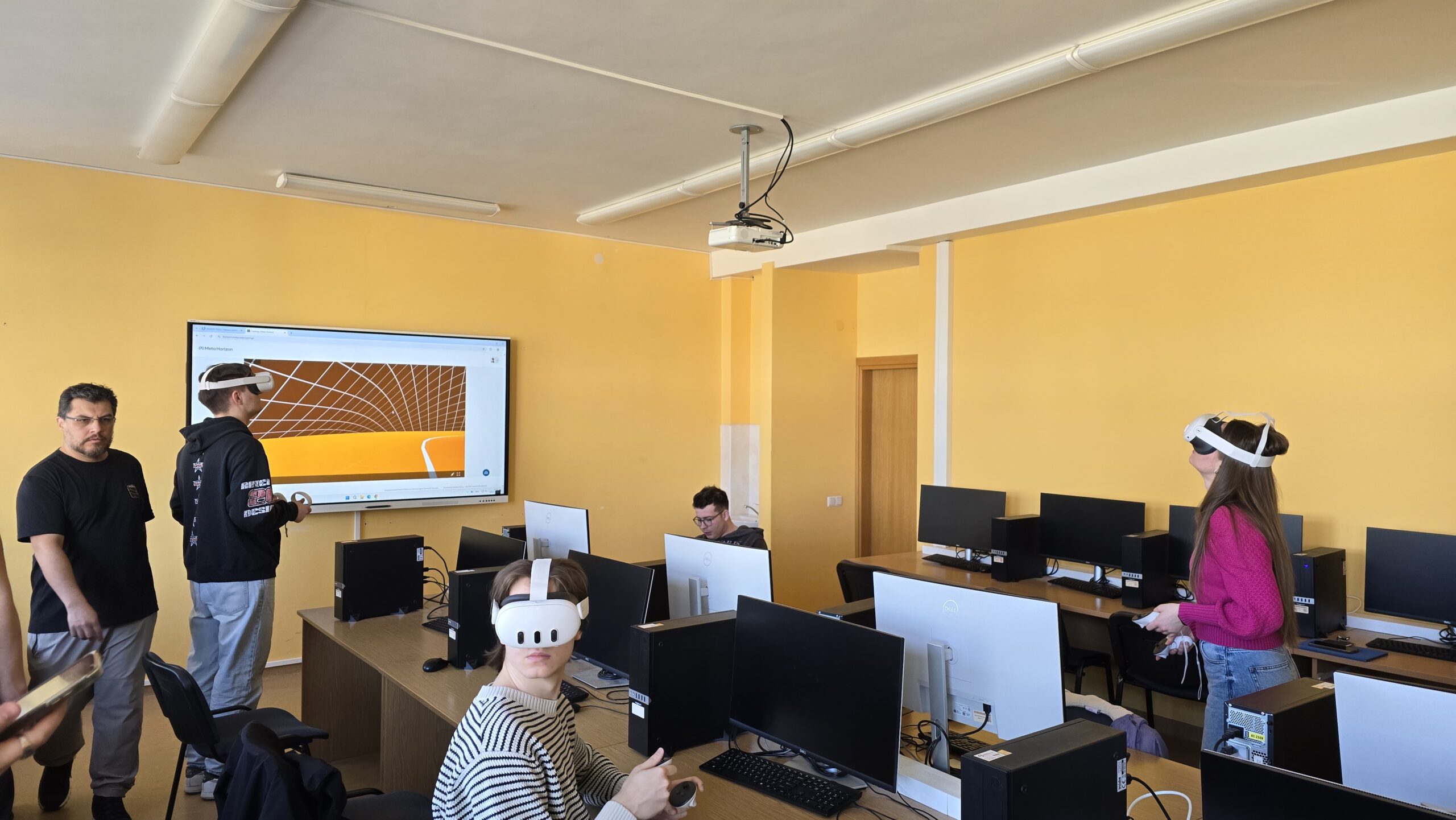
During the visit, the guest lecturer conducted classes for third-year students of the “Data Analysis Technologies” study programme. Active teaching methods were applied to encourage student engagement and independent thinking. Students participated in:
- group work
- scientific discussions
- experimental activities
- the use of virtual reality (VR) tools and GeoGebra
The eight-hour lecture cycle was designed based on the principles of the semiotic representation theory developed by Raymond Duval. These principles emphasize the importance of multiple representations of mathematical objects and the ability to transition between them. Such transitions are considered essential for achieving deeper mathematical understanding.
These principles were applied in lectures focused on directional derivatives and gradient concepts of multivariable functions. The learning process incorporated discussions, group work, and interactive virtual reality environments that enabled students to visualize multidimensional mathematical structures and better understand complex concepts.
During the lectures, individual attention was given to each student, and open discussions at the end of the sessions encouraged reflection and critical thinking. Observing students’ activity, engagement, and positive working atmosphere, it can be concluded that the applied methodology is effective in increasing student motivation and improving learning outcomes.
In addition to teaching activities, meetings and discussions were held within the Department of Mathematical Statistics regarding mathematics teaching methodologies and research topics. Opportunities for further international cooperation were discussed, including potential joint projects and academic exchanges.
The Head of the Department of Mathematical Statistics expresses sincere gratitude to colleagues, the Faculty of Fundamental Sciences administration, and the Multimedia Design Laboratory for their support and cooperation, which ensured the smooth implementation of the visit activities.
Galerija