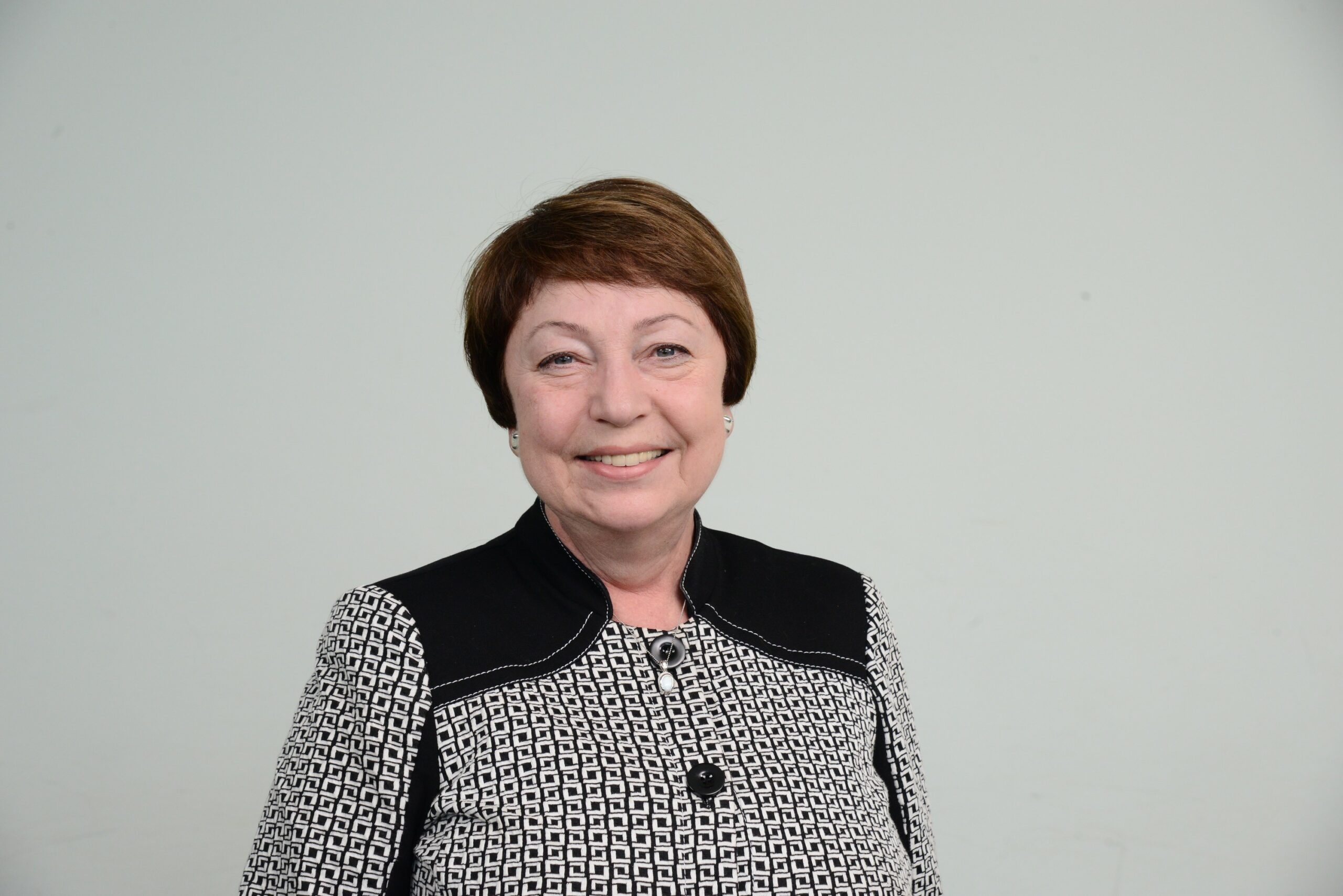
For several decades in VILNIUS TECH lecture halls and the scientific community, Emeritus Prof. Dr. Marija Burinskiene from the Department of Roads at the Faculty of Environmental Engineering has been one of the most prominent representatives of urban planning and city development in Lithuania.
Today she is a professor at the Department of Roads, Faculty of Environmental Engineering, but her academic path is inseparably linked with the formation and development of urban planning throughout Lithuania.
Recalling the time when she herself was a student, Prof. Dr. M. Burinskiene says that her study years are first and foremost associated with an especially strong sense of community, which at that time was a natural part of student life. Those were years when togetherness, daily shared activities, and simply being together created strong interpersonal bonds that lasted for a long time.
“One of the most vivid memories I have is participation in volunteer work trips. Although from today’s perspective it may seem like practical training, at that time it was also a social and cultural phenomenon. Work itself was often only part of the experience – evenings spent together around campfires and interactive communication were just as important. Another memorable experience was counting urban traffic flows. We stood at intersections and manually recorded vehicle movement in different directions. These were long studies, sometimes lasting an entire day or even around the clock, involving the whole group. This activity not only provided practical knowledge about urban planning, but also allowed us to directly observe how the city system functions in real life. It was a kind of science in reality – without digital tools, relying on observation, patience, and teamwork,” the emeritus professor recalls.
Cultural activities such as participation in the choir “Gabija’ also played an important role. According to the professor, this was not only a musical experience but also an important social space. Trips to concerts, shared performances, and just traveling to another city in general had special value at that time because travel opportunities were rarer and more eagerly awaited.
Having worked at the university for several decades, the emeritus professor notes that her academic and personal path was most strongly shaped by the lecturers working at the university, especially representatives of the Department of Urban Construction: department head Prof. Habil. Dr. Vaclovas Vytautas Sestokas and Associate Professor Pranciskus Juskevicius. They stood out not only because of their professionalism but also their broad thinking, scientific intuition, and ability to inspire students.

“Their attitude toward students was respectful and motivating – they taught and encouraged independent thinking, asking questions, and searching for answers. This became an important impulse in choosing the academic path and remaining at the university,” says the professor.
According to her, all of this shaped not only knowledge but also the structure of thinking – the ability to analyze, argue, and present ideas. Even unexpected situations, such as choosing the wrong conference date, turned into valuable life lessons.
“In striving for goals in life, the most important things were determination, a sense of responsibility, consistent work, the ability to stay on your chosen path, and not giving up in the face of difficulties. Personal motivation related to family was also very important. The desire to justify my parents’ expectations became a strong internal driving force. This gave additional meaning to the chosen academic path and encouraged me to strive for more. Opportunities within the academic system were also an important factor – the possibility to continue scientific work, return to doctoral studies, and work at the university,” explains Prof. Dr. M. Burinskiene.
Speaking about her experience working in the field of engineering, where the majority of representatives are men, the emeritus professor openly shares that she never felt fear or discomfort in such an environment. Nevertheless, the beginning was not easy – at that time there were only a few women in the department: two were doctoral students, one worked as a secretary, while all lecturers were men.
Since after graduation she began working in the same department she had previously attended as a student, at first she was viewed rather cautiously – as a young and still inexperienced specialist. However, consistent work, good results, and effort gradually changed her colleagues’ attitude. According to her, diligence and professionalism helped prove her value and earn the trust of colleagues.
“The greatest challenge awaited me when I became head of the department. At first there was no shortage of tension – meetings caused stress, and colleagues often compared me to the previous head, emphasizing ‘how things were done before.’ Nevertheless, over time the situation improved. I am convinced that the most important thing in such situations is not to give up, to work consistently, and to see yourself as an equal partner. This is how authority and recognition emerge,” the emeritus professor notes.
Speaking about changes, she points out that today the situation is already different – in some departments there are even more women than men. In her opinion, balance is the ideal situation, although it is not always easy to achieve. As the environment changes the most important thing is the ability to accept it and remain open-minded.
“Although until now the university has only been led by men, the situation may change in the future. In my opinion, the first female rector should come from the field of engineering, considering the university’s identity. True, this may require generational change or an exceptional personality who earns broad recognition through her achievements. Although the university is expanding and various study fields are becoming stronger, engineering still remains the central axis, so changes may take time. I believe that in the future a person will emerge who surprises the community and becomes a symbol of significant change,” shares the professor.
Evaluating today’s student generation, the professor openly states that this generation is highly dynamic and strongly influenced by the technological environment. These are young, brave people focused on goals, naturally living in the digital world, quickly mastering new tools, confidently using technology, and easily integrating artificial intelligence and other digital solutions into their learning process.
According to her, this mobility has two sides. On one hand, it means great freedom and opportunities; on the other hand, weaker attachment to organizations and sometimes a weaker sense of long-term responsibility. Nevertheless, she emphasizes that students remain very different from one another. Master’s students stand out because of their higher motivation. They usually return to university already having a clearer understanding of what they want, their questions are more precise and more focused on practical or scientific results. These are people who consciously choose their academic path rather than simply finding themselves in it.
Speaking about developing courage in presenting ideas, the emeritus professor emphasizes that courage is developed through consistent work and confidence in one’s knowledge. By spending a long time deepening expertise in a field, analyzing, gaining experience, and relying on science, internal confidence is naturally formed. In such a case, presenting ideas becomes not an emotional challenge but a natural and logical part of the work process. If a person truly believes in what they are doing, additional courage is no longer necessary – they simply present their point of view confidently and with arguments.
“To today’s students I wish courage, creativity, and openness to new ideas. It is especially important not to fear unconventional or even crazy ideas, because very often they become the beginning of innovation and progress. Also nurture a sense of community – learn to work together, trust one another, share ideas, and create a strong academic environment. Finally, do not forget the university, your Alma Mater, which is not only a place of study but also an important part of life and professional identity,” wishes Prof. Dr. M. Burinskiene.
Galerija