VILNIUS TECH creates Lithuania’s first flight simulator that allows you to feel like a pilot

April 15, 2024
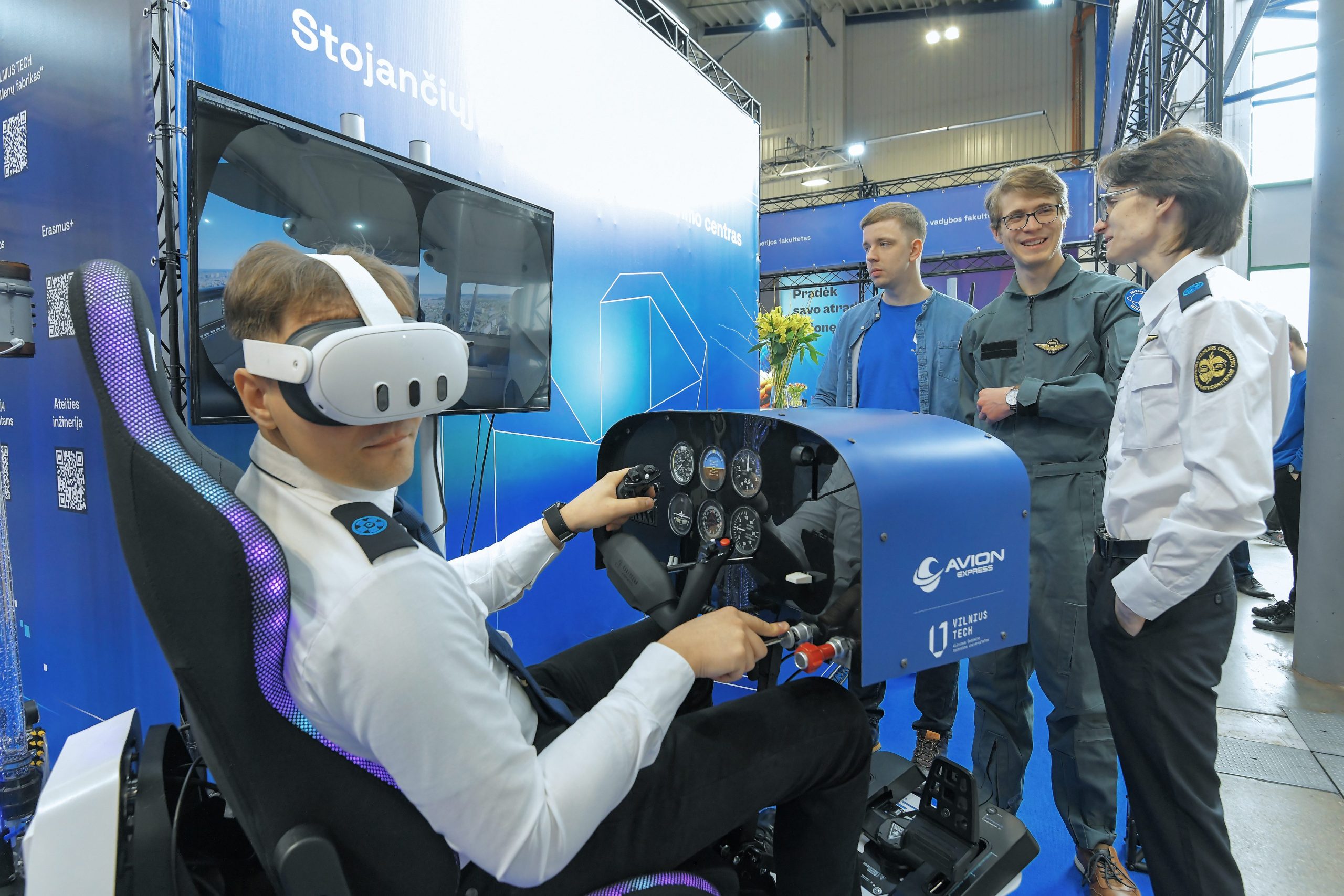
Often, when looking at the sky, one wonders, what does it feel like to control an aircraft of an impressive size? To experience it, one ususally must strive for a pilot career, but today’s technology and creativity of innovators allows everyone to experience a flight through simulations. Students and researchers at the Antanas Gustaitis Aviation Institute (AGAI) of Vilnius Gediminas Technical University (VILNIUS TECH), which prepares aeronautical and aerospace specialists in Lithuania, have created a mobile virtual reality flight simulator. It will particularly inspire schoolchildren and future students who, during VILNIUS TECH open days and study fairs, are invited to try the roles of pilots and co-pilots themselves – to interactively experience a flight by plane.

Born from passion for flights

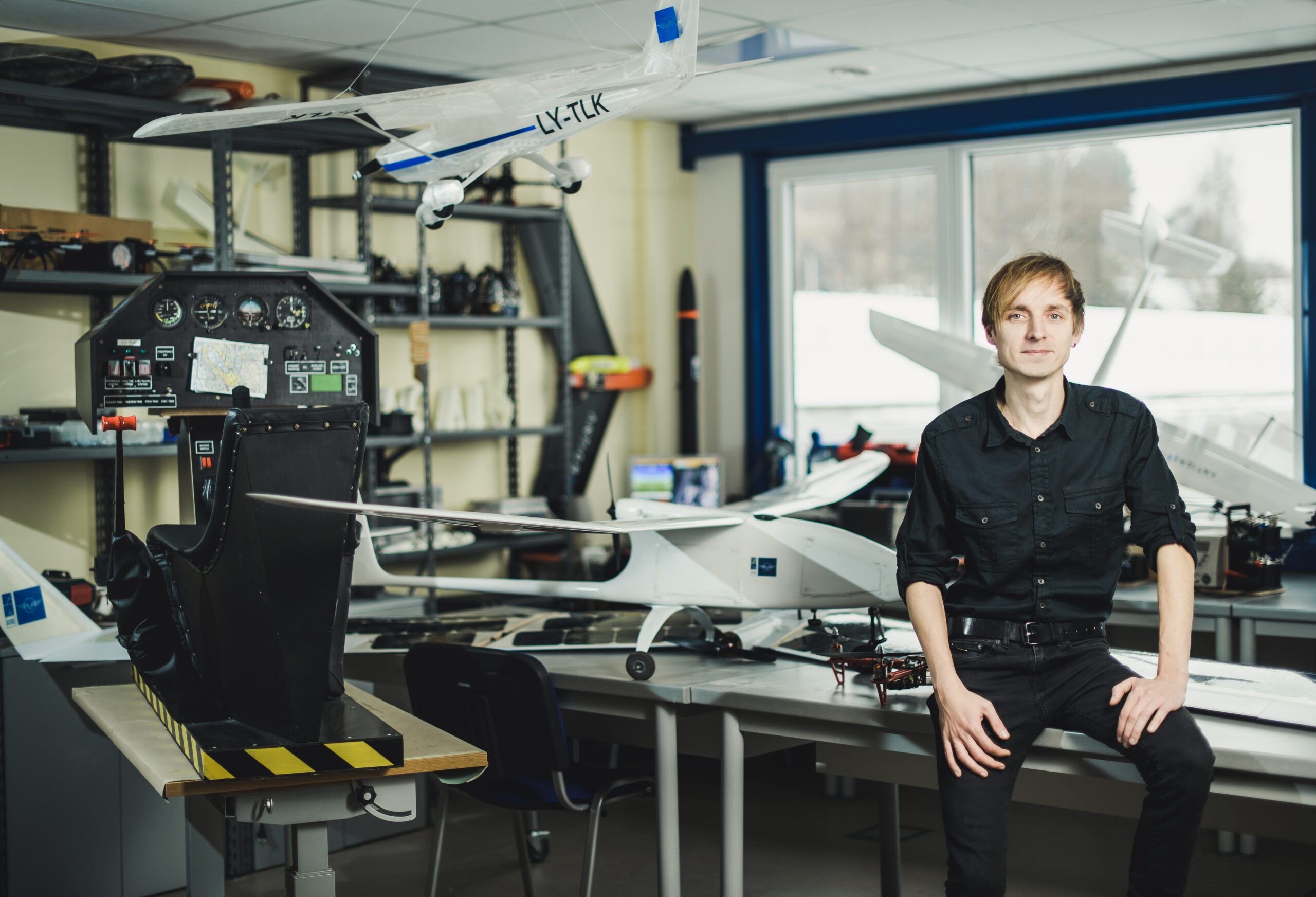
According to Aleksandr Lapusinskij, head of the Aeronautics Laboratory at AGAI and its founder, as early as 2018, aviation students were actively interested in flight simulations and flew in virtual environments using joysticks.

"We decided in the AGAI laboratory to create a device resembling a real aircraft, so that the simulator operator with virtual reality glasses would feel like a real pilot. They would sit in the pilot's seat and have control levers, joysticks, rudder pedals, and lift and landing mechanisms just like in a real aircraft. We wanted to create a device for the most accurate flight simulation," says the AGAI researcher.

For the first model, even real aircraft parts were used – a joystick, helicopter pedals, and other devices – to make the simulator as similar to a real aircraft as possible. The first prototype received the most attention at study fairs, where students have the opportunity to see how VILNIUS TECH students study and learn.

The new flight simulator – even more advanced

According to A. Lapusinskij, at the beginning of 2024, the idea arose to take the next step – to design and manufacture the second version of the simulator "V2."

"The main advantage of the new simulator is that the cabin design is a replica of a real 'CESSNA 172' aircraft cabin, with instruments and mechanisms arranged just like in the original. The 'CESSNA 172' is the training aircraft at the Kyviskes flight practice base. This way, students get familiar with the aircraft in advance, even before boarding the real one," shares the founder of the aeronautics laboratory.

In the simulation, it is possible to fly with various aircraft models. The new flight simulator is more advanced because it uses high-resolution virtual reality glasses, modern motion mechanisms: during the simulation, when the aircraft turns, ascends or descends, the chair in which the pilot sits also moves, providing a more realistic flight experience. The simulator uses the latest version of "Microsoft Flight Simulator," which is most suitable for pilots to practice before flights.

The goal of the simulator is to promote aviation studies in Lithuania

VILNIUS TECH notes that there is still a prevalent myth in the country that there are few opportunities in aviation in Lithuania. Despite this, airlines in our country are very active, and it is forecasted that the number of jobs for aviation professionals in the country will only increase. For example, one of the largest ACMI (aircraft lease with crew, maintenance, and insurance) companies in the world, "Avion Express," which financially contributed to the production of the simulator, says that educating young people about opportunities in this field is essential: "Currently, almost 600 aviation professionals fly aircraft in the 'Avion Express' team, performing flights all over the world, from Europe to Latin America and Asia. We notice that the demand for pilots is growing, and in the future, the sector may face a shortage of professionals. Therefore, it is important to educate young people about opportunities in the aviation sector in our country. I believe that a majority do not even realise how many of our compatriots fly aircraft worldwide and how many opportunities we have in our country to build a career in this field – both in terms of studies and in the highly active aviation job market," says Laura Macutkevic, Head of People and Culture Department at "Avion Express."

In the airline, education in aviation is an advantage. Most people who have completed their studies at VILNIUS TECH's Antanas Gustaitis Aviation Institute (AGAI) successfully continue their careers in aviation companies, which can offer a wide range of opportunities both here and abroad.

"Not a single pilot after many years of flying continues to work in administrative activities – they move on to training new pilots, organising flights, occupying managerial positions. So educating and having conversations with young people about available opportunities are very important and necessary," says L. Macutkevic.

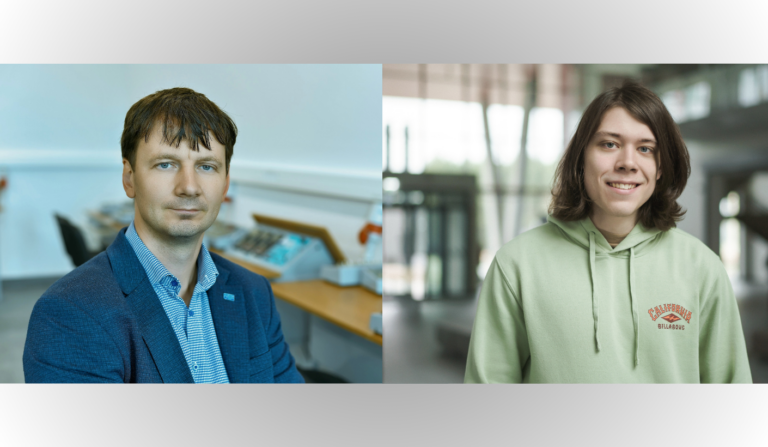
The article was prepared by Kristupas Kazanavicius, senior manager at the Antanas Gustaitis Aviation Institute at VILNIUS TECH, and Laurynas Sisovas, Deputy Dean of Communications, International Relations, Alumni, and Partnership.

Galerija
Related news

New doctoral dissertation
VILNIUS TECH Library invites you to follow the published new dissertations. The dissertation „Interaction between currency market evolution with monetary policy instruments in the age of digitisation“ („Valiutų rinkos evoliucijos sąveika su monetarinės politikos instrumentais skaitmenizacijos amžiuje“) prepared at VILNIUS TECH by Tomas Pečiuli. The dissertation was prepared in 2020–2026. Scientific consultant – Assoc. Prof. Dr Asta Vasiliauskaitė. The dissertation was defended at the public meeting of the Dissertation Defence Council of the Scientific Field of Economics in the Aula Doctoralis Meeting Hall of Vilnius Gediminas Technical University at 10 a.m. on 10 June 2026. The emergence of decentralised cryptocurrencies has created fundamental challenges for traditional monetary policy systems. Although these digital assets have the potential to increase financial inclusion and efficiency, their volatility and the lack of centralised oversight create systemic risks that cannot be properly managed using classical models. This dissertation presents an integrated hybrid analytical framework designed to quantitatively assess the impact of cryptocurrencies on monetary policy transmission mechanisms, providing policymakers with empirically grounded tools to analyse this evolving financial domain more effectively. The dissertation is divided into three main parts. The First Chapter summarises the theoretical role of cryptocurrencies in modern monetary theory. The Second Chapter presents and substantiates a new methodology that combines machine-learning techniques with advanced econometric modelling, specifically using an Elastic Net machine learning model with ARIMA residuals and MSGARCH specifications to capture regime-dependent behaviour. The Third Chapter empirically validates the framework using data from cryptocurrency markets and central bank policy operations. The empirical results show a significant asymmetric policy transmission effect, with the price of Bitcoin reacting by USD -15,348 to a 1% change in the Federal Reserve interest rate. The analysis also identifies critical volatility thresholds (σ>80%) at which cryptocurrency fluctuations increase inflation risk. These results indicate the growing systemic importance of cryptocurrencies in monetary policy dynamics. The study contributes to the emerging field of digital asset economics. The integrated modelling approach helps overcome the long-standing limitations of analysing nonlinear financial phenomena. Practical applications include real-time financial stability risk monitoring systems and evidence-based guidelines for regulatory interventions. The modular structure of the framework allows for future expansion by incorporating evolving market structures and new digital assets. The dissertation’s results have been presented to the scientific community in eight peer-reviewed publications in scientific journals and conference proceedings. This work provides central banks with essential analytical tools to maintain monetary stability and to promote responsible financial innovation in the digital era. Doctoral dissertation readers can search via VILNIUS TECH Virtual Library.
More
New doctoral dissertation
VILNIUS TECH Library invites you to follow the published new dissertations. The dissertation „Research and application of machine learning methods for migraine attack prediction“ prepared at VILNIUS TECH by Viroslava Kapustynska. The dissertation was prepared in 2021–2026. Scientific consultant – Prof. Dr Šarūnas Paulikas. The dissertation was defended at the public meeting of the Dissertation Defense Council of the Scientific Field of Electrical and Electronic Engineering in the Aula Doctoralis Meeting Hall of Vilnius Gediminas Technical University at 2 p.m. on 9 June 2026. Migraine is a complex neurological disorder characterized by strong inter- and intra-individual variability, which makes early forecasting difficult using only clinical observations. Wearable biosensors combined with machine learning offer new opportunities to detect subtle physiological changes that may precede migraine attacks and to develop individualized prediction models. This dissertation investigates migraine analysis and next-day prediction using physiological recordings collected under real-life monitoring conditions. Data were obtained with the Empatica Embrace Plus wearable device and include electrodermal activity, pulse rate, skin temperature, and movement-related signals. The analysis focuses on nocturnal recordings, since the night period provides a more stable physiological context with fewer external disturbances. Nights were standardized using sleep-based contextual selection and consistent night-level rules. The experimental framework is organized in two stages. In the first stage, a window-level binary classification task is used as an exploratory methodological analysis to examine how design choices influence model performance. Night recordings are segmented into analysis frames ranging from 5 to 120 minutes, statistical features are extracted, and the influence of signal preprocessing and feature representation is evaluated across several classifier families, including Random Forest, XGBoost, histogram-based gradient boosting, support vector machines, and k-nearest neighbors. In the second stage, the research evaluates next-day migraine prediction based on whole-night recordings. This stage refines the experimental methodology to obtain more reliable estimates of predictive performance under a stricter validation framework. The analysis focuses on the effect of temporal aggregation while comparing the same classifier families under consistent evaluation conditions. The results demonstrate considerable variability across participants in achievable prediction performance and optimal modeling configurations. Shorter analysis frames generally preserve informative short-term physiological changes, whereas longer windows tend to smooth these variations. Signal preprocessing shows a window-dependent effect and does not consistently improve performance. Overall, the results highlight the importance of temporal resolution, rigorous validation, and individualized modeling for wearable-based migraine prediction systems. Doctoral dissertation readers can search via VILNIUS TECH Virtual Library.
More