
VILNIUS TECH graduate at OpenAI: “Human creativity is becoming more valuable”

June 3, 2026

Tomas Markevičius, former Creative Director at COLLINS, a world-leading brand transformation agency, recently joined the Motion Design team at OpenAI. He interprets #TechCulture as a reflection of the seamless integration between technology and creativity: tech is creativity, and creativity is tech. In today’s world, that connection has never been more evident.

Exploring possibilities

The intersection of technology and design has always fascinated Tomas. From a young age, he was drawn to creativity but was uncertain how to turn it into a career. The Creative Industries programme at VILNIUS TECH provided the answer. “It felt like a perfect fit,” he recalls. “The studies showed me how creativity could lead to countless paths and helped me figure out where I wanted to go next.”

During his studies, Tomas loved experimenting – testing tools, exploring approaches, and tackling challenges with curiosity and self-drive.
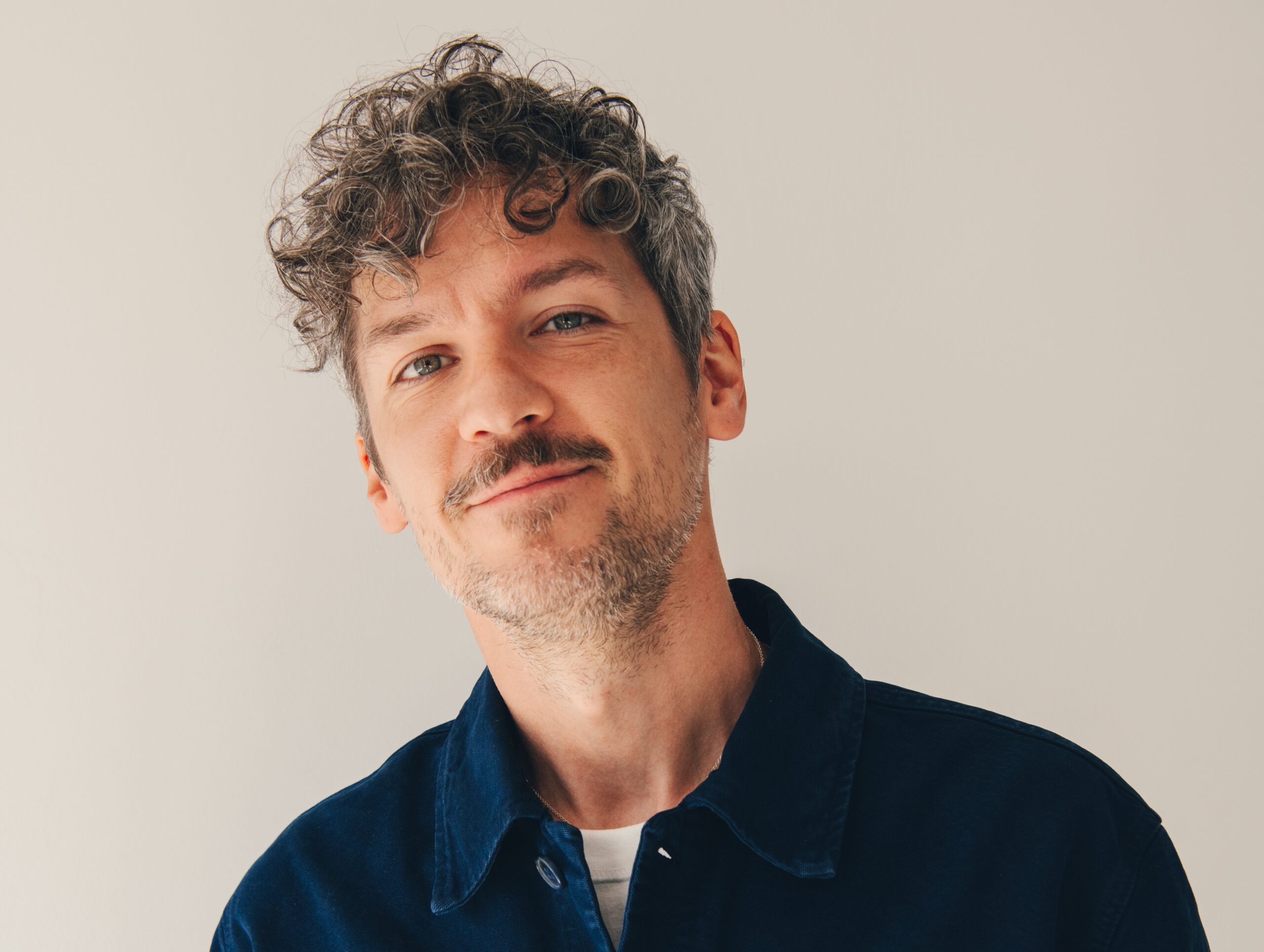
Tomas Markevičius

Tomas Markevičius

“Those years really helped me build the foundation for my career in design,” he notes. “I was surrounded by motivated, creative people, and that environment pushed me to grow and stay inspired. I genuinely believe the standard of education at VILNIUS TECH is high.”

A result of hard work

While still a student, Tomas joined a small design agency in Vilnius. After a few years, and with some practical experience under his belt, he continued freelancing as a multidisciplinary designer. His portfolio of local and international clients grew steadily.

In 2015, Tomas relocated to New York, a city that continues to inspire him to this day. There, he spent several years working at design studio 2×4 and creative agency Hugo & Marie. Among the many engaging projects was a long-term collaboration with Prada, where Tomas created visuals for their store window displays around the world, fashion shows, social media, and advertising campaigns.

Then one day, he was invited to join COLLINS, one of the most prominent design agencies in the world.

“It’s been the result of consistent hard work over the years. When I joined COLLINS in 2019, one of the co-founders, Brian Collins, recognised that my background in motion design could play a key role in where branding was heading – beyond static logos and traditional guidelines towards something more dynamic, fluid, and interactive,” Tomas recalls. “That perspective allowed me to shape how motion could become a core part of brand identity at the studio. Eventually, I was promoted to Motion Design Director, and later to Creative Director, which expanded my responsibilities to leading projects, managing teams, and collaborating directly with clients.”

The human touch in a technological age

During his years at COLLINS, Tomas had worked on a number of what some might call dream projects. For the San Francisco Symphony, the team designed a typeface that literally dances along with the music – movement became the core expression of the brand.

While working on the Bose project, he drew inspiration from a thought by philosopher Alan Watts – that when we listen to music, we’re not hearing the past or the future; we’re experiencing an expanded present. This concept shaped the visual side of the project – from stretching the edges of the Bose logo to creating a unique, dynamic graphic language for the brand.

As the work of a Creative Director requires maintaining a sharp and imaginative mind, Tomas draws inspiration from the rhythm of New York. “Living in this city definitely helps!” he laughs. “Honestly, I think it’s one of the best cities to live in for any creative who wants to operate at a high level. It’s not just about the jobs or even the creative community – it’s the city itself. There’s inspiration everywhere: in museums, shows, and bookstores and in the little surprises you stumble upon on the street – whether it’s stylish people, unique architecture, or an old hand-painted shop sign. That constant stimulation keeps my creative pulse alive and pushes me to stay curious every day.”
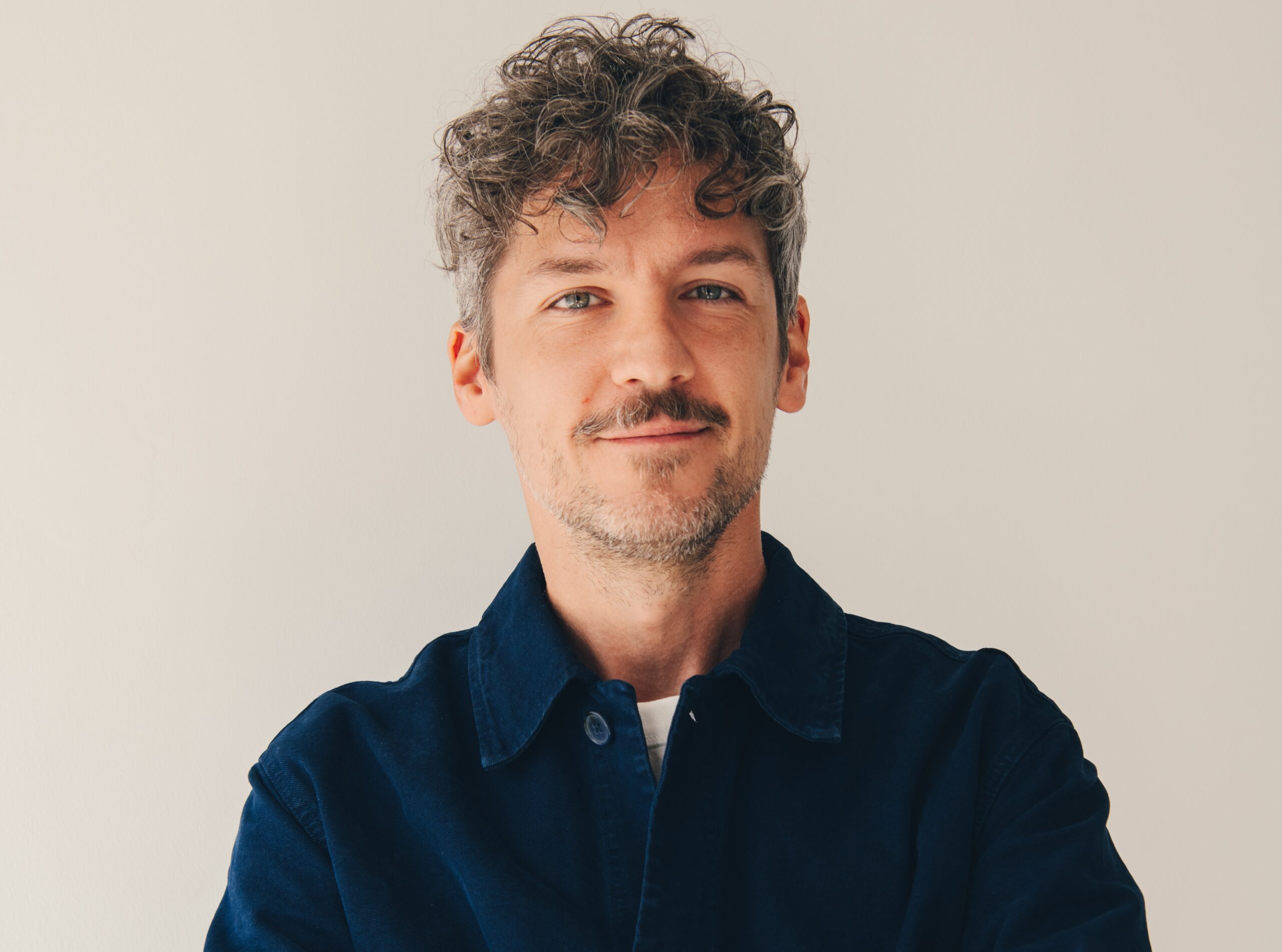
Tomas Markevičius

Tomas Markevičius

Films and music are another constant source of inspiration for Tomas. They open new perspectives and ways of seeing the world. He has a particular interest in the intersection of technology and design, which, in his opinion, is becoming increasingly important in how we create experiences.

In the age of AI, he sees creativity evolving in a way that encourages us to focus on what only humans can bring to the table. When so much of what we do today can be automated or streamlined, the human touch becomes more valuable than ever.

“At the same time, keeping up with the rapidly emerging tools is challenging – but also more important than ever,” says Tomas. “Between the time I type this sentence and when it’s published, I’m sure dozens of new AI tools will have been released that will further impact the creative field. It’s a strange and fast-moving moment, but I believe that truly talented and creative people will always find ways to harness these tools to make their work even better.”

Related news

Interdisciplinarity in practice: how Electronics and Medical Engineering students developed a Human motion analysis system
Modern engineering solutions are increasingly created through collaboration between specialists from different fields. The university environment provides an opportunity to combine diverse competencies and develop solutions that would be difficult to achieve within the boundaries of a single discipline. Such collaboration was also at the heart of a bachelor’s thesis project in which VILNIUS TECH students Laura Venckutė (Faculty of Electronics) and Abderrazak El Aamrani (Faculty of Mechanics) combined expertise in electronics and medical engineering to develop a human motion recognition and evaluation system. From an Idea to Interdisciplinary Collaboration At the beginning of the project, students from the Medical Engineering and Electronics Engineering study programmes sought to address a problem relevant to both sports and rehabilitation: the lack of accessible systems capable of automatically evaluating human movements and providing immediate feedback. As the project authors point out, incorrect movements can reduce training effectiveness and increase the risk of injuries during rehabilitation, sports activities, or everyday tasks. For this reason, they decided to look for a technological solution that could help objectively assess movement quality. The idea emerged from previous projects and experience gained during their studies, while an important catalyst was the opportunity for collaboration proposed by their supervisors. From the outset, it was clear that the project would require expertise from different fields, as motion analysis involves not only developing a technical system but also defining meaningful criteria for evaluating human movement. [caption id="attachment_120707" align="alignnone" width="2048"] Electronics and Medical Engineering students developed a Human motion analysis system[/caption] The students brought different, yet closely interconnected and complementary competencies to the project. The Electronics Engineering student was responsible for computer vision, embedded systems, and system integration, while the Medical Engineering student contributed expertise in biomechanics and human movement assessment. Although responsibilities were divided according to individual areas of expertise, key decisions were made collaboratively. From the Initial Concept to a Functional System In the early stages, the team planned to develop a system capable of analysing a broader range of movement patterns and performing more advanced analytical functions. However, as the project progressed, technical limitations, available hardware resources, and the scope of the bachelor’s thesis had to be taken into account. As a result, some ideas had to be abandoned. According to the team members, no major disagreements arose during the project. Decisions were made by discussing possible alternatives, evaluating how well they aligned with the project objectives, and, whenever possible, testing different approaches in practice. When technical and medical requirements conflicted, the team sought solutions that best balanced project goals and implementation constraints. The final outcome of the project is a human motion recognition and feedback system based on a pose estimation algorithm designed for basketball shooting analysis. The system detects a person in real time, estimates body posture, evaluates shooting technique according to biomechanical criteria, and subsequently provides feedback to the user. The Value of Interdisciplinarity and Future Opportunities During testing, the system performed better than expected. It successfully analysed the movements of users of different heights and maintained reliable performance at distances of up to 12 metres. According to the students, not only did the technical results exceed expectations, but the collaboration process itself also proved highly successful. In their view, such a project could theoretically be completed by a specialist from a single field. In practice, however, this would be difficult and inefficient. The project required both expertise in electronics and an understanding of human movement analysis. Without competencies from both fields, considerably more time would have been needed for learning unfamiliar topics and identifying appropriate solutions. Looking ahead, the students see opportunities to further develop the project by improving system stability, optimising resource usage, expanding the range of supported movement patterns, and increasing motion recognition accuracy. Although they are not yet certain whether they will continue working in this specific area, they hope to further deepen their expertise in related fields of technology and engineering. Supervisors’ Insights: Interdisciplinarity as a Foundation of Future Engineering The thesis supervisors emphasise that the nature of the project itself required collaboration across disciplines. However, the greatest value of the project lies not only in the technical solution that was developed, but also in the students’ ability to work together effectively. Professor Kristina Daunoravičienė, lecturer in the Medical Engineering study programme, notes that developing a human posture recognition and evaluation system requires both an understanding of human movement and biomechanics, as well as the ability to create a technical system capable of collecting, processing, and presenting information to the user. „The need for different knowledge and competencies made this topic an excellent platform for collaboration between Medical Engineering and Electronics Engineering students. Such projects foster not only technical solutions but also the ability to understand the logic, limitations, and priorities of other disciplines,“ says Prof. Dr Kristina Daunoravičienė. Although the students were initially unfamiliar with one another and came from different engineering backgrounds, a shared goal quickly became the foundation of successful cooperation. According to the supervisor, Medical Engineering contributed the perspective of human movement assessment and result interpretation, while Electronics Engineering provided expertise in system architecture, prototyping, and optimisation. According to Prof. Dr K. Daunoravičienė, the most important outcome of the project is not only the developed prototype and its comparison with the Xsens motion analysis system: „Equally important are the competencies of collaboration, communication, trust, initiative, and the ability to learn from one another. These are the qualities that allow good ideas to become real, functioning solutions.“ Associate Professor Dr Vytautas Abromavičius of the Faculty of Electronics also points out that in the era of artificial intelligence, technical expertise alone is no longer sufficient. Clear communication, the ability to understand specialists from different fields, and working together towards a common goal are becoming increasingly important. „This bachelor’s thesis demonstrated that our students communicated exceptionally well and were able to explain specialised professional terminology in a simple and understandable way. This mutual understanding enabled them to effectively combine knowledge from different disciplines and achieve an excellent result,“ says Assoc. Prof. Dr Vytautas Abromavičius. According to him, the need for interdisciplinary projects in modern engineering continues to grow. Every real-world product developed for the market consists of multiple interconnected components; therefore, a broader understanding of the problem leads to better product applicability and a more complete final outcome.
More
VILNIUS TECH Professor A. Čenys Represents Baltic States at Google Leadership Summit
Prof. Antanas Čenys, a prominent researcher at VILNIUS TECH and the SustAInLivWork project, participated by personal invitation from Google in the exclusive Google for Education Higher Education Leader Series EMEA in London. Prof. Čenys was the only AI and cybersecurity expert from the Baltic countries to be personally invited to this high-level summit. The exclusive event brought together higher education leaders, technology pioneers, and innovation stakeholders from across Europe, the Middle East, and Africa. The summit focused on shaping the future of Artificial Intelligence, digital transformation, cybersecurity, and driving responsible innovation within the global academic and industrial landscapes. The insights and discussions from the London summit strongly resonate with the core mission of the SustAInLivWork project: strengthening Europe’s capacity to develop, deploy, and scale trustworthy AI solutions while simultaneously building the advanced skills, critical infrastructures, and innovation ecosystems required for a sustainable digital future. Through SustAInLivWork, VILNIUS TECH and its partners are actively delivering: An International AI Cluster: bridging the gap between research excellence, industry, and public sector stakeholders; Advanced Innovation Services: driving AI and data-driven solutions for various sectors; AI Skills Development: establishing lifelong learning opportunities and specialized training; Cross-Regional Collaboration: accelerating practical AI adoption and ensuring positive societal impact. The summit also underscored the rapidly growing importance of cybersecurity as a fundamental pillar for secure AI deployment. This focus perfectly aligns with ongoing initiatives led by VILNIUS TECH, including specialized cybersecurity skills development programmes supported by Google.org, aimed at strengthening digital resilience and cyber competence across Europe. As Europe accelerates its comprehensive AI transformation, structured collaboration between universities, industry leaders, policymakers, and major technology providers becomes increasingly paramount. SustAInLivWork and VILNIUS TECH remain committed to contributing to this evolutionary journey by building strong bridges between cutting-edge research, thriving innovation ecosystems, and sustainable societal progress.
More