
World Day for Cultural Diversity for Dialogue and Development

May 24, 2024
Every year on May 21st, UNESCO leads the commemoration of World Day for Cultural Diversity for Dialogue and Development, underscoring not just the abundance of global cultures but also the indispensable role of intercultural dialogue in fostering peace and sustainable development. The United Nations has issued a declaration titled "Identity, Diversity and Pluralism," aimed at preserving the uniqueness, diversity, freedom, and collaboration among nations.

89% of contemporary global conflicts arise in regions lacking sufficient intercultural dialogue. Strengthening such dialogue is crucial for ensuring effective cooperation and long-lasting peace.

Cultural diversity serves as a catalyst for development, enriching not only economic growth but also fostering a more enriched intellectual, emotional, moral, and spiritual existence. This concept is enshrined in cultural conventions, providing a robust framework for the promotion of cultural diversity, which is an essential asset in reducing poverty and advancing sustainable development.

Simultaneously, embracing and acknowledging cultural diversity are pivotal for fostering peace, prosperity, and harmony within society. Understanding and respecting various cultural identities promote dialogue, mutual understanding, and cooperation—critical components for addressing global challenges.

Furthermore, promoting cultural diversity fuels creativity and innovation. The amalgamation of diverse cultural perspectives stimulates the generation of novel ideas and problem-solving approaches, fostering cultural, artistic, and intellectual development and contributing to societal enrichment and progress.

Moreover, cultural diversity offers individuals an opportunity to express their unique identities and contribute to the collective cultural heritage of society. This facilitates self-understanding, empathy towards others, and the cultivation of tolerance and cooperation, fostering cohesive and vibrant communities.

Therefore, cultural diversity is not just valuable but imperative for the prosperity and resilience of every society. It is a precious resource that demands preservation, respect, and promotion on a global scale. On this occasion, Vilnius Tech library presents 10 books that promote an understanding of cultural diversity and encourage intercultural dialogue:


Eckersley, S., & Vos, C. (2023). Diversity of Belonging in Europe: Public Spaces, Contested Places, Cultural Encounters (1st ed., Vol. 1). Routledge. 
The book explores the conflicting notions of identity and belonging in contemporary Europe, discussing how different sites of belonging are created and used. The authors use an interdisciplinary approach to analyse the impact of cultural difference and change on public and contested places. They emphasise the links between social change and culture, heritage and memory. The case studies in the book shed light on the role of communities and activist groups in practices of belonging and identity conflicts in Europe.
Yuval Noah Harari (2019)  21 pamoka XXI amžiui; iš anglų kalbos vertė Tadas Juras Kitos knygos  
In the context of intercultural dialogue, "21 Lessons for the 21st Century" serves as a comprehensive pathway to navigate our diverse and interconnected global landscape. Written by Yuval Noah Harari, a writer known for his insightful exploration of the human past, present and future, this book delves into pressing issues, from politics and technology to social dynamics and existential questions.
 
Thomas, David Clinton, & Inkson, Kerr. (2017). Cultural intelligence: surviving and thriving in the global village (3rd ed.). Berrett-Koehler Publishers.
Topics covered include living and working in a global environment, cultural knowledge, awareness and sensitivity, decision-making, communication, leadership and working with multicultural teams. Each chapter emphasises the importance of cultural adaptation and cooperation, providing specific tools for cultural situations.
Unlike other guides, this book not only provides practical advice, but also encourages readers to let go of cultural stereotypes and pay attention to detail. It is a practical and engaging guide to success in a variety of cultural environments.
Saed, Z., & Muradi, S. (2010). One Story, Thirty Stories: An Anthology of Contemporary Afghan American Literature (1st ed.). University of Arkansas Press. 
The book  showcases a vibrant collection of poetry, fiction, and essays from thirty-three Afghan American writers. This anthology highlights the rich cultural and intellectual contributions of the Afghan diaspora in the United States, capturing personal and collective journeys through themes of exile, migration, and the impact of historical events like the Soviet invasion and the rise of the Taliban.
Magid, A. M. (2008). You Are What You Eat: Literary Probes into the Palate (1st ed.). Cambridge Scholars Publishing.
The book  presents essays on food culture, approached through a variety of methods and disciplines. The collection brings together multicultural scholars on topics such as feminist theory, domesticity, children's literature, film, cultural history, gender ideology, motherhood, queer theory, politics and poetry.
Golden, A. (2005). Memoirs of a geisha: a novel. Vintage Books.
Arthur Golden's novel "Confessions of a Geisha" offers a deep insight into Japanese culture. The term "geisha" refers to an artist, not a prostitute. Golden's research, based on interviews with members of the geisha world, gives readers an insight into this unique way of life.The novel follows the protagonist's journey from orphan to respected geisha, exploring the subtleties of social hierarchy, artistic prowess and relationships. The life of a geisha is portrayed as similar to the role of a western "trophy wife". Golden authentically depicts the world of the geisha, transporting readers to teahouses and social gatherings, where a geisha's career depends on charm and social manoeuvring. Although the love plot may seem implausible, the author captures the essence of Japanese culture.
With its playful style and lively portrayal of Japanese society, Confessions of a Geisha has won critical acclaim, a testament to Golden's ability to convey a complex and fascinating culture.
Coelho, P. (2003). The Alchemist. HarperCollins
Brazilian writer Paulo Coelho's The Alchemist, which was a phenomenal success before it was written, is still on the world's best-seller lists. Over 65 million copies have been sold, the book is being made into a film and Paulo Coelho is listed in the Guinness Book of World Records for being the novel translated into the world's most languages. Paulo Coelho's The Alchemist tells the story of Santiago, a young Andalusian shepherd who leaves his home in Spain and travels to Egypt in the hope of finding a treasure. He meets a mysterious alchemist, discovers the secrets of life and success, achieves his dream and meets his great love. An inspiring story that encourages readers to reach new heights.
Snyder, T. (2003). The Reconstruction of Nations: Poland, Ukraine, Lithuania, Belarus, 1569–1999 (1st ed.). Yale University Press.  
Timothy Snyder's book examines the development of modern nationalism in north-eastern Europe. Snyder analyses the historical processes that have shaped the emergence of these nations over four centuries and explores the interplay between nationalism, violence and reconciliation in the region.
The book focuses in particular on the Ukrainian-Polish ethnic cleansing of the 1940s, revealing its complexity and long-term impact. Snyder also examines Poland's efforts to reconcile with its newly independent eastern neighbours in the wake of the upheavals of the 20th century.
"Reconstructing Nations provides valuable insights into the interplay between nationalism, violence and reconciliation in north-eastern Europe, contributing to a better understanding of the historical forces that have shaped the region's identity.
García Márquez, G. (2002). Šimtas metų vienatvės: [romanas]. Vaga.  
Gabriel Garcia Marquez's novel "One Hundred Years of Solitude" is an exceptional literary achievement that has attracted a worldwide readership and has remained popular ever since. It has become a literary sensation, often compared even to the meaning of the Old Testament.
The novel tells the story of the centuries-long history of the Buendi family and the city of Makonde that they founded. Each generation of the family has unique experiences and challenges, and the magical details and plot twists give the work a special atmosphere.
Gabriel García Márquez, a famous Latin American writer of the 20th century, won the Nobel Prize for his magical realism work. "One Hundred Years of Solitude is a testament to his extraordinary talent for creating vivid worlds enriched with magical elements, which have brought him into the elite of world literature.
Brown, J., & Cain, W. (1997). Ethnicity and the American Short Story (1st ed., Vol. 16). Routledge. 
The book explores how different ethnic groups adopt the short story form. This collection of articles is the first to focus on the practice of short stories among ethnic minorities in America, making it essential reading for scholars of American literature, narrative theory and multicultural studies.

The VILNIUS TECH institutional members can access the e-books free of charge by logging on to the University's computer network and from home by connecting to the VILNIUS TECH network via VPN.
More books can be found in the VILNIUS TECH virtual library.
Related news

University of the future: dialogue between the past and the present
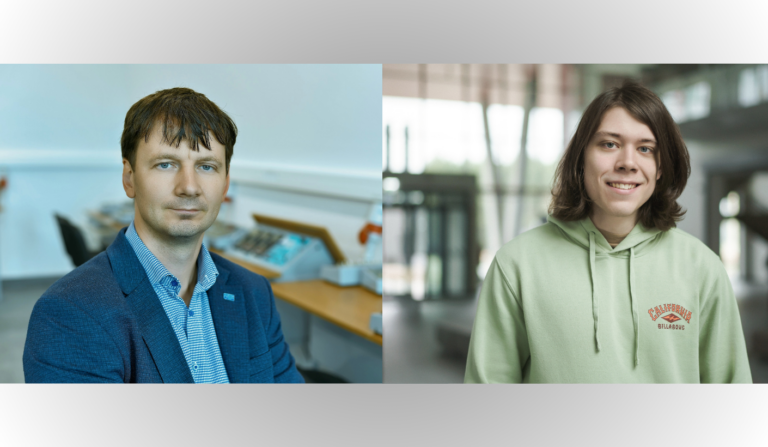
How does the role of a university change when viewed from two different perspectives: that of a former student who has now become a lecturer, and that of a current student just beginning their academic journey? How does university appear to someone who started there as a student and today teaches others, and how is it perceived by a student only taking one’s first independent steps in life? Representatives of the VILNIUS TECH Faculty of Electronics - Prof. Dr. Andrius Katkevicius from the Department of Electronic Systems and electronics engineering student Nojus Balciunas - are two different generations taking a fresh look at today's university and its future. Prof. Dr. Andrius Katkevicius, Department of Electronic Systems, Faculty of Electronics How has your view of the university changed from your student years to now as a lecturer? My perspective has changed significantly over time. When I studied electronics engineering at the Faculty of Electronics, I only saw a small part of university activity - mostly the teaching process. At that time, the university was associated with lectures, laboratory work, practical classes, and exams. During my bachelor's studies, I naively believed that successfully passing all exams was enough to secure a future in engineering career. Practice showed that in order to become a professional in your field, it is necessary to do extra work and actively participate in the chosen area of electronics, deepen your knowledge independently, and continuously improve yourself. Only during my master's studies did I begin to clearly understand that active scientific work is also carried out at the university. Today, after completing all stages of higher education and gaining pedagogical and scientific experience, I see the university as a multifaceted institution encompassing a wide range of activities and opportunities - from educating first-year bachelor's students to carrying out scientific and commissioned projects with local as well as international partners. How are student generations and their relationship with learning changing? Today's students are more focused on practical benefits and quick results. They have much broader and faster access to information, so they are increasingly less limited to material presented during lectures. At the same time, however, they face challenges related to information overload and evaluating information quality, especially when many answers can be obtained through artificial intelligence. There is a growing need for practical learning, understanding how knowledge is applied in real contexts, and seeing the value of studies in future professional activities. Students' expectations toward lecturers are also changing - dialogue, feedback, and a clearly structured learning process are increasingly valued. Although some students lack patience for long-term and consistent work, they are also more open to new technologies, digital tools, and flexible forms of learning. This encourages lecturers to constantly review and update their teaching methods. If you could compare the university from your student years with the current one, what has changed the most? One of the most noticeable changes is the study and research environment. A few years ago, after moving into new facilities, a modern and well-designed infrastructure was created, which clearly focused on study quality, scientific research, and collaboration. This environment not only improved technical possibilities but also changed the academic culture and daily work at the university. Fundamentally, the understanding of the university's role has changed - from an institution mostly focused on the study process, the university has become a much more active center for science, innovation, and project-based activities. Today, the university creates opportunities for students to participate in scientific, applied, and international projects, something that was previously less visible or accessible. Another important change is the advancement of learning tools and technologies related to digitalization as well as the application of artificial intelligence. Today, students have access to advanced digital learning platforms, virtual laboratories, simulation tools, and AI-based support systems that can help analyze, model, and deepen their knowledge. This fundamentally changes the learning process - from passive absorption of information to active, independent, and individualized learning. What should universities do differently today to better prepare students for the future? Universities should enhance the connection between studies and real practical experience even more, so that students can more clearly understand how acquired knowledge will be applied in professional activities. This includes closer cooperation with businesses and scientific partners, project-based learning, and involving students in applied and scientific projects as early as possible. It is important to develop not only subject-specific competencies but also general abilities - critical thinking, independence, responsibility for the learning process, and the ability to adapt to constantly changing technologies. Universities should encourage students to learn throughout life, experiment, make mistakes, and learn from experience, while also providing a suitable academic environment, which encourages that.   Nojus Balciunas, 3rd-year Electronics Engineering Student, Faculty of Electronics How would you describe the university and the significance of studies? For me, the university is first and foremost a community. Members of the VILNIUS TECH community are very warm and supportive people who constantly encourage participation in various activities organized both within and outside the university. Studies at VILNIUS TECH are an extremely significant stage of life. I can acquire not only academic knowledge but also practical skills, while developing critical thinking, independence, and responsibility. Of course, it is also a kind of transition into adult life, but even more importantly, it is a stage of growth, self-improvement, and self-discovery. I believe this is one of the most important periods in life. What expectations do you currently have for the university, and are they different from what you imagined before starting your studies? When I started studying at the university, I expected to gain more practical experience during lectures, but I soon realized that opportunities to gain such experience are provided beyond lectures. The university offers various additional activities, programs, and internships that students can join to deepen their knowledge and become more involved in practical activities. These opportunities are one of the university's greatest advantages - it provides space to grow, improve, and shape your own study path. What experiences or skills gained during studies are the most valuable? I believe the most important acquired skills are the so-called soft skills: being proactive, the ability to present your work and ideas, adapt to new environments, and respond quickly to changing situations. How do you imagine the university of the future - what should be different there compared to today? It is difficult to imagine the university of the future being very different from what it is now. Of course, laboratories and the equipment in them will become even more modern over time, but even today it is clear that VILNIUS TECH is constantly updating, expanding, and implementing the latest technologies. However, I believe that in the future laboratories will become even more open, giving students more opportunities to independently work on projects and implement their ideas outside of study hours. What motivates you the most today to study and improve yourself? What motivates me the most is my love for electronics and the desire to understand things I do not yet understand. And there are still very many such things.
More
Photography Exhibition "Leaving My Body" by Ieva Mizgeraitė
We invite you to visit the photographic exhibition "Leaving My Body" by VILNIUS TECH alumna Ieva Mizgeraitė. This collection is a journey through a woman's inner world – through the body, emotions, self-discovery, and the attempt to look at oneself from the outside. In her work, the photographer explores a body that does not always conform to society's expectations, situations beyond our control, the masks we see around us and sometimes put on ourselves, as well as the constant demand to be strong, equal, and always ready. “Each project was born from a specific emotion – from the noise and dialogue in my mind that arose at that moment. Searching for answers, I left my body and looked at everything from the outside – through the states of my models, their poses, gazes, and bodies. I understood that when you look at yourself from the outside, emotions become temporary. Inner dilemmas that once seemed permanent begin to dissolve,” the photographer says about the concept behind the exhibition. The exhibition brings together anger, resistance, masks, expectations, and freedom. These are not merely personal themes – they are experiences familiar to many women. The photographer says that she captures not faces, but psychological states. For her, photography has become a way of self-discovery and self-reflection – a form of meditation that helps her step away from the noise of the outside world and better understand what truly matters. The author works predominantly in black and white. She has been professionally active in photography since 2025. The exhibition "Leaving My Body" is an introduction to a deeper journey, which is planned to be presented in Gallery A of the library in November 2026.   The exhibition is on display in the foyer on the second floor of the Central Library.
More