Department of Electrical Engineering

The Department of Electrical Engineering prepares qualified specialists in electrical engineering, automation, and electrical power engineering. The Department carries out study, research, and applied activities in the fields of electrical power engineering, automation, renewable energy, and electrical equipment safety.
Phone: +370 5 274 4762 Email: elei@vilniustech.lt
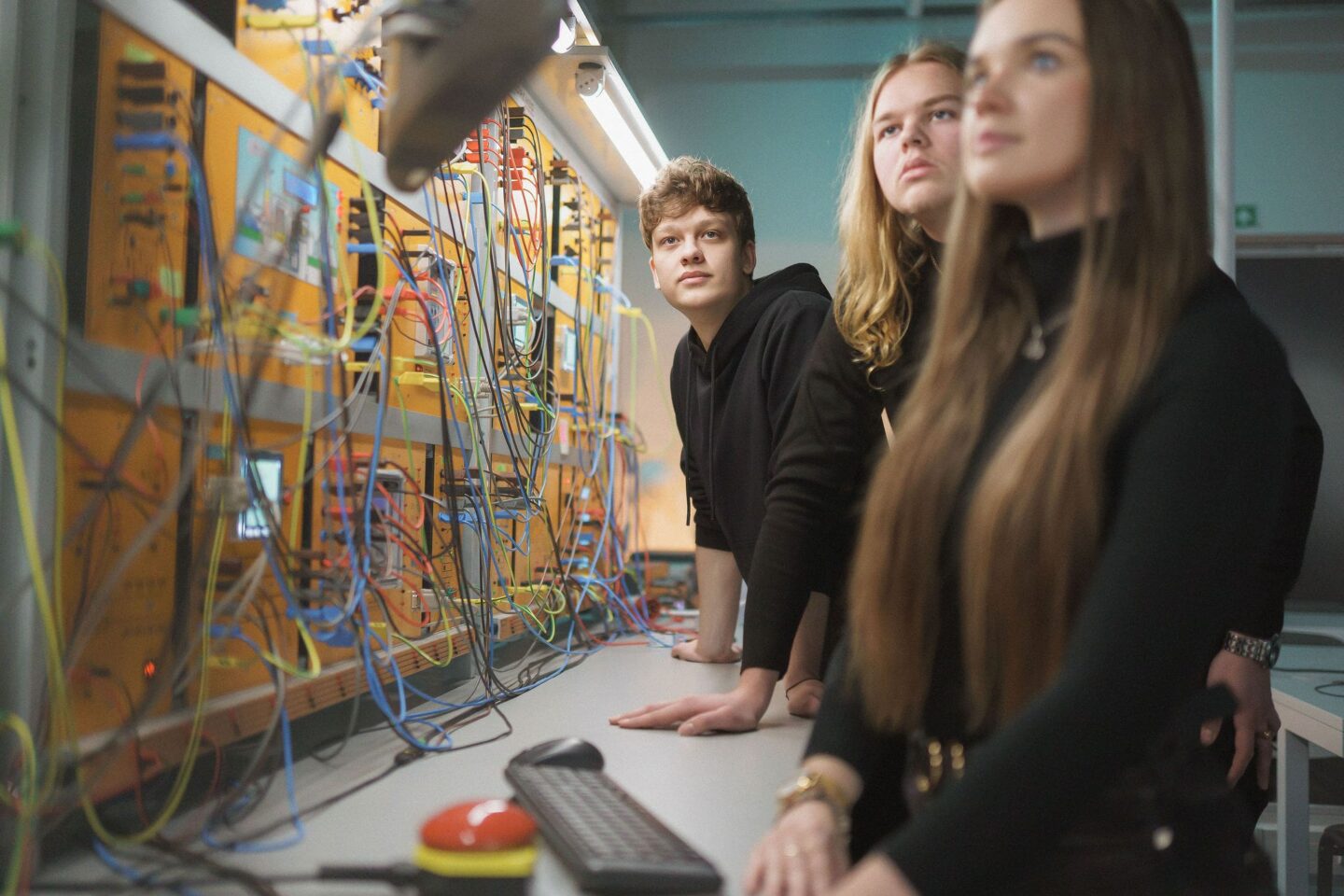
Studentai laboratorijoje

About the Department

Study Programmes

  • Undergraduate Programmes
    Automation and Electrical Power Engineering.

    These programmes prepare specialists who are able to design, operate, and modernise electrical power systems, automate control processes, apply smart technologies, and ensure equipment safety.

  • Graduate Programmes

    Automation (Specialisation: Automatic Systems) and Electrical Power Systems Engineering (Specialisations: Renewable Electrical Power Engineering; Electrical Power Engineering Technologies).

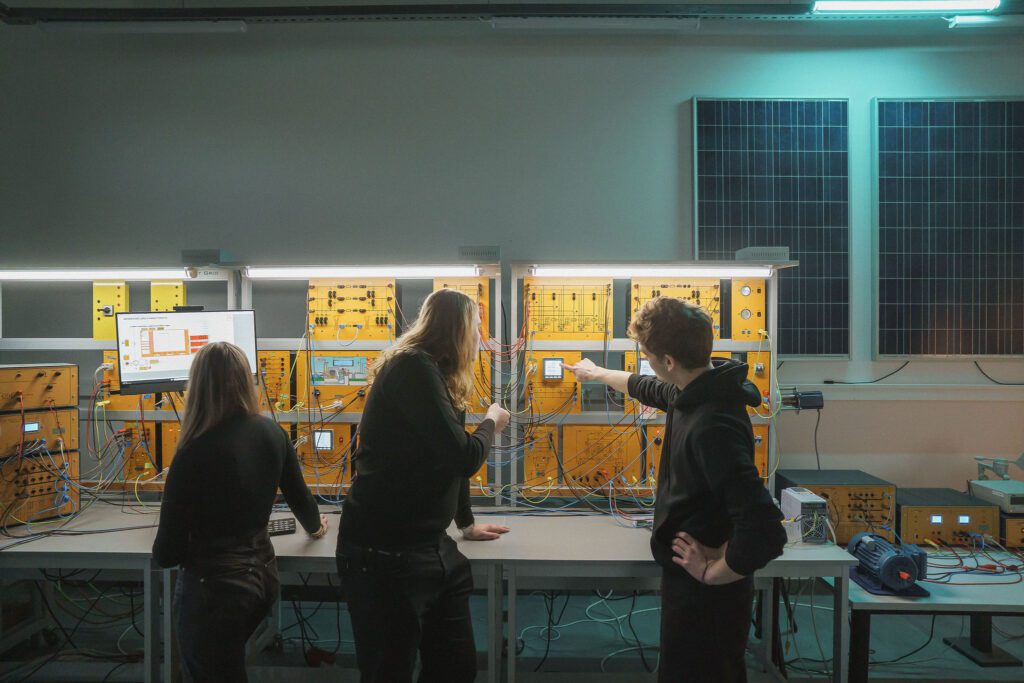
Studentai

Double Degree

The Electrical Power Systems Engineering Master’s programme is offered as a double degree in partnership with National Sun Yat-sen University (NSYSU), Taiwan. Students may spend one semester at NSYSU. If at least 40% of the programme credits are earned there and the studies are successfully completed, students receive Master’s degree diplomas from both institutions.

Partners

The Department collaborates with Lithuanian energy companies as well as international universities and research institutions.


Show more

Scientific Research

The Department’s research focuses on the integration of renewable energy sources into power grids, the safety of electrical equipment and energy storage systems, improving the efficiency of automated control systems, and the development of sustainable technologies.

Research Areas:

  • Generation of Strong Magnetic Fields
  • Application of High-Power Pulses in Biotechnology
  • Application of Pulsed Magnetic Fields in Materials Science
  • Generation and Application of High-Voltage Electrical Pulses
  • Application of High-Power Semiconductor Switches
  • Development of Measurement Theory for the Electromagnetic Parameters of Electrical Materials
  • Development of Automated Measurement Systems for the Dynamic Parameters of Logic Integrated Circuits and ASICs
  • Improvement of Measurement Instruments for Dynamic Parameters of ASICs and Low-Resistance Variations
  • Research on Electrostatic Capacitive Generators

Department Staff

Department staff actively collaborate with companies, implement internship programmes, and carry out expert evaluations of automation equipment failures for industrial and public sector clients. Each year, meetings are organised between social partners and students enrolled in the programmes.

Administration
  • Administration
  • Research Staff
  • Associate Professors
  • Lecturers
  • Assistant Lecturers
Show more

Thesis abstracts

Years
Qualification
Clear selections
Abir Chowdhury — Prof Dr Vitalij Novickij
Investigation of Electromagnetic Field Radiation of High Voltage Lines
This thesis presents a systematic investigation into the electromagnetic field (EMF) radiation characteristics of high-voltage overhead transmission lines in the Vilnius region of Lithuania. The study is motivated...
2026 Masters
  • 2026
  • Masters
Investigation of Electromagnetic Field Radiation of High Voltage Lines
Student: Abir Chowdhury
Supervisor: Prof Dr Vitalij Novickij
Department: Department of Electrical Engineering
Thesis abstract (LT)
Šiame magistro darbe pateikiamas sistemingas Vilniaus regione esančių aukštos įtampos oro perdavimo linijų elektromagnetinio lauko (EML) spinduliuotės charakteristikų tyrimas. Tyrimas grindžiamas vis didėjančiu visuomenės ir mokslo atstovų susidomėjimu dėl galimo ilgalaikio žmogaus poveikio itin žemo dažnio (IŽD) elektromagnetinei spinduliuotei, kurią skleidžia 50 Hz dažniu veikianti elektros energetikos infrastruktūra, ypač tuomet, kai ji vis dažniau kertasi su tankiai apgyvendintomis teritorijomis. Tyrimas buvo vykdomas dviem pagrindiniais etapais. Pirmajame etape MATLAB aplinkoje sukurtas dvimatis baigtinių elementų metodo (BEM) skaičiavimo modelis, skirtas imituoti elektrinio ir magnetinio laukų erdvinį pasiskirstymą aplink Kino Studija–Vilnia 110 kV dvigrandės oro perdavimo linijos bokšto geometriją. Antrajame etape buvo atliekami fiziniai lauko matavimai tiesiogiai objekte, naudojant kalibruotą NFA 1000 plačiajuostį lauko analizatorių, standartizuotame 1,5 metro aukštyje virš žemės paviršiaus – tiek tiesiai po linija, tiek įvairiais šoniniais atstumais nuo bokšto ašies. Modeliavimo ir matavimo rezultatai parodė aukštą suderinamumą – skirtumas neviršijo 1,16 %. MATLAB modelis prognozavo didžiausią elektrinio lauko stiprį 1891,8 V/m, o išmatuota reikšmė siekė 1914 V/m. Magnetinio srauto tankis didžiausias buvo tiesiai po bokštu – 0,7171 µT – ir tolygiai mažėjo didėjant šoniniam atstumui. Visi rezultatai buvo palyginti su ICNIRP gairėmis, IEEE Std C95.1™-2019 standartu ir Lietuvos nacionaline higienos norma HN 104:2011. Linija visiškai atitiko tarptautinius standartus, nustatančius 5000 V/m elektrinio lauko ribą, tačiau griežtesnė Lietuvos lauko norma – 1000 V/m – buvo viršyta maždaug iki 35 metrų atstumu nuo bokšto centro, o visiškas atitikimas pasiekiamas tik už 40 metrų ribos. Magnetinio srauto tankis visuose matavimo taškuose neviršijo jokių taikomų normų. Tyrimas leidžia daryti išvadą, kad linija atitinka tarptautinius reguliavimo reikalavimus, tačiau apibrėžtoje koridoriaus zonoje aplink bokštą yra lokalus neatitikimas Lietuvos nacionaliniams standartams.
Raktiniai žodžiai: Elektromagnetinis laukas (EML) Elektromagnetinė spinduliuotė (EMS) Aukštos įtampos perdavimo linijos Elektrinio lauko stipris Magnetinio srauto tankis Itin žemas dažnis (IŽD) Baigtinių elementų metodas (BEM) MATLAB modeliavimas NFA 1000.
Thesis abstract (EN)
This thesis presents a systematic investigation into the electromagnetic field (EMF) radiation characteristics of high-voltage overhead transmission lines in the Vilnius region of Lithuania. The study is motivated by growing public and scientific concern regarding the potential health implications of prolonged human exposure to extremely low frequency (ELF) electromagnetic radiation emitted by electrical power infrastructure operating at 50 Hz, particularly as such infrastructure increasingly passes through densely populated areas. The research was conducted in two principal phases. The first involved the development of a custom two-dimensional Finite Element Method (FEM) computational model in MATLAB, used to simulate the spatial distribution of electric and magnetic fields surrounding the Kino Studija–Vilnia 110 kV double-circuit overhead transmission line. The second phase consisted of physical field measurements recorded on-site using a calibrated NFA 1000 broadband field analyser at a standardised height of 1.5 metres above ground level, taken both directly beneath the line and at varying lateral distances from the tower centreline. Simulation and measurement results demonstrated strong agreement within a 1.16% margin, with the MATLAB model predicting a peak electric field of 1891.8 V/m against a measured value of 1914 V/m. Magnetic flux density peaked at 0.7171 µT directly beneath the tower and decayed steadily with increasing lateral distance. All results were benchmarked against the ICNIRP guidelines, IEEE Std C95.1™-2019, and the Lithuanian national hygiene norm HN 104:2011. While the line complied fully with the international standards, which specify a 5000 V/m electric field limit, the stricter Lithuanian outdoor threshold of 1000 V/m was exceeded within approximately 35 metres of the tower centre, with full compliance only achieved beyond 40 metres. Magnetic flux density remained well within all applicable limits at every measurement point. The study concludes that the line adheres to international regulatory frameworks but presents localised non-compl
Keywords: Electromagnetic Field (EMF) Electromagnetic Radiation (EMR) High-Voltage Transmission Lines Electric Field Strength Magnetic Flux Density Extremely Low Frequency (ELF) Finite Element Method (FEM) MATLAB Simulation NFA 1000.
Antanas Jokubauskas — Dr Jonas Vanagas
Management Tasks and Optimization of the Battery System Operating in the Distribution Network
The final master thesis addresses a relevant problem – the difficulty private consumers face in assessing the benefits of investing in a battery system in the Lithuanian electricity...
2026 Masters
  • 2026
  • Masters
Management Tasks and Optimization of the Battery System Operating in the Distribution Network
Student: Antanas Jokubauskas
Supervisor: Dr Jonas Vanagas
Department: Department of Electrical Engineering
Thesis abstract (LT)
Baigiamajame darbe sprendžiama aktuali problema – privačiam vartotojui sudėtinga įvertinti baterijos sistemos investicijos naudą Lietuvos elektros rinkoje. Atlikta baterijų sistemų valdymo ir optimizavimo metodų teorinė analizė, parengta tyrimo metodika ir sukurta autoriaus programa „Solar Battery Strategy Simulator“. Taikyti metodai – Monte Karlo metodas su 5 000 iteracijų, deterministiniai finansiniai rodikliai (NPV, IRR, atsipirkimas) ir taisyklėmis grįsta procentilių valdymo strategija. Sukurta programa modeliuoja energijos srautus, valdo baterijos įkrovimo ir iškrovimo procesus pagal „Nord Pool LT“ kainų procentilius bei vertina investicijų ekonominį pagrįstumą įskaitant baterijos keitimo kaštus 12-aisiais projekto metais. Programa pasižymi moduline struktūra ir duomenų apsauga per „Tailscale“virtualų privatų tinklą. Darbą sudaro šios dalys: įvadas, toerinė, metodinė ir praktinė dalys, išvados, literatūros sąrašas. Darbo apimtis: 56 puslapių be priedų, 26 iliustracijos, 7 lentelių, 39 bibliografiniai šaltiniai.
Baterijų energijos kaupimo sistema saulės elektrinė grynoji dabartinė vertė vidinė grąžos norma Monte Karlo metodas procentilių valdymo strategija skirstomasis tinklas baterijos įkrovos lygis.
Thesis abstract (EN)
The final master thesis addresses a relevant problem – the difficulty private consumers face in assessing the benefits of investing in a battery system in the Lithuanian electricity market. A theoretical analysis of battery system management and optimization methods was conducted, a research methodology was developed, and the author created a program called “Solar Battery Strategy Simulator.” The methods applied include the Monte Carlo method with 5 000 iterations, deterministic financial indicators (NPV, IRR, payback period), and a rule-based percentile management strategy. The developed program models energy flows, manages battery charging and discharging processes based on “Nord Pool LT” price percentiles, and evaluates the economic viability of the investment, including battery replacement costs in the 12th year of the project. The program features a modular structure and data protection via a “Tailscale” virtual private network. Structure: introduction, theoretical, methodological and and practical parts, conclusions, refrences. The thesis consists of 56 pages without appendices, 26 illustrations, 7 tables, 39 bibliographical sources.
Battery energy storage system solar power plant net present value internal rate of return Monte Carlo method percentile management strategy distribution network state of charge
Augustas Smažinas — Prof Dr Sonata Tolvaišienė
The Influence of Artificial Intelligence on the Power System
This thesis examines the impact of artificial intelligence on the power system and its application in solar power generation forecasting. The study compares the accuracy and forecasting errors...
2026 Masters
  • 2026
  • Masters
The Influence of Artificial Intelligence on the Power System
Student: Augustas Smažinas
Supervisor: Prof Dr Sonata Tolvaišienė
Department: Department of Electrical Engineering
Thesis abstract (LT)
Baigiamajame darbe tiriama dirbtinio intelekto įtaka elektros energetikos sistemai ir saulės elektrinės generacijos prognozei. Darbo metu atliktas tyrimas, taikant skirtingus saulės elektrinės generacijos prognozavimo metodus, palygintas taikytų metodų tikslumas bei prognozavimo paklaidos. Analitinėje dalyje nagrinėjama dirbtinio intelekto įtaka ir pritaikymas elektros energetikos sistemoje. Tyrimo dalyje nagrinėjami laiko eilučių, slenkančio vidurkio, svertinio vidurkio, svertinio vidurkio su kintančiais koeficientais, adaptyvaus svertinio vidurkio su stiprinimu metodai, sudaromi algoritmai ir atliekami skaičiavimai. Darbą sudaro: įvadas, analitinė ir metodinė baigiamojo darbo dalis, tiriamoji baigiamojo darbo dalis, rezultatai, išvados, literatūros sąrašas. Darbo apimtis: 62 puslapiai be priedų, 6 iliustracijos, 15 lentelių, 11 diagramų, 55 literatūros šaltiniai.
Dirbtinis intelektas elektros energetikos sistema saulės elektrinė generacijos prognozavimas prognozavimo metodai ir modeliai mašininis mokymasis laiko eilutės slenkantis vidurkis adaptyvus svertinis vidurkis duomenų analizė.
Thesis abstract (EN)
This thesis examines the impact of artificial intelligence on the power system and its application in solar power generation forecasting. The study compares the accuracy and forecasting errors of various solar power generation forecasting methods. The analytical section examines the impact and application of artificial intelligence in the power system. The research section examines methods for time series analysis, including moving averages, weighted averages, weighted averages with variable coefficients, and adaptive weighted averages with amplification. It also presents algorithms and calculation results. The thesis consists of: an introduction, the analytical and methodological section, the research section, results, conclusions, and a list of references. The thesis consist of 62 pages without annexes, 6 illustrations, 15 tables, 11 diagrams, and 55 references.
Artificial intelligence power system solar power plant generation forecasting forecasting methods and models machine learning time series moving average adaptive weighted average data analysis.
Česlovas Martinkevičius — Dr Veronika Malyško
Investigation of the Efficiency of Electric Cables
The final master's thesis examines the efficiency of different types of electrical cables. The analytical section introduces electrical networks and cable lines, provides an overview of cable installation,...
2026 Masters
  • 2026
  • Masters
Investigation of the Efficiency of Electric Cables
Student: Česlovas Martinkevičius
Supervisor: Dr Veronika Malyško
Department: Department of Electrical Engineering
Thesis abstract (LT)
Baigiamajame magistro darbe atliekamas skirtingų elektros kabelinių efektyvumo tyrimas. Analitinėje dalyje pristatomi elektros tinklai, kabelinės linijos, apžvelgiamas kabelių tiesimas, detaliau aprašomas kabelių parinkimas ir linijų efektyvumo rodikliai, pristatoma darbų sauga bei aptariama naudota programinė įranga. Metodologijoje aprašomi tyrime taikyti metodai ir naudoti parametrai. Tiriamojoje dalyje atliekamas empirinis tyrimas, kuriame parenkami ir sumodeliuojami kabeliai, atliekami matavimai ir palyginami gauti rezultatai. Darbą sudaro: įvadas, teorinė ir metodinė baigiamojo darbo dalis, praktinė baigiamojo darbo dalis, išvados, literatūros sąrašas, priedai. Darbo apimtis: 47 puslapiai be priedų, 33 iliustracijos, 5 lentelės, 26 literatūros šaltiniai. Pridedami priedai: lentelės kabelių parinkimui.
Kabelinės linijos kabelių parinkimas COMSOL modeliavimas matavimai temperatūros priklausomybė nuo atstumo temperatūros pasiskirstymas tinklelis darbų sauga.
Thesis abstract (EN)
The final master's thesis examines the efficiency of different types of electrical cables. The analytical section introduces electrical networks and cable lines, provides an overview of cable installation, describes cable selection and line efficiency, discusses occupational safety, and outlines the software used. The methodology section describes the methods and parameters used in the study. The research section presents an empirical study in which cables are selected and modeled, measurements are taken, and the results are compared. The thesis consists of: introduction, theoretical and methodological sections, practical section, conclusions, list of references, annexes. Thesis length: 47 pages without annexes, 33 illustrations, 5 tables, 26 references. Annexes: tables for cable selection.
Cable lines cable selection COMSOL simulation measurements temperature dependence on distance temperature distribution grid occupational safety.
Dmitrijs Popovs — Dr Veronika Malyško
Design of the Hybrid PV System and Battery Control Strategy for the Multi-Apartment Building
In this final bachelor's thesis, a hybrid photovoltaic system for a multi-apartment building is designed, and a battery management strategy is developed. The work includes a scientific literature...
2026 Bachelor's and Integrated Studies
  • 2026
  • Bachelor's and Integrated Studies
Design of the Hybrid PV System and Battery Control Strategy for the Multi-Apartment Building
Student: Dmitrijs Popovs
Supervisor: Dr Veronika Malyško
Department: Department of Electrical Engineering
Thesis abstract (LT)
Baigiamajame bakalauro darbe projektuojama daugiabučio namo hibridinė fotovoltinė sistema bei kuriama akumuliatorių valdymo strategija. Darbe atlikta mokslinės literatūros analizė, fotovoltinės sistemos projektavimas, elektrotechniniai skaičiavimai bei saulės elektrinės su energijos kaupimo sistema modeliavimas „Matlab Simulink“ aplinkoje. Projektuojant parinkta optimali sistemos įranga, apsaugos sprendimai ir laidininkai, užtikrinantys saugų ir efektyvų sistemos veikimą. Suprojektuota 73,08 kW galios hibridinė saulės elektrinė su 122,88 kWh talpos energijos kaupimo sistema. Be to, „Matlab Simulink“ aplinkoje sukurtas ir ištestuotas akumuliatorių valdymo algoritmas, kuris vasaros ir žiemos metu efektyviai valdė energijos srautus, optimizavo saulės energijos panaudojimą bei sumažino elektros energijos sąnaudas, atsižvelgiant į elektros kainų pokyčius. Darbą sudaro šios dalys: įvadas, analitinė dalis, projektinė dalis, išvados, literatūros sąrašas, priedai. Darbo apimtis – 57 psl. be priedų, 16 paveikslų, 8 lentelių, 44 literatūros šaltinių, 2 priedų.
hibridinė saulės elektrinė fotovoltinė sistema energijos kaupimo sistema akumuliatorių valdymo algoritmas „Matlab Simulink“.
Thesis abstract (EN)
In this final bachelor's thesis, a hybrid photovoltaic system for a multi-apartment building is designed, and a battery management strategy is developed. The work includes a scientific literature analysis, photovoltaic system design, electrotechnical calculations, and modeling of a solar power plant with an energy storage system in the "Matlab Simulink" environment. During the design process, optimal system equipment, protection solutions, and conductors were selected to ensure safe and efficient system operation. A 73.08 kW hybrid solar power plant with a 122.88 kWh energy storage system was designed. Furthermore, a battery management algorithm was created and tested in the "Matlab Simulink" environment, which effectively managed energy flows during summer and winter, optimized the use of solar energy, and reduced electricity costs by taking into account changes in electricity prices. Thesis structure: introduction, analytical part, project part, conclusions, list of references, appendixes. Thesis consists of: 57 p. excluding appendixes, 16 figures, 8 tables, 44 literature sources, 2 appendixes.
hybrid solar power plant photovoltaic system energy storage system battery management algorithm "Matlab Simulink".
Gediminas Žinka — Assoc Prof Dr Tomas Luneckas
Car Parking Barrier Detection Systems Investigation
The master’s thesis examines the application of object detection technologies in barrier-based car parking systems. The relevance of the thesis is determined by the need to ensure reliable...
2026 Masters
  • 2026
  • Masters
Car Parking Barrier Detection Systems Investigation
Student: Gediminas Žinka
Supervisor: Assoc Prof Dr Tomas Luneckas
Department: Department of Electrical Engineering
Thesis abstract (LT)
Baigiamajame magistro darbe nagrinėjamas objektų aptikimo technologijų taikymas barjerinėse automobilių stovėjimo aikštelių sistemose. Darbo aktualumą lemia poreikis užtikrinti patikimą transporto priemonių ir kitų objektų aptikimą bei saugų užtvarų veikimą realiomis eksploatavimo sąlygomis. Darbe analizuojami indukciniai kilpiniai, mikrobangų radariniai, ultragarsiniai ir infraraudonųjų spindulių jutikliai, jų veikimo principai ir taikymo galimybės. Eksperimentinio tyrimo metu realiose parkavimo sistemose buvo registruojami skirtingų jutiklių suveikimo duomenys, vertinamas jų suveikimo laikas, patikimumas ir klaidingų suveikimų skaičius. Taip pat sudarytos ir ištirtos skirtingų jutiklių kombinacijos, siekiant nustatyti, ar kelių technologijų derinimas gali kompensuoti pavienių jutiklių trūkumus. Gauti rezultatai parodė, kad patikimiausias veikimas pasiekiamas derinant indukcinį kilpinį jutiklį ir mikrobangų radarą. Darbą sudaro šios dalys: įvadas, literatūros analizė, metodologija, eksperimentinis tyrimas, išvados, literatūros sąrašas. Darbo apimtis – 51 puslapiai be priedų, 27 paveikslai, 5 lentelės, 54 bibliografiniai šaltinai.
barjerinės sistemos detektavimo sistemos indukcinė kilpa mikrobangų radaras ultragarsinis jutiklis infraraudonųjų spindulių jutiklis.
Thesis abstract (EN)
The master’s thesis examines the application of object detection technologies in barrier-based car parking systems. The relevance of the thesis is determined by the need to ensure reliable detection of vehicles and other objects, as well as the safe operation of barriers under real operating conditions. The thesis analyses inductive loop, microwave radar, ultrasonic, and infrared sensors, including their operating principles and potential applications. During the experimental study, activation data from different sensors were recorded in real parking systems. Their response time, reliability, and number of false activations were evaluated. Different sensor combinations were also developed and tested in order to determine whether combining several technologies can compensate for the limitations of individual sensors. The results showed that the most reliable performance is achieved by combining an inductive loop sensor with microwave radar. The thesis consists of the following sections: introduction, literature review, methodology, experimental study, conclusions, and a list of bibliographic references. The thesis has a length of 51 pages excluding appendices, including 27 figures, 5 tables, and 54 bibliographic references.
barrier systems detection systems inductive loop microwave radar ultrasonic sensor infrared sensor
Loxman Paul — Prof Dr Jurij Novickij
Investigation of Inductors Structures for High dB/dt Magnetic Field Generation
The research studies the potential of different inductor structures to produce high dB/dt rate of change of the magnetic field) magnetic fields that have been used in various...
2026 Masters
  • 2026
  • Masters
Investigation of Inductors Structures for High dB/dt Magnetic Field Generation
Student: Loxman Paul
Supervisor: Prof Dr Jurij Novickij
Department: Department of Electrical Engineering
Thesis abstract (LT)
Tyrime nagrinėjamas skirtingų induktorių struktūrų potencialas generuoti didelį magnetinio lauką, kuris naudojamas įvairiose srityse, tokiose kaip medicina ir mechanikos inžinerija. Greitai kintantys magnetiniai laukai vis dažniau bus reikalingi ateities technologijose, įskaitant bekontaktę ląstelių permeabilizaciją, vaistų pristatymą, genų pernašą ir pan. Todėl labai svarbu suprasti, kokie veiksniai lemia tokių sistemų veikimo efektyvumą. Šiame darbe atliekama trijų induktorių analizė. Trys ritės, kurioms buvo taikomi skirtingi laidininko skersmens (mm), spindulio (mm) ir apvijų sluoksnių skaičiaus deriniai, buvo tiriamos esant srovėms nuo 500 A iki 1900 A. 1 oji ritė turėjo 0,5 mm skersmens laidą, 2,0 mm spindulį ir keturis 8 vijų sluoksnius. 2 oji ritė turėjo 0,8 mm skersmens laidą, 2,0 mm spindulį ir penkis 8 vijų sluoksnius. 3 ioji ritė taip pat turėjo 0,8 mm skersmens laidą, tačiau jos spindulys buvo šiek tiek didesnis nei 2 osios (padidintas 0,1 mm), ir ji turėjo šešis 8 vijų sluoksnius. Visos trys ritės buvo modeliuojamos baigtinių elementų metodu (BEM) naudojant COMSOL Multiphysics programinę įrangą. Modeliuose buvo taikytas didelės rezoliucijos tinklas ritės srityje. BEM modeliavimas parodė beveik linijinę magnetinio srauto tankio priklausomybę nuo srovės visoms trims ritėms. Pavyzdžiui, esant 1900 A srovei, maksimalus magnetinio srauto tankis siekė 12 T 1 ajai ritei, 14,2 T 2 ajai ir 16 T 3 iajai ritei. Be to, atitinkamos 1 osios, 2 osios ir 3 iosios ričių induktyvumo vertės buvo maždaug 3,93 μH, 6,72 μH ir 10,61 μH. Šie rezultatai aiškiai rodo, kad ritės geometrinė sandara turi didelę įtaką tiek pasiekiamam magnetinio srauto tankiui, tiek ir gebėjimui kaupti elektrinę energiją. 3 ioji ritė pasirodė esanti tinkamiausia dideliems dB/dt laukams generuoti taikant dideles impulsines sroves ir parodė, kad BEM pagrįsti modeliavimo metodai yra tinkama priemonė induktorių optimizavimui.
didelio dB/dt magnetinis laukas induktoriaus geometrija magnetinio srauto tankis induktyvumas baigtinių elementų metodas (BEM) COMSOL Multiphysics didelės srovės impulsai.
Thesis abstract (EN)
The research studies the potential of different inductor structures to produce high dB/dt rate of change of the magnetic field) magnetic fields that have been used in various areas such as medicine and mechanical engineering. Rapidly changing magnetic fields will increasingly be required in future generations of technologies including contactless cell permeabilization, drug delivery, gene transfer, and pulsed power or inductive energy transfer systems. Therefore, understanding what factors determine their performance is essential. This paper describes the comparison of three compact air-core coil designs. Three coils, each using different combinations of wire size (mm), radius (mm), and number of layers were tested at currents ranging from 500 A to 1900 A. Coil 1 had a 0.5 mm diameter wire, 2.0 mm radius and four 8 layer turns. Coil 2 had a 0.8 mm diameter wire, 2.0 mm radius and five 8 layer turns. Coil 3 also had a 0.8 mm diameter wire but it was larger than Coil 2 (radius increased by 100 microns), with six 8 layer turns. These three coils were modeled using the Finite Element Method (FEM) through COMSOL Multiphysics. They were simulated with high resolution meshes around the coils and two materials within the coil's multi-material domain. The FEM modeling indicated an almost linear increase in magnetic flux density and current for all three coils. The coils maintained a stable topological configuration over the entire current range. For example, at 1900 A, the maximum flux density was 12 T for Coil 1, 14.2 T for Coil 2 and 16 T for Coil 3. Additionally, the inductance values of Coils 1, 2 and 3 were approximately 3.93 uH, 6.72 uH and 10.61 uH respectively. Overall, these findings clearly demonstrate that the geometry of a coil has a significant impact on both the magnitude of the magnetic flux density produced and its capacity to store electrical energy. Coil 3 appears to be the best option for generating large dB/dt fields when high-current pulses are applied and indicates that FEM-based simulation models are suitable tools for optimizing inductors.
High dB/dt Magnetic Field Inductor Geometry Magnetic Flux Density Inductance Finite Element Method (FEM) COMSOL Multiphysics High‑Current Pulses.
Lukas Jančauskas — Prof Dr Sonata Tolvaišienė
Research on Lighting Control Solutions for National Highways and Their Impact on Energy Efficiency and CO2 Reduction
This master’s thesis analyzes road lighting system control solutions and their impact on electrical energy consumption and CO₂ emission reduction on national roads. The study reviews regulatory documents...
2026 Masters
  • 2026
  • Masters
Research on Lighting Control Solutions for National Highways and Their Impact on Energy Efficiency and CO2 Reduction
Student: Lukas Jančauskas
Supervisor: Prof Dr Sonata Tolvaišienė
Department: Department of Electrical Engineering
Thesis abstract (LT)
Magistro darbe nagrinėjami kelių apšvietimo sistemų valdymo sprendimai ir jų įtaka elektros energijos suvartojimui bei CO₂ emisijų mažinimui valstybinės reikšmės keliuose. Darbo metu analizuoti kelių apšvietimui taikomi norminiai dokumentai, apžvelgtos šiuolaikinės apšvietimo technologijos, apšvietimo valdymo sistemos bei jų taikymo galimybės. Tyrimo metu analizuotas valstybinės reikšmės magistralinio kelio A1 ruožas nuo 10,0 iki 11,9 km, kuriame įrengta centralizuota apšvietimo valdymo sistema SRMS ir eismo intensyvumo matavimo įrenginiai. Eksperimentinėje dalyje buvo tiriamas „VIZULO Little Brother“ 130 W LED šviestuvas, vertinant jo elektrinius ir optinius parametrus skirtinguose pritemdymo režimuose. Tyrime naudoti eksperimentiniai matavimai, eismo intensyvumo duomenų analizė bei apšvietimo modeliavimas „Dialux EVO“ programine įranga. Darbo metu sudaryti šeši apšvietimo valdymo scenarijai ir įvertinta jų įtaka energijos suvartojimui bei CO₂ emisijoms. Tyrimo rezultatai parodė, kad didžiausias energijos taupymo potencialas pasiekiamas taikant adaptyvų valdymą pagal transporto srautą ir pritemdymo grafiką. Taip pat nustatyta, kad šviestuvo darbo efektyvumas nėra vienodas visame pritemdymo diapazone, todėl optimizuojant apšvietimo valdymą būtina vertinti ne tik energijos taupymą, bet ir šviestuvo bei elektros tinklo darbo charakteristikas. Darbo rezultatai gali būti taikomi projektuojant ir modernizuojant valstybinės reikšmės kelių apšvietimo sistemas bei diegiant išmanius energijos vartojimo mažinimo sprendimus.
Kelių apšvietimas apšvietimo valdymo sistemos LED šviestuvai energijos vartojimo efektyvumas CO₂ emisijos adaptyvus apšvietimo valdymas išmanusis apšvietimas.
Thesis abstract (EN)
This master’s thesis analyzes road lighting system control solutions and their impact on electrical energy consumption and CO₂ emission reduction on national roads. The study reviews regulatory documents related to road lighting, modern lighting technologies, lighting control systems, and their application possibilities. The research was carried out on a section of the national highway A1 from 10.0 km to 11.9 km, where a centralized SRMS lighting control system and traffic intensity measurement devices are installed. In the experimental part, a “VIZULO Little Brother” 130 W LED luminaire was investigated by evaluating its electrical and optical parameters under different dimming levels. The research methods included experimental measurements, traffic intensity data analysis, and lighting simulations using the “Dialux EVO” software. Six lighting control scenarios were developed and analyzed in terms of their impact on energy consumption and CO₂ emissions. The results showed that the highest energy-saving potential is achieved by applying adaptive control based on traffic flow data and dimming schedules. The study also revealed that luminaire efficiency is not constant across the entire dimming range; therefore, lighting optimization should consider not only energy savings but also luminaire and electrical network operating characteristics. The results of this work can be applied in the design and modernization of national road lighting systems and in the implementation of intelligent energy-saving solutions.
road lighting lighting control systems LED luminaires energy efficiency CO₂ emissions adaptive lighting control smart lighting.
Lukas Vaškelis — Vytautas Rafanavičius
Design and Implementation of Panoptic Segmentation Algorithm Using Deep Learning Neural Networks on an On-edge Device and Research on it's Performance Characteristics
In the final master's thesis, panoptic segmentation was implemented using neural networks. The neural networks were trained and deployed on the Nvidia Jetson Orin Nano Super edge device....
2026 Masters
  • 2026
  • Masters
Design and Implementation of Panoptic Segmentation Algorithm Using Deep Learning Neural Networks on an On-edge Device and Research on it's Performance Characteristics
Student: Lukas Vaškelis
Supervisor: Vytautas Rafanavičius
Department: Department of Electrical Engineering
Thesis abstract (LT)
Baigiamajame magistriniame darbe sukurta panoraminė segmentacija pasinaudojant neuroniniai tinklais. Neuroniniai tinklai apmokyti ir įdiegti kraštiniame „Nvidia Jetson Orin Nano Super“ įrenginyje. Naudota „Detectron2“ biblioteka su „Panoptic FPN“ tinklu ir „ResNet-50“ stuburu. Sudarytas ~2700 atvaizdų rinkinys. Kraštiniame įrenginyje atliktas tikslumo ir greitaveikos tyrimas, kuriame taikyti panoraminės (PQ), segmentacijos (SQ) ir atpažinimo (RQ) kokybės statistiniai rodikliai, kadrų apdorojimo laiko matavimai. Darbą sudaro dalys: įvadas, literatūros šaltinių paieška, teorinė dalis, tiriamoji dalis, išvados ir siūlymai, literatūros sąrašas. Darbo apimtis - 71 p., 33 iliustr., 2 lent., 41 bibliografiniai šaltiniai
panoraminė segmentacija gilieji neuroniniai tinklai kraštinis įrenginys Detectron2 Panoptic FPN vaizdo apdorojimas.
Thesis abstract (EN)
In the final master's thesis, panoptic segmentation was implemented using neural networks. The neural networks were trained and deployed on the Nvidia Jetson Orin Nano Super edge device. The Detectron2 library was used together with the Panoptic FPN network and a ResNet-50 backbone. A dataset of approximately 2,700 images was compiled. An accuracy and performance study was carried out on the edge device, employing the Panoptic Quality (PQ), Segmentation Quality (SQ) and Recognition Quality (RQ) statistical metrics, along with frame processing time measurements. The thesis consists of the following parts: introduction, literature review, theoretical part, research part, conclusions and recommendations, and list of references. Length of the thesis – 71 p., 33 fig., 2 tables, 41 bibliographic references.
panoptic segmentation deep neural networks edge device Detectron2 Panoptic FPN image processing.
Martynas Sabaliauskas — Prof Dr Sonata Tolvaišienė
Design of 10/0.4 kV Modular Transformer Substations and Connection to 10 kV Overhead Lines
In the final bachelor’s thesis, a 10/0.4 kV modular transformer substation is designed, it is connected to the distribution network in transit from 10 kV overhead lines. In...
2026 Bachelor's and Integrated Studies
  • 2026
  • Bachelor's and Integrated Studies
Design of 10/0.4 kV Modular Transformer Substations and Connection to 10 kV Overhead Lines
Student: Martynas Sabaliauskas
Supervisor: Prof Dr Sonata Tolvaišienė
Department: Department of Electrical Engineering
Thesis abstract (LT)
Baigiamajame bakalauro darbe projektuojama 10/0,4 kV modulinė transformatorinė, ji prijungiama prie skirstomojo tinklo tranzitu nuo 10 kV oro linijų. Analitinėje dalyje aprašomi skirstomojo tinklo įrenginiai, naudojami modulinės transformatorinės projektavimui, bei jos prijungimui prie 10 kV oro linijų. Projektinėje dalyje atliekami įrenginių parinkimo skaičiavimai remiantis užduotimi. Apskaičiuotas galios transformatorius, galios kabeliai, įžeminimo kontūras, srovės transformatoriai, automatiniai jungikliai. Brėžiniuose pateikiamos principinės schemos, įrenginių išdėstymo planas, kabelinių linijų planas. Darbą sudaro 6 dalys: įvadas, analitinė dalis, projektinė dalis, išvados, literatūros sąrašas, priedai. Darbo apimtis - 45 p. teksto be priedų, 26 iliustr., 6 lent., 22 bibliografiniai šaltiniai. Atskirai pridedami darbo priedai
Modulinė transformatorinė 10 kV narvelis galios kabelis įžeminimas galios transformatorius srovės transformatorius.
Thesis abstract (EN)
In the final bachelor’s thesis, a 10/0.4 kV modular transformer substation is designed, it is connected to the distribution network in transit from 10 kV overhead lines. In the analytical part, the distribution network devices used for the design of the modular transformer substation, as well as for its connection to the 10 kV overhead lines, are described. In the design part, calculations for equipment selection are performed based on the assignment. The power transformer, power cables, grounding contour, current transformers, and automatic circuit breakers were calculated. The drawings present principal diagrams, the equipment layout plan, and the cable line plan. Structure: introduction, analytical part, design part, conclusions, list of references, appendices. Thesis consist of: 45 p. of text without appendices, 26 illustrations, 6 tables, 22 bibliographic sources. Attachments are attached separately.
Modular transformer substation 10 kV cubicle power cable grounding power transformer current transformer.

Useful links