A researcher from the US has revealed 5 myths of cyber security

December 4, 2018

The rapid development of technology has brought about not only enormous benefits. In view of protecting the cyberspace of countries, the issue of cyber security in the area of cloud computing, which is among the fastest progressing ones, is becoming topical. We have discussed the benefits of cloud computing and the prevailing myths of cyber security with Dr Charles Kamhoua, a researcher at the Network Security Branch of the US Army Research Laboratory, who paid his first visit to Vilnius Gediminas Technical University (VGTU) under the Fulbright Scholar Program.

“Technology is the cause of many changes, including language. Today, the word ‘cloud’ denotes the computational cloud as well,” said C. Kamhoua. According to Kamhoua, cloud computing, like atmospheric clouds, exists everywhere, we can compare it with power utilities such as water, electricity.

The National Institute of Standards and Technology defines cloud computing as a model for enabling ubiquitous, convenient, on-demand network access to a shared pool of configurable computing resources (networks, servers, storage, applications and services) that can be rapidly provisioned and released with minimal management effort or service provider interaction.

According to the researcher, the future of cloud computing is very promising. The more companies use cloud computing services, the lower the risk of cyber-attacks. When speaking of the benefits of cloud computing, Dr C. Kamhoua also emphasises the importance of cyber security. “We live in a globally connected world with most of our critical infrastructure and daily life relying on online transactions. We need cyber security to mitigate all risks associated with computer networks,” emphasised C. Kamhoua.

During the conversation researcher has revealed 5 myths of cyber security. 

Myth 1. A complex password helps protect yourself against cyber attacks

Some people hope that a complex password and cryptography may resolve cyber security problems. However, no matter how complex a password may be, it still does not guarantee the cyber security of the system. This myth is also disproved by electronics engineer Charles Kamhoua. “In fact, encrypted cryptography can be mathematically strong but it is still vulnerable at the time of installation, and such shortcomings are greatly exploited by cyber attackers. It is quite difficult to remember a strong password with special characters, so people often input simply the word ‘password’ or create a simple password easily recognisable by them. Such thoughtless behaviour creates a vulnerable space and opens the door to a new cyber-attack,” said C. Kamhoua.

Myth 2. Cyber Security – responsibility of IT professionals

Probably many representatives of companies would subscribe to the opinion that cyber-attacks and cyber security are the responsibility of IT professionals. The engineer notes that the following trend prevails: a company will employ the best IT professionals who will be able to configure a perfectly secure system and install a firewall, and the entire system will be protected. However, in reality, there is a weak Internet communication support system. For best security practices, it is advisable to organise cyber security trainings for users and teach them how to prevent fraud attacks.

Dr Kamhoua emphasises the importance of informing users that they should not use suspected USB flash drives and other external devices. If using unknown devices, one may download malware and make the corporate system more vulnerable. 

Myth 3. Safety in cyber space is a one-person job

To ensure security in the cyberspace, we need to work together. Security is not the work of a single person. The researcher distinguishes yet another myth of cyber security: the protection of systems depends only on us and only we can ensure that we are secure.

“The security of a corporate system also depends on other factors and there is no organisation that exists as if in a vacuum from other companies. Indeed, companies trust other vendors, contractors and other third party representatives. So, if their information systems are damaged and they have access to your systems, then there arises a real cyber threat that your system will also be damaged and affected by a cyber-attack,” claimed researcher.

Myth 4. Cyber-attacks can’t have physical consequences

Dr Kamhoua points out that many people believe that cyber-attacks do not have physical or any other implications for security. However, cyber security can also have tragic consequences not only for companies but also for their people.

“Many elements of the infrastructure that are of special importance to us, such as the energy system, water distribution system, smart transport, air traffic control, autonomous vehicles, a medical cardiac stimulator, are based on algorithms that can be vulnerable. If those systems are damaged, we can suffer catastrophic losses, including threat to human life,” said C. Kamhoua.

Myth 5. Cyber security doesn’t need scientific foundation

As far as security in the virtual space is concerned, it is obvious that there is no room for speculation. Cyber security must have a solid scientific foundation.

“I would distinguish the fifth myth of cyber security: cyber security is too complex to be mathematically modelled and many mathematical models are unpredictable. The reality is that we should avoid cyber situations to ensure cyber security. We should look for a solid scientific foundation for cyber security. Lately, top-level international conferences are being organised, where hundreds of researchers are looking for mathematical methods to protect systems and seek to discover a scientific foundation for cyber security,” said researcher. 
 

Related news

Alumni Success Stories: From Internships in the USA to Founding Their Own Startups
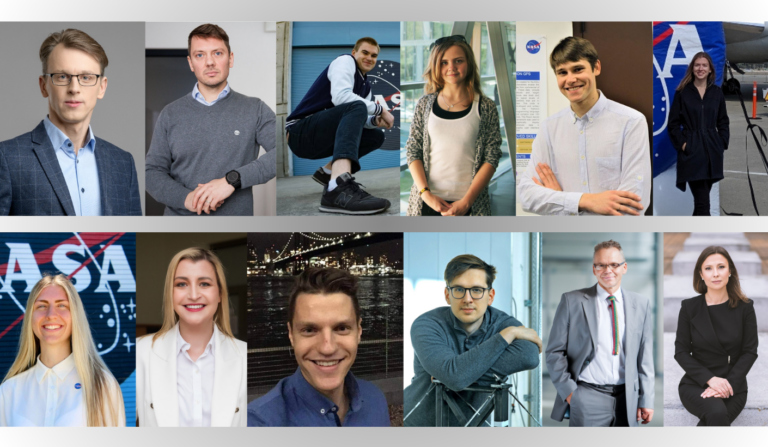
The success stories of our alumni and researchers, now spread across the globe and speak for us. Their journeys are a continuation of our story. Their achievements were shaped not only by the knowledge gained at the university, but also by the opportunities they took advantage of during their studies, which included scholarships and internships abroad. Internship and exchange programs in the United States (USA) are strategically important for VILNIUS TECH, as they contribute to increasing the university's international visibility and improving the quality of studies as well as research. These programs also strengthen the university's reputation: participation in exchanges with US academic institutions demonstrates the university's openness and international credibility. This helps attract talented students, lecturers, additional funding for projects and other joint initiatives. Interships at NASA VILNIUS TECH is particularly proud that every year students leave for internships at the National Aeronautics and Space Administration (NASA) in the United States. Students work on a wide range of projects at various facilities and divisions. This includes anything from developing satellite systems to creating sensors capable of monitoring astronauts' health in space. This type of experience opens doors to the world's leading technology companies and inspires them to create their own innovations. Below are the experiences and achievements of several alumni who completed internships at NASA. Associate Professor Dr. Laurynas Mačiulis, who studied Aviation Mechanical Engineering at the Antanas Gustaitis Aviation Institute (AGAI) and later earned his doctoral degree there, worked at the Ames Research Center in 2012, analyzing thermodynamics, flight dynamics, and heat transfer processes. Today, he leads the Lithuanian space and defense technology company Astrolight and shares his experience with the younger generation at AGAI. [caption id="attachment_123152" align="alignnone" width="300"] Doc. dr. Laurynas Mačiulis/ Photo from personal archive[/caption] Another Aviation Mechanical Engineering student, Vytenis Buzas, also went to the Ames Research Center in 2012. He analyzed advanced nanosatellite propulsion systems and their applications for orbit maintenance and payload recovery. Today, Vytenis is the co-founder and CEO of the unmanned defense systems manufacturer UDS. [caption id="attachment_117195" align="alignnone" width="300"] Vytenis Buzas/ Photographer J. Stacevičius [/caption] Thanks to Laurynas Mačiulis and Vytenis Buzas, Lithuania became a spacefaring nation. They initiated and led the project of Lithuania's first satellite, LituanicaSAT-1, in 2014 and also co-founded the space technology company NanoAvionics. [caption id="attachment_123175" align="alignnone" width="300"] „Online media“ photo / Laurynas Mačiulis and Vytenis Buzas, the creators of the first Lithuanian satellite, Lituanica SAT-1[/caption] Lukas Jakas, who studied Aviation Mechanical Engineering at AGAI, completed an internship at the Ames Research Center in 2017. Most of his time there was spent conducting phased microphone array tests. He currently works as a freelance engineer, providing 3D modeling, design-for-manufacturing, project development, and related services to companies in the US market. [caption id="attachment_123154" align="alignnone" width="300"] Lukas Jakas/ Photo from personal archive[/caption] Julija Semenenko, Julija Semenenko, who studied Engineering Informatics at the Faculty of Fundamental Sciences (FMF), went to NASA for an internship in 2016. Together with her team, she developed a mobile application for satellite monitoring that allows users to view all satellites orbiting Earth in real time. [caption id="attachment_123144" align="alignnone" width="300"] Julija Semenenko/ Photographer VILNIUS TECH[/caption] Narūnas Kapočius, a Telecommunications Engineering student at the Faculty of Electronics, went to the Ames Research Center in 2017. There, he contributed to the CHOMPTT 3U CubeSat space technology project and worked on CAD design, electronics development (PCB), data processing software, engineering simulations, and testing. He currently serves as Senior Engineering Project Manager at the cloud optimization platform Cast AI. [caption id="attachment_123156" align="alignnone" width="300"] Narūnas Kapočius/ Photo from personal archive[/caption] Justina Gineikytė, who studied Bioengineering at FMF, completed her internship in 2019 at the Ames Research Center's Nanotechnology Center, in the Biosensors Laboratory. Together with her team, she worked on developing a sensor designed to measure human hydration levels. She now works as a microfluidics engineer at the biotechnology startup Atrandi Biosciences, founded by scientists who returned to Lithuania from abroad. The company recently secured a new USD 25 million investment from Lux Capital and other venture capital funds. [caption id="attachment_123150" align="alignnone" width="300"] Justina Gineikytė/ Photo from personal archive[/caption] Paulina Draugelytė, a graduate of the Aerospace Engineering Master's program at AGAI, contributed during her 2024 internship to the transformation of NASA infrastructure into modern unmanned aircraft systems (UAS) research and flight training facilities. Her input also benefited scientific mission planning and other initiatives. These efforts included programs such as Smart Mobility, FireSense, ACERO, UTM, ATM-X, PAAV, and others. She is currently the co-founder and Chief Technology Officer (CTO) of a stealth startup. [caption id="attachment_123160" align="alignnone" width="300"] Paulina Draugelytė/ Photo from personal archive[/caption] Scholarship from the Baltic-American Freedom Foundation Another exceptional opportunity to gain professional experience in world-class companies is through a scholarship from the Baltic-American Freedom Foundation (BAFF), which enables participants to undertake internships at various US businesses, corporations, and organizations. Through these opportunities, students expand their professional networks and gain firsthand experience of American culture and lifestyle. One of the participants was Dr. Agnė Vaiciukevičiūtė, an alumna of the Faculty of Business Management, who took advantage of this opportunity in 2019. At the time, she was pursuing doctoral studies and completed a one-year internship at the Center for European Policy Analysis (CEPA) in Washington, D.C. In addition, Dr. Agnė Vaiciukevičiūtė taught at VILNIUS TECH for nearly ten years, served as a member of the Senate, worked as Vice Minister of Transport and Communications of Lithuania, and currently serves on the Vilnius City Council. [caption id="attachment_123138" align="alignnone" width="253"] Dr. Agnė Vaiciukevičiūtė/ Photographer  LR Susisiekimo min. nuotr.[/caption] In 2016, Civil Engineering alumnus Dr. Vytautas Tumulėnas also completed an internship in the USA, working as a BIM/VDC Engineer at Skanska. He now works at SRP Projektas, a transport infrastructure development company, where he serves as Head of the BIM Department. [caption id="attachment_123172" align="alignnone" width="300"] dr. Vytautas Tumulėnas/ Photo from personal archive[/caption] Another alumnus of the Faculty of Civil Engineering, Dr. Povilas Dabrila, gained VDC professional experience during an internship at Skanska in 2024. He continues his research activities at VILNIUS TECH and serves as an advisor at the Lithuanian Armed Forces Defence Staff. Povilas is also the founder of the construction process analysis company ReframeBIM. In addition, he has been pursuing the rank of lieutenant through the Junior Officer Command Training Program (JKVM) for the past three years. [caption id="attachment_123170" align="alignnone" width="300"] Dr. Povilas Dabrila/ Photographer A. Jaunius[/caption] Fulbright Program Scholarships and international internships are not only created for students but also for experienced researchers. The Fulbright Program is one of the world's most prestigious academic exchange and scholarship programs, funded annually by the United States to support researchers in conducting studies and carrying out professional projects. Recipients include Nobel Prize winners, heads of state, renowned scientists, artists, and entrepreneurs. VILNIUS TECH can proudly say that two of its researchers have received this unique opportunity. The first was Professor Emeritus Dr. Habil. Gintaris Kaklauskas from the Faculty of Civil Engineering, who completed an internship at the University of Illinois Urbana-Champaign in 1996. There, he carried out the project "An Inverse Physical Modeling Method for Cracked Reinforced Concrete in Tension Using Experimental Data from Reinforced Concrete Beams." The university offered him a permanent position, but the professor says he always wanted to live in Lithuania and work at his Alma Mater. [caption id="attachment_123142" align="alignnone" width="300"] Prof. habil. dr. Gintaris Kaklauskas/ Photographer VILNIUS TECH[/caption] In 2025, Associate Professor Dr. Skirmantė Mozūriūnaitė from the Department of Urban Design at the Faculty of Architecture was awarded this prestigious scholarship. She went to the Massachusetts Institute of Technology (MIT) to prepare a scientific monograph manuscript entitled Rebuilding Sustainable and Smart Cities After the War. [caption id="attachment_123166" align="alignnone" width="300"] Associate Professor Dr. Skirmantė Mozūriūnaitė/ Photographer S. Bernotas[/caption]
More
University of the future: dialogue between the past and the present
How does the role of a university change when viewed from two different perspectives: that of a former student who has now become a lecturer, and that of a current student just beginning their academic journey? How does university appear to someone who started there as a student and today teaches others, and how is it perceived by a student only taking one’s first independent steps in life? Representatives of the VILNIUS TECH Faculty of Electronics - Prof. Dr. Andrius Katkevicius from the Department of Electronic Systems and electronics engineering student Nojus Balciunas - are two different generations taking a fresh look at today's university and its future. Prof. Dr. Andrius Katkevicius, Department of Electronic Systems, Faculty of Electronics How has your view of the university changed from your student years to now as a lecturer? My perspective has changed significantly over time. When I studied electronics engineering at the Faculty of Electronics, I only saw a small part of university activity - mostly the teaching process. At that time, the university was associated with lectures, laboratory work, practical classes, and exams. During my bachelor's studies, I naively believed that successfully passing all exams was enough to secure a future in engineering career. Practice showed that in order to become a professional in your field, it is necessary to do extra work and actively participate in the chosen area of electronics, deepen your knowledge independently, and continuously improve yourself. Only during my master's studies did I begin to clearly understand that active scientific work is also carried out at the university. Today, after completing all stages of higher education and gaining pedagogical and scientific experience, I see the university as a multifaceted institution encompassing a wide range of activities and opportunities - from educating first-year bachelor's students to carrying out scientific and commissioned projects with local as well as international partners. How are student generations and their relationship with learning changing? Today's students are more focused on practical benefits and quick results. They have much broader and faster access to information, so they are increasingly less limited to material presented during lectures. At the same time, however, they face challenges related to information overload and evaluating information quality, especially when many answers can be obtained through artificial intelligence. There is a growing need for practical learning, understanding how knowledge is applied in real contexts, and seeing the value of studies in future professional activities. Students' expectations toward lecturers are also changing - dialogue, feedback, and a clearly structured learning process are increasingly valued. Although some students lack patience for long-term and consistent work, they are also more open to new technologies, digital tools, and flexible forms of learning. This encourages lecturers to constantly review and update their teaching methods. If you could compare the university from your student years with the current one, what has changed the most? One of the most noticeable changes is the study and research environment. A few years ago, after moving into new facilities, a modern and well-designed infrastructure was created, which clearly focused on study quality, scientific research, and collaboration. This environment not only improved technical possibilities but also changed the academic culture and daily work at the university. Fundamentally, the understanding of the university's role has changed - from an institution mostly focused on the study process, the university has become a much more active center for science, innovation, and project-based activities. Today, the university creates opportunities for students to participate in scientific, applied, and international projects, something that was previously less visible or accessible. Another important change is the advancement of learning tools and technologies related to digitalization as well as the application of artificial intelligence. Today, students have access to advanced digital learning platforms, virtual laboratories, simulation tools, and AI-based support systems that can help analyze, model, and deepen their knowledge. This fundamentally changes the learning process - from passive absorption of information to active, independent, and individualized learning. What should universities do differently today to better prepare students for the future? Universities should enhance the connection between studies and real practical experience even more, so that students can more clearly understand how acquired knowledge will be applied in professional activities. This includes closer cooperation with businesses and scientific partners, project-based learning, and involving students in applied and scientific projects as early as possible. It is important to develop not only subject-specific competencies but also general abilities - critical thinking, independence, responsibility for the learning process, and the ability to adapt to constantly changing technologies. Universities should encourage students to learn throughout life, experiment, make mistakes, and learn from experience, while also providing a suitable academic environment, which encourages that.   Nojus Balciunas, 3rd-year Electronics Engineering Student, Faculty of Electronics How would you describe the university and the significance of studies? For me, the university is first and foremost a community. Members of the VILNIUS TECH community are very warm and supportive people who constantly encourage participation in various activities organized both within and outside the university. Studies at VILNIUS TECH are an extremely significant stage of life. I can acquire not only academic knowledge but also practical skills, while developing critical thinking, independence, and responsibility. Of course, it is also a kind of transition into adult life, but even more importantly, it is a stage of growth, self-improvement, and self-discovery. I believe this is one of the most important periods in life. What expectations do you currently have for the university, and are they different from what you imagined before starting your studies? When I started studying at the university, I expected to gain more practical experience during lectures, but I soon realized that opportunities to gain such experience are provided beyond lectures. The university offers various additional activities, programs, and internships that students can join to deepen their knowledge and become more involved in practical activities. These opportunities are one of the university's greatest advantages - it provides space to grow, improve, and shape your own study path. What experiences or skills gained during studies are the most valuable? I believe the most important acquired skills are the so-called soft skills: being proactive, the ability to present your work and ideas, adapt to new environments, and respond quickly to changing situations. How do you imagine the university of the future - what should be different there compared to today? It is difficult to imagine the university of the future being very different from what it is now. Of course, laboratories and the equipment in them will become even more modern over time, but even today it is clear that VILNIUS TECH is constantly updating, expanding, and implementing the latest technologies. However, I believe that in the future laboratories will become even more open, giving students more opportunities to independently work on projects and implement their ideas outside of study hours. What motivates you the most today to study and improve yourself? What motivates me the most is my love for electronics and the desire to understand things I do not yet understand. And there are still very many such things.
More