ATHENA Recap: 2023 at a Glance

December 29, 2023
As we enter 2024, it presents a fitting opportunity to reflect on ATHENA's journey and assess our achievements. To encapsulate the vibrancy of ATHENA's progress, here is an overview of the key highlights from 2023.

ATHENA in numbers

Let's talk numbers – in 2023, 9 ATHENA members organised 17 Blended Intensive Programmes (BIPs) for students, 7 Summer/Winter Schools, 2 International Staff Weeks, 2 BIPs for staff, and 15 Collaborative Online International Learning (COIL) sessions. Over 1000 ATHENA students participated in the BIPs and COILs! Additionally, there were 17 job shadowing opportunities throughout the Alliance.

ATHENA for students

This year, ATHENA students enjoyed abundant opportunities to learn and connect through various BIPs, winter and summer schools. Over 200 students from 38 countries attended the super ATHENA Advanced Data Technologies summer school!

ATHENA students actively participated in diverse summer and winter schools, covering topics such as video and audio production, engineering, product design, sustainability, logistics, management, renewable energy, digital environmental geosciences, and more. Students were also invited to submit papers on research theses and best practices for the ATHENA Research Book, Volume 2.0. ATHENA also emphasised and highlighted the best practices of undergraduate students participating in research projects.

In 2023, ATHENA representatives also participated in the European Student Assembly 2023 in Strasbourg, where students had the opportunity to engage in ten different panels and work on 6 to 10 policy recommendations regarding a specific topic.

ATHENA, initiated by the Hellenic Mediterranean University in Greece, also organised five roundtable discussions for Erasmus+ Days.

November 2023 was all about students' professional careers for ATHENA. ATHENA provided students with a month full of opportunities to prepare for working life and boost employability during the ATHENA Career Days 2023.

ATHENA students were invited to the new Erasmus Mundus Master's program EMINENT (European Master on Embedded Intelligence Nanosystems Engineering), which is now open for applications. Four ATHENA universities—the University of Siegen, the Hellenic Mediterranean University, the University of Orléans, and VILNIUS TECH—collaborate in this joint degree program along with the New University of Lisbon (Portugal).

ATHENA for university staff

Throughout 2023, ATHENA consistently engaged audiences with its ongoing ATHENA Talks, notably introducing the ATHENA Alumni Talk. In these sessions, alumni explore a variety of topics spanning science, technology, and industry.

Spring 2023 heralded exciting news for sports enthusiasts as the much-anticipated ATHENA sporting event, ATHENATHON, made its return.

The Erasmus+ blended intensive programme, 'FutureFit Learning Gym,' was also a highlight. This innovative program, aimed at both academic and non-academic staff, focuses on personal and professional well-being. It revolves around the development and enhancement of skills in five key 'FutureFit' areas: Design Thinking, Virtual Collaboration, Cultural Adaptability, Connectedness, and Change Resilience.

Furthermore, the PhD Summer School was a significant gathering, uniting young researchers from 20 countries. Participants honed their leadership skills, engaged in discussions about the latest scientific developments, exchanged knowledge and ideas, and forged valuable connections that promise to greatly benefit their scientific careers.

The 'Co-Creation Hub' advanced with its second successful meeting in Porto, fostering collaborative innovation among various disciplines. Additionally, a collaborative Erasmus Mundus Master’s programme by four ATHENA partner universities has been approved for funding, marking a significant step in international education

ATHENA for Industry & society

A vital meeting in Vilnius, focusing on international cooperation opportunities between universities and industry, sparked productive discussions among ATHENA members. Participants from 10 ATHENA and partner universities reviewed existing initiatives and planned new activities for the upcoming academic year, enriching their experience with numerous campus and company tours.

Further exploration into the industry of Rome and the Lazio region has opened new avenues for research and partnership. ATHENA members and industry partners engaged in various discussions, with three local companies showcasing their initiatives that are performed in synergy with academia.

In a significant display of innovation, ATHENA, along with the University of Siegen, showcased their latest advancements at the Hannover Messe. Six ATHENA partner universities travelled to Hannover to present various exhibits in the fields of IoT, robotics, and smart sensing. Additionally, they introduced ATHENA to visitors and international industry representatives.

The ATHENA Technology Forum was another highlight, featuring inspiring presentations and discussions that underscored the alliance’s commitment to technological progress. The forum attracted 118 attendees and focused on main topics such as nutrition, Industry 4.0, and university networking.

ATHENA has also highlighted the significant topic of Citizen Science, emphasising how ordinary residents help solve unexplored problems in diverse fields ranging from biology and computer science to statistics and astronomy.

Last but not least, in 2023, it was calculated that over five years, ATHENA partner universities have collectively been granted over 350 patents, demonstrating a robust culture of innovation and research.

 ATHENA growth

The ATHENA Alliance continues to expand its global reach. In 2023, ATHENA began collaborating with international partners on the ABC – Africa BlendEd Core project. This initiative involves prestigious institutions such as the Polytechnic Institute of Porto, Hellenic Mediterranean University, University of Siegen, University of Nigeria, Federal University of Technology Minna, Eduardo Mondlane University, Zambeze University, Makerere University, Soroti University, Odisee, and the Regional Universities Forum for Capacity Building in Agriculture.

The project's mission is to foster cross-border collaboration among students, transcending disciplines and nations. It aims to create impactful projects that significantly benefit local communities.
Related news

World Science Day: what is the role of science and the university today?
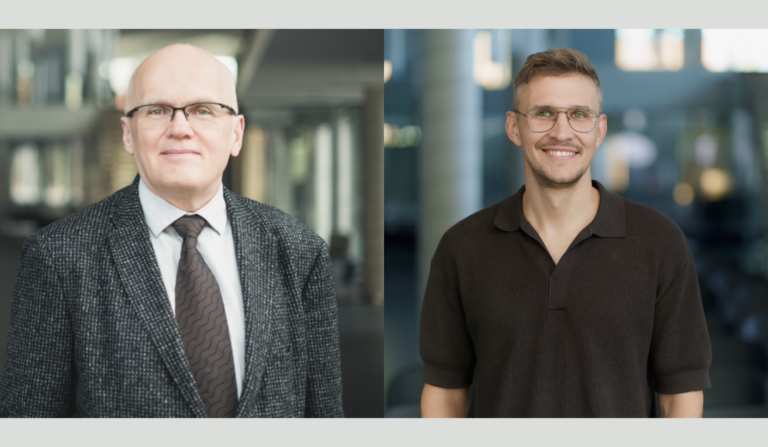
Celebrated annually on November 10, World Science Day serves as a reminder that science is not merely about new discoveries or cutting-edge technologies. It is the very foundation of societal progress, helping us understand the world, solve complex problems, and shape future solutions. The aim of this day is to highlight the importance of science to the development of society and to strengthen the dialogue between researchers and the public. So, how is the role of science changing today? Which research fields are shaping the future? And why should students get involved in research while still studying? On this occasion, we asked VILNIUS TECH researchers to share their perspective on the role of science yesterday, today, and tomorrow. Insights are shared by Professor at the Department of Information Systems, Faculty of Fundamental Sciences (FMF), and Chief Research Fellow at the Department of Information Technologies – Habil. Dr. Antanas Čenys, and FMF Vice-Dean for Research and Project Development, Dr. Eimantas Ramonas. A University Is Inconceivable Without Science According to the former Vice-Rector for Research, Prof. Habil. Dr. A. Čenys, although scientific and technological progress has accelerated rapidly in recent decades, the fundamental meaning of science within the university has remained unchanged: to train specialists and raise the general level of public education—neither of which is possible without modern scientific research. "The university is the place where people are prepared to utilize the latest achievements in science and technology across all areas of societal development. In order to understand the newest technologies, one must take part in creating them; and to be able to prepare such specialists, it is essential to involve them directly in scientific research," says the professor. For this reason, both researchers emphasize the importance of student involvement in scientific activities. As Prof. Habil. Dr. A. Čenys notes, merely using the latest technologies is not enough to truly understand them—it is necessary to be part of their development process. That is precisely why integrating students into research is an inseparable part of the university’s mission. According to Dr. E. Ramonas, an early introduction to science allows students to understand how new technologies and innovations are born—not just by sitting in a lecture hall or lab listening to a lecturer, but by experiencing it firsthand. Furthermore, this involvement helps students gain clarity on their interests and career direction. "Getting a taste of scientific research during your studies and realizing that you enjoy it gives you a competitive edge in your future career, as you start building experience earlier than graduation. On the other hand, trying out such activities in your first years and discovering that a particular field does not interest you at all allows you to pivot and search for your path elsewhere," explains the Vice-Dean. Nevertheless, stepping into the world of science presents young researchers with certain challenges. Dr. E. Ramonas highlights two main issues: the fast pace of life and an extraordinarily broad field of potential research. "Due to the rapid rhythm of life, it is difficult for young researchers to focus on just one or two directions where they can deepen their competencies and become experts. Today, there are more opportunities to get involved in science than ever before, but it is precisely this abundance of choice that often makes it difficult to decide which way to go," he explains. A Faculty Responding to Today’s Challenges Speaking of technological advancement, Artificial Intelligence (AI) is increasingly applied in science, which, according to Dr. E. Ramonas, is fundamentally altering the research process. "With the help of artificial intelligence, it is possible to gather required data from open-access sources much faster, perform preliminary analyses, and evaluate the feasibility of planned research. This helps scientists manage their time and limited resources far more efficiently," the Vice-Dean notes. The researcher also emphasizes another aspect: AI is not merely a tool that accelerates processes, but an object of study in itself, meaning that a significant portion of research at FMF is centered directly around it. Dr. Eimantas Ramonas points to several other key research areas currently being actively pursued at the faculty: data analytics, cybersecurity, and data-driven decision-making. Mathematical modeling research utilizing quantum computing methods is also underway, which in the future could help analyze complex systems at unprecedented speeds. Additionally, the faculty conducts biotechnology research in life sciences, focused on improving food quality and studying cellular processes—ranging from research utilizing microorganisms to studying cancer cells. Creative technology fields are no less important. Research into animation, game engines, and virtual and augmented reality solutions seeks to enable broader, more diverse entertainment options. Science as an Opportunity to Change the World When asked what science means to him personally, Prof. Habil. Dr. A. Čenys answers concisely: "For me, it is an opportunity to understand the world around us and strive to improve it." Among the most inspiring scientific breakthroughs of recent years, he highlights artificial intelligence and medical achievements. "In my personal opinion, recent years have been dominated by achievements in artificial intelligence, whose scale, rate of development, and impact across various spheres of life are simply incredible. However, medical breakthroughs are no less impressive. One of the clearest examples is the COVID-19 vaccine, developed in record time, which demonstrated what can be achieved when the global scientific community mobilizes its efforts. Still, artificial intelligence stands out because its impact spans virtually every aspect of human society," says Prof. Habil. Dr. A. Čenys. Although it is difficult to predict exactly what science will look like in ten years, both researchers agree that artificial intelligence, data analytics, and interdisciplinary research will inevitably shape the future directions of science. On the occasion of World Science Day, both researchers share a message for the younger generation: "Stay active and have the courage to take on things we haven't done before," wishes Prof. Habil. Dr. A. Čenys. And for those considering Master's or PhD studies, Dr. E. Ramonas advises not to dismiss the opportunity to take that step: "To students who have given even a passing thought to master's studies, I would suggest not overthinking it and just going for it. Upon finishing a bachelor's degree, fatigue often takes over, but after a short rest comes the realization of how much you have already learned and how much still remains undiscovered. That is precisely when the most crucial question arises: what else do I not know yet?"
More
In the age of content-generating artificial intelligence, who is the true author of the work?
Take a look at these images. Which one do you think is the most beautiful? Which one is technically better executed? Which were created by a human and which by artificial intelligence (AI)? Click on the image to view it in full size And how would your assessment change if you found out that they were all created by AI? We live in a time when AI is increasingly moving into almost all spaces - from social media campaigns to advertisements, posters and informational visuals. It is quite possible that soon a large proportion of the images we see around will be marked with the words "Created using AI." But does knowing who created an image change the way we perceive it? (But before you continue reading, we will reveal that: image 1 was created by AI, image 2 by Giedre Gedeikyte, image 3 by Lukrecija Jaseviciute, image 4 and 5 by DI, image 6 by Milda Mockūnaite-Vitkiene). A bachelor's thesis research project by Laura Dutkute, a graduate of the VILNIUS TECH Entertainment Production study programme, titled "Consumer Participation in Visual Communication in the Digital Environment: Human and Artificial Intelligence Interaction," revealed that when evaluating visual content, audiences consider not only its aesthetics or quality, but also how and by whom it was created. Nevertheless, although AI is increasingly becoming part of the creative process, the role of the human is still essential. Dutkute, who conducted the research, notes that AI is often presented in society as a competitor to creators. However, the research results reveal a somewhat different reality - audiences primarily see AI as a tool that exists alongside humans. Moreover, information about the use of AI can change the way a person evaluates the work itself. "This means that the label indicating the use of AI is not completely neutral. If for the audience AI has negative connotations, this perception can also be transferred to the work, even if AI's contribution was minor," the graduate explains. One of the most important findings of the research is that AI does not eliminate the role of the human as the creator. It can perform certain parts of the creative process, help generate ideas, create different visual versions or personalise content, but the final decisions still have to be made by a human. Therefore, according to L. Dutkute, the creative process does not become any less human but, in a sense, becomes a more collaborative process where AI can offer numerous options and the human is still the one making a choice, evaluating, modifying and maintaining the creative direction. The creator's own skills become particularly important here. The responses from specialists in the study showed that the outcome is strongly determined by how well a person knows how to use the selected tool. As AI becomes increasingly integrated into the creative process, the user's relationship with content is also changing. For users, it is important to know who the content creator is, how it is presented, where it came from and whether it can be trusted. "With the emergence of AI, users have begun to evaluate content more rather than simply enjoy it. On the other hand, people are not always able to recognise for themselves that visual content was created using AI. Once they learn about its origin, they may change their assessment. Therefore, it is important not only to be able to recognise AI-generated content, but also to improve society's overall AI literacy," says L. Dutkute. The involvement of AI in the creative process inevitably raises the question of what we actually mean by authorship today. If one part of a work is created by a human and another is generated by AI, whose work is it? "AI is not a replacement for the creator; it simply serves as another creative tool – just like Canva, Google or Photoshop. Its use has expanded the possibilities even further while also it placing even greater responsibility on the person who decides what they create with this tool and how they present that work to the audience. Ultimately, the person remains responsible for the final result," she says. Therefore, according to the interviewee, it is important to communicate transparently about AI's contribution. All of this is also changing the nature of work for visual communication specialists. In the future, those who simply know how to use one AI tool or another will become less important than those who understand when to use it, what to entrust to it and how to critically evaluate the result. "Specialists will need to compete with AI less and learn how to integrate it properly into their work more. There will be a greater need for people who can choose the right AI tool, formulate a task, evaluate the result and maintain the creative direction," says Laura. According to the graduate, AI is best viewed not as a tool that will take over the entire creative process, but as an assistant capable of expanding human capabilities.
More