C. Ignatio: “The sense of impact keeps me going”

April 10, 2026

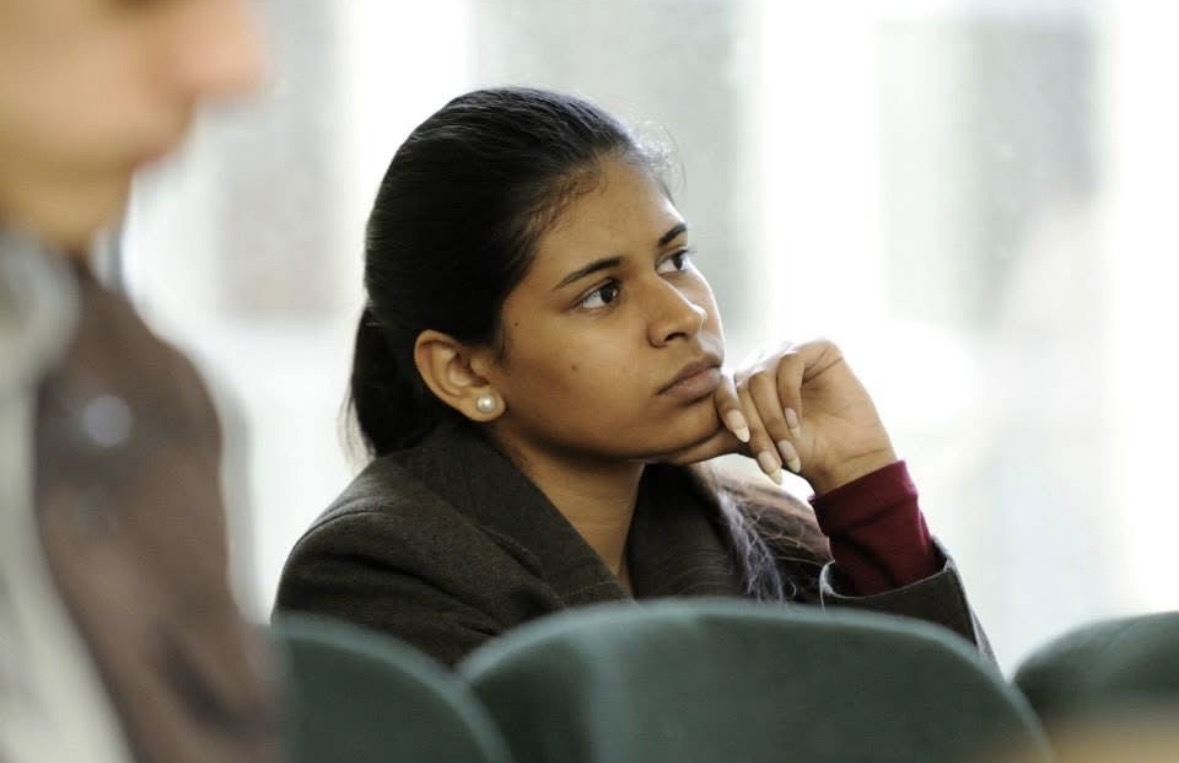
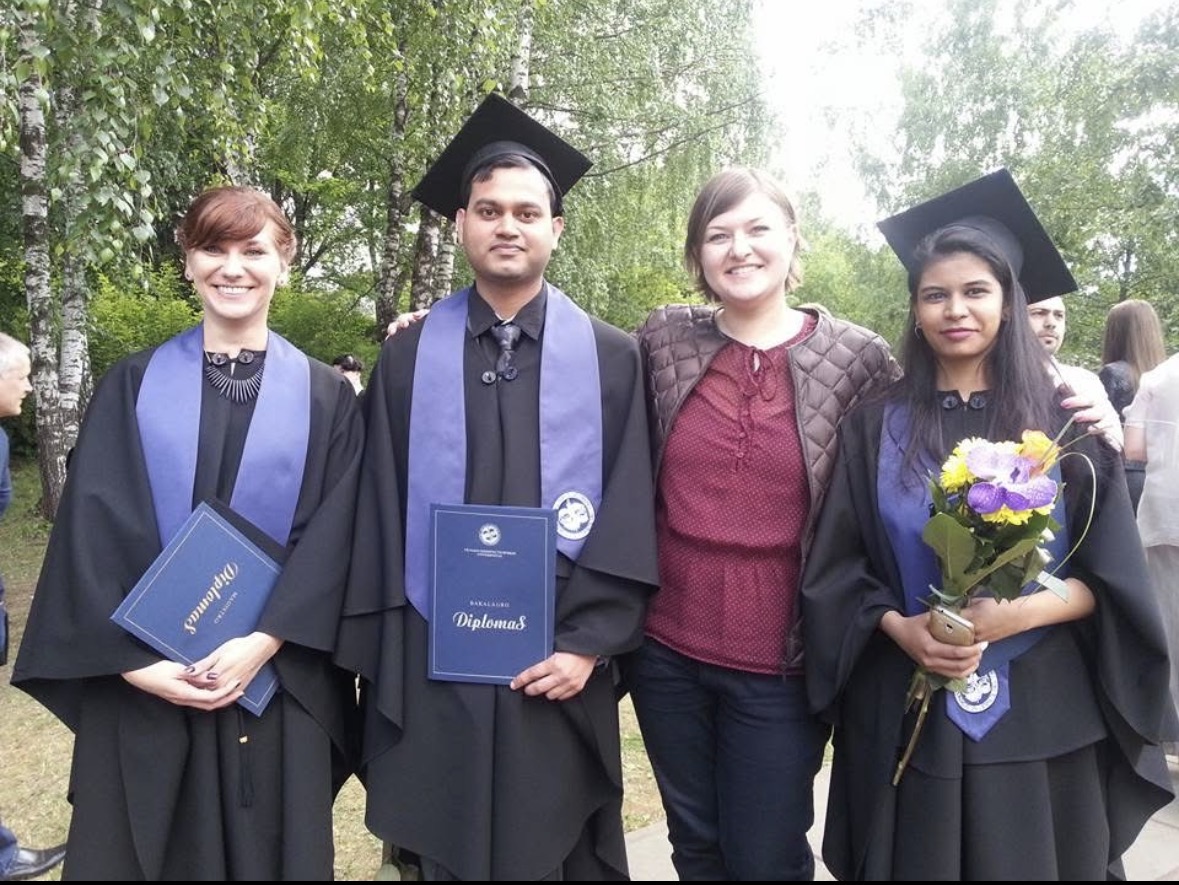
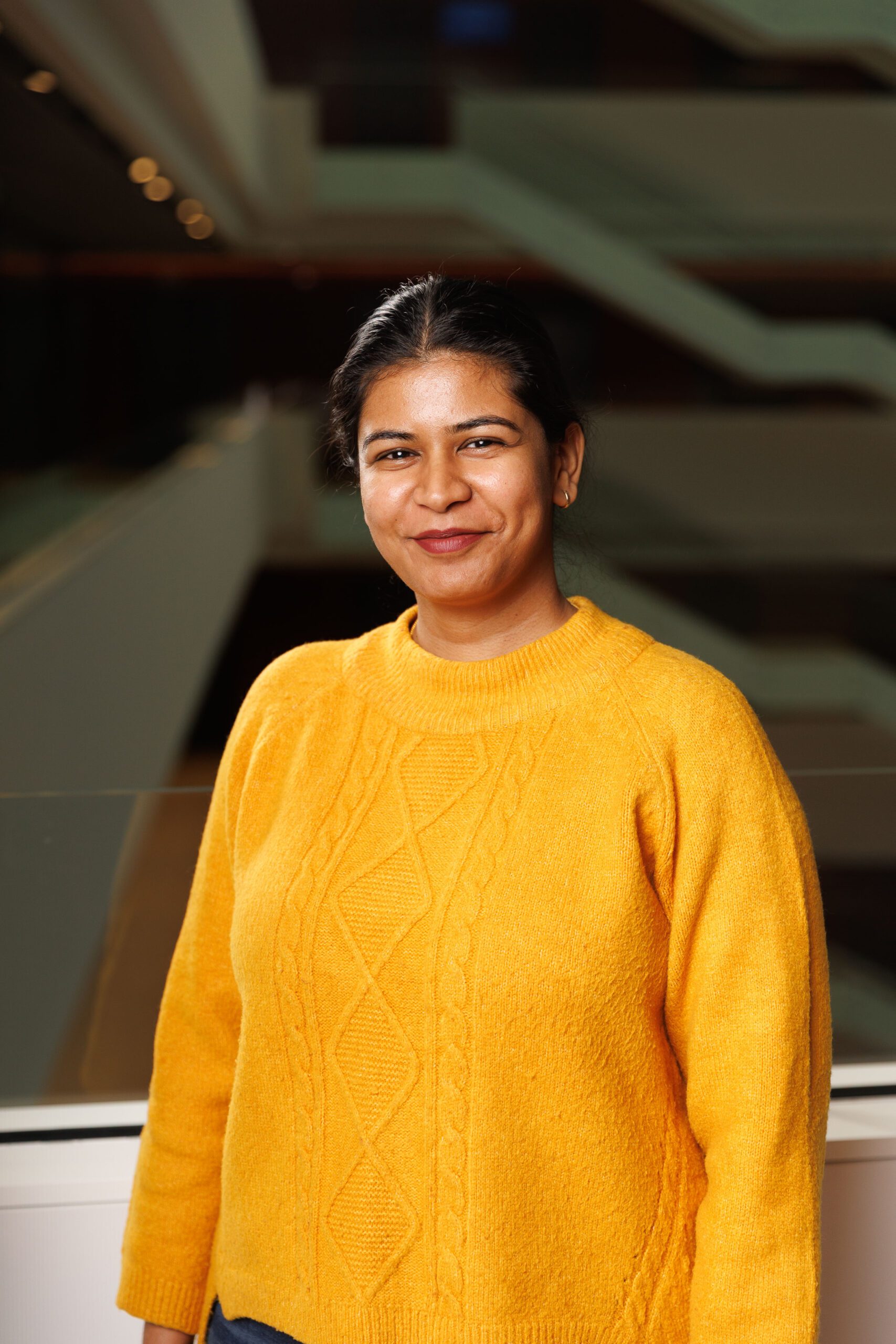
When Carolyne Ignatio left India to study Business Management at VILNIUS TECH, she didn’t arrive with a five-year plan. What she brought was curiosity, an openness to the unfamiliar, and a willingness to figure things out as she went. More than a decade later, she is now a Senior Business Intelligence Analyst at Danske Bank, working at the crossroads of data, compliance, and financial crime prevention. Her journey wasn’t straight forward — and that’s exactly why it worked.

A step into the unknown

For Carolyne, choosing Lithuania wasn’t the obvious choice. “It wasn’t something I knew much about at first, but that also made it interesting — it felt like stepping out of my comfort zone,” she recalls. What drew her to VILNIUS TECH was a mix of its practical, skills-first approach to education and a scholarship that made the decision financially feasible. “Looking back, it turned out to be a very good choice for both my personal and professional growth.”

The early adjustment wasn’t without its difficulties. The communication style in Lithuania initially felt unfamiliar — more reserved and less immediately warm than what she was used to. Over time, Carolyne realised it wasn’t unfriendliness — just a different way of interacting. The academic shift was equally noticeable: less rote learning, more independent thinking. “It felt unfamiliar at first, but it helped me become more adaptable and open-minded,” she says. Both proved to be skills she would draw on for years. 

She feels grateful to the entire academic community, especially the International and Erasmus office staff who guided and supported her throughout the journey. 

The skills that quietly mattered most

When asked which part of the Master’s programme was most valuable in her career, Carolyne surprises with her answer: not a lecture on strategy or a module on leadership, but something more technical — Excel, data, and analytical thinking. “At the time, I didn’t fully realise how relevant it would be,” she recalls. “But those skills turned out to be very important. They helped me move into more technical roles and build a strong foundation in data analysis and problem-solving, which I use almost every day now.”

An unplanned path into financial crime prevention

“Honestly, this wasn’t something I had clearly planned from the beginning,” Carolyne says of her career in AML (Anti-Money Laundering) and financial crime prevention. “Over time, things evolved through the opportunities I seized and the skills I developed.”

Today, as a Senior Business Intelligence Analyst at Danske Bank, her work is at the intersection of data, compliance, and technology. Day to day, that involves analysing transaction data, refining sanctions and PEP screening processes, and working with IT teams to make risk detection more effective and practical,” Carolyne explains. “I translate complex regulatory requirements into clear logic that both business and technical teams can actually use.” 

The work carries true moral significance, something she doesn’t take lightly. Knowing that it helps prevent financial crime makes her more attentive to accuracy and quality. It’s something she takes pride in — being involved in work that truly makes a difference.

The project that didn’t go to plan

Not every chapter of Carolyne’s journey has been straightforward. One of the most formative moments of her career did not come from a success but from a large cross-functional project that was eventually deprioritised after significant investment from multiple teams. “It felt like a setback, especially after putting in a lot of effort. It affected my confidence at the time,” Carolyne admits. 

What changed everything was a conversation with her manager, who offered a reframe she has carried with her ever since: the quality of your contribution matters more than the outcome of the project. “Since then, I try to view my work that way, especially in complex team environments,” she says.

What keeps it interesting

Financial crime is a constantly evolving field. New sanctions, emerging fraud techniques, and regulatory demands continuously reshape the landscape. Early in her career, she found it overwhelming. Now, she values it most because it drives her to keep learning and improving.

“There’s always something different to work on, which keeps it interesting,” she says. “I also like the fact that I can contribute in a meaningful way — whether it’s solving a problem or improving something. That sense of impact keeps me going.”

Advice for the next generation

For students from India, or anywhere else, standing on the verge of a decision about studying abroad, Carolyne’s advice would be practical and well-considered: “Stay open-minded and proactive. Focus on building skills, but also explore different roles instead of limiting yourself too early. Networking is very important, especially as an international student — it genuinely helps open doors and understand how things work. And don’t worry if you don’t have everything figured out. Confidence builds with experience.”

Carolyne discovered that the credibility did not come from where she was from, but from the quality of her work and the consistency of her effort. 

Galerija
Related news

Naujas VILNIUS TECH elektroninis leidinys
We are pleased to present the new VILNIUS TECH electronic publication „Vilnius: nuo laukinių miškų iki Rojaus sodo“ („Vilnius: From Wild Forests to the Garden of Eden“), edited by Associate Professor Giedrė Ingrida Laukaitytė-Malžinskienė of the Department of Urban Design. The publication showcases the outcomes of the autumn semester project carried out by third-year students in the Landscape Architecture programme at the VILNIUS TECH Faculty of Architecture. The project comprises a comprehensive analysis of a historic area of Vilnius and its surrounding context, the development of a territorial strategy, and individual proposals for the preservation and future use of the site. “The title of the project – Vilnius: From Wild Forests to the Garden of Eden – reflects the clear conceptual framework that guided our analytical work. We explored the notion of wildness in Vilnius in relation to the city’s spiritual and cultural development. As future landscape architects, we examined how natural landscape elements, urban transformation, and political processes have shaped the evolution of Vilnius’s cultural landscape. Saviour’s Hill, the Garden of Eden, Rojaus Street, Blind Alley, Schwarz Tavern, the School for Noble Girls, K. Brzostowski’s golden heart, mysterious wells, the communities of the Jesuits, Missionaries, and Visitandine Order, the 1863 Uprising, Russification, Sovietisation, and other historical factors have all influenced the territory we investigated. The study area is located between Rasų, Subačiaus, Vitebsko, and Drujos streets. It includes the present-day grounds of the Visitandine Monastery and Church, the adjacent hospice, the grounds of the American School (occupying the site of former historic gardens), Vilnius Correctional Facility (also located within the former historic gardens), and the historical territory of the former Garden of Eden, which currently remains open and undeveloped. Each student develops and presents an individual interpretation of their own ‘Paradise’, while the collective outcome of the group project lies in identifying the historical constants of the site and revealing the strengths and future potential of this currently underused territory. The project involved analysing the historical development of the site, changes in topography, and vegetation patterns. Drawing on historical maps, texts, and works of art, we traced the relationships between historic buildings and former gardens, documented both surviving and lost heritage elements, explored patterns of life across different historical periods, and examined visual connections, compositional axes, existing and former urban structures, as well as concepts of ecclesiastical heritage — all of which are presented in this publication,” writes Associate Professor Giedrė I. Laukaitytė-Malžinskienė in the introductory section of the publication. Electronic book (in Lithuanian)  >>>  
More
New doctoral dissertation
VILNIUS TECH Library invites you to follow the published new dissertations. The dissertation „Research and application of biofiltration materials in the purification of biogas from hydrogen sulfide“ prepared at VILNIUS TECH by Kamyab Mohammadi. The dissertation was prepared in 2022–2026. Scientific consultant – Assoc. Prof. Dr Rasa Vaiškūnaitė. The dissertation was defended at the public meeting of the Dissertation Defense Council of the Scientific Field of Environmental Engineering in the Aula Doctoralis Meeting Hall of Vilnius Gediminas Technical University at 10 a.m. on 15 June 2026. This dissertation analyzes the removal of hydrogen sulfide (H₂S) from biogas via biofiltration. The study addresses one of the major challenges in biogas utilization, effective H₂S removal, since this compound is toxic and corrosive, and significantly reduces the operational efficiency and service life of biogas energy systems. The main object of the research is biofiltration materials intended for hydrogen sulfide removal from biogas: biochar produced from sewage sludge, cellular lightweight concrete (CLC) waste, and polyurethane foam (PUF). The doctoral dissertation aims to increase the efficiency of hydrogen sulfide removal from biogas and to enhance the operational stability of the biofilter by applying physically and chemically modified as well as unmodified waste-derived materials within the biofiltration process. The dissertation consists of an introduction, a literature review, chapters on methodology and results, general conclusions and recommendations, and lists of references and the author’s publications related to the dissertation topic. The Introduction presents the research problem and its relevance, describes the research object, formulates the aim and objectives, outlines the research methodology, scientific novelty, and practical significance of the results, and states the defended propositions. The First Chapter reviews biotechnologies for hydrogen sulfide removal from biogas, with particular emphasis on biofiltration mechanisms, the properties of biofilter packing materials, and the key factors determining process efficiency. The Second Chapter describes the experimental methodologies used to select biofiltration materials, determine their physicochemical and adsorption properties, inoculate and cultivate microorganisms, evaluate hydrogen sulfide removal efficiency, and the mathematically model the biofiltration process. The Third Chapter presents the results of theoretical and experimental investigations of innovative filtration materials, revealing the relationship between their properties and modification with microbial establishment, biofilm formation, and filter performance in hydrogen sulfide removal, and compares experimental results with mathematical modeling outcomes. Eight scientific papers related to the dissertation topic have been published: two in Web of Science-indexed journals with an impact factor, one in a Web of Science-indexed journal without an impact factor, four in other internationally indexed journals, and one in a conference proceedings volume indexed in the Scopus database. Seven presentations on the dissertation topic were given at national and international scientific conferences. Doctoral dissertation readers can search via VILNIUS TECH Virtual Library.  
More