Future jobs 2029: what will we do when robots take over our jobs?

April 12, 2019

Joy Adjutant, Data Trash Engineer, Juvenile Cybercrime Rehabilitation Counsellor, Voice UX Designer, E-sports Arena Builder – these are just a few examples of what professionals will be needed within the next 10 years. Cognizant, the U.S. headquartered and one of the world’s leading professional services companies, released a report on the future of work and proposed 21 new jobs that will enable people to realise their potential and stay employed in the changing job market.

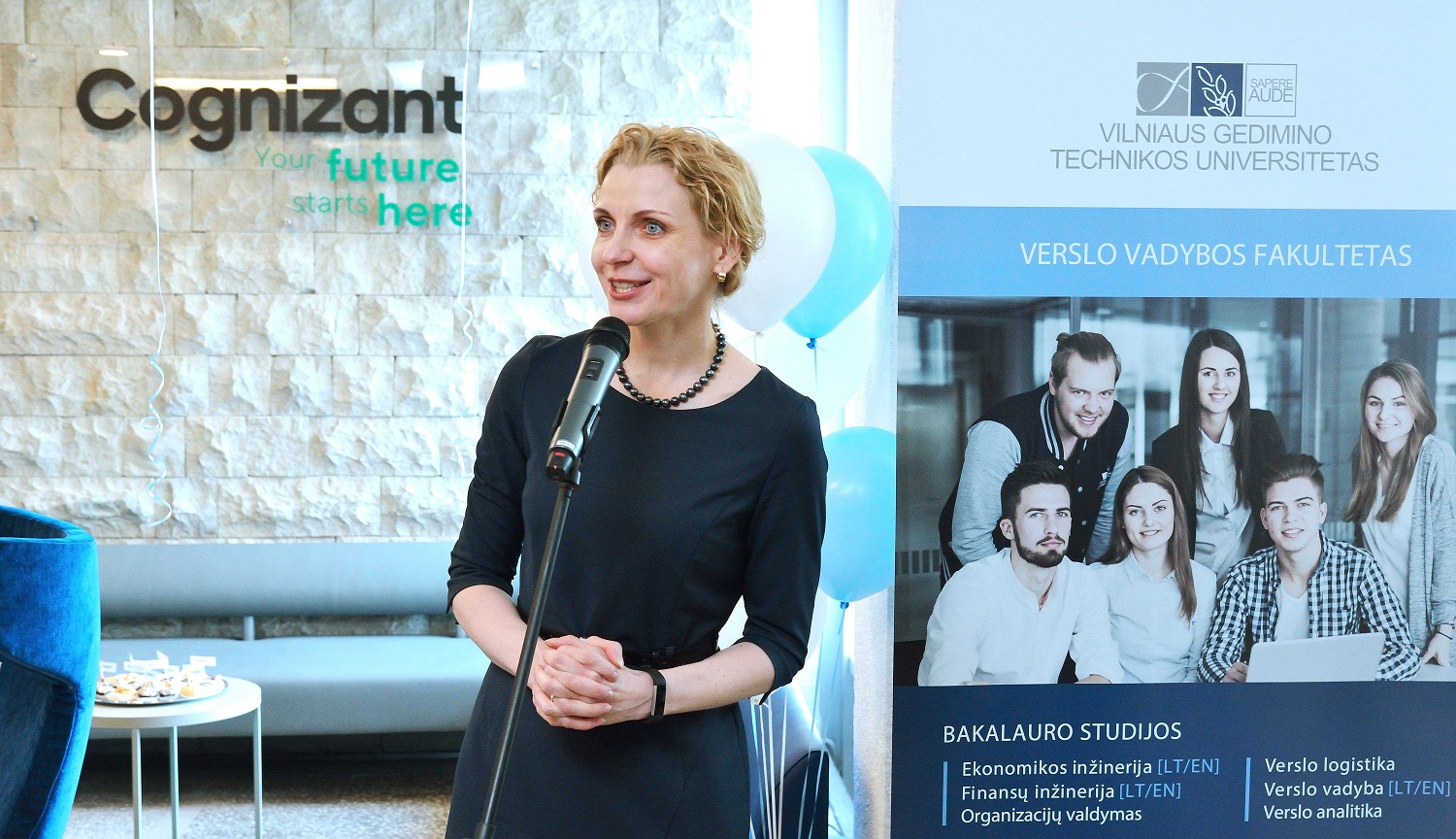
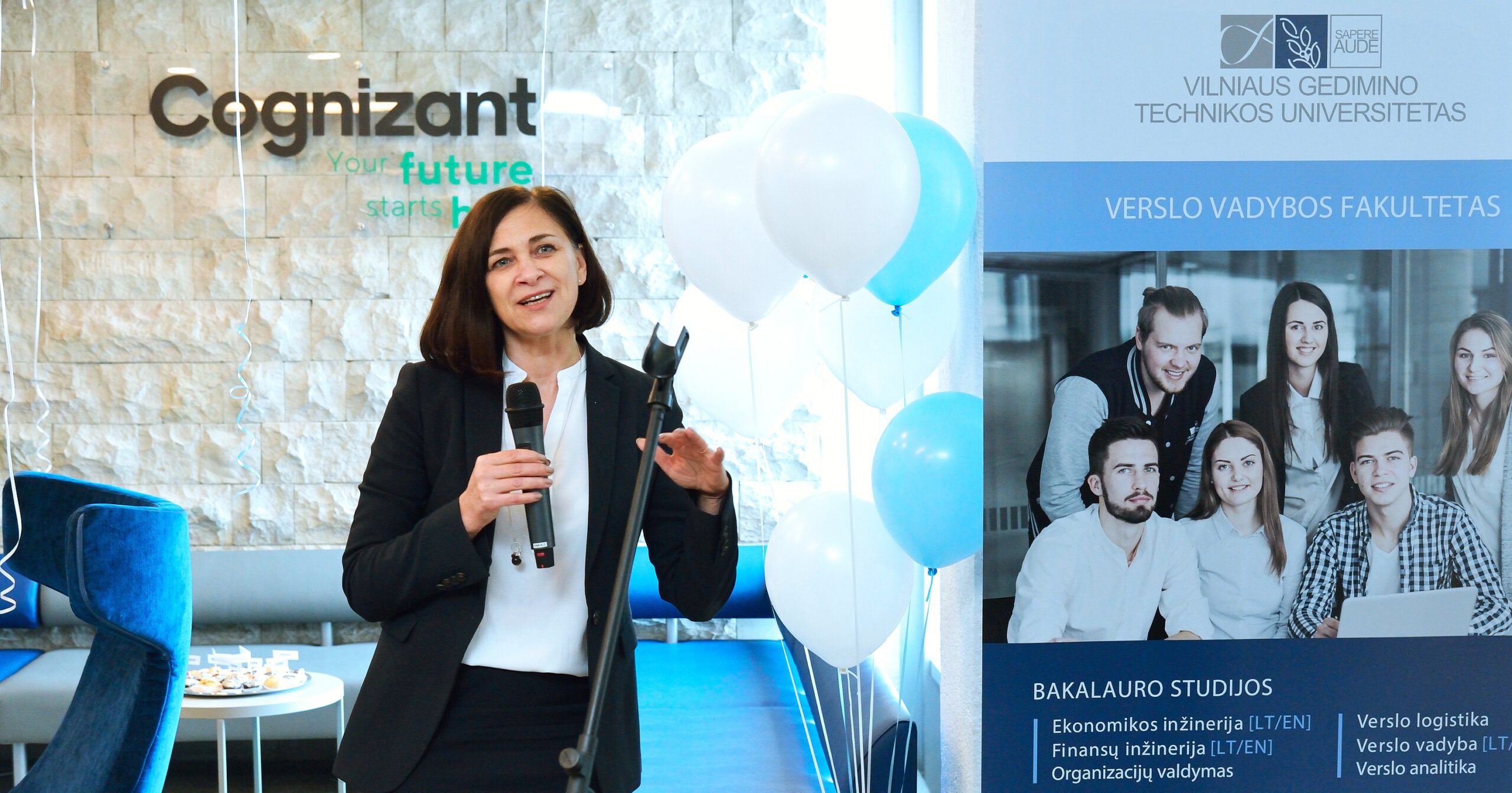
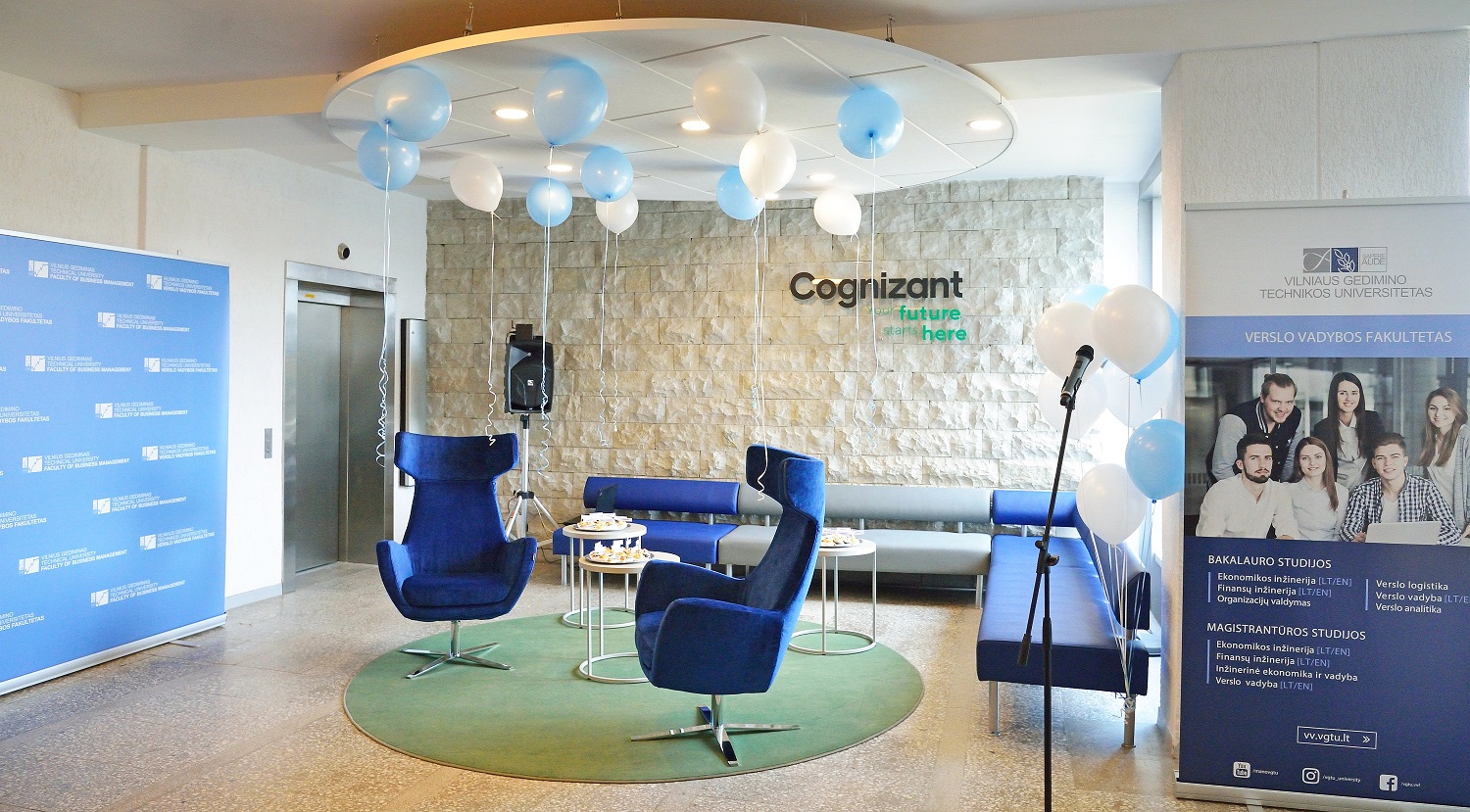
“Although, when we speak about artificial intelligence and the Fourth Industrial Revolution, we still focus on what jobs will people loose, it is equally important to show the opportunities. It is crucial that both the employers and the educators talk about the future jobs,” said Assoc. Prof. Dr. Asta Radzevičienė, Vice-rector for Strategic Partnership at Vilnius Gediminas Technical University (VGTU) together with representatives from Cognizant Technology Solutions Lithuania, the division of Cognizant in Lithuania, today during the opening of a Cognizant sponsored new student area in VGTU’s Faculty of Business Management.

Ethical behaviours are important not only to humans, but to machines as well

According to Assoc. Prof. Dr. Asta Radzevičienė, the Jobs of the Future report has three areas important for future business – ethics, security and technological advancement. It is very likely that the major change will happen and most of the new professions, which do not exist yet, will be created in the above mentioned areas. 

A widely debated Amazon case, when their secret AI recruiting tool had to be cancelled because it showed bias against some candidates, is a good example. In the future, Algorithm Bias Auditor will ensure that the algorithms at the heart of AI are fair, legal and representative of the values of organization. Machine Personality Designers will work on human machine interaction trying to develop for example a robot waiter or a virtual assistant that resembles the character, voice and personal traits of a customer.

The need to feel safe shall also increase; thus, companies shall employ Machine Risk Officers, Virtual Identity Defenders, and the security of a country will be guarded by Cyber Attack Agents. Warming climate and rising seawater levels call for Tidewater Architects, whose primary responsibility will be the overall planning and execution of projects that work with nature – not against it – in cities all over the world.

Some of the new jobs are based on the belief in technological advancement, and their names sound like from fiction books; nevertheless, it is quite likely that in 2029 there will be Flying Car Developers and Smart Home Design Managers. 

The robots are here – how do we stay competitive on the job market?

“The job market has always been changing; thus, during the next several decades, the jobs lost due to the Fourth Industrial Revolution, will be replaced by new ones. The winners of this change will be the ones who are open to new challenges and embrace the new professions. Many of the new jobs do not exist yet, but some of them are starting to gain shape,” says Edita Znutienė, Head of HR Baltics at Cognizant. She says, that in order to stay competitive and to withstand the invasion of robots and artificial intelligence into the job market, we have to be better humans. Machines will never gain certain human traits and will need a human to operate them. It may sound unbelievable, but things that humans are good at will be even more important in a few years. Analytical, communication and learning skills, ability to communicate and work in teams are crucial to every person and every business. To become invincible, we have to work on development of our skills and competences that are insurmountable and are beyond the reach of computers. 

VGTU’s Vice-Rector noted that many new jobs will emerge at the junction of several disciplines. “Developers will have to be literate in law, architects – gaming industry, psychologists – the principles of cyber security etc. It proves that the university’s chosen direction towards interdisciplinarity, digitalization and integration of information technologies in all areas of studies is the right choice,” says Assoc. Prof. Dr. Asta Radzevičienė.  According to her, changes are essential not only what students learn, but also how they do it. Now students gain new knowledge and experience by working in teams on common projects, communicating with various people, looking for new ideas and solutions not only to existing challenges, but also for the challenges of the future. That is what the new Cognizant’s student space at VGTU’s Faculty of Business Management will promote. 

The Jobs of the Future report by Cognizant is available here

Video on the new professions is available here
 

Galerija
Related news

Photography Exhibition "Leaving My Body" by Ieva Mizgeraitė
We invite you to visit the photographic exhibition "Leaving My Body" by VILNIUS TECH alumna Ieva Mizgeraitė. This collection is a journey through a woman's inner world – through the body, emotions, self-discovery, and the attempt to look at oneself from the outside. In her work, the photographer explores a body that does not always conform to society's expectations, situations beyond our control, the masks we see around us and sometimes put on ourselves, as well as the constant demand to be strong, equal, and always ready. “Each project was born from a specific emotion – from the noise and dialogue in my mind that arose at that moment. Searching for answers, I left my body and looked at everything from the outside – through the states of my models, their poses, gazes, and bodies. I understood that when you look at yourself from the outside, emotions become temporary. Inner dilemmas that once seemed permanent begin to dissolve,” the photographer says about the concept behind the exhibition. The exhibition brings together anger, resistance, masks, expectations, and freedom. These are not merely personal themes – they are experiences familiar to many women. The photographer says that she captures not faces, but psychological states. For her, photography has become a way of self-discovery and self-reflection – a form of meditation that helps her step away from the noise of the outside world and better understand what truly matters. The author works predominantly in black and white. She has been professionally active in photography since 2025. The exhibition "Leaving My Body" is an introduction to a deeper journey, which is planned to be presented in Gallery A of the library in November 2026.   The exhibition is on display in the foyer on the second floor of the Central Library.
More
Built a global career: VILNIUS TECH alumna encourages students not to be afraid of engineering
What should you study if you're equally interested in the humanities and the sciences? VILNIUS TECH alumna Katažina Andrukonytė knows this dilemma well. Today, she leads international teams and advises on some of the world's largest energy and infrastructure investments, but when she graduated from school, she had no clear idea which path to choose. „A few setbacks, staying proactive, and choosing the right study programme helped me discover a career that I truly enjoy and find meaningful. If I could give future students just one piece of advice, it would be this: don't be afraid to choose engineering,“ she says. [caption id="attachment_122573" align="alignnone" width="1536"] Katažina Andrukonytė[/caption] Based in Finland, Andrukonytė leads a team at AFRY that works on projects financed by international financial institutions. She coordinates complex energy and infrastructure projects across Europe, Asia, Australia, and other regions, while advising banks, investment funds, governments, private investors, and project developers on investments worth hundreds of millions of euros. Yet more than twenty years ago, she was simply another school graduate trying to decide what to study. Engineering wasn't the original plan „At school, I was equally interested in the humanities and the sciences. I explored several study options, including law. To be honest, engineering wasn't my dream. After I wasn't admitted to my first-choice programme, I decided to study engineering instead—and looking back, it was one of the best decisions I've ever made,“ she recalls. At VILNIUS TECH, she completed a Bachelor's degree in Environmental Engineering Technologies, followed by a Master's degree in Environmental Engineering and Management. Later, encouraged by her employer, she also earned a Master's degree in Building Energy Engineering. „What surprised me most was how quickly employers started recruiting engineering students. I had barely started my master's studies before companies were already competing to hire us,“ she says with a smile. Finding the right specialisation While studying, Andrukonytė realised that environmental engineering offers a wide range of career opportunities. She also understood the importance of identifying an area where she could apply her knowledge in practice. The turning point came when the company where she was already working encouraged her to specialise in energy engineering. „My employer was looking for specialists in the energy sector and suggested that I continue my studies in Building Energy Engineering. They even covered my tuition because qualified professionals were in such high demand. That's how I found the field I wanted to build my career in,“ she explains. Today, she believes this approach can benefit many young people: first gain a broad engineering education that opens multiple career paths, then discover the area you are most passionate about. More than a degree Although the studies were challenging, Andrukonytė believes they gave her a strong professional foundation. „There was certainly plenty of mathematics and physics, but engineering is much more than formulas. The difficult subjects are simply part of the learning process—you have to work through them,“ she says. For her, however, the greatest value of studying at VILNIUS TECH lay beyond the classroom. „The university offered countless opportunities to get involved in projects, competitions, international summer schools, and exchange programmes. I made the most of them. During my studies, I had the chance to study and complete internships abroad six times. I visited the Czech Republic, Denmark, Italy, South Korea, Finland, and Sweden. Those experiences showed me just how many doors an engineering education can open,“ she says. Engineering opens doors around the world Today, Andrukonytė lives in Finland with her family and works for AFRY, one of Europe's leading engineering, design, and consulting companies, employing around 19,000 specialists in more than 40 countries. For the past 15 years, she has worked on international energy and infrastructure projects, advising banks, investment funds, project developers, and investors. Her work brings together professionals from many different fields, including engineers, financial experts, investors, municipal authorities, and international organisations. „Over the past few years, we've seen growing investment in biomethane, hydrogen, renewable energy, hybrid energy systems, energy storage, district heating, power generation, and decarbonisation projects. Technical expertise is essential, but so are communication, negotiation, and project management skills. My role is to bring together specialists from different backgrounds and help them work as one team. That's why I always say engineering isn't only for people who love numbers. There is plenty of room for people with strong communication and interpersonal skills as well. Energy is a global industry, and if you're a skilled engineer, your expertise will be valued anywhere in the world.“
More