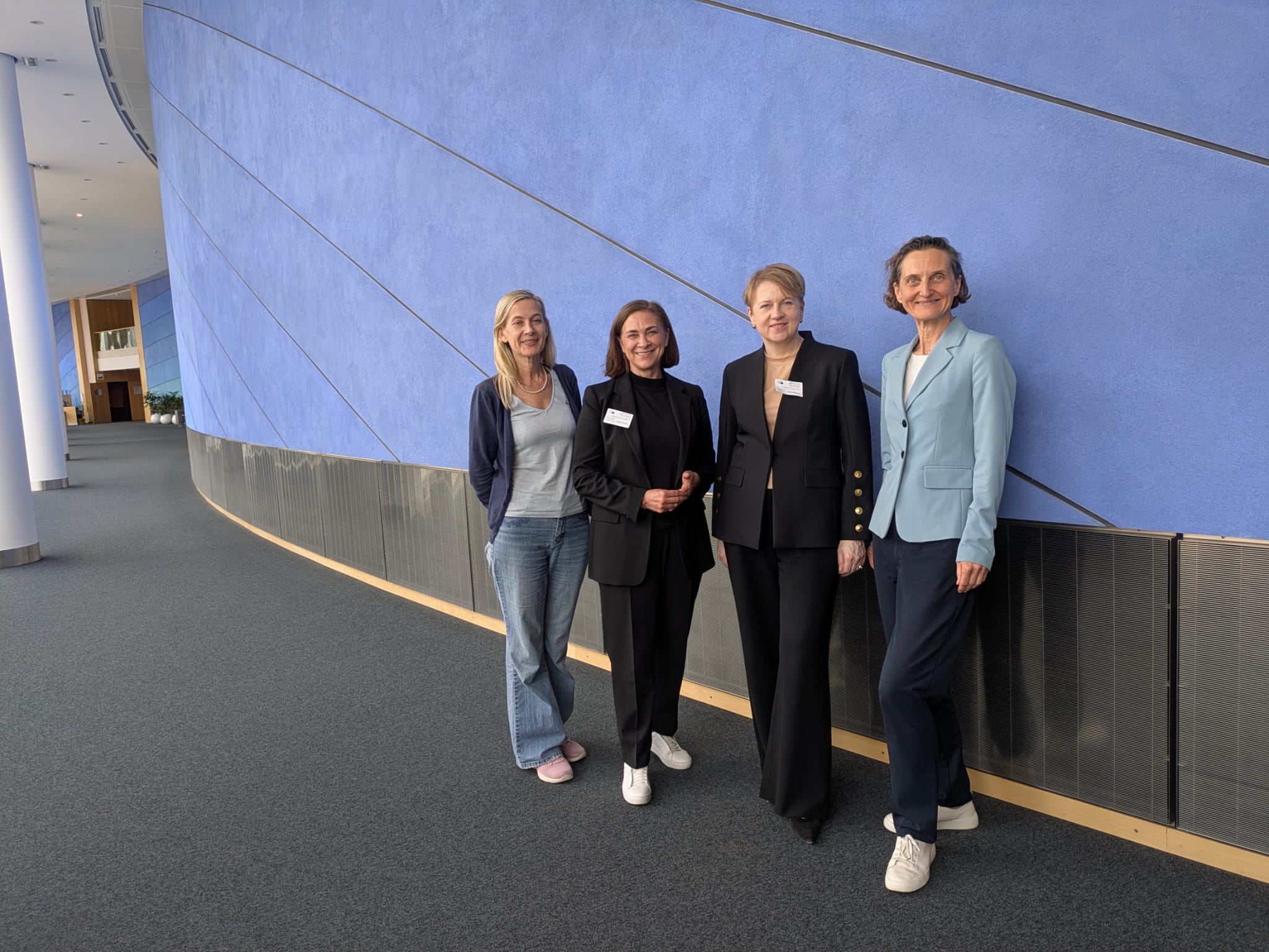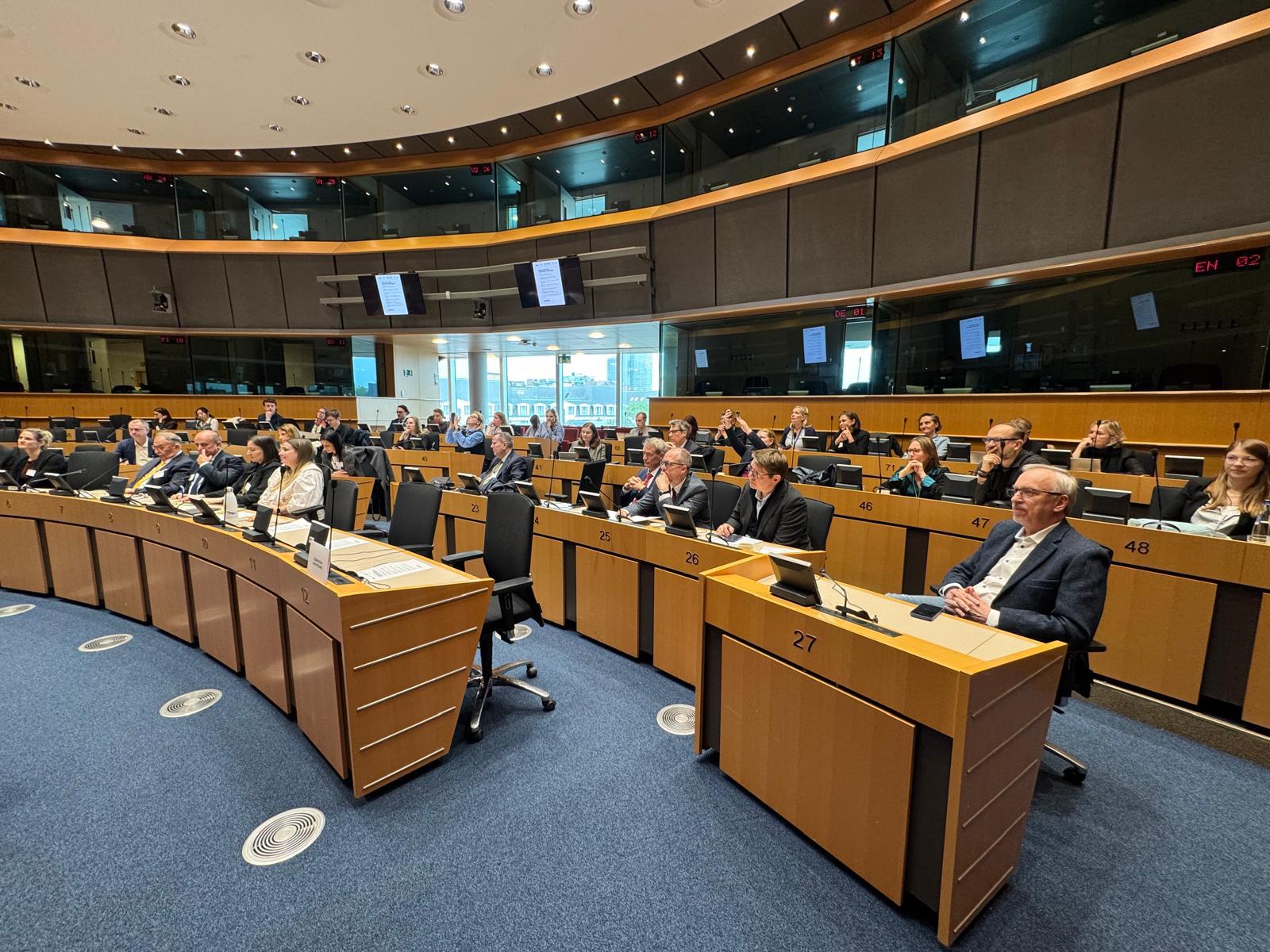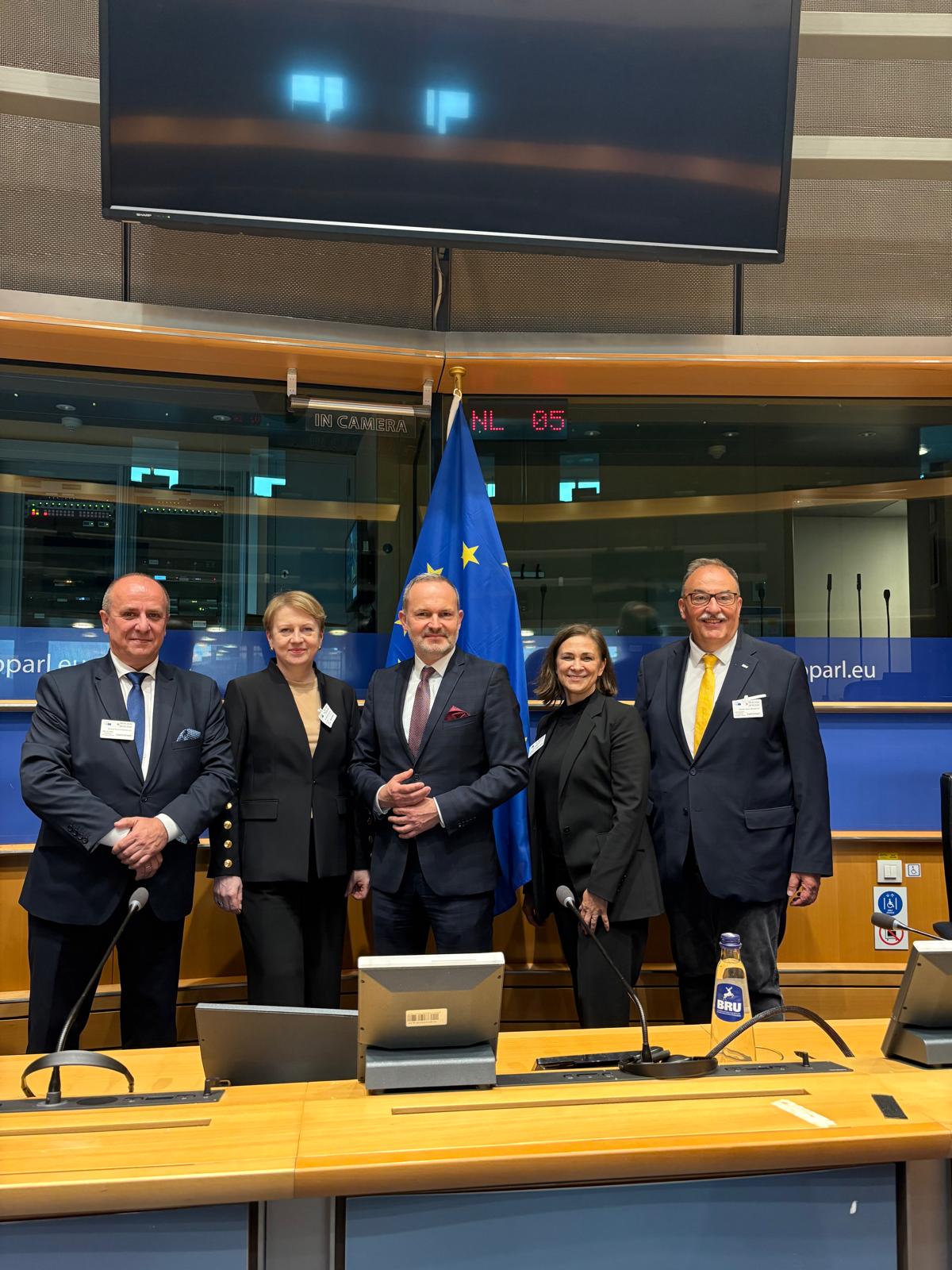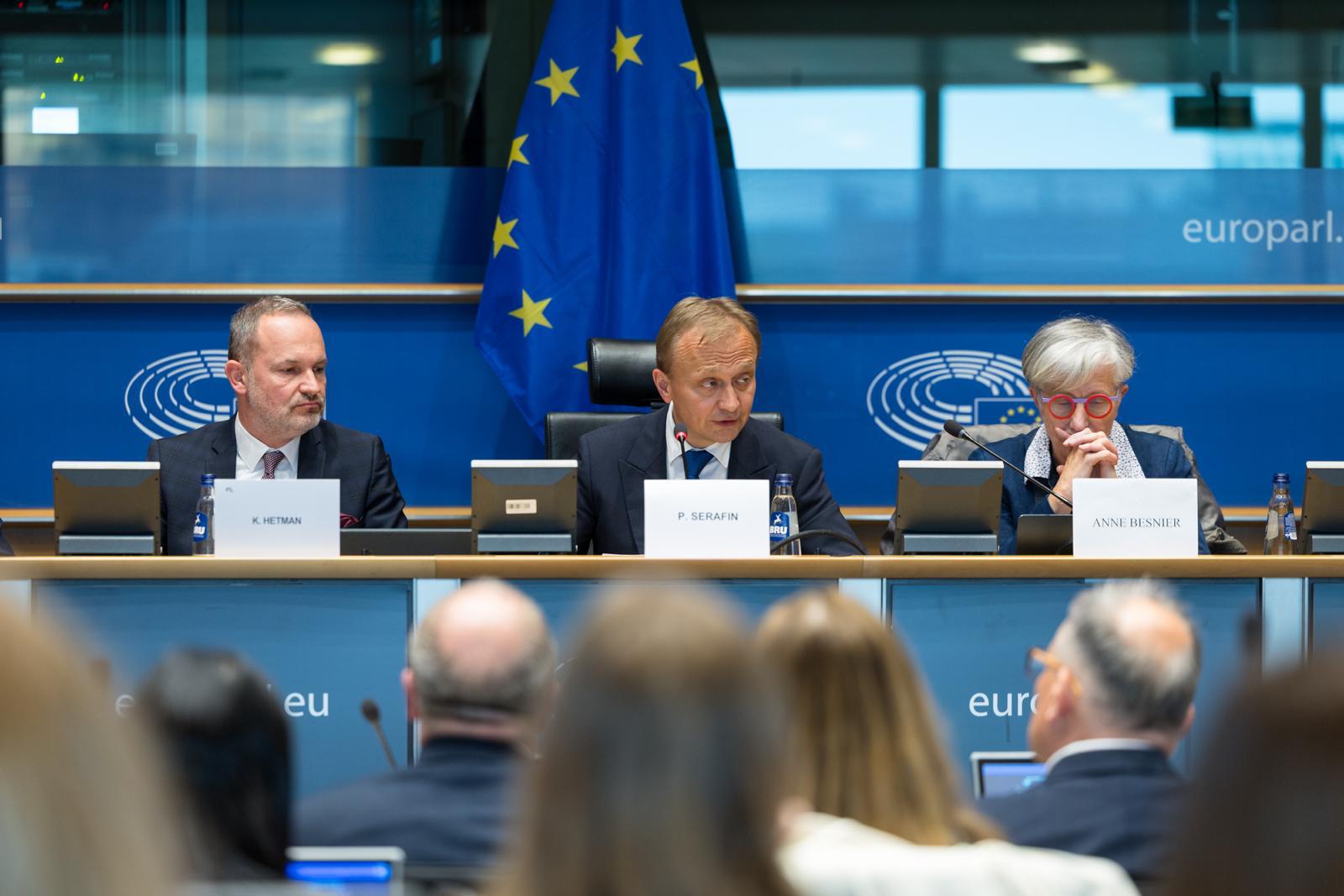
At the conference “Investing in Europe’s Future: Funding Pathways for Higher Education,” held on May 6 at the European Parliament in Brussels, European policymakers, university leaders, representatives of regions and businesses, and research experts discussed the future of European higher education, the role of university alliances, and the need for long-term funding to strengthen Europe’s competitiveness.
The conference was organized by ATHENA alliance member Maria Curie-Skłodowska University together with its alumnus and Member of the European Parliament Krzysztof Hetman. VILNIUS TECH also participates in the ATHENA alliance, working together with European partners to strengthen joint study programmes, research collaboration, international mobility, and the integration of European universities.
According to Živilė Sederevičiūtė-Pačiauskienė and Asta Radzevičienė, who attended the event, considerable attention was devoted to the emerging role of European universities — university alliances are increasingly being viewed not as temporary project-based networks, but as future long-term European higher education institutions.
In his keynote speech, Piotr Serafin emphasized that decisions regarding the new multiannual financial framework of the European Union after 2028 will have a long-term impact on Europe’s competitiveness, innovation policy, and university development. According to him, university alliances must become stronger, more integrated, and more closely connect studies, research, and innovation.
Member of the European Parliament Krzysztof Hetman stressed that funding under the “Horizon Europe” programme is currently distributed unevenly, with around 85% of funding allocated to countries outside the “widening” group. In his view, this means that the European Union is failing to fully utilize its scientific and innovation potential. He noted that university alliances could become an important tool for reducing these disparities, strengthening interregional cooperation, and promoting innovation development across Europe.
Anne Besnier devoted significant attention to the importance of regional innovation ecosystems and smart specialization. According to her, regions must clearly identify their strengths and build international cooperation networks based on them. She emphasized that collaboration among students and young researchers across Europe is gradually becoming the foundation for a common European innovation space.
Bartek Czyczerski, CEO of Business & Science Poland, spoke about the transformation of the knowledge-based economy and the impact of artificial intelligence on the labour market. According to him, Europe’s main challenge today is not only preparing highly qualified specialists, but also ensuring that their competencies are fully utilized within the economy. He stressed that universities will need to shift toward more flexible, modular, and practice-oriented study models, where AI literacy, critical thinking, creativity, and lifelong learning will play a much greater role.
Mariusz Głąbowski, Vice-Rector for International Relations at Poznan University of Technology and head of the EUNICE4U project, presented a model for the financial sustainability and governance of European university alliances. He emphasized that university alliances can no longer remain merely project-based structures dependent on short-term funding cycles. According to him, it is necessary to establish permanent structures integrated from legal, strategic, and organizational perspectives that could operate as genuine European universities.
ATHENA European University President Eric Blond emphasized that a true European university cannot be built solely on student mobility. According to him, studies, research, and innovation must be integrated into a single common system. He also noted that ATHENA stands out because most of its partners come from “widening” countries — Lithuania, Poland, Greece, Portugal, Slovenia, and Ukraine. In his view, these countries should not remain on the periphery of European higher education, but instead become active leaders of Europe’s transformation.
The conference featured extensive discussions on the development of joint European degrees, the European Student Card, the necessity of long-term funding for university alliances, and the connection between regional and European policies. Participants repeatedly emphasized that the development of university alliances requires a long-term political vision and a stable financial model that would enable the transition from pilot projects to fully functioning European universities.
The discussions also highlighted that university alliances are becoming not only networks for studies or mobility, but also important actors in regional policy, innovation, and competitiveness. They are increasingly collaborating with businesses, regional authorities, European Digital Innovation Hubs, and other organizations in order to strengthen regional innovation ecosystems and create a common European knowledge space.
Conference participants agreed that the key condition for the successful development of European universities is a long-term vision and a sustainable funding model that would allow university alliances to become fully-fledged European higher education institutions.

Galerija