Although mechanical engineering is often still associated with traditional manufacturing, today it is increasingly becoming the foundation of smart industry. It determines not only how equipment is designed and operated, but also a business’s ability to reduce costs, increase productivity, and create a competitive advantage in international markets.
The sector’s scale also confirms the importance of this industry in the Lithuanian economy. Darius Lasionis, Director of the Lithuanian Engineering and Technology Industry Association (LINPRA), emphasizes that the engineering and technology industry in Lithuania is already one of the most important pillars of the economy.
“According to data from the State Data Agency, the output of Lithuania’s engineering and technology industry (excluding VAT and excise tax at current prices) reached 7.82 billion euros in 2025 and grew by 6.6 percent year-over-year. This accounted for 24.4% of the manufacturing sector. It is clear that these results would not have been achieved without the workforce. In 2024, nearly 64,000 people were employed in Lithuania’s engineering and technology industry, accounting for as much as 30% of the manufacturing sector. The number of companies in Lithuania’s engineering and technology industry reached 2,416, or 25% of the total number of manufacturing companies. “These figures show that the engineering and technology industry is a significant and promising component of Lithuania’s industry and economy,” he states.
According to the head of LINPRA, mechanical engineering is one of the key components of the Lithuanian engineering and technology industry.
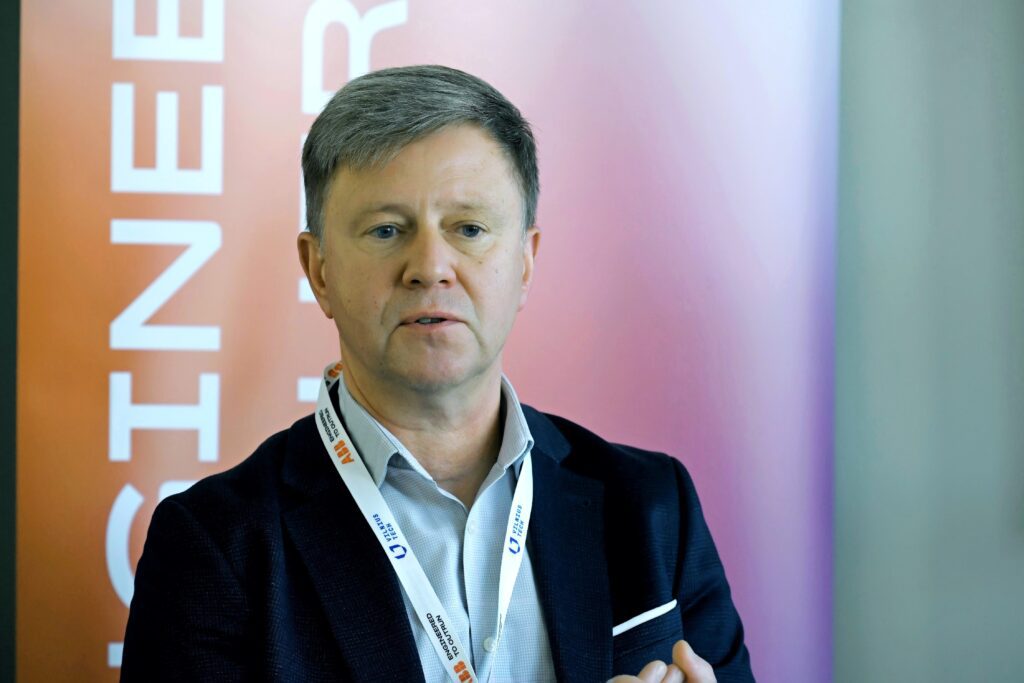
Director of the Lithuanian Engineering and Technology Industry Association (LINPRA) Darius Lasionis
“This field is important not only for ensuring basic engineering solutions, but also for implementing innovative solutions in our daily operations. If we include the manufacture of motor vehicles, trailers, and semi-trailers, the manufacture of machinery and equipment not classified elsewhere, and the manufacture of other transport equipment in mechanical engineering, we will see that, according to State Data Agency data, in 2025, the total volume of economic activities within the scope of Lithuania’s engineering and technology industry output (excluding VAT and excise tax at current prices) accounted for as much as 28 percent, and in 2024—30 percent. “This demonstrates the strong and stable role of mechanical engineering in Lithuania’s engineering and technology industry,” says D. Lasionis.
Today, the competitiveness of the industry is determined not only by internal corporate decisions. The broader international context—supply chains, geopolitical risks, and export destinations—is becoming increasingly significant.
“In our daily lives, each of us uses electronic devices, and the demand for them covers an ever-wider spectrum, naturally increasing the need for their components. Supply chain decisions are also being shaped by the trade wars between the U.S. and China and the growing dependence on Chinese components—companies are increasingly concerned about potential supply disruptions, cyber threats, or national security risks. In light of this, we are seeing that Europeans are increasingly inclined to order goods from American or other reliable manufacturers, rather than from Asian countries that may raise security concerns. This is particularly relevant when it comes to dual-use defense-related products,” says D. Lasionis.
He notes that another key factor for the engineering and technology industry is international trade. For example, by December 2025, exports from this sector accounted for as much as 23.4% of Lithuania’s total exports. Eighty percent of the engineering industry’s output is exported to European countries, with Germany and the U.S. being the two largest export destinations overall. “That said, we are seeing significant growth in Poland, the Czech Republic, and Central and Eastern European countries. This is not surprising, as Central and Eastern Europe has become a sort of manufacturing hub for Europe. Major Western manufacturers—German and French conglomerates—have relocated or built many factories in Poland, the Czech Republic, Slovakia, and Hungary in recent decades,” he says.
Must Create Value
In this context, mechanical engineering itself is changing. Assoc. Prof. Kristina Bazienė, Vice Dean of the Faculty of Mechanical Engineering at VILNIUS TECH University, says that although mechanical engineering was long considered a classical field, it is now becoming one of the most interdisciplinary and technology-driven areas.
“In the past, many relied on physical prototypes, but now computer-aided design and digital simulations dominate. Mechanical engineering is no longer limited to iron and bolts; it is becoming increasingly digital, smart, and closely linked to other fields of technology, and artificial intelligence is increasingly used in modern mechanical solutions, for example, in predicting failures,” she says, describing the breakthrough.
According to the vice dean, mechanical engineering has broken free from the confines of the classical design discipline and is becoming the engineering of systems, data, and innovation. Global changes begin with the design and construction of smart factories, where mechanical, IT, and electronic systems operate as a single organism. Sustainability is becoming the cornerstone of design: mechanical solutions are evaluated based on energy efficiency, CO2 reduction, and product lifecycle.
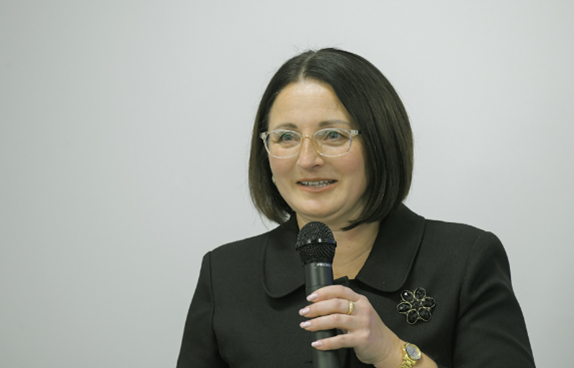
Vice Dean of the Faculty of Mechanical Engineering at VILNIUS TECH University Kristina Bazienė
The current market needs not just an executor, but a specialist capable of working with increasingly complex technological systems. According to D. Lasionis, businesses are recognizing this shift and responding to it.
“Engineers in a company not only design, develop, and manufacture, but also manage technologies. This is particularly relevant in today’s society, where companies seek a competitive advantage not only nationally but also internationally. With this in mind, engineers are increasingly being involved in a company’s long-term strategic processes,” says the interviewee.
K. Bazienė says that the competencies of a modern mechanical engineer clearly demonstrate that this field is a combination of technical, digital, business, and social skills.
“The VILNIUS TECH study program has adapted very quickly to market needs. Mechanical engineers still need core fundamental competencies, such as mechanics (statics, dynamics), thermodynamics, fluid mechanics, materials science, and machine design. However, engineers are increasingly not only doing calculations but also working in teams and making decisions, so they need to understand communication and acquire knowledge of teamwork, leadership, and project management,” she explains.
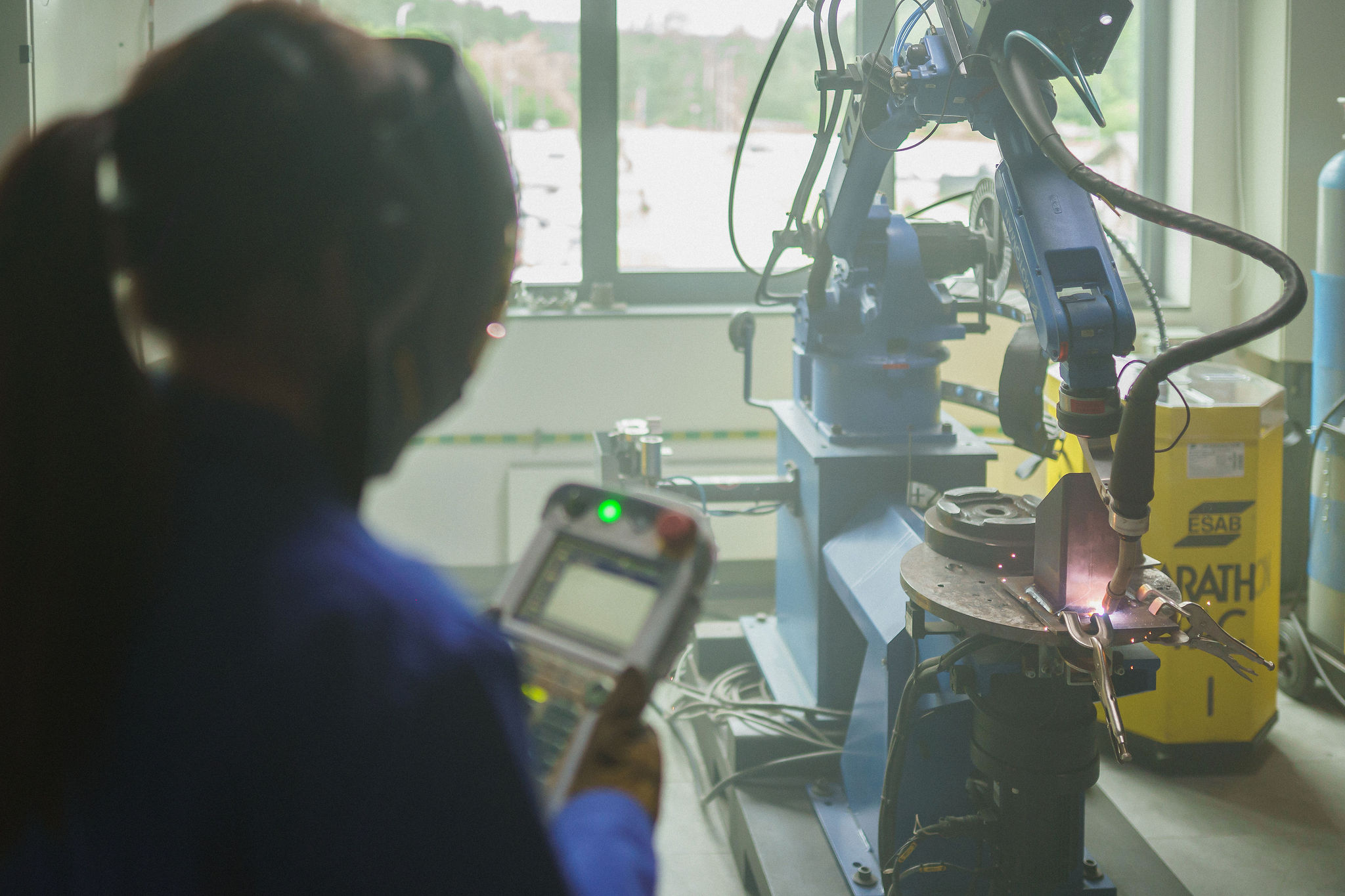
The mechanical engineering program at VILNIUS TECH retains the fundamentals of mathematics, physics, and classical mechanics, but increasingly integrates studies in programming, automation, and digital tools. Professional internships at companies during the program play a particularly important role.
“During the program, up to 50 percent of the coursework consists of practical activities: exercises and laboratory work. The mechanical engineering program trains decision-makers, not mere implementers,” emphasizes K. Bazienė.
D. Lasionis adds that the value of mechanical engineering today is measured by the ability to increase efficiency and competitiveness.
“Competitiveness is determined by labor productivity, raw material costs, and labor costs. We will be more competitive in the market if we can produce a high-quality product at a relatively lower cost by applying innovative and technologically advanced solutions developed by motivated and talented professionals in their field, rather than by other market players,” he says.
Partnerships and Internships
K. Bazienė notes that during studies, internships and real-world business projects are no longer just an “add-on” but one of the most important parts of the learning process. Without them, mechanical engineering studies would be theoretically strong but insufficient for the market.
“In the mechanical engineering program, internships don’t just take place in the summer; they’re spread out throughout the year. During their studies, students conduct lab work, work with real equipment, and perform experiments. They often use the same tools as in industry, such as CAD or simulation software. Both during professional internships and when preparing final projects, industry needs are taken into account: final project topics proposed by companies are selected, and business representatives participate in final project presentations,” explains the vice dean.
According to D. Lasionis, the business community also emphasizes the importance of experience and stresses that a diploma alone is not enough today.
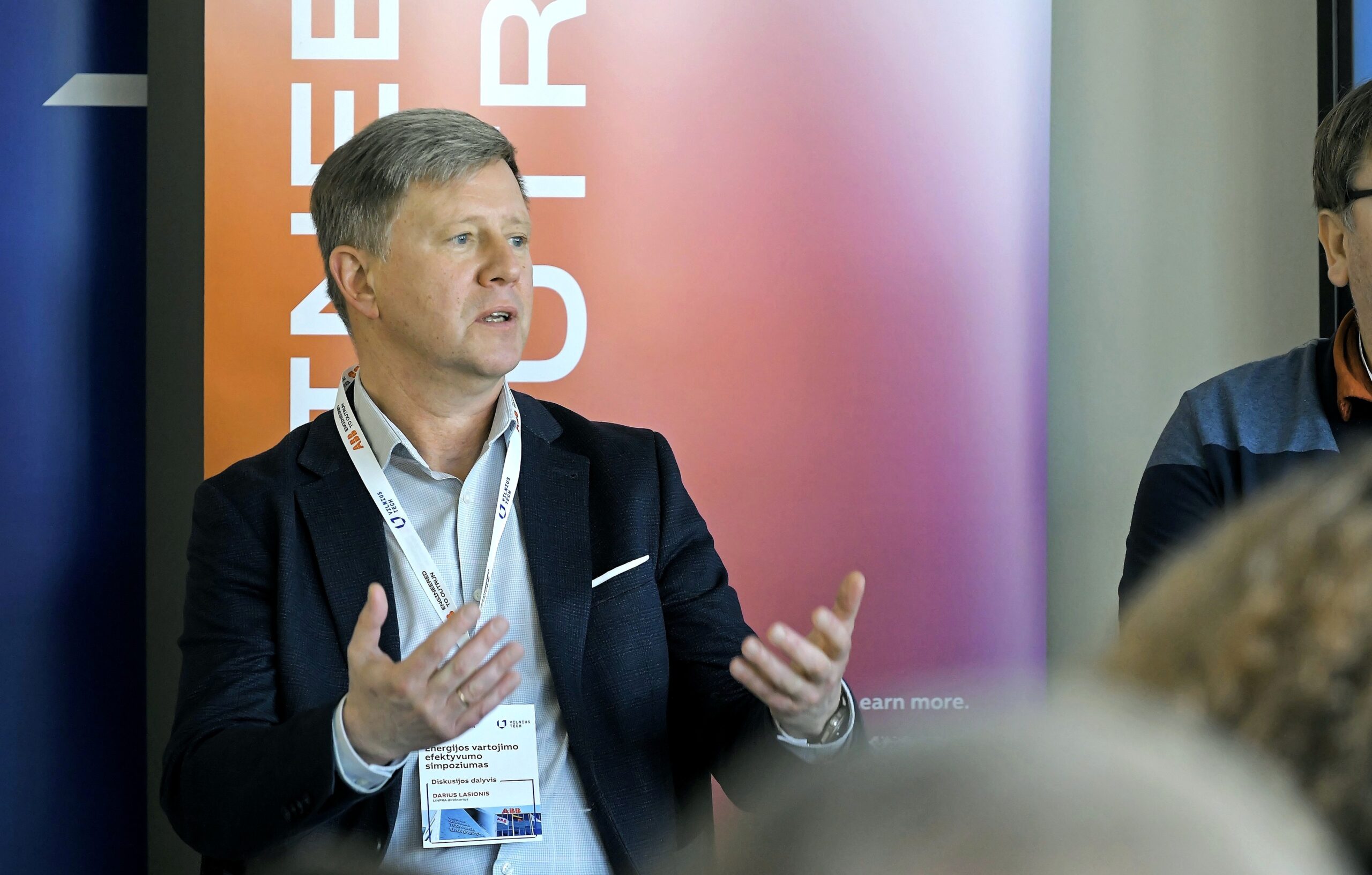
Darius Lasionis
“Business leaders often note that young people tend to believe that a college degree alone guarantees a good salary. However, in the business world, salary depends on one’s competencies, practical skills, and the value one creates. That is why the business community hopes that as many students as possible will gain practical experience and hands-on training,” says the head of LINPRA.
K. Bazienė adds that collaboration with the business community during mechanical engineering studies at VILNIUS TECH is not a series of isolated initiatives, but a systematically integrated part of the program.
“In many cases, students are already working with companies during their studies and quite often begin their careers before even finishing their studies. VILNIUS TECH actively collaborates with manufacturing and technology companies. Companies are facing a growing need for talent, so they actively seek out students and offer them internships. For example, a significant number of third- and fourth-year students already have work experience. “Today, studying mechanical engineering means not only attending university but also entering the job market early,” she says.
The demand for talent is growing
D. Lasionis agrees that the market is experiencing a shortage of mechanical engineers—companies are looking for specialists earlier and earlier, as this shortage is already having a direct impact on their expansion plans.
“According to data from the Employment Service, demand for mechanical engineers and mechanical engineering technicians, electronics engineers, electrical engineering technicians, and civil engineering technicians was higher in 2025 than in 2024 or 2023. It is clear that employers had a harder time finding engineering staff last year. This is reflected not only in statistics but also in real-world business situations. Company executives often express concern that, due to the shortage of engineers, they frequently have to limit their expansion plans related to automation, robotization, and digitization,” emphasizes D. Lasionis.
Nevertheless, there are positive signs—both the number of applicants and the profession’s appeal to the public are growing.
“Commissioned by LINPRA, Spinter Research conducted a representative survey of Lithuanian residents and found that in June 2025, 80% of residents agreed that the engineering profession has a promising future. In March 2023, this figure was 8 percentage points lower, at 72%. Thus, graduates in the fields of engineering and technology typically enter the job market motivated, ambitious, and promising,” he states.
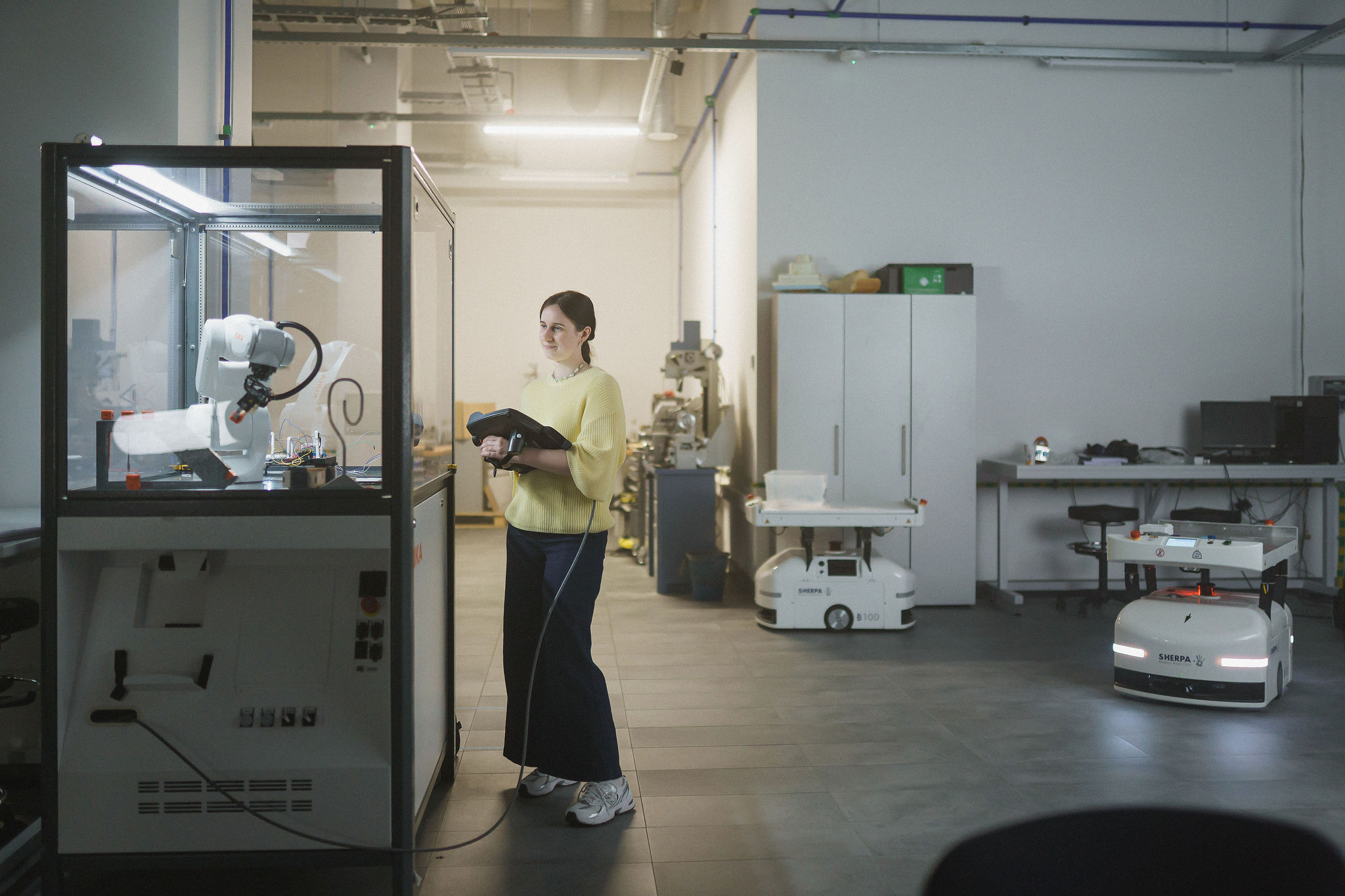
According to D. Lasionis, good results are also inseparable from consistent policy decisions.
“What is needed most is a clear strategy spanning at least ten years that is not dependent on political cycles. The guidelines for the National Artificial Intelligence Strategy and the Engineering Industry Roadmap, currently under development, should strengthen competencies, promote the adoption of artificial intelligence in industry, increase productivity and competitiveness, and clearly define the future direction of Lithuanian industry,” says the head of LINPRA.
Encouraging early interest in engineering contributes to these positive changes.
“We are very pleased with the ‘Engineering of the Future’ (AI) program implemented by VILNIUS TECH, which is designed to help students in grades 7–12 at schools offering general education programs to practically develop their innovative abilities, which include creativity, competencies in STEAM subjects, modern technologies, and entrepreneurship,” the interviewee explains.
According to D. Lasionis, the sector’s long-term ambition is clear—Lithuania can become an engineering nation, but this will require consistent efforts from all stakeholders.
“We believe that by 2030, Lithuania can be an engineering nation. However, the successful achievement of this goal requires the efforts of all of us,” says the interviewee.
According to K. Bazienė, mechanical engineering is one of those fields that never loses its relevance.
“If you’re considering mechanical engineering, the most important message is very simple but honest: it’s not an easy path, but this profession is one of the most versatile and ‘resilient’ choices for the future,” says the associate dean.