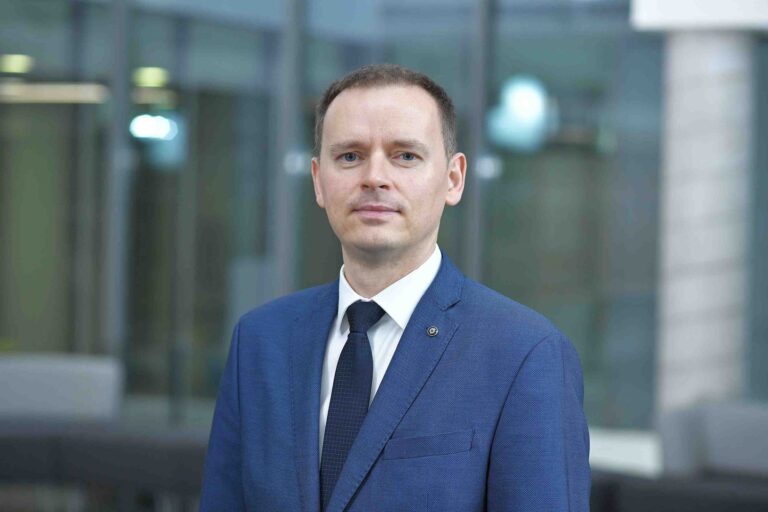
Martynas Šapurov, the newly appointed Dean of the VILNIUS TECH Faculty of Electronics, aims to strengthen the role of study programme committees, encourage community initiatives and find ways to simplify everyday academic processes. He believes that the best changes do not come from top-down instructions, but from involving the people who know their areas of expertise best.
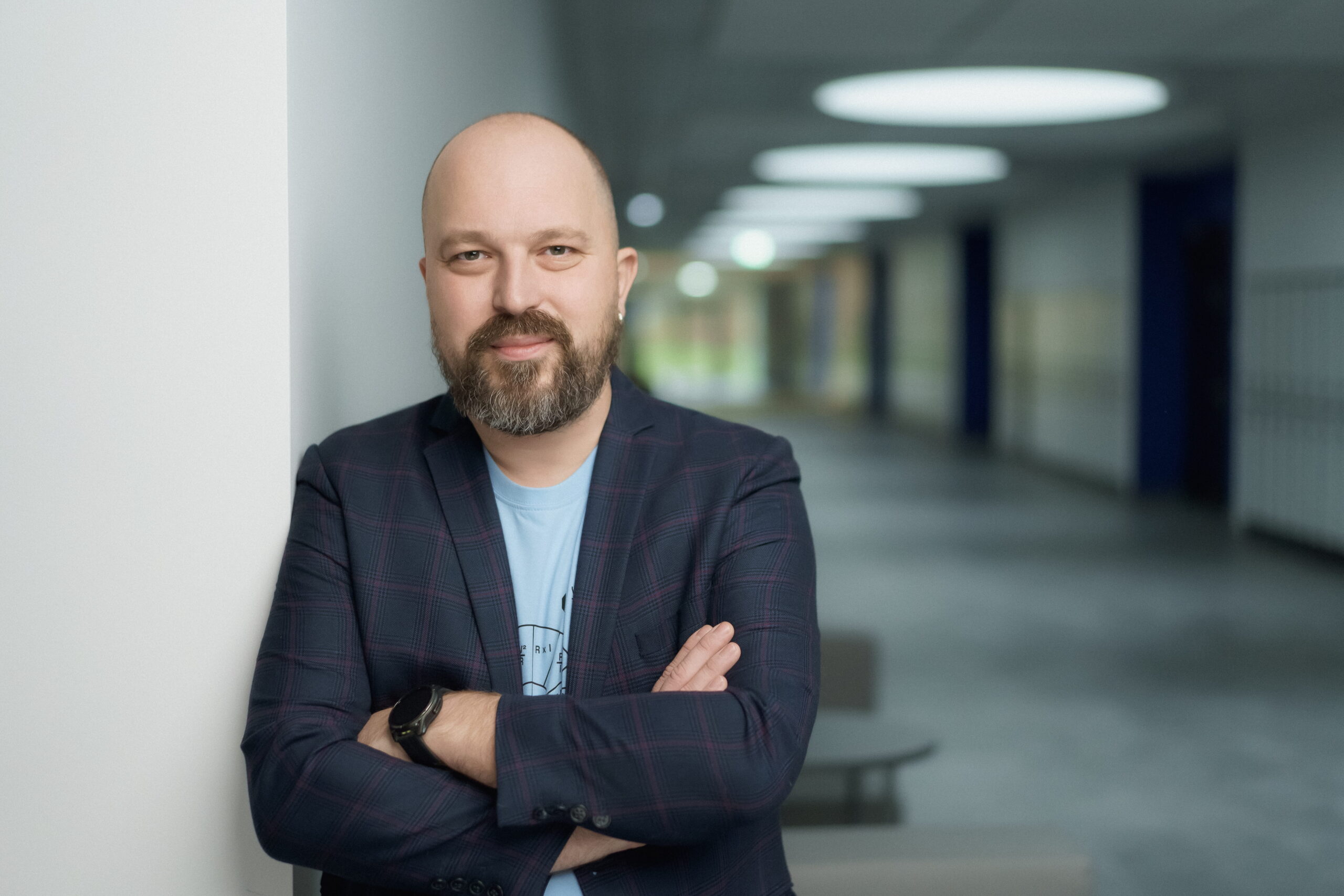
Martynas Šapurov
For him, taking on the new position means not only assuming responsibility for the faculty’s future, but also having an opportunity to continue the work already underway. Before becoming Dean, he served as Vice-Dean for Studies for almost three years, gaining an in-depth understanding of the faculty’s activities, its community and the challenges it faces.
Returning to the university after a break
The new Dean of the VILNIUS TECH Faculty of Electronics has been associated with the university since 2003, when he enrolled in Electronics Engineering. However, his academic journey was not entirely straightforward: he took a four-year break from his bachelor’s studies.
“When you’re 20, you’re ambitious and want to earn money, so you work a lot,” M. Šapurov recalls of his decision at the time.
After starting a family, he returned to university, completed his bachelor’s degree and continued his studies at master’s level. Having obtained a bachelor’s degree in Electronics Engineering and a master’s degree in Computer Engineering, he went on to pursue doctoral studies.
At that time, M. Šapurov’s professional life was divided between academia and industry. His main job was at a manufacturing company, while he also worked part-time as a university lecturer. He remembers this period with gratitude towards his former employer, who supported his research activities and enabled him to undertake an internship during his doctoral studies.
Eventually, he had to decide which direction to pursue. Academia gradually became his main professional focus.
Change must start with the community
His time as Vice-Dean for Studies gave him an opportunity to gain a closer understanding of the Faculty of Electronics, its activities and the needs of its community. The new Dean considers closer collaboration and a more open faculty environment among the most important areas for development.
According to M. Šapurov, this requires not only individual initiatives but also spaces where people can meet, communicate and bring their ideas to life together. More opportunities for the faculty community to come together help strengthen informal connections, create opportunities to discuss joint projects and encourage people to find solutions collectively.
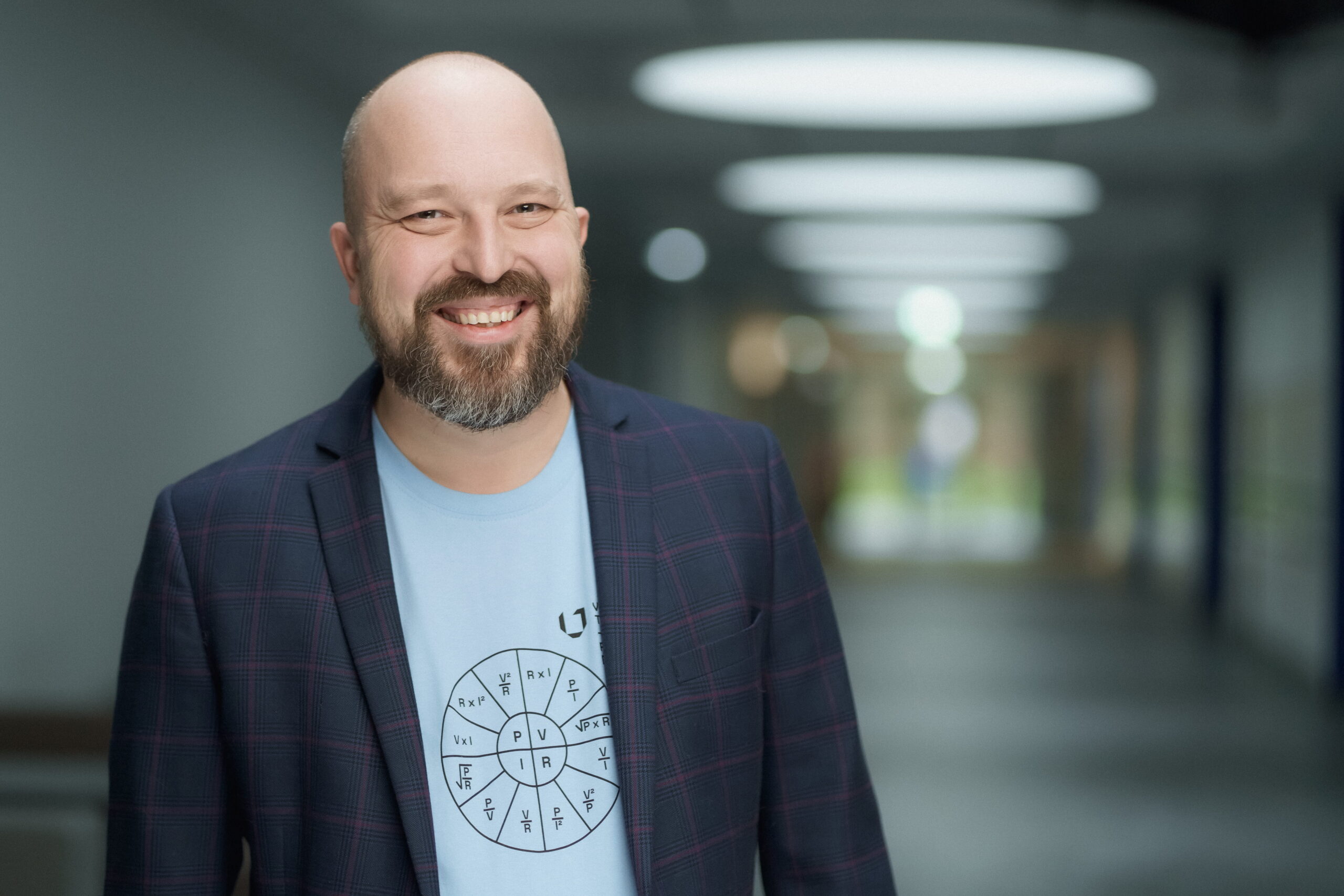
Martynas Šapurov
The new Dean wants to continue in this direction by strengthening the sense of community and ensuring that every member of the faculty feels they are an important part of it. This includes not only lecturers and researchers, but also people working in research institutes and on various projects.
“It is important that people feel they belong to our community and that nobody feels like an outsider,” M. Šapurov emphasises.
In leading the faculty, he considers it important not only to encourage new ideas but also to maintain initiatives that are already underway. He believes a leader’s role is to help staff put their ideas into practice and show them that their efforts are valued.
Greater responsibility for study programme committees
One of the new Dean’s first priorities is to give study programme committees greater autonomy. These committees, which also include students, are closely involved in the everyday study process and are therefore best placed to assess what changes individual programmes need.
The Dean wants the committees not merely to follow administrative instructions, but to take an active role in proposing solutions, regularly reviewing study content and initiating updates.
“I would like initiatives to come from the people who work directly with the study programmes. They know best what works, what needs to change and what knowledge students need today,” he says.
The Faculty of Electronics offers numerous study programmes and specialisations, making it difficult for a single leader to become familiar with every subject in detail. This makes it essential to trust the people who work with the programmes every day and give them more opportunities to make decisions.
He would also like to see greater autonomy in the work of study programme committee chairs. In his view, university and faculty leaders should support them in implementing changes rather than simply telling them what to do.

According to the Dean, this approach could help create study programmes that are relevant to students and engaging for lecturers.
M. Šapurov also does not rule out exploring opportunities to give greater attention to the arts and creativity-enhancing subjects within study programmes in the future. However, he stresses that such decisions should emerge from discussions with study programme committees rather than being imposed unilaterally.
AI can make everyday work easier
Another area requiring attention is the simplification of administrative processes and the use of technology. The new Dean believes that some repetitive tasks could be automated, allowing staff to devote more time to activities that require greater attention and expertise.
Among the tasks he mentions are preparing reports, managing documents and entering timetable data. In his view, digital tools and artificial intelligence, when used appropriately, can help process large amounts of information more quickly, compile data summaries and carry out preliminary analysis.
However, using technology should not mean blindly trusting its results. To assess information generated by artificial intelligence, people need to understand the subject being analysed and be able to identify potential errors.
“Artificial intelligence can help save time, but to understand the summary it produces, you need to have a good grasp of the subject itself,” he says.
The Dean also wants to encourage a change in attitudes towards using such tools. In his view, using technology does not mean avoiding one’s responsibilities. On the contrary, it can help people analyse information more efficiently and devote more attention to decisions that require human expertise.
Making changes gradually while preserving what works
Speaking about the faculty’s future, the new Dean stresses that changes should not be rushed. Before making decisions, it is important to assess the current situation, understand the needs of the community and preserve what has already proved successful.
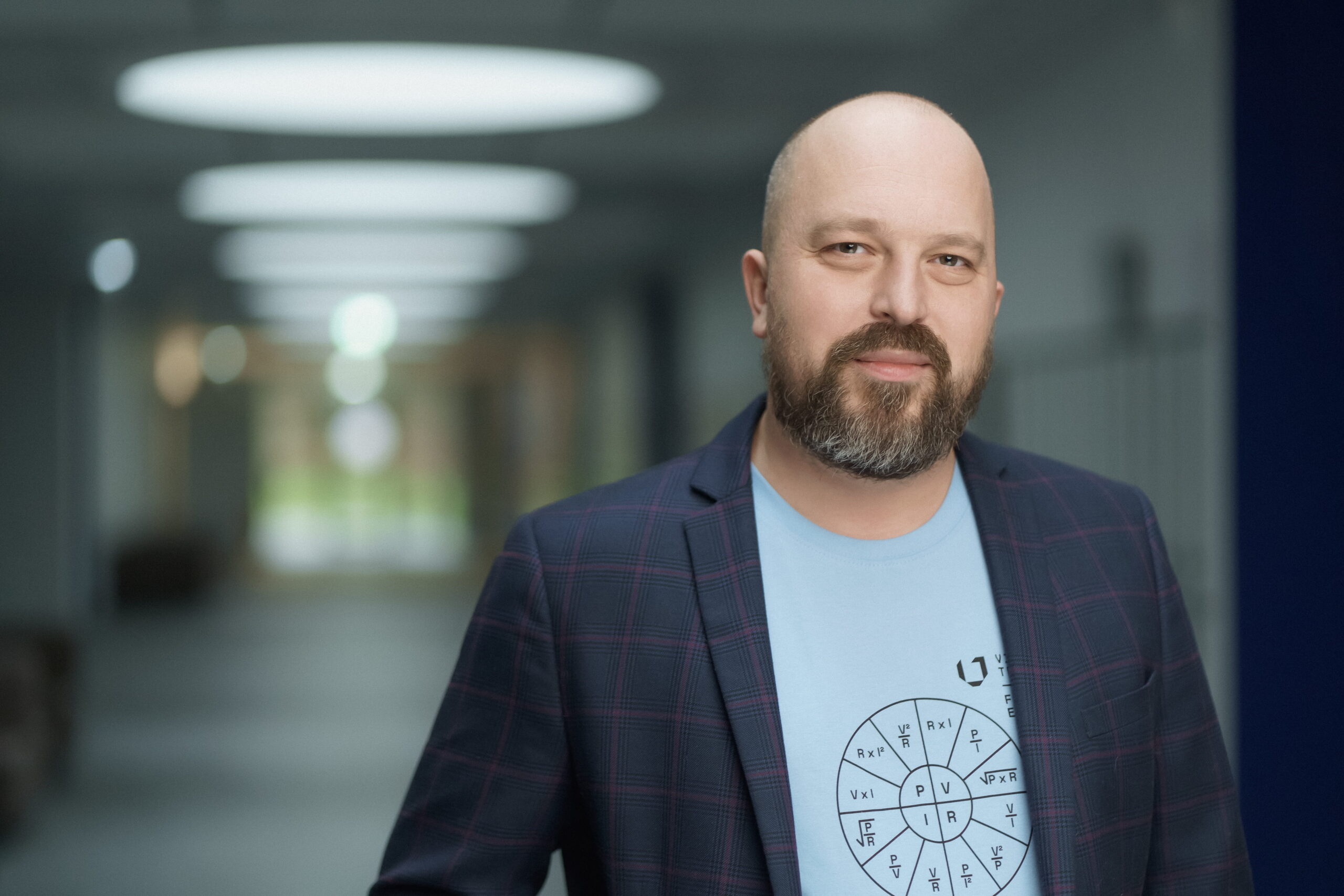
Martynas Šapurov
Long-term priorities include strengthening research activities, developing closer cooperation with businesses and attracting new students. However, he believes these goals can be achieved gradually by consistently implementing initiatives and creating favourable conditions for collaboration.
M. Šapurov also acknowledges that taking on a leadership role requires finding one’s own approach. When continuing the work of a predecessor, it is important not to try to imitate them, but rather to preserve what has worked well while looking for new solutions.
“Bringing people together, giving them more responsibility and helping them turn their ideas into reality. This is how I hope to strengthen the Faculty of Electronics, where study quality, research and community initiatives complement one another,” says M. Šapurov.