• University
  • News and events

New Dean Prof. Dr. D. Jasaitis: “My goal is to preserve what AGAI has already built while seeking new opportunities for growth”

November 6, 2026

In November, Prof. Dr. Dainius Jasaitis assumed the position of Dean of the Antanas Gustaitis Aviation Institute (AGAI). His vision includes plans to continue the work already underway, implement new yet long-matured ideas, and contribute to the continued growth of AGAI: “For me, it is important not only to maintain what has already been created, but also to bring people together, encourage their initiatives, provide opportunities for professional growth, and achieve new results together.”
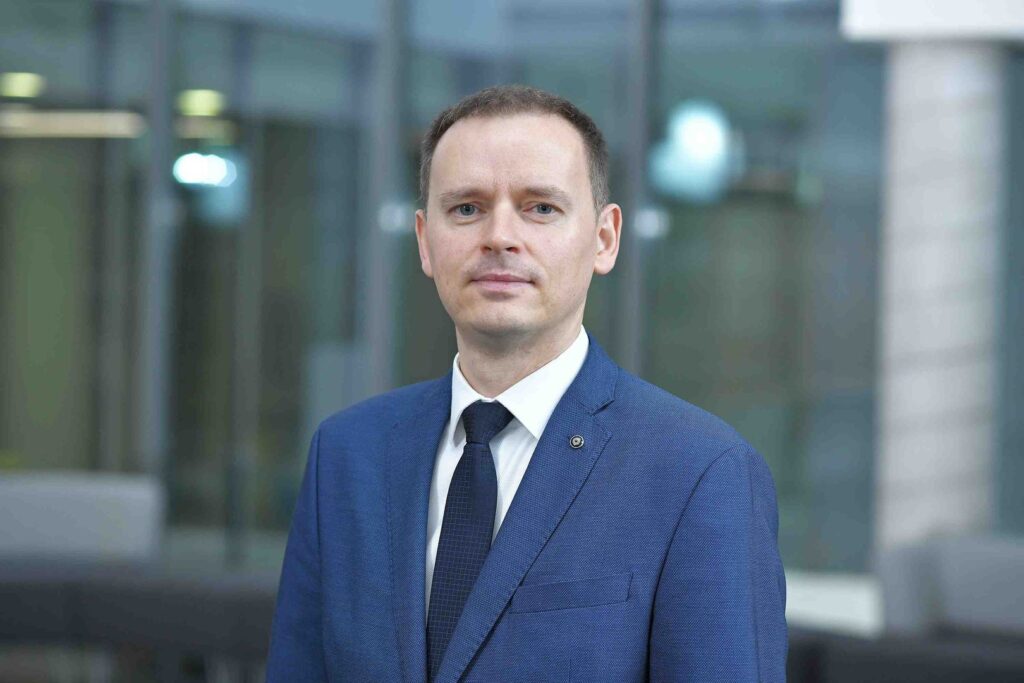
dainius-jasaitis-AGAI

– How many years have you been part of the university?

I have been a member of the VILNIUS TECH community for 25 years. After completing my bachelor’s degree in physics, I decided that I wanted to pursue engineering further, so I enrolled in a master’s program at the VILNIUS TECH Department of Physics, Faculty of Fundamental Sciences.

Right at the start of my master’s studies, two professors noticed me and actively encouraged me to pursue an academic path, enter doctoral studies, and launch a scientific career. I won’t deny that I considered it for a long time—it was a major decision—but I felt this direction was truly close to my heart. I also loved the university itself: its academic environment, its people, and its community. In my very first year as a PhD student, I began working as an assistant lecturer at the Department of Physics. That marked the beginning of a new chapter in my life, which continues to this day.

– What roles did you hold at AGAI and the university prior to becoming Dean?

After defending my doctoral dissertation, I spent several years teaching physics to students at the Faculty of Civil Engineering. Later, the Head of the Department of Physics at the time, Prof. Habil. Dr. Antanas Čenys, suggested that I start teaching physics to students at the Antanas Gustaitis Aviation Institute. Since then, my professional career has been closely linked with AGAI for nearly 15 years.

During this time, I became an associate professor and later a full professor. Alongside my teaching activities, I conducted scientific research at the Radiation Research Laboratory, which I later went on to lead. Subsequently, I was appointed Head of the Department of Physics and was also elected to the University Senate.

Five years ago, when the new Rector took office, I was invited to join the newly formed AGAI administrative team as Vice-Dean for Academic Affairs. The AGAI environment was already very familiar to me: I had taught here for many years—first at the Rodūnios Street facility and later at the Linkmenų Street campus—and I knew many of the lecturers and administrative staff. Therefore, it wasn’t an unfamiliar environment, but rather a natural step forward in my career.

Studies have always been one of the areas closest to my heart. I chair the Studies and Students Committee of the University Senate and serve as a member of the Study Evaluation Commission at the Centre for Quality Assessment in Higher Education (SKVC). This experience has allowed me to view educational processes not only from the perspective of an educator or faculty administration, but from the vantage point of the university as a whole.

– What is your area of specialization? Why did you choose it?

My research field is environmental physics. During my doctoral studies, I investigated ionizing radiation in living environments. My dissertation supervisor was Prof. Dr. Aloyzas Girgždys—one of Lithuania’s leading specialists in atmospheric physics, who worked at and led the Institute of Physics for many years. Working alongside him showed me just how vast and interdisciplinary environmental physics is, bridging diverse disciplines such as physics, chemistry, engineering, environmental science, and information technology. Moreover, this field has strong intersections with aviation, its technologies, and operational processes.

When I joined AGAI, I began supervising master’s theses, and currently, I am also advising a PhD student whose research is distinctly practical and interdisciplinary, connecting environmental physics and aviation. The dissertation investigates the possibilities of monitoring ionizing radiation using unmanned aerial vehicles (UAVs / drones). I believe such interdisciplinary topics capture the true essence of modern science, combining knowledge and technology from different sectors to solve real-world problems.

– What motivated you to accept the challenge and take on the role of Dean?

I originally joined the Institute as a team with the then-Dean of AGAI, Assoc. Prof. Dr. Linas Juknevičius. I am very glad that from the very beginning, we shared a common work ethic, values, and vision for where the Institute needed to head. We routinely consulted each other before making decisions, exchanged ideas, celebrated successes, and, of course, worked very hard.

The former Dean accomplished a great deal of goals and oversaw significant initiatives. His work was recognized and valued by the university leadership, leading to an invitation to join the Rector’s team. In turn, I was offered the opportunity to take the helm of the Institute.

I accepted this invitation as an opportunity to carry forward the work that had been started, implement ideas that had been maturing over time, and contribute to the further growth of AGAI. For me, it is not just about sustaining what has already been built, but about bringing people together, fostering their initiatives, supporting professional advancement, and reaching new milestones together.

It is a great responsibility, but also an expression of trust. AGAI is more than just a workplace to me—nearly 15 years of my professional life are tied to this Institute, so its future is something I care about deeply.

– Having stepped into the Dean’s role, what are your main goals and objectives? How will you pursue them?

I believe AGAI is currently moving in the right direction. Over the past few years, the Institute has grown stronger in many areas: the student body is expanding, all study programs are accredited for the maximum term, academic and research infrastructure is expanding, and our numbers of PhD holders and doctoral candidates are rising. We have active international cooperation, ongoing scientific and academic projects, commercial research contracts, and specialized training programs for aviation professionals.

Therefore, one of my primary goals is to ensure the smooth continuation of the work already underway and to help the Institute keep growing stronger. However, maintaining the current standard alone is not enough. We must continually seek new opportunities to remain competitive in a rapidly evolving aviation industry.

I believe great results are achieved when people share a common purpose, trust one another, and feel that their work matters. I would like AGAI employees to remain proactive, feel encouraged to share ideas, take initiative, and work together toward improving the Institute. My goal is to foster an environment where staff feel appreciated and young specialists have ample room to grow professionally.

Another area I want to focus on is establishing a tighter link between studies and scientific research. I want research to be more deeply integrated into the curriculum, offering students greater opportunities to engage in scientific projects. This is beneficial to both students and lecturers, as it brings the coursework into closer alignment with cutting-edge trends in science and aviation technology.

– What will be your first priorities as you begin your term? What are your immediate tasks?

First of all, I want to assemble a strong team with whom we can work in unison, guided by a clear vision and mutual trust. Another critical task is ensuring the smooth continuity of the academic process. The study year is already well underway, so it is vital to keep all operations running smoothly and ensure students do not experience any disruptions due to administrative changes.

There is also a lot of practical work ahead regarding AGAI’s new infrastructure. Construction of the new annex to the Linkmenų building was completed this year, and the facility has been officially certified for use. The focus now is on bringing it to life—furnishing classrooms, the library, and dedicated spaces for student work and leisure. I am very keen to see AGAI students utilizing these new spaces as early as the spring semester.

Another specific and vital aspect of AGAI’s operations is flight training for the Aircraft Piloting program at our Kyviškės base. We already need to start preparing for the spring flight season: reviewing lessons learned from the previous season, scheduling operations, inspecting aircraft maintenance and airworthiness, and preparing for smooth flight training operations.

What makes AGAI distinctive is that we are not merely a traditional university faculty. We operate ten aircraft and flight simulators, and we conduct practical flight and air traffic control training; this requires harmonizing academic activities with stringent aviation safety, technical maintenance, and regulatory requirements. Managing all of this calls for immense coordination, planning, and accountability. Consequently, another key priority of mine is to ensure that the academic and practical aviation components are properly coordinated and function as a unified, seamless system.

– Are there any changes ahead for the faculty?

I believe that change is essential for any organization seeking growth. Even when results are strong, you cannot afford to stand still and assume everything has already been accomplished. The aviation sector is changing at a rapid pace—new technologies are emerging, market demands are evolving, and expectations for specialist competencies are constantly rising. The university must not merely respond to these shifts, but anticipate them.

However, change should never be pursued merely for the sake of the process. For me, every decision must serve a clear purpose and bring value to students, staff, and the Institute itself. I see great purpose in continuing to bridge science and studies, expanding international partnerships, exploring new project opportunities, and involving industry partners more actively in our study programs. It is equally important to provide good working conditions for proactive staff, support their professional development, and help students feel like an integral, valued part of the Institute’s community.

My goal is to preserve and strengthen what AGAI has already built, while continuously seeking new pathways for growth and development. I firmly believe the Institute has tremendous potential, and we will best unlock it by working together.

Galerija
Related news

New electric trains in Lithuania: will travel now be faster, more comfortable, and more reliable?
The new electric "Stadler FLIRT" train has already launched regular services on Lithuanian railways. On October 22, the first train made its debut on the Vilnius–Kaunas–Vilnius route. This is not merely the introduction of a new vehicle—it marks the beginning of a significant renewal of the passenger train fleet, the benefits of which will gradually be felt by more and more residents of Lithuania. However, does a new train necessarily mean we will travel faster? Will ticket prices drop and delays decrease? Will the modernization benefit only the residents of major cities, or the regions as well? According to researchers from the Department of Mobile Machinery and Railway Transport at VILNIUS TECH, the most significant change is not just higher speed or more modern equipment. It is an opportunity to travel more comfortably, make more efficient use of railway infrastructure, reduce operating costs, and systematically build a modern Lithuanian railway system. Nonetheless, the actual benefit will depend on how well the trains, the infrastructure, and passenger needs are harmonized. A Faster Train Does Not Yet Mean a Shorter Journey One of the first questions passengers ask is whether the new trains will get them to other cities faster. Technically, the potential is there. For instance, the PESA 730ML diesel trains previously used on the Vilnius–Klaipėda route have a maximum design speed of 140 km/h, while the new electric "Stadler FLIRT" trains reach 160 km/h. However, it is crucial to understand that maximum train speed and actual travel duration are not the same thing. Even if capable of traveling at 160 km/h, the train cannot maintain that speed along the entire route. Factors influencing this include railway infrastructure, speed limits on specific sections, the number of stops, traffic density, and scheduling. "If the infrastructure allowed a speed of 160 km/h along the entire 300-kilometer route, the journey could theoretically be shortened by about 16 minutes purely due to the higher top speed. Taking into account the superior acceleration of electric trains, a simplified model shows the difference could reach approximately 18 minutes. However, this is not a forecast for an actual scheduled run—real-world results depend on many other circumstances," explains Laurynas Meilus, a PhD student at the VILNIUS TECH Department of Mobile Machinery and Railway Transport. Electric trains offer another distinct advantage: faster acceleration. This is particularly crucial on routes with multiple intermediate stops. In other words, the superiority of electric traction is demonstrated not only at high speeds, but also during frequent braking and restarting. Nevertheless, according to Assoc. Prof. Dr. Gediminas Vaičiūnas from the same department, evaluating travel speed requires considering the layout of the railway itself. For example, the Vilnius–Klaipėda railway winds through Radviliškis, Šiauliai, and Plungė, making its length and route different from the more direct highway. "We often want trains to run faster and faster, but we forget that technical capability is not the only factor. We must decide what role a specific route serves: is it intended to connect major cities as quickly as possible, or must it also provide connectivity for smaller settlements? If a train stops every 40–50 kilometers, 160 km/h is a rational choice. If we want express connectivity, we must also consider fewer stops," says Assoc. Prof. Dr. G. Vaičiūnas. Therefore, the benefits of the new trains should not be judged by journey time alone. Reliability is just as essential. Newer technology, modern control systems, and early fault detection capabilities create the prerequisites for minimizing technical malfunctions. Do New Trains Mean Cheaper Tickets? While electric traction can help the operator cut costs, this does not automatically translate into immediately lower ticket prices for passengers. Fares are influenced not only by energy and maintenance costs, but also by passenger traffic, train occupancy, trip frequency, discount schemes, and state funding decisions. Scientific research indicates that maintaining electric trains can be significantly more cost-effective. In a 2025 study titled "Economical Comparison of Passenger Rail Traction Rolling Stock Alternatives" by L. Meilus and co-authors, the maintenance and repair costs per passenger seat per 100 kilometers under analyzed conditions were found to average €0.197 for electric trains, €0.434 for battery trains, and €0.498 for diesel trains. Thus, maintenance costs for electric trains were approximately 60% lower than those for diesel trains. This is primarily due to the simpler design of electric traction drives, fewer mechanically wearing parts, and the absence of many routine maintenance tasks inherent to internal combustion engines. "When assessing the economic viability of rolling stock, it is vital to calculate not just the purchase price, but the entire life-cycle cost—energy, maintenance, repairs, and service life. A more expensive vehicle upfront can often be economically advantageous in the long run because it costs less to maintain," the doctoral researcher highlights. According to data released by "LTG Link," the operating costs of the new electric and battery trains can be up to 25% lower than those of diesel units. The carrier has also confirmed that traveling on the new trains will incur no extra charges—regular ticket pricing for the chosen route will apply. Assoc. Prof. Dr. G. Vaičiūnas also points out that the advantages of electrification extend beyond passenger transport. The electrified Vilnius–Klaipėda section is critical for freight traffic, especially for trains heading to the Port of Klaipėda. [caption id="attachment_115071" align="alignnone" width="683"] Assoc. Prof. Dr. Gediminas Vaičiūnas[/caption] "Electric traction is exceptionally beneficial for hauling heavy freight trains weighing thousands of tons. In these scenarios, energy can be utilized far more efficiently, reducing reliance on diesel. The benefits of electrification should therefore be viewed in the context of the entire transport and logistics network, not merely by the number of passenger services," he notes. Regional Areas Should Also Benefit from Modernization While high-profile intercity routes often capture the headlines, a core mission of railway modernization is enhancing connectivity across regional areas. Battery-electric multiple units (BEMUs) will play a pivotal role here. They draw power from the overhead contact line on electrified sections and switch to onboard battery reserves where catenary is absent. This enables zero-emission electric travel on non-electrified routes without requiring massive infrastructure investments across the entire line. Battery trains are scheduled to operate on the Kaunas–Šiauliai, Radviliškis–Klaipėda, and Vilnius–Varėna–Marcinkonys routes. This opens the door to modernized rail travel in corridors previously dominated by diesel power. Another vital shift involves the redeployment of rolling stock. As the new trains take over services on main lines, the relatively modern PESA trains previously assigned to those routes can replace older rolling stock elsewhere, such as on the Vilnius–Turmantas line. Still, Assoc. Prof. Dr. G. Vaičiūnas notes an ongoing dilemma: should trains run as fast as possible, or stop more frequently in smaller towns? "The railway network must serve more than just metropolitan hubs. For someone living in a region, shaving a few minutes off the total trip time is often secondary to having a dependable, convenient schedule to reach work, schools, or medical facilities. One practical approach is combining faster express trains with more frequent regional stopping services. Naturally, this requires adequate passenger demand and well-synchronized timetables," the researcher remarks. A More Comfortable Journey – Not Just Speed One of the most immediate upgrades passengers will notice is travel comfort. The new "Stadler FLIRT" trains were designed around diverse passenger needs: they offer more spacious layouts, ergonomic seating, onboard device charging points, a bistro area, and dedicated bicycle spaces. Crucially, the interiors accommodate passengers with reduced mobility, seniors, families with strollers, and travelers with bulky luggage. Low-floor entrances, wider aisles, and integrated spaces for wheelchairs foster greater independence and comfort during transit. For cycling enthusiasts, bicycle capacity can be flexibly adjusted from four up to 30 spaces depending on seasonality and passenger demand. This caters not only to daily commuters but also to cycle tourists and active travelers. Quieter electric propulsion is another distinct advantage. Because electric trains lack internal combustion engines, interior noise and vibrations are drastically reduced. Moreover, electric traction reduces local air pollution, as trains running on electric power emit no diesel exhaust. The overall environmental footprint will depend on how sustainably the supplied electricity is generated. New Trains: An Opportunity to Transform Maintenance Culture A train’s operational reliability is shaped by more than just manufacturing quality; how it is maintained and whether faults can be intercepted before causing disruptions is equally important. Modern rolling stock comes equipped with onboard diagnostic systems that continuously monitor components, log operating metrics, and track deviations. This lays the groundwork for predictive maintenance—servicing or replacing parts based on their actual wear and condition rather than rigid, pre-set time intervals. "A brand-new fleet gives us the opportunity to apply advanced maintenance methodologies from day one. Condition-based servicing optimizes maintenance planning, maximizes resource utilization, and catches issues early. However, such a system requires not only modern hardware, but also qualified specialists, data analytics, and a properly organized maintenance workflow," explains PhD student L. Meilus. [caption id="attachment_135583" align="alignnone" width="1024"] Laurynas Meilus[/caption] Conversely, the overall resilience of the railway network depends on retaining strategic alternatives. Assoc. Prof. Dr. Gediminas Vaičiūnas suggests considering whether a portion of the existing diesel fleet should be preserved as a strategic reserve against potential power outages or emergency scenarios. However, mothballing old trains is not enough on its own—they must be regularly operated, maintained, and backed by suitable maintenance facilities and technicians. Otherwise, they may prove unserviceable when an emergency strikes. The Real Transformation Will Depend on the Entire Railway System The debut of electric and battery trains represents a major leap forward, but it is not the final chapter in the modernization of Lithuania’s railways. Higher travel speeds in the future will depend heavily on wider infrastructure upgrades, and the "Rail Baltica" project will introduce entirely new possibilities for European standard-gauge high-speed passenger travel, with design speeds up to 249 km/h. However, operating at those speeds requires purpose-built high-speed rolling stock; the current "Stadler FLIRT" units are not designed to leverage that infrastructure's full speed limit. "We should not assume that every train unable to reach 250 or 300 km/h is technologically outdated. A train's operating speed must match its service purpose, station stop frequency, passenger demand, and track infrastructure capabilities. The priority is to build a harmonized network where every train serves a defined role—some providing swift express links between major hubs, others facilitating accessible regional mobility," emphasizes Assoc. Prof. Dr. Gediminas Vaičiūnas. According to the researchers, the new trains are already poised to offer passengers a more modern, comfortable, and inclusive travel experience. Over time, these benefits will be augmented by lower operating expenses, higher technical reliability, and expanded electric rail coverage. Ultimately, the true success of railway modernization will not be judged by the top speeds shown on paper, but by how many people can reach their destinations comfortably, reliably, and affordably. Text prepared by Assoc. Prof. Dr. Kamilė Taujanskaitė, Vice-Dean for Communication at the VILNIUS TECH Faculty of Transport Engineering.
More
New Dean of VILNIUS TECH Faculty of Electronics prioritises study quality and a strong community
Martynas Šapurov, the newly appointed Dean of the VILNIUS TECH Faculty of Electronics, aims to strengthen the role of study programme committees, encourage community initiatives and find ways to simplify everyday academic processes. He believes that the best changes do not come from top-down instructions, but from involving the people who know their areas of expertise best. [caption id="attachment_135233" align="alignnone" width="2560"] Martynas Šapurov[/caption] For him, taking on the new position means not only assuming responsibility for the faculty's future, but also having an opportunity to continue the work already underway. Before becoming Dean, he served as Vice-Dean for Studies for almost three years, gaining an in-depth understanding of the faculty's activities, its community and the challenges it faces. Returning to the university after a break The new Dean of the VILNIUS TECH Faculty of Electronics has been associated with the university since 2003, when he enrolled in Electronics Engineering. However, his academic journey was not entirely straightforward: he took a four-year break from his bachelor's studies. "When you're 20, you're ambitious and want to earn money, so you work a lot," M. Šapurov recalls of his decision at the time. After starting a family, he returned to university, completed his bachelor's degree and continued his studies at master's level. Having obtained a bachelor's degree in Electronics Engineering and a master's degree in Computer Engineering, he went on to pursue doctoral studies. At that time, M. Šapurov's professional life was divided between academia and industry. His main job was at a manufacturing company, while he also worked part-time as a university lecturer. He remembers this period with gratitude towards his former employer, who supported his research activities and enabled him to undertake an internship during his doctoral studies. Eventually, he had to decide which direction to pursue. Academia gradually became his main professional focus. Change must start with the community His time as Vice-Dean for Studies gave him an opportunity to gain a closer understanding of the Faculty of Electronics, its activities and the needs of its community. The new Dean considers closer collaboration and a more open faculty environment among the most important areas for development. According to M. Šapurov, this requires not only individual initiatives but also spaces where people can meet, communicate and bring their ideas to life together. More opportunities for the faculty community to come together help strengthen informal connections, create opportunities to discuss joint projects and encourage people to find solutions collectively. [caption id="attachment_135234" align="alignnone" width="2560"] Martynas Šapurov[/caption] The new Dean wants to continue in this direction by strengthening the sense of community and ensuring that every member of the faculty feels they are an important part of it. This includes not only lecturers and researchers, but also people working in research institutes and on various projects. "It is important that people feel they belong to our community and that nobody feels like an outsider," M. Šapurov emphasises. In leading the faculty, he considers it important not only to encourage new ideas but also to maintain initiatives that are already underway. He believes a leader's role is to help staff put their ideas into practice and show them that their efforts are valued. Greater responsibility for study programme committees One of the new Dean's first priorities is to give study programme committees greater autonomy. These committees, which also include students, are closely involved in the everyday study process and are therefore best placed to assess what changes individual programmes need. The Dean wants the committees not merely to follow administrative instructions, but to take an active role in proposing solutions, regularly reviewing study content and initiating updates. "I would like initiatives to come from the people who work directly with the study programmes. They know best what works, what needs to change and what knowledge students need today," he says. The Faculty of Electronics offers numerous study programmes and specialisations, making it difficult for a single leader to become familiar with every subject in detail. This makes it essential to trust the people who work with the programmes every day and give them more opportunities to make decisions. He would also like to see greater autonomy in the work of study programme committee chairs. In his view, university and faculty leaders should support them in implementing changes rather than simply telling them what to do. According to the Dean, this approach could help create study programmes that are relevant to students and engaging for lecturers. M. Šapurov also does not rule out exploring opportunities to give greater attention to the arts and creativity-enhancing subjects within study programmes in the future. However, he stresses that such decisions should emerge from discussions with study programme committees rather than being imposed unilaterally. AI can make everyday work easier Another area requiring attention is the simplification of administrative processes and the use of technology. The new Dean believes that some repetitive tasks could be automated, allowing staff to devote more time to activities that require greater attention and expertise. Among the tasks he mentions are preparing reports, managing documents and entering timetable data. In his view, digital tools and artificial intelligence, when used appropriately, can help process large amounts of information more quickly, compile data summaries and carry out preliminary analysis. However, using technology should not mean blindly trusting its results. To assess information generated by artificial intelligence, people need to understand the subject being analysed and be able to identify potential errors. "Artificial intelligence can help save time, but to understand the summary it produces, you need to have a good grasp of the subject itself," he says. The Dean also wants to encourage a change in attitudes towards using such tools. In his view, using technology does not mean avoiding one's responsibilities. On the contrary, it can help people analyse information more efficiently and devote more attention to decisions that require human expertise. Making changes gradually while preserving what works Speaking about the faculty's future, the new Dean stresses that changes should not be rushed. Before making decisions, it is important to assess the current situation, understand the needs of the community and preserve what has already proved successful. [caption id="attachment_135235" align="alignnone" width="2560"] Martynas Šapurov[/caption] Long-term priorities include strengthening research activities, developing closer cooperation with businesses and attracting new students. However, he believes these goals can be achieved gradually by consistently implementing initiatives and creating favourable conditions for collaboration. M. Šapurov also acknowledges that taking on a leadership role requires finding one's own approach. When continuing the work of a predecessor, it is important not to try to imitate them, but rather to preserve what has worked well while looking for new solutions. "Bringing people together, giving them more responsibility and helping them turn their ideas into reality. This is how I hope to strengthen the Faculty of Electronics, where study quality, research and community initiatives complement one another," says M. Šapurov.
More