Professionals of the future are needed today

April 15, 2019

Just a decade ago, a mobile phone was an item for calls in early mornings or late evenings, when the rates were lower. Now, mobile phone has made it to the list of indispensable goods, and hardly anyone doesn’t use it for browsing social networks, filming videos or playing music. The unfortunate story of the Finnish giant’s Nokia mobile phone division is among the most well-known to illustrate the magnitude of the change and the rate of development and application of technologies. 

Due to poor judgement of competitive environment, Nokia’s mobile phone business experienced a major setback and couldn’t catch up with aggressive competitors that were offering innovations. Finally, it was devoured by the US giant Microsoft in 2014.

Innovation savvy accountant or a real professional? 

Professionals agree, that nowadays many companies from various industries, some of them – in Lithuania, are treading similar ground. Digital technologies are transforming the world of manufacturing rapidly, and data management becomes crucial in almost all processes – most of them are digitalised. Automation of manufacturing is also gaining speed.

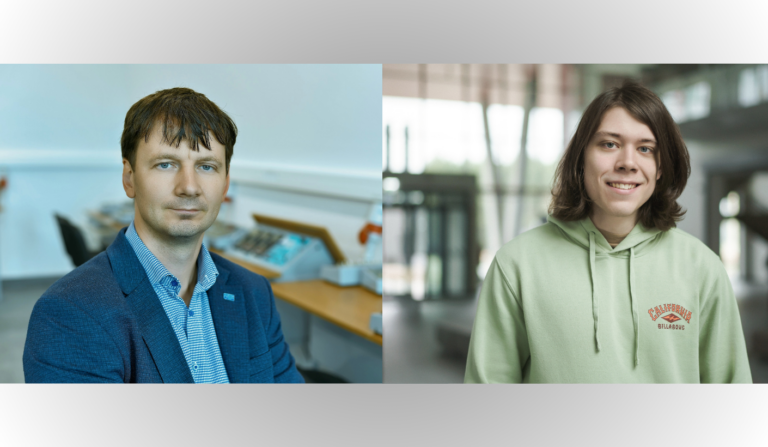
According to Audrius Jasėnas, Director of SMART Manufacturing competence centre a public establishment InTechCentras, modern companies, which employ 150 or more employees and are thinking about the future, are looking for professionals in digital technologies.

“The truth is, that companies in Lithuania are looking for the talent among their employees, and most often heads of manufacturing or IT are being requalified for the job. I know a case when innovation savvy accountant became responsible for digital technologies. Of course, requalification is used for the purpose because there are no available specialists on the job market; thus, companies are tapping into their own resources,” says the professional. 

In 2018, InTechCentras and the Lithuanian Innovation Centre have published Lithuanian Industry Digitalization Roadmap 2019-2030. The roadmap was based on a research which identified a lack of 1 000 professionals in digitalisation of manufacturing processes. 

“Expertise in digital manufacturing would enable companies to take better and faster decisions, innovations in manufacturing processes would be implemented more rapidly, and it would enable the companies to look for digitalisation solutions in all departments taking into account their specific needs. Such professional could be responsible not only for digital technologies, but also could look for specific digital competences on the market, develop a dialogue about digitalisation with clients and partners – what changes are they implementing now and what are their plans for the future. Faster processes would enable companies to compete on a global market,” A. Jasėnas believes. 

VGTU programme to focus on education of required professionals

Prof. Dr. Vytautas Bučinskas, Head of the Department of Mechatronics, Robotics and Digital Manufacturing at the Faculty of Mechanics at Vilnius Gediminas Technical University (VGTU), agrees that digital manufacturing professionals are needed in Lithuania, and notes that their demand will only grow in the future. Bachelor programme in Digital Manufacturing is designed to fill this gap. Programme graduates will be awarded a bachelor degree in engineering sciences. 

“Digital Manufacturing programme was designed to meet the needs of rapidly changing industry. Currently, the companies are using their internal competence potential. Though new solutions, based on technologies of cloud engineering, big data flows from mass production, and machine to machine communication, call for very specific competences. These processes are not limited to machine processing industry. It is relevant in food and other products’ processing industries, agriculture, or industry of biotechnologies,” says one of the authors of the Digital Manufacturing programme.   

According to V. Bučinskas, the programme focuses on two main areas

“The first focus area is organisation of modern manufacturing process. It covers various issues, such as machine manufacturing, product manufacturing, food production, production of biotechnologies, and many other where technologies are interrelated. The second focus area is digitalisation – the internet, internet of things, cloud computing technologies and their application,” says the professor. 

Unlocking of the human potential is another important aspect of transformation of the traditional manufacturing into an automated one, as the authors of the Digital Manufacturing programme say.

“The change creates more time for managers and other workers, and they can dedicate their energy to something more creative, they can focus on creating an added value. In addition, this increases our attractiveness in the market – more companies find resources for investment and new equipment. Nowadays, we have many modern and well-known manufacturing brands in Lithuania. Manufacturing of components, aviation technologies, hydraulic systems, lasers and laser related components is also a large branch of digital manufacturing. We have so many of them,” notes V. Bučinskas.
 

Related news

Time-resistant student love: Emilija and Marius found each other at VILNIUS TECH
Love from university days does not rust - this is something the heroes of this article unanimously agree on. For them, VILNIUS TECH (then Vilnius Gediminas Technical University) provided not only education, a circle of long-lasting friends, and countless beautiful memories, but also love.  Emilija Gaveniene and Marius Gavenas not only met here, but also got engaged during the diploma awarding ceremony - an event later even broadcasted on national television.  First of all, tell us how you met each other and your love story began. Emilija: Our story began completely by chance. In the summer of 2013, after finishing school, I received a call from the Student Representation of the Faculty of Transport Engineering. They invited me, a first-year student, to a freshmen camp. Without much hesitation, I agreed, although I had been admitted to the Entertainment Industries study program at the Faculty of Creative Industries. I clearly remember seeing Marius on the main university stairs when I arrived - his appearance and self-confidence caught my attention. At the first-year student camp, there was a presentation of the student representation. After the event, we sat together on a bench and talked for about half an hour about the representation and life choices. After the camp, we each returned to our student routine, until we met again on May 8, 2015, at the student representation anniversary. That evening we danced, and since then we’ve been inseparable. Marius: Emilija still does not believe it, but I noticed her during the very first introduction game at the freshmen camp in Aukstadvarys. The shy Samogitian girl somehow caught my attention, and in the evening sitting on the bench was not quite as accidental as it seems. Marius, you proposed during the graduation ceremony. Why did you decide to propose in this way? Were you nervous in front of such a large audience? Marius: It turned out that this proposal perfectly summarized the study cycle. We met on Emilija’s first day at the university and committed to each other on the last. I was not only studying but also actively involved in the student representation, so I felt a special connection to the Alma Mater. [caption id="attachment_122391" align="alignnone" width="2048"] Emilija ir Marius[/caption] As for the idea itself, I was never afraid of attention, and I was not scared by it until the very last moment. Only when I was already kneeling and people started cheering did I become very emotional, and I am not even sure if I managed to say the standard “Will you marry me?” Also, I must thank the university staff who encouraged me when I doubted whether it was a good idea. Emilija, was this move unexpected? Or did you suspect something? Emilija: At that time we were living separately, so it was a complete surprise. We had been together for about three years, so I secretly sometimes dreamed about engagement. The only small hint was that the evening before the proposal Marius asked what my favorite song was. But I really could not have guessed it would happen during the graduation ceremony. Your proposal video became very popular on social media and was even featured in various media outlets. Did this bring additional emotions? Emilija: The emotions were overflowing! We also received a lot of media attention - we were shown on LRT news, on the show “Good Morning, Lithuania,” and radio stations called us. We were happy to share our joy. Marius: The attention was unexpected. When planning it, I definitely did not think it would become so public. Friends joked that I should have put an advertisement on my back and monetized it. How did your story continue? Emilija: Soon after the engagement we moved in together into our first shared apartment. A year later, in 2018, we had a big wedding, where Marius prepared a slideshow presentation telling our story. It was the highlight of the celebration. Later we bought our first home, and five years later we had our daughter Beata. She fills our lives daily with laughter, joy, and maturity. [caption id="attachment_122387" align="alignnone" width="1361"] Emilija ir Marius[/caption] How do you live now? How has your love grown? What is your professional field? Emilija: We are currently in a mature stage of love - family health and peace have become the most important things. We enjoy parenthood but still make time for each other. Our daughter Beata is 2.5 years old, so we are growing together with her. I recently returned from maternity leave and work as a senior customer service manager at Lindstrom. Like many mothers, I combine work and family. Marius: A friend wished us at our wedding: “May you always have something to look forward to.” That really helps. We have future plans and are moving toward them. Thanks to Emilija’s enthusiasm, we travel a lot, and traveling strengthens our relationship and deepens love. Professionally, I develop technical sales projects, where my engineering education and confidence gained in student representation help a lot. Do you think university love really does not rust? Do you know other couples who met at university and are still together? Emilija: I think we are living proof that it truly does not rust - on the contrary, it only gets stronger. We have many friends who also met at university and are still together. [caption id="attachment_122393" align="alignnone" width="1707"] Emilija ir Marius Gavėnai su dukrele[/caption] Marius: Where else do people meet anyway? What would you wish to the VILNIUS TECH community as former students? Emilija: We wish current and future students to be curious, active, and boldly engage in university life. Do not overthink every life choice, but rather enjoy everyday life - you never know where or when you might meet your life partner. Marius: I highly recommend using student status. While being a student, a lot is allowed and much is forgiven, so it is the best time to try yourself in different fields, go on Erasmus+ exchange, work different jobs, and try hobbies. Prepared by: Egle Kirliauskaite-Blazeviciene Photos: from personal archive
More