• University
  • News and events

Rector of Esslingen University Visits VILNIUS TECH: Focus on International Cooperation and Transport Engineering Innovations

October 16, 2026

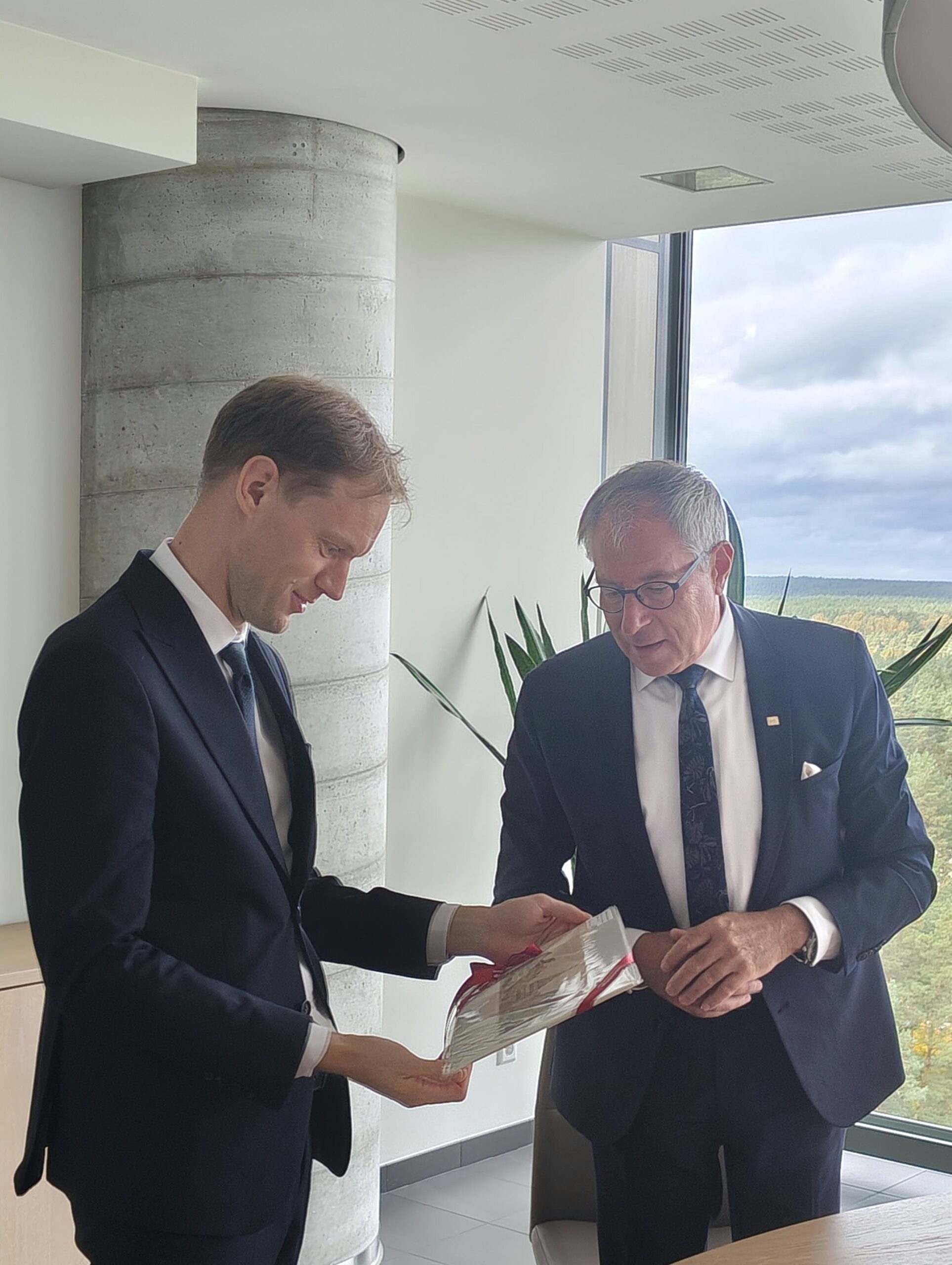
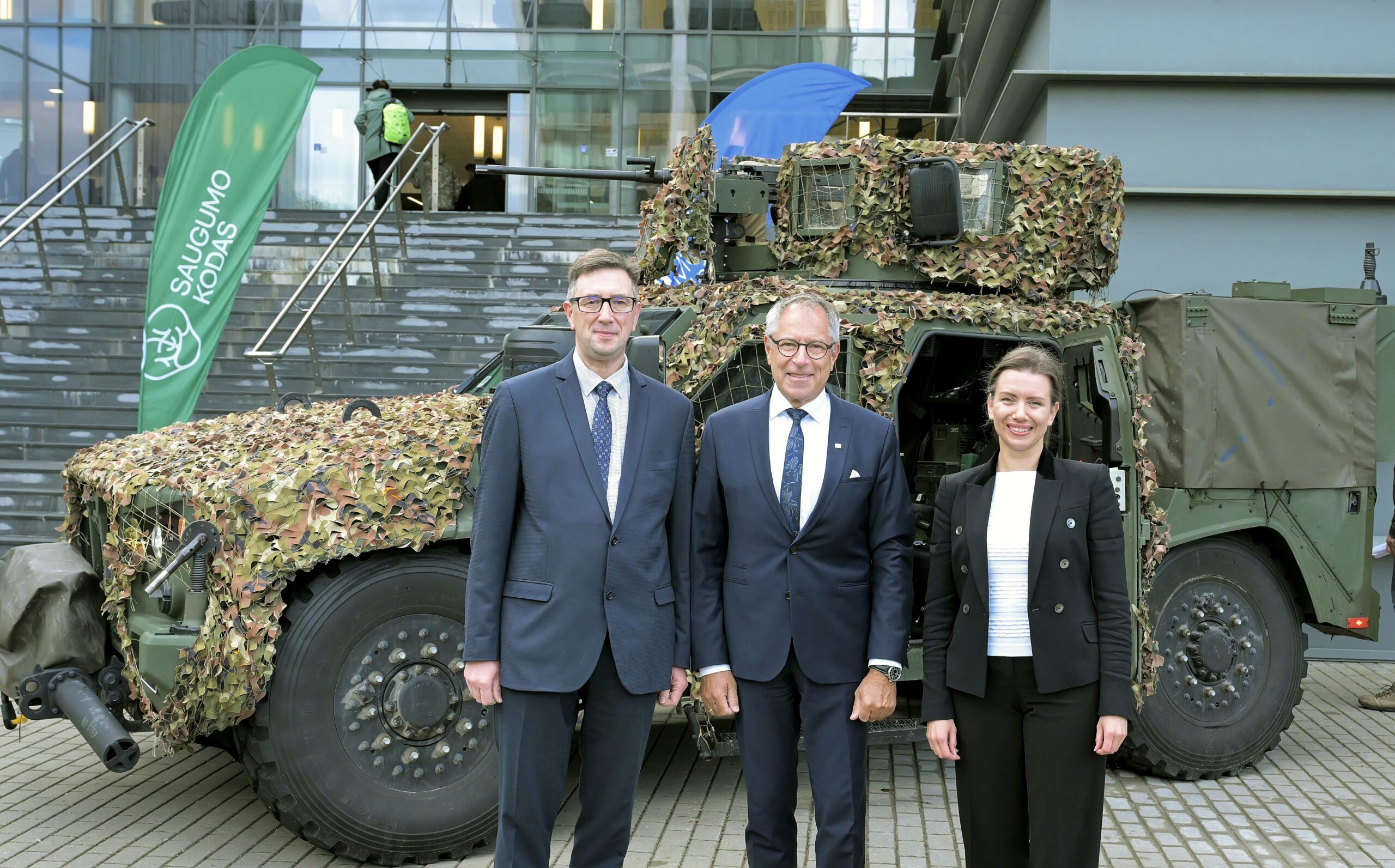
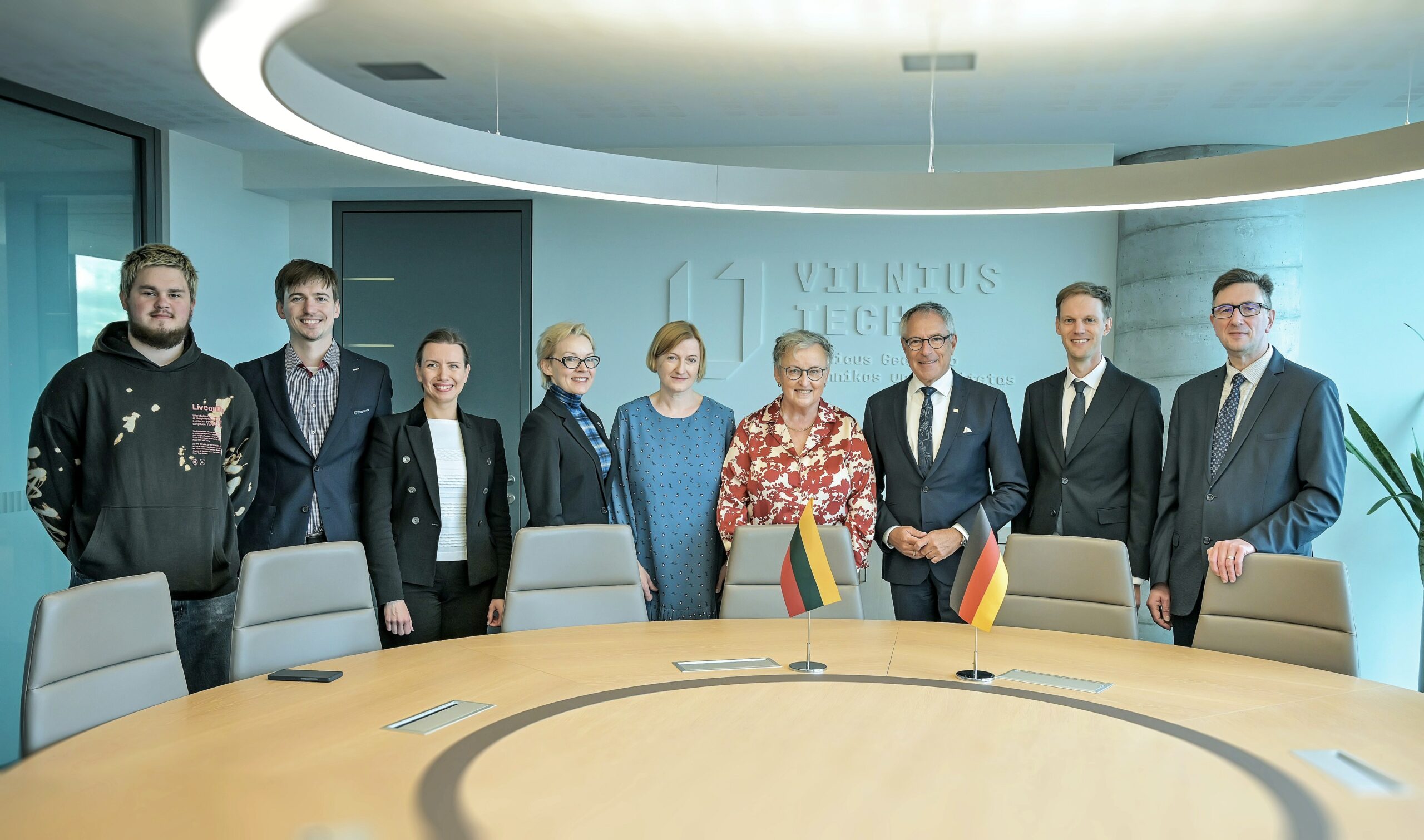
The Rector of Esslingen University of Applied Sciences (Hochschule Esslingen, Germany), Prof. Dr. Christof Wolfmaier, visited VILNIUS TECH. During the visit, discussions focused on prospects for cooperation between the two universities, opportunities for academic mobility of students and teaching staff, and the research and educational infrastructure of VILNIUS TECH and its Faculty of Transport Engineering. The guest also learned about ongoing research activities and engineering projects developed by students.

International Partnership – New Opportunities for Education and Research

During the meeting, Assoc. Prof. Dr. Adas Meškėnas, Vice-Rector for Strategic Partnerships at VILNIUS TECH, emphasised the importance of international cooperation in strengthening the university’s academic and research potential.

“International partnerships are one of the key priorities of our university’s strategic development. Cooperation with foreign higher education institutions creates new opportunities for students, teaching staff and researchers, while promoting the exchange of knowledge and best practices. We are pleased to see our ties with Esslingen University growing stronger and hope that the joint activities already implemented will provide a solid foundation for new initiatives in education, research and innovation,” said Assoc. Prof. Dr. Adas Meškėnas, Vice-Rector for Strategic Partnerships at VILNIUS TECH.

Cooperation Based on Academic Mobility and Knowledge Exchange

The VILNIUS TECH Faculty of Transport Engineering and Esslingen University have already established active academic cooperation. Through an exchange programme supported by the German Academic Exchange Service (Deutscher Akademischer Austauschdienst – DAAD), students from the Faculty of Transport Engineering have visited Esslingen University of Applied Sciences on three occasions. These visits provided opportunities to become familiar with the study process, teaching and research infrastructure, and approaches to practical engineering education.

Cooperation between the universities has also been strengthened through visits by academic staff, during which participants exchanged academic experience and discussed matters related to study organisation, teaching methods and research activities.

The visit of the Rector of Esslingen University to VILNIUS TECH provided another opportunity to review the outcomes of previous joint activities and discuss future directions for developing the partnership.

Focus on Transport Engineering Research and Laboratories

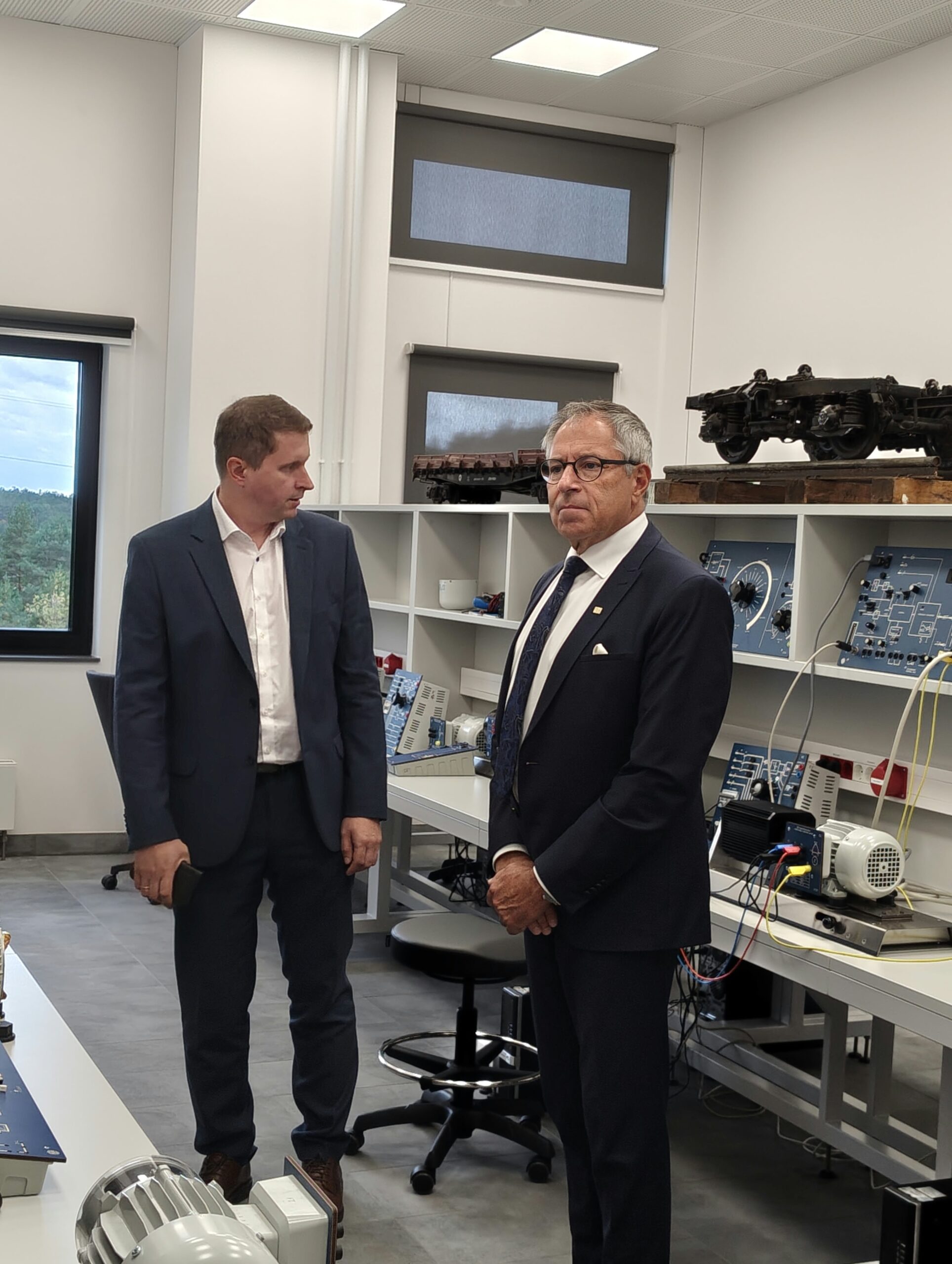
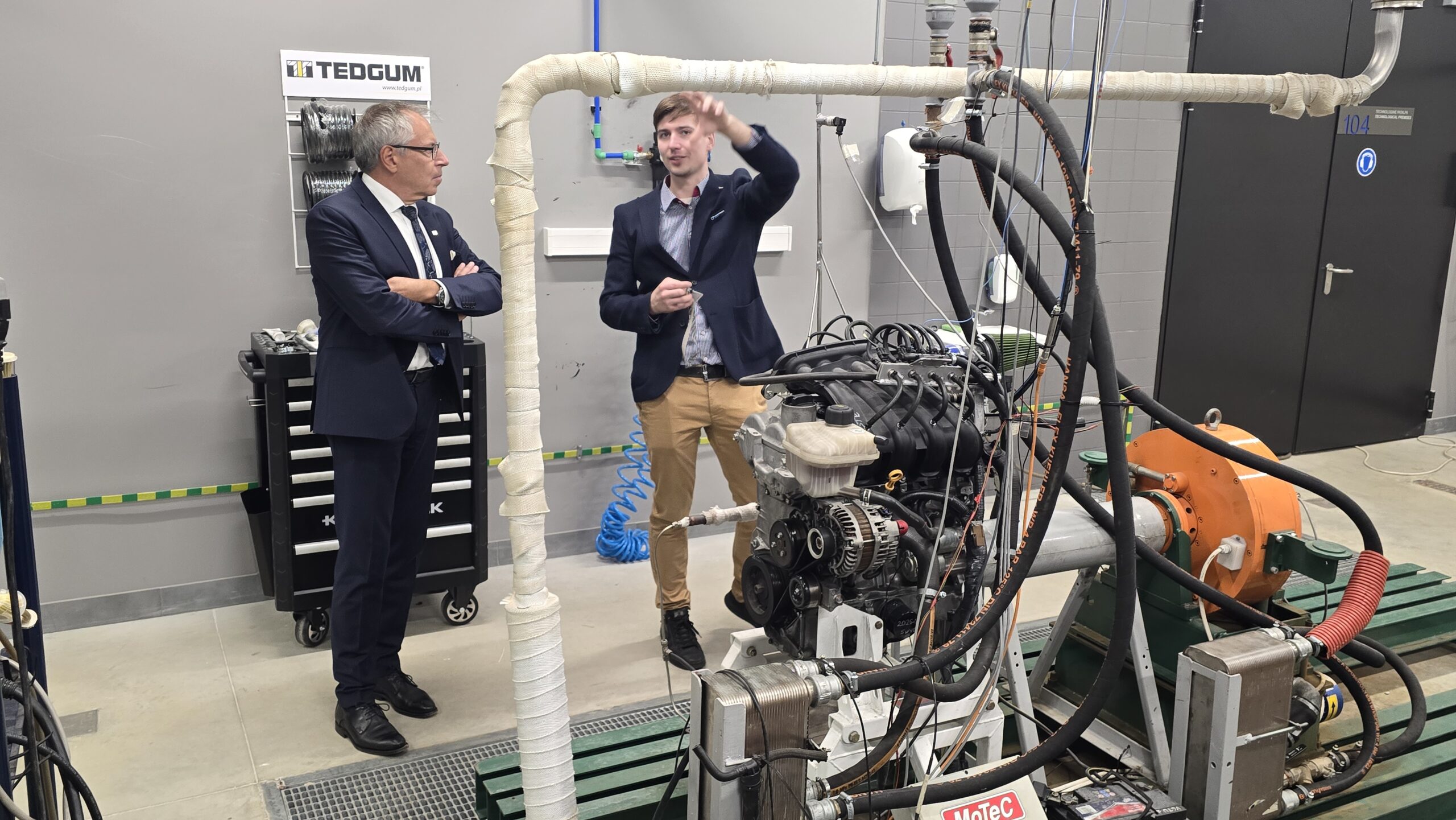
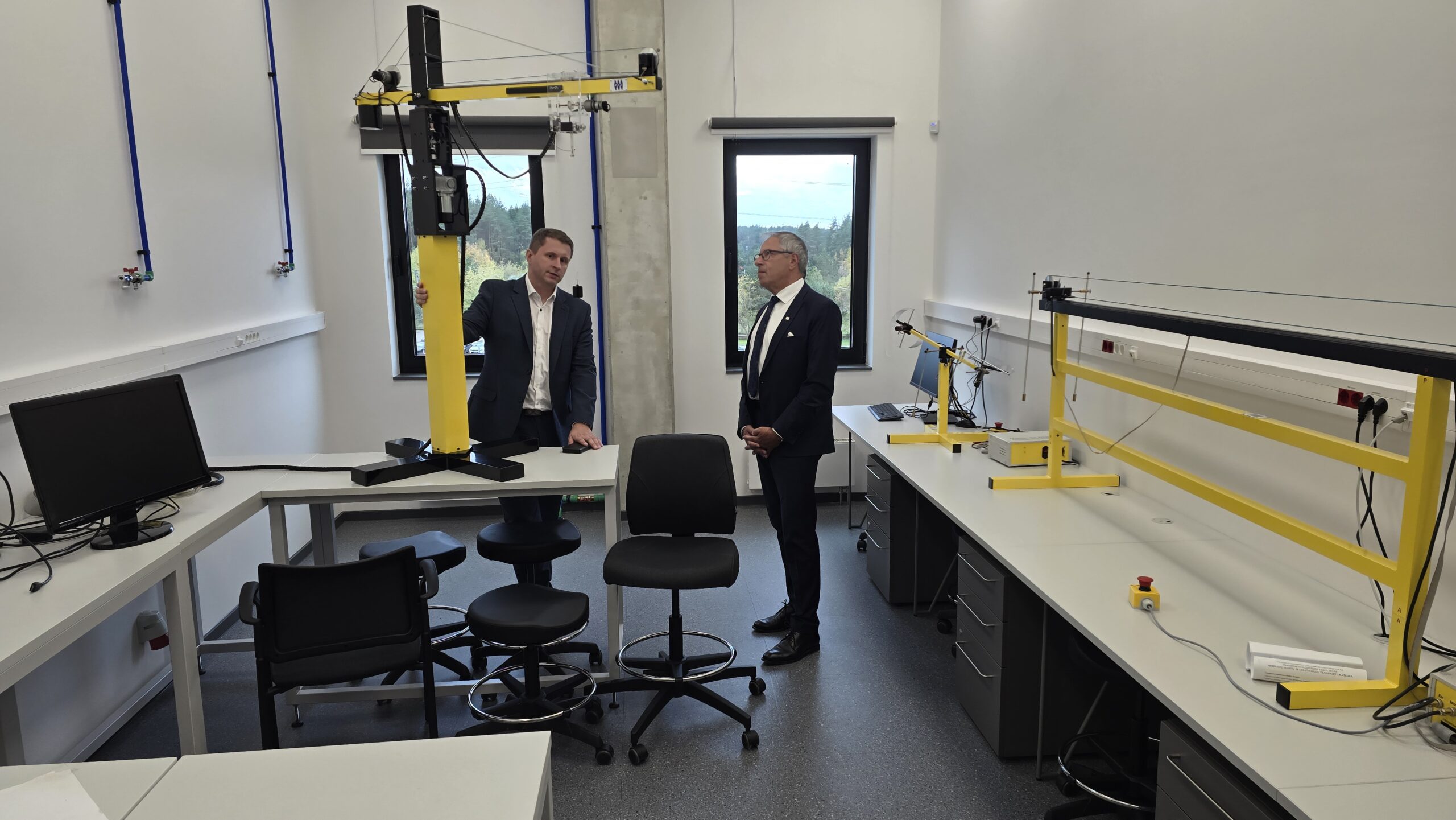
During his visit to the VILNIUS TECH Faculty of Transport Engineering, Prof. Dr. Christof Wolfmaier, Rector of Esslingen University, whose academic background is in the field of transport engineering, toured the transport engineering and logistics laboratories. He became acquainted with the equipment used in these facilities, ongoing research activities and opportunities for practical student training.

The guest showed particular interest in the faculty’s research projects in the fields of autonomous transport and railway transport. These areas are highly relevant to the transport sectors of both Lithuania and Germany, where automation, digitalisation, safety and sustainable technological solutions are becoming increasingly important.

Discussions also addressed current trends in transport engineering, opportunities for applying research results in practice, and the role of universities in preparing specialists for the rapidly evolving transport sector.

From Scientific Research to Student-Designed Vehicles

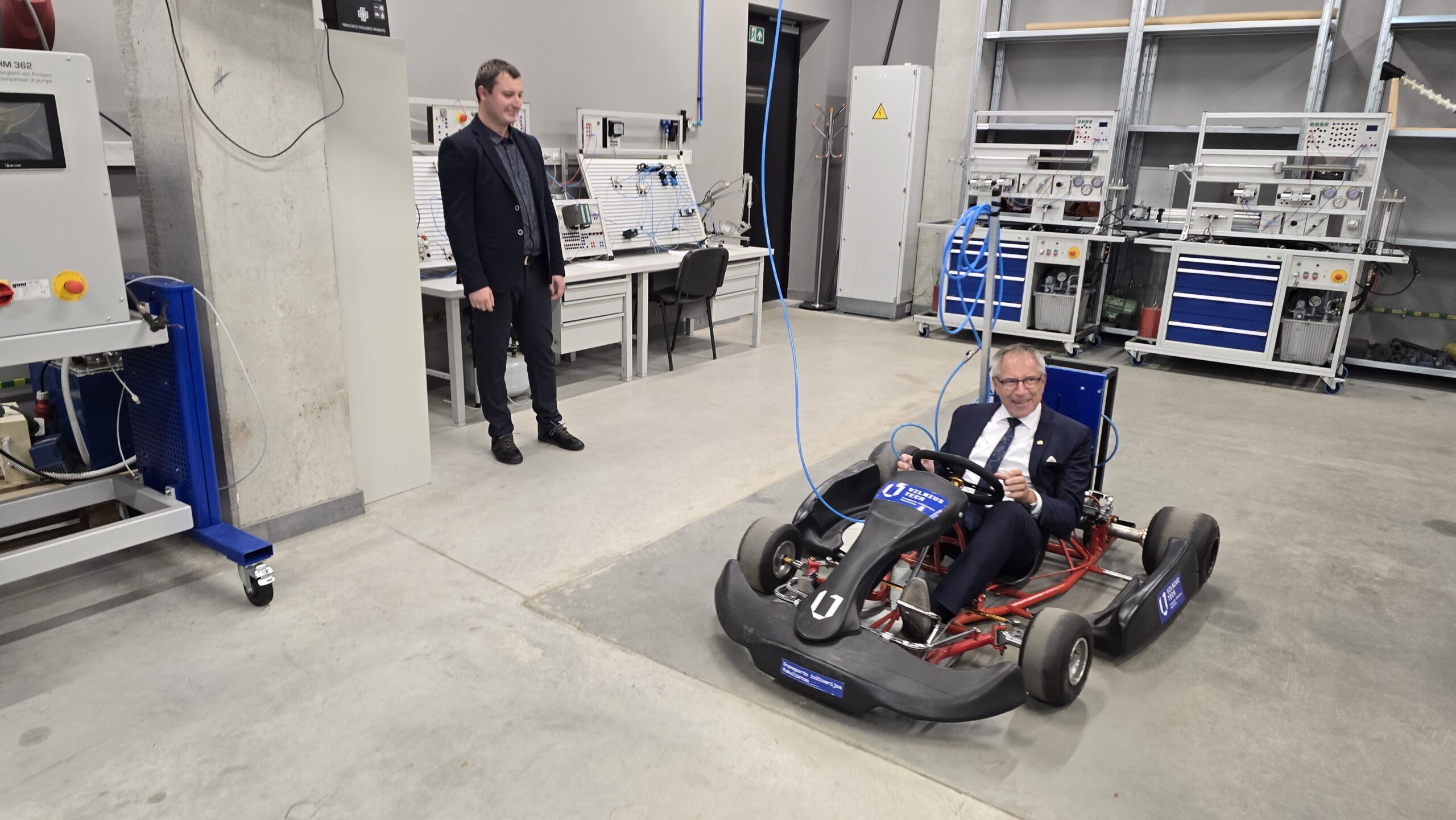
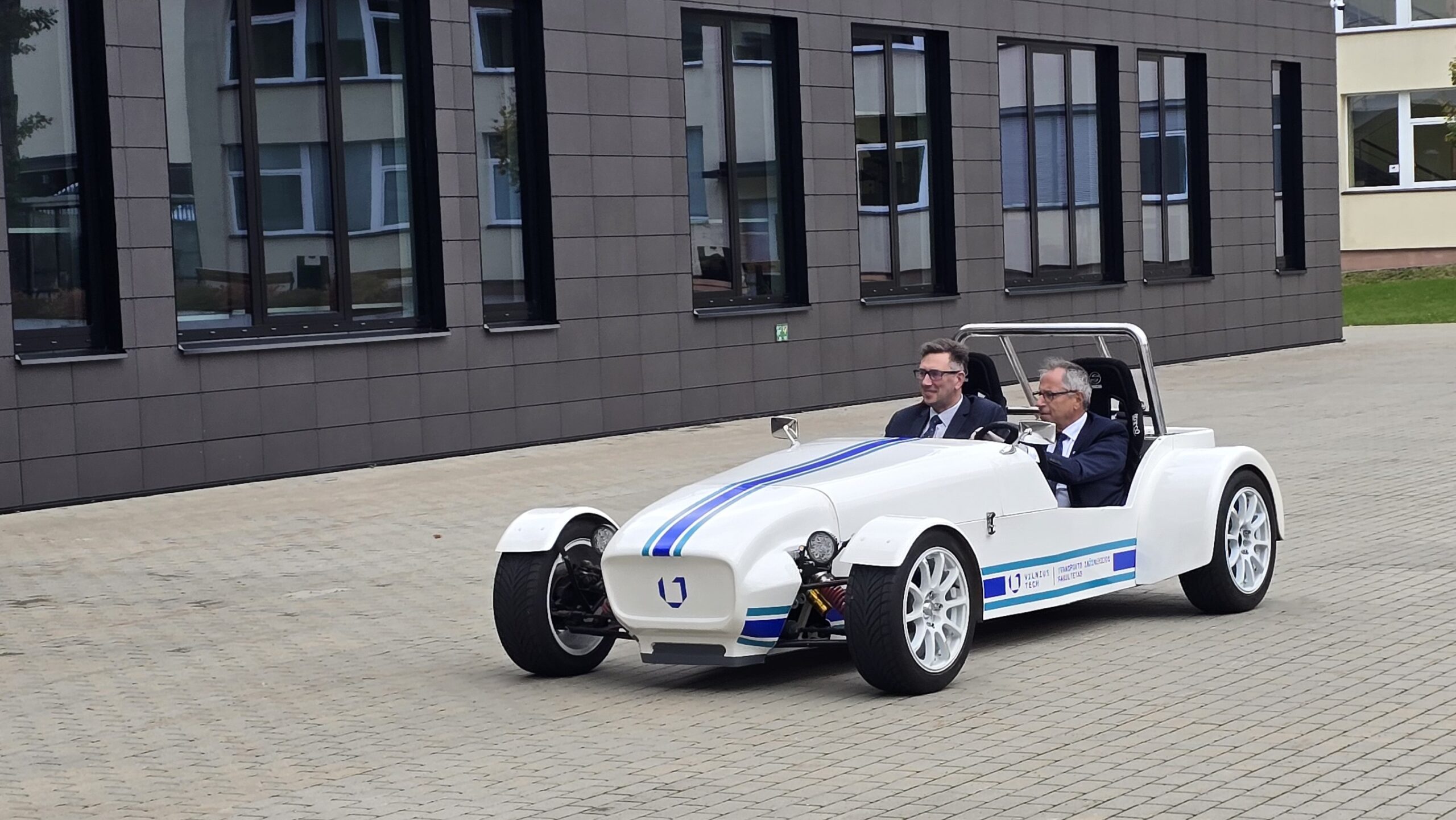
Another particularly engaging part of the visit was dedicated to practical engineering projects developed by students. The guest examined the faculty’s conventional and electric go-karts, learned about their technical solutions and explored other innovative ideas being implemented by students.

However, the visit went beyond simply observing the exhibits. Prof. Dr. Christof Wolfmaier personally tested a pneumatic go-kart designed and built by students, which is powered by compressed air. This unconventional engineering solution enables students to apply their knowledge of computer-aided engineering, mechanics, pneumatics, vehicle design and control systems in practice.

The guest also had the opportunity to take a ride in a student-built electric vehicle and experience the results of their practical engineering work firsthand.

Such projects demonstrate that transport engineering studies extend far beyond theoretical knowledge. Students have opportunities to design, build, experiment, test their solutions and improve them under real-world conditions.

New Opportunities for International Partnership

According to Prof. Dr. Olegas Prentkovskis, Dean of the VILNIUS TECH Faculty of Transport Engineering, visits of this kind are important not only for maintaining institutional relationships but also for creating new opportunities for cooperation.

“We are pleased that our cooperation with Esslingen University has already produced tangible results, including student academic exchanges, visits by teaching staff and the establishment of professional connections. It is particularly important to us that international partnerships provide students with opportunities to gain new experience, learn about engineering solutions developed in other countries and broaden their professional horizons. We are also delighted that our guest showed interest in the research conducted at our faculty and had the opportunity to experience the vehicles developed by our students not only in theory but also in practice,” said the Dean of the Faculty.

The visit highlighted the shared interest of both universities in expanding international academic mobility, promoting cooperation among teaching staff and researchers, and exploring opportunities for joint educational and research initiatives.

The visit of the Rector of Esslingen University once again confirmed that international cooperation, scientific research and students’ practical engineering activities are among the key strengths of a modern university of technology.


Foto: Alekso Jauniaus

Galerija
Related news

In the age of content-generating artificial intelligence, who is the true author of the work?
Take a look at these images. Which one do you think is the most beautiful? Which one is technically better executed? Which were created by a human and which by artificial intelligence (AI)? Click on the image to view it in full size And how would your assessment change if you found out that they were all created by AI? We live in a time when AI is increasingly moving into almost all spaces - from social media campaigns to advertisements, posters and informational visuals. It is quite possible that soon a large proportion of the images we see around will be marked with the words "Created using AI." But does knowing who created an image change the way we perceive it? (But before you continue reading, we will reveal that: image 1 was created by AI, image 2 by Giedre Gedeikyte, image 3 by Lukrecija Jaseviciute, image 4 and 5 by DI, image 6 by Milda Mockūnaite-Vitkiene). A bachelor's thesis research project by Laura Dutkute, a graduate of the VILNIUS TECH Entertainment Production study programme, titled "Consumer Participation in Visual Communication in the Digital Environment: Human and Artificial Intelligence Interaction," revealed that when evaluating visual content, audiences consider not only its aesthetics or quality, but also how and by whom it was created. Nevertheless, although AI is increasingly becoming part of the creative process, the role of the human is still essential. Dutkute, who conducted the research, notes that AI is often presented in society as a competitor to creators. However, the research results reveal a somewhat different reality - audiences primarily see AI as a tool that exists alongside humans. Moreover, information about the use of AI can change the way a person evaluates the work itself. "This means that the label indicating the use of AI is not completely neutral. If for the audience AI has negative connotations, this perception can also be transferred to the work, even if AI's contribution was minor," the graduate explains. One of the most important findings of the research is that AI does not eliminate the role of the human as the creator. It can perform certain parts of the creative process, help generate ideas, create different visual versions or personalise content, but the final decisions still have to be made by a human. Therefore, according to L. Dutkute, the creative process does not become any less human but, in a sense, becomes a more collaborative process where AI can offer numerous options and the human is still the one making a choice, evaluating, modifying and maintaining the creative direction. The creator's own skills become particularly important here. The responses from specialists in the study showed that the outcome is strongly determined by how well a person knows how to use the selected tool. As AI becomes increasingly integrated into the creative process, the user's relationship with content is also changing. For users, it is important to know who the content creator is, how it is presented, where it came from and whether it can be trusted. "With the emergence of AI, users have begun to evaluate content more rather than simply enjoy it. On the other hand, people are not always able to recognise for themselves that visual content was created using AI. Once they learn about its origin, they may change their assessment. Therefore, it is important not only to be able to recognise AI-generated content, but also to improve society's overall AI literacy," says L. Dutkute. The involvement of AI in the creative process inevitably raises the question of what we actually mean by authorship today. If one part of a work is created by a human and another is generated by AI, whose work is it? "AI is not a replacement for the creator; it simply serves as another creative tool – just like Canva, Google or Photoshop. Its use has expanded the possibilities even further while also it placing even greater responsibility on the person who decides what they create with this tool and how they present that work to the audience. Ultimately, the person remains responsible for the final result," she says. Therefore, according to the interviewee, it is important to communicate transparently about AI's contribution. All of this is also changing the nature of work for visual communication specialists. In the future, those who simply know how to use one AI tool or another will become less important than those who understand when to use it, what to entrust to it and how to critically evaluate the result. "Specialists will need to compete with AI less and learn how to integrate it properly into their work more. There will be a greater need for people who can choose the right AI tool, formulate a task, evaluate the result and maintain the creative direction," says Laura. According to the graduate, AI is best viewed not as a tool that will take over the entire creative process, but as an assistant capable of expanding human capabilities.
More
Elsevier Training: Scientific Publishing, Journal Selection and Scopus Insights
We invite VILNIUS TECH students, academic staff, and employees to participate in a series of free online training sessions organized by Elsevier, one of the world's leading providers of scientific publishing and information solutions. During these training sessions, participants will learn how to successfully publish research, choose the most suitable journal for their work, gain insights into Scopus evaluation criteria, and make effective use of advanced scientific information search tools. Elsevier Author Workshop – How to Feel Confident on the Publishing Journey Date and time: November 13 | 13:00 Learn how to navigate the scientific publishing journey, from choosing the right journal to understanding peer review and editorial decisions. The webinar will also explore research ethics, responsible AI use, and Elsevier resources that support researchers at every stage of their work. Registration   Editors Session with Elsevier Date and time: November 18 | 11:30 T In this session, participants will learn how the Scopus database selects and evaluates journals for inclusion, ensuring their quality and reliability. The webinar will cover journal evaluation criteria, the submission process, and key information for journal editors seeking to have their publications indexed in Scopus. Registration   How to Find the Right Journal: Strategies and Tools That Can Help Authors Date and time: November 24 | 11:30 This training session will help researchers identify the most suitable journal for their publication. Participants will learn about key journal selection criteria, how to identify leading journals in their field, and how to use Elsevier tools and solutions to make informed publishing decisions and increase the visibility of their research. Registration   Mastering Scopus Advanced Search Date and time: November 26 | 11:30 This session will introduce advanced Scopus search capabilities, enabling participants to build precise and sophisticated queries using additional search fields and search operators. Attendees will learn how to structure complex searches effectively, make the most of advanced database features, and improve the efficiency and accuracy of scientific information retrieval. Registration
More