A university is not only about academic achievements but also about the visions and memories of the people who helped shape it. On the occasion of VILNIUS TECH’s 70th anniversary, four university rectors share the defining events that shaped the institution’s identity, as well as colorful stories from behind the scenes of academic life. We invite you to explore the university’s history through the eyes of its leaders, where serious and significant decisions intertwine with some of their most memorable student experiences.
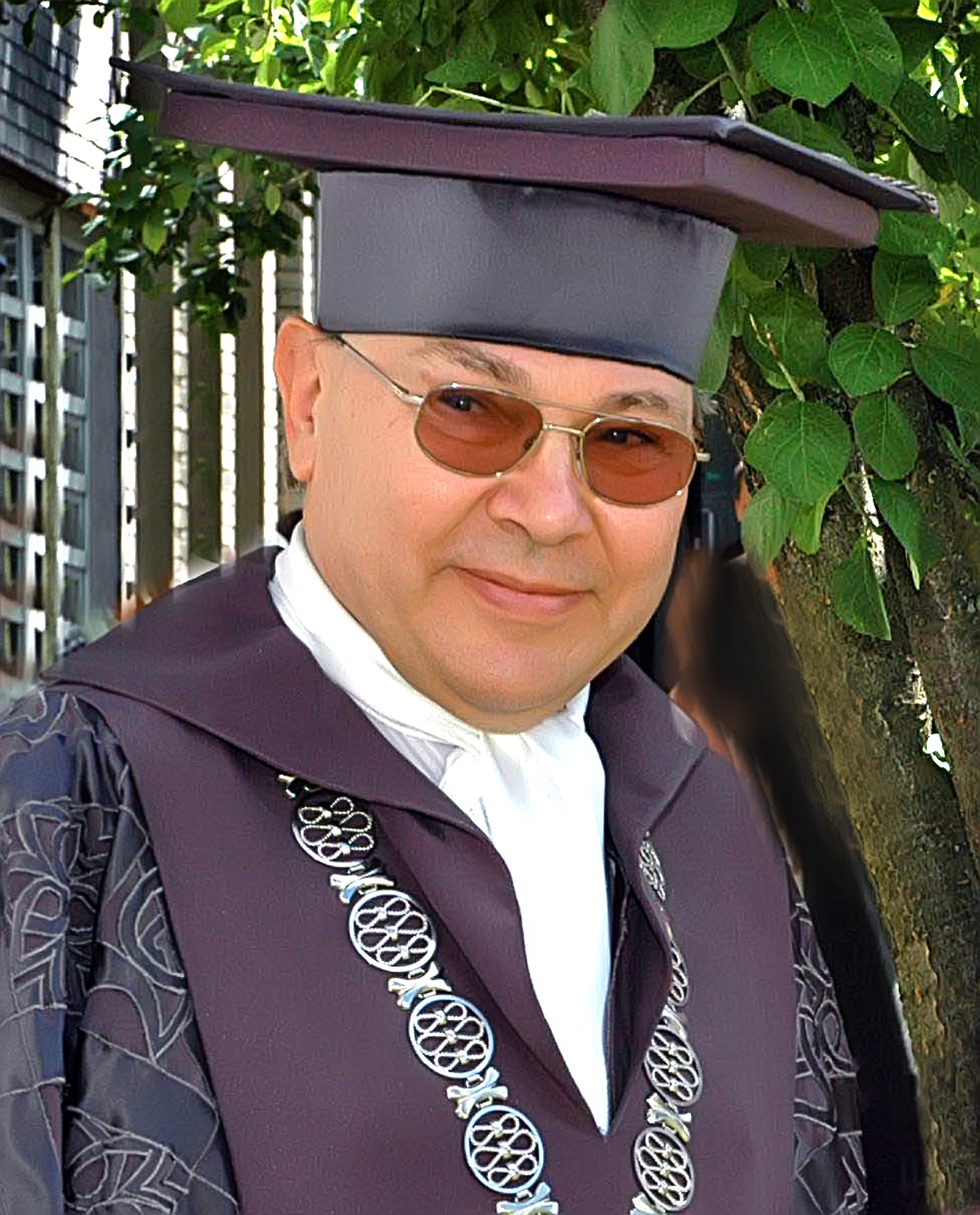
Prof. habil. dr. Edmundas Kazimieras Zavadskas – the first rector of Vilnius Gediminas Technical University, serving from 1990 to 2002, a Lithuanian scientist and engineer.

Change of status and expansion
“When I became rector, my main goal was to transform the Vilnius Civil Engineering Institute (VISI) into a technical university. Just nine months later, the Supreme Council of Lithuania decided to reorganize VISI into a Technical University. Had we not achieved this, the university would not exist today – it would have long since been merged with another institution. A structure consisting of nine faculties was established. We also succeeded in acquiring the Traku Street complex, a large factory on Naugarduko Street, and a driving school on Plytines Street together with its entire territory. In 1994, the university was granted the name of Gediminas,” recalls Prof. habil. dr. E. K. Zavadskas.
These milestones – university status, expanded infrastructure, the creation of faculties, and receiving the Gediminas name – became the achievements of the first rector that shaped the university’s identity.
An exam that erquired a flight to Kaunas
As a student, E. K. Zavadskas was exceptionally hardworking. He completed his first year studying remotely as he also worked as a mathematics teacher. His second year was done the same way – while working on construction sites during the day and attending lectures in the evenings. During his studies, he was willing to do whatever it took to succeed academically.
He remembers one occasion when strict deadlines were approaching. If he failed to complete his coursework on time, he faced immediate military conscription. As the semester drew to a close, the final obstacle was an unfinished descriptive geometry assignment. Realizing that time was running out and that mailing the drawings was no longer an option, he made an unusual decision: he boarded an An-2 aircraft and personally flew to Kaunas to find the lecturer responsible for accepting the assignment.
“Now it sounds funny – I flew from Vilnius to Kaunas by plane. At first, I couldn’t find the lecturer, so after obtaining his address, I went to the Julijanava settlement. There I found him outside his house chatting with a chimney sweep and smoking a pipe. I introduced myself as a distance-learning student, explained that I had brought the completed assignment, and that I absolutely had to submit it. The next day, at the Faculty of Civil Engineering, the associate professor confirmed that he had accepted the work, but he organized an unusual exam. He stood me at a drafting table in his office, handed me a large sheet of paper, and instructed me to complete a difficult drawing within a few hours. He wanted to make sure I really knew how to draw the plans myself. After I finished the drawing and answered several questions, he graded the work with a four out of five,” recalls Prof. habil. dr. E. K. Zavadskas.
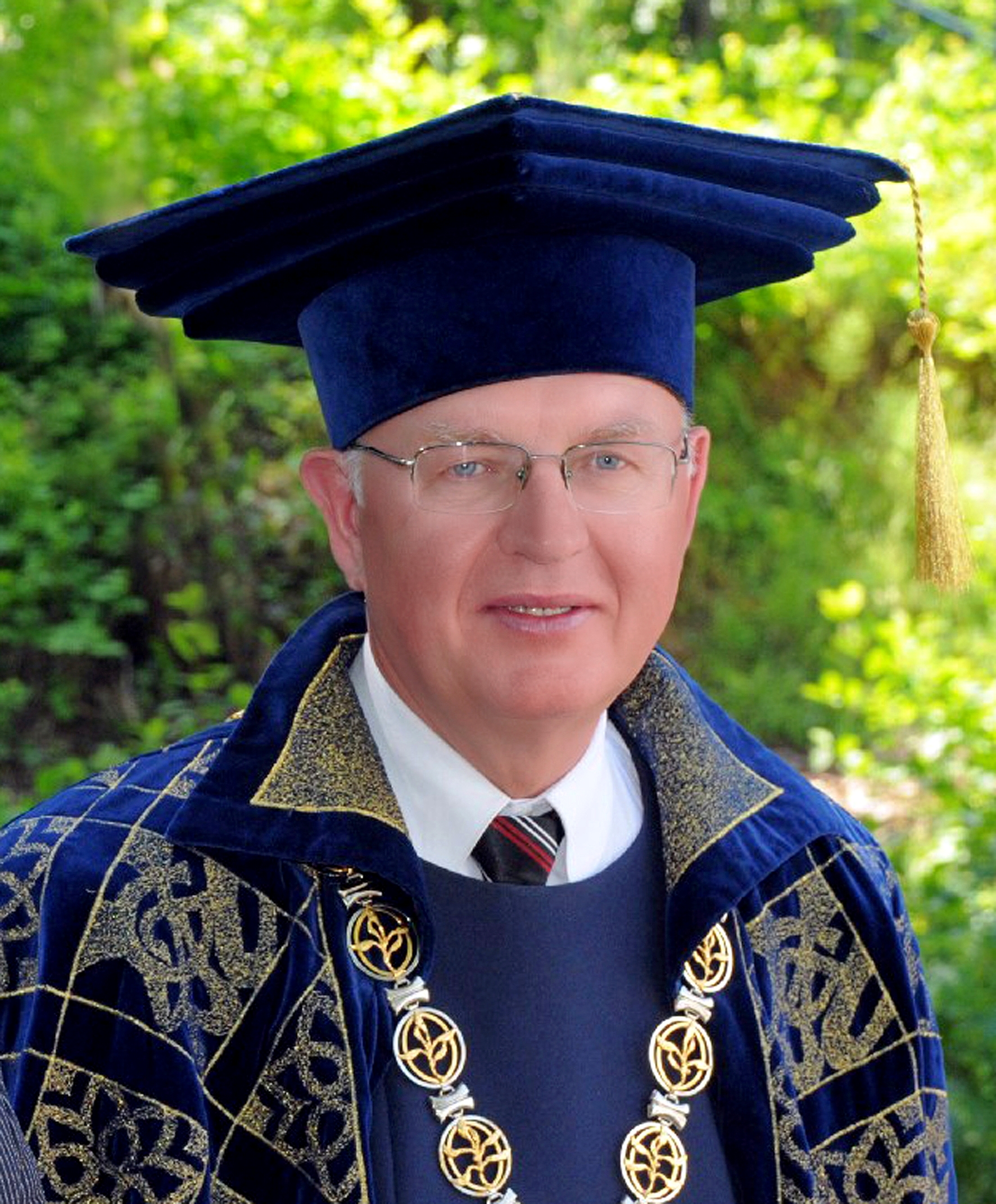
Prof. habil. dr. Romualdas Ginevicius – Lithuanian scientist, economist, and long-serving rector of the university from 2002 to 2011.

The greatest achievement – entering the international research arena
“During my term as rector, Lithuanian science was only beginning to integrate into the international community. Journals began to be established on an international level – international editorial boards were formed, English became the primary language, and international peer review was introduced. We also introduced incentives for prestigious publications – a bonus of 5,000 litas for an article. The results exceeded all expectations. In terms of the number of scientific journals, we matched some of the world’s most renowned universities, such as Oxford and Harvard, and the number of prestigious publications increased dramatically,” recalls Prof. habil. dr. R. Ginevicius.
The rector emphasizes that financial motivation and the development of high-quality in-house journals were key elements of the university’s visibility strategy. This enabled the university not only to receive greater funding but also to become an equal partner on the global scientific stage.
A threat to burn a zhiguli and six debt slips
Working with students left many memorable impressions on Rector R. Ginevicius. One of them involved a student who had failed an exam and angrily told him in the corridor: “Your red Zhiguli parked outside will be burned.”
Although the situation sounded dramatic, it ended peacefully in the dean’s office, where the student later sincerely apologized.
Prof. habil. dr. R. Ginevicius also recalls another student who surprised him with his determination.
“A student from the Faculty of Electronics wanted to transfer to Business Management. After comparing the study plans, I found six missing courses. The situation seemed hopeless. Knowing this and not wanting to disappoint him, I issued six debt slips and said: if you clear all six within a month, I will approve the transfer. Exactly one month later, the office door opened, and the student placed all six completed slips on my desk,” remembers Prof. habil. dr. R. Ginevicius.
Keeping his promise, the dean transferred the student to the desired program. After graduation, the young man quickly advanced in his career, working for some of the country’s largest companies. Later, under the supervision of Prof. habil. dr. R. Ginevicius himself, he successfully defended his doctoral dissertation. Today, this former “debtor” is recognized as one of the most respected and authoritative specialists in his field throughout Lithuania.
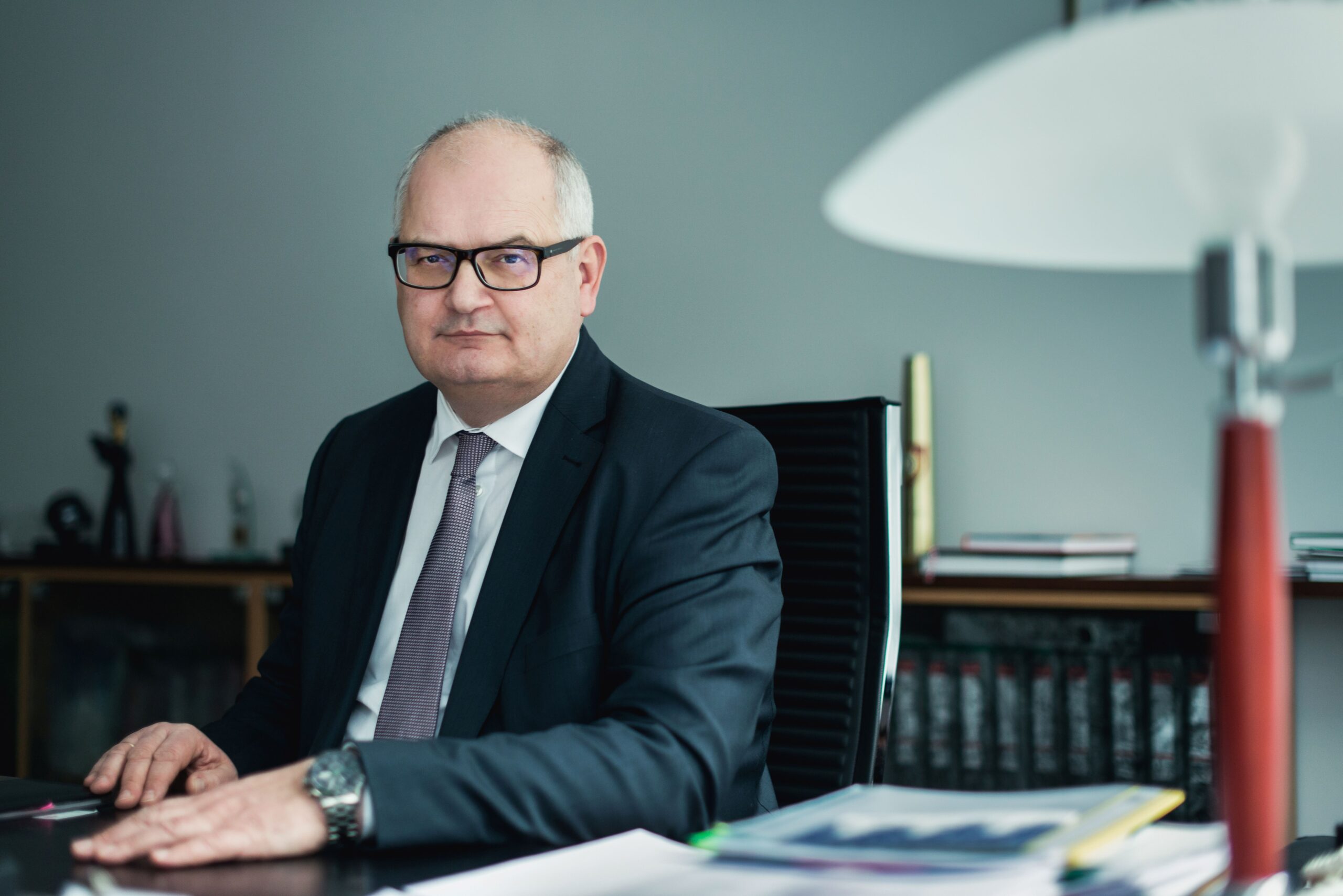
Prof. dr. Alfonsas Daniunas, who served as rector from 2011 to 2021 and now serves as Chairman of the Senate, witnessed the university through many stages of transformation.

Breakthrough in global rankings
One of the most significant achievements during his tenure was the university’s success in international rankings. Before 2012, the university was absent from the most influential global rankings. However, thanks to reforms in research and education, in 2018 the university entered the top 600 institutions in the prestigious QS World University Rankings.
“Regardless of how we view them, global rankings reflect a university’s overall strength in research and education, as well as its sustainability,” emphasizes the former rector. “Thanks to the intensive work of the university community, we also achieved excellent results in individual disciplines. In 2018, we entered the global top 100 institutions in Civil Engineering.”
The new university name
In 2020, a new university name and branding concept was adopted. Vilnius Gediminas Technical University became VILNIUS TECH, with greater attention devoted to branding and communication. Reflecting on these changes, Prof. dr. A. Daniunas stresses that this was an important step toward modernization.
“The university’s name is connected to the history of Gediminas and the city of Vilnius. The second part referred to technology. In today’s world, the concept of technology no longer covers everything. Centuries ago, it was a clearly defined term. Today, however, technologies have taken root in virtually every field, including social sciences, humanities, and many others. It is important to emphasize that we are more than a traditional technical university, and the new name VILNIUS TECH allows us to unite all areas of development and expand into new fields.”
Rector for a day
During Prof. dr. A. Daniunas’ tenure, the university maintained a special tradition: once a year, a student would take over the rector’s chair for a day. The selected student assumed the role of university leader and experienced firsthand what the position involved.
“It was always a fun day. Of course, the student could not sign official documents, but they solved problems and participated in meetings. It was something of a game, but students always bring enjoyable moments,” recalls Prof. dr. A. Daniunas.
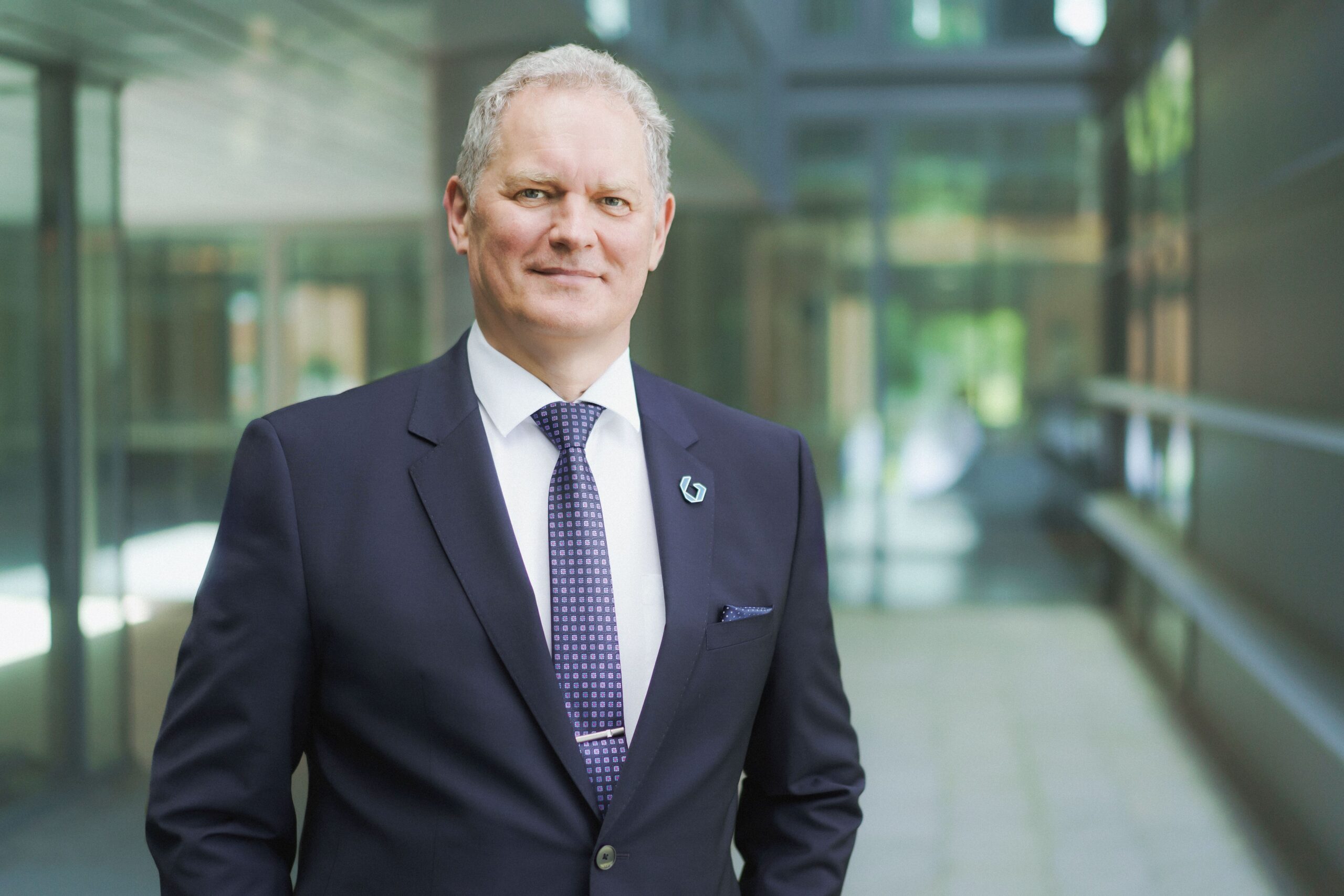
Since 2021, VILNIUS TECH has been led by Prof. Romualdas Kliukas, also a university alumnus, civil engineer, and Doctor of Technological Sciences.

Hiding from a strict professor
Recalling his student years, Rector R. Kliukas shares an adventure from the laboratory.
“We conducted experiments in the concrete testing laboratory supervised by Prof. G. Marciukaitis. We did not always leave everything perfectly tidy afterward, which made the professor very angry. If we worked without informing him beforehand, he would even shout at us. We were quite afraid of him.
One day, I had prepared samples on the press platform when G. Marciukaitis unexpectedly entered the laboratory. Out of fear, I immediately lay down behind the press on the floor. Seeing my samples, the professor began loudly expressing his dissatisfaction. At that moment, Prof. A. Kudzys entered the laboratory, noticed my legs sticking out from behind the press, covered them with a trash bin, calmed G. Marciukaitis down, and led him out of the laboratory.
When I finally emerged from behind the press, I could hardly recover from the experience. For several days I avoided both professors. Later, when I met Prof. A. Kudzys, he never mentioned the incident, as if nothing had happened,” recalls R. Kliukas.
Proud of the Lithuanian Maritime Academy
One of the most significant events of his tenure, according to R. Kliukas, was VILNIUS TECH’s expansion into the Klaipeda region. In 2024, the Lithuanian Higher School of Maritime Studies became a division of Vilnius Gediminas Technical University in Klaipeda and was renamed the Lithuanian Maritime Academy.
“This change gave young people more choice and an opportunity to continue their studies not only in Vilnius but also in Klaipeda. We began offering professional higher education studies, strengthening educational quality, and contributing to the development of a maritime and engineering-oriented state. This represents a unique opportunity to strengthen competitiveness in international markets.
I am convinced that this merger opened even broader opportunities for the academy, while the university began educating future talent across water, air, and land transport engineering. Connectivity is one of our strategic values, so together through unique experiences we have grown and enriched one another,” says the rector.
Prepared by students Amelija Zaksauskaite (Faculty of Creative Industries, Entertainment Production, 2nd Year) and Joana Dacevic (Faculty of Creative Industries, Creative Industries, 2nd Year)
Galerija