


Home
About University
News
University Presents Lithuania's First Scientific Monograph in EPUB3 Format

2026-01-14
University Presents Lithuania's First Scientific Monograph in EPUB3 Format
By implementing the requirements for e-books set out in the Republic of Lithuania's Law on Accessibility Requirements for Products and Services, and by contributing to the formation of inclusive publishing standards in Lithuania, VILNIUS TECH has published the first scientific monograph in a fully accessible format: "Contemporary Architectural Theory: The Interplay of Texts and Intellectual Contexts" by Prof. Dr. Almantas Samalavičius of the Faculty of Architecture. This has all been done to ensure that the content is easily read, listened to, and used by readers with diverse needs.
Through the joint efforts of Audronė Gurklienė, a layout designer from the VILNIUS TECH Library's Journal Publishing Department, and Dalia Markevičiūtė, a language editor from the Book Publishing Department—and especially due to the layout designer's extensive technical knowledge and her ability to apply it when creating the e-book—the monograph has become the first VILNIUS TECH scholarly publication to meet all accessibility requirements for e-books.
Library Director Ingrida Kasperaitienė and Journal Publishing Department layout designer Audronė Gurklienė tell us more about the creative process, technical solutions, and the challenges the team faced.
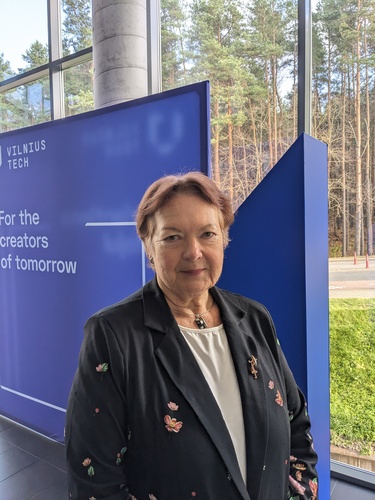
Library Director Ingrida Kasperaitienė
How did the idea to publish VILNIUS TECH's first fully accessible scientific monograph come about?
VILNIUS TECH has taken an important step by implementing the provisions of the European Union's Accessibility Directive and the Republic of Lithuania's Law on Accessibility Requirements for Products and Services, becoming the first university in Lithuania to publish a scientific monograph in the Lithuanian language in the fully accessible EPUB3 format.
The VILNIUS TECH Library's publishing departments not only implemented the directive's requirements but also demonstrated best practices by preparing a scholarly publication according to universal accessibility principles, making it accessible to all readers, regardless of their abilities or the technologies they use.
How does this publication relate to collaboration between people, fields, and ideas?
VILNIUS TECH's first fully accessible scientific monograph perfectly reflects the university's value of Connectivity. The preparation of the publication was an interdisciplinary process that brought together the scholarly ideas of the Faculty of Architecture, the technical and editorial expertise of the VILNIUS TECH Library's publishing departments, and knowledge of accessibility standards. The scholarly content by Prof. Dr. Almantas Samalavičius was presented in a way that all readers could access it. This was achieved through the technical expertise of layout designer Audronė Gurklienė and the meticulous work of language editor Dalia Markevičiūtė, who supplemented the illustrations with alternative descriptions.
This publication connected different fields—architectural theory, information technology, publishing innovations, and social responsibility. Such a partnership has shown that by combining people's experience and creativity, it is not only possible to meet legal requirements but also to create new standards for inclusive publishing in Lithuania, which contribute to the openness and accessibility of science for all.
What changes in the publishing house or the university's publishing culture did this project prompt?
The implementation of the Accessibility Directive has prompted significant changes both within the VILNIUS TECH Library's publishing departments and in the broader university publishing culture. After publishing the first fully accessible scientific monograph, it became clear that applying accessible publishing principles requires a new approach to the publishing process—closer collaboration among all participants: authors, editors, layout designers, librarians, and information technology specialists.
In the coming year, text authors and publishing specialists will need to acquire knowledge related to new technologies and publishing standards. It is essential to ensure that all books by university authors published in electronic format comply with accessible publishing requirements. The Accessibility Directive has spurred a cultural shift in university publishing—from traditional publishing to an inclusive, technology-based model that aims to make scholarly content accessible to all. This marks a new stage in the activities of the VILNIUS TECH Library's publishing departments, strengthening the university's identity as an open and socially responsible center for science.
Do you plan to continue preparing this type of publication?
Currently, the VILNIUS TECH e-book platform hosts 740 books. The VILNIUS TECH Library's publishing departments will consistently continue preparing publications in a fully accessible format and will plan the work of converting the existing e-book archive. In the near future, all electronic publications will need to be converted to the EPUB3 format to meet the accessibility standards set by the European Parliament and Council Directive.
All future VILNIUS TECH e-books in technology, engineering, social sciences, and humanities will be prepared in accordance with accessible publishing principles, applying EPUB 3 and WCAG 2.1 standards to ensure that the content is easily read, listened to, and used by readers with diverse needs. An accessible format is particularly important for e-books used by students, researchers, and members of the public, so the goal will be to ensure that every university e-book is not only high-quality in terms of content but also fully accessible to all readers.
In your opinion, do accessible publishing initiatives help build a stronger connection between the university, the community, and society?
Accessible academic publishing initiatives significantly strengthen the connection between the university, the academic community, and society. They directly align with the principles of Open Science, which aim to make scientific knowledge freely accessible, transparent, and usable by all. By publishing e-books in an accessible format, the visibility, citability, and societal impact of science are increased, as research findings become more readily available not only to researchers but also to students, policymakers, businesses, and the general public.
Such publications contribute to citizen science initiatives, encouraging public engagement in scientific processes and strengthening the university's social responsibility. An institution that ensures the accessibility of its publications demonstrates that it operates according to the principles of socially responsible and inclusive science. This creates a positive public image and increases the trust of the academic community, sponsors, and partners.
Ultimately, accessible publishing helps create an inclusive academic culture where knowledge is available to everyone, regardless of personal needs or technological capabilities. This strengthens the university's identity as an open, community-oriented, and socially responsible center for science.
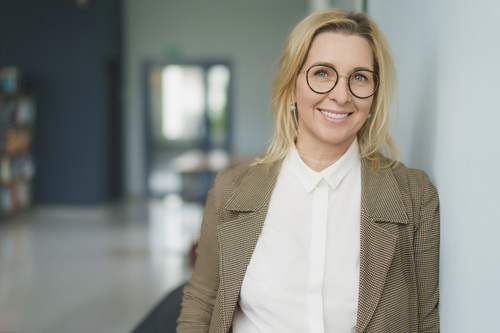
Journal Publishing Department Layout Designer Audronė Gurklienė
How does this publication differ from standard publishing processes? What new methods or technologies did you learn?
When designing books, we rely on the publishing standards for printed books. The result is a PDF file intended for print or digital distribution. Now, we had to delve into the requirements for the accessible EPUB3 format, which is considered the standard for accessible publishing. Standard academic books are often published simply as PDFs, which are inaccessible. The new process required a shift from visual layout ("what it looks like") to structural tagging ("what it is"—a heading, an illustration, a quote) to ensure content comprehension for users with disabilities.
Unlike a printed book or a simple PDF, the EPUB3 format allows the reader to freely change the text font, size, contrast, alignment, and spacing. The text dynamically adapts to the screens of different devices.
I had to learn to apply technical knowledge to ensure active content and links, create descriptions for illustrations (alternative text), tag inserts in foreign languages, and ensure text readability using voice synthesis.
One of the most important aspects was creating descriptions of illustrations for the visually impaired. How did this work proceed, and what kind of collaboration with the author did it require?
All illustrations were supplemented with descriptions (alternative text) so that screen reader programs for the visually impaired could convey the meaning of the image. Since the illustrations in the monograph are specific and related to architectural theory, their meaning is not always obvious, which required close collaboration with the author. He had to explain the essence and context of the image precisely to ensure that the alternative text we prepared was as accurate and meaningful as possible in a scholarly context. This was not just a technical skill but also a crucial content editing task.
In your opinion, what role does the accessible publishing process play in connecting different audiences—the sighted and the visually impaired, creators and readers?
The accessible publishing process plays a crucial integrative and democratizing role, connecting different audiences and transcending the traditional barriers of scholarly dissemination.
The accessible EPUB3 format for books creates equal opportunities for everyone to access complex scientific information. It breaks down information barriers, opening up architectural theory and other achievements of higher education to the visually impaired community and those with other reading difficulties.
Although accessibility requirements are intended for people with disabilities, the EPUB3 format improves the reading experience for everyone. The ability to freely increase font size, change contrast, or adjust text spacing is particularly useful for older readers or those using small portable devices. This promotes social inclusion and enables individuals with disabilities to participate more actively in the academic space and discussions.
Creators (authors) and publishers (the VILNIUS TECH Library) are implementing the principle of inclusion, going beyond minimum legal requirements and demonstrating a high level of social responsibility. By starting this process, we are not just publishing a book but shaping a new culture of academic publishing. The achievements of science should be democratic and accessible.
This process encourages continuous innovation in the publishing field, forcing creators and technical staff (layout designers) to acquire new competencies that meet future needs.
Accessible publishing acts as a bridge, ensuring that the value of science reaches all parts of society. It requires educational and scientific institutions to become more responsible and progressive.
What personal value did working on this project, which makes architectural theory accessible to everyone, have for you?
It was very interesting for me to contribute to the creation of the first such publication at VILNIUS TECH. I acquired new technical skills (the subtleties of the EPUB3 format, accessibility requirements, creating descriptions for illustrations). We received help from the Lithuanian Audiosensory Library, which is a leader in the field of inclusive publishing. This collaboration not only helped in implementing the project but also provided an opportunity to establish valuable professional connections. I feel great personal satisfaction knowing that this work has real social value—it allows complex scientific achievements to become accessible to everyone, including individuals with visual impairments, and directly contributes to the creation of a more inclusive society.
Through the joint efforts of Audronė Gurklienė, a layout designer from the VILNIUS TECH Library's Journal Publishing Department, and Dalia Markevičiūtė, a language editor from the Book Publishing Department—and especially due to the layout designer's extensive technical knowledge and her ability to apply it when creating the e-book—the monograph has become the first VILNIUS TECH scholarly publication to meet all accessibility requirements for e-books.
Library Director Ingrida Kasperaitienė and Journal Publishing Department layout designer Audronė Gurklienė tell us more about the creative process, technical solutions, and the challenges the team faced.
Library Director Ingrida Kasperaitienė
How did the idea to publish VILNIUS TECH's first fully accessible scientific monograph come about?
VILNIUS TECH has taken an important step by implementing the provisions of the European Union's Accessibility Directive and the Republic of Lithuania's Law on Accessibility Requirements for Products and Services, becoming the first university in Lithuania to publish a scientific monograph in the Lithuanian language in the fully accessible EPUB3 format.
The VILNIUS TECH Library's publishing departments not only implemented the directive's requirements but also demonstrated best practices by preparing a scholarly publication according to universal accessibility principles, making it accessible to all readers, regardless of their abilities or the technologies they use.
How does this publication relate to collaboration between people, fields, and ideas?
VILNIUS TECH's first fully accessible scientific monograph perfectly reflects the university's value of Connectivity. The preparation of the publication was an interdisciplinary process that brought together the scholarly ideas of the Faculty of Architecture, the technical and editorial expertise of the VILNIUS TECH Library's publishing departments, and knowledge of accessibility standards. The scholarly content by Prof. Dr. Almantas Samalavičius was presented in a way that all readers could access it. This was achieved through the technical expertise of layout designer Audronė Gurklienė and the meticulous work of language editor Dalia Markevičiūtė, who supplemented the illustrations with alternative descriptions.
This publication connected different fields—architectural theory, information technology, publishing innovations, and social responsibility. Such a partnership has shown that by combining people's experience and creativity, it is not only possible to meet legal requirements but also to create new standards for inclusive publishing in Lithuania, which contribute to the openness and accessibility of science for all.
What changes in the publishing house or the university's publishing culture did this project prompt?
The implementation of the Accessibility Directive has prompted significant changes both within the VILNIUS TECH Library's publishing departments and in the broader university publishing culture. After publishing the first fully accessible scientific monograph, it became clear that applying accessible publishing principles requires a new approach to the publishing process—closer collaboration among all participants: authors, editors, layout designers, librarians, and information technology specialists.
In the coming year, text authors and publishing specialists will need to acquire knowledge related to new technologies and publishing standards. It is essential to ensure that all books by university authors published in electronic format comply with accessible publishing requirements. The Accessibility Directive has spurred a cultural shift in university publishing—from traditional publishing to an inclusive, technology-based model that aims to make scholarly content accessible to all. This marks a new stage in the activities of the VILNIUS TECH Library's publishing departments, strengthening the university's identity as an open and socially responsible center for science.
Do you plan to continue preparing this type of publication?
Currently, the VILNIUS TECH e-book platform hosts 740 books. The VILNIUS TECH Library's publishing departments will consistently continue preparing publications in a fully accessible format and will plan the work of converting the existing e-book archive. In the near future, all electronic publications will need to be converted to the EPUB3 format to meet the accessibility standards set by the European Parliament and Council Directive.
All future VILNIUS TECH e-books in technology, engineering, social sciences, and humanities will be prepared in accordance with accessible publishing principles, applying EPUB 3 and WCAG 2.1 standards to ensure that the content is easily read, listened to, and used by readers with diverse needs. An accessible format is particularly important for e-books used by students, researchers, and members of the public, so the goal will be to ensure that every university e-book is not only high-quality in terms of content but also fully accessible to all readers.
In your opinion, do accessible publishing initiatives help build a stronger connection between the university, the community, and society?
Accessible academic publishing initiatives significantly strengthen the connection between the university, the academic community, and society. They directly align with the principles of Open Science, which aim to make scientific knowledge freely accessible, transparent, and usable by all. By publishing e-books in an accessible format, the visibility, citability, and societal impact of science are increased, as research findings become more readily available not only to researchers but also to students, policymakers, businesses, and the general public.
Such publications contribute to citizen science initiatives, encouraging public engagement in scientific processes and strengthening the university's social responsibility. An institution that ensures the accessibility of its publications demonstrates that it operates according to the principles of socially responsible and inclusive science. This creates a positive public image and increases the trust of the academic community, sponsors, and partners.
Ultimately, accessible publishing helps create an inclusive academic culture where knowledge is available to everyone, regardless of personal needs or technological capabilities. This strengthens the university's identity as an open, community-oriented, and socially responsible center for science.
Journal Publishing Department Layout Designer Audronė Gurklienė
How does this publication differ from standard publishing processes? What new methods or technologies did you learn?
When designing books, we rely on the publishing standards for printed books. The result is a PDF file intended for print or digital distribution. Now, we had to delve into the requirements for the accessible EPUB3 format, which is considered the standard for accessible publishing. Standard academic books are often published simply as PDFs, which are inaccessible. The new process required a shift from visual layout ("what it looks like") to structural tagging ("what it is"—a heading, an illustration, a quote) to ensure content comprehension for users with disabilities.
Unlike a printed book or a simple PDF, the EPUB3 format allows the reader to freely change the text font, size, contrast, alignment, and spacing. The text dynamically adapts to the screens of different devices.
I had to learn to apply technical knowledge to ensure active content and links, create descriptions for illustrations (alternative text), tag inserts in foreign languages, and ensure text readability using voice synthesis.
One of the most important aspects was creating descriptions of illustrations for the visually impaired. How did this work proceed, and what kind of collaboration with the author did it require?
All illustrations were supplemented with descriptions (alternative text) so that screen reader programs for the visually impaired could convey the meaning of the image. Since the illustrations in the monograph are specific and related to architectural theory, their meaning is not always obvious, which required close collaboration with the author. He had to explain the essence and context of the image precisely to ensure that the alternative text we prepared was as accurate and meaningful as possible in a scholarly context. This was not just a technical skill but also a crucial content editing task.
In your opinion, what role does the accessible publishing process play in connecting different audiences—the sighted and the visually impaired, creators and readers?
The accessible publishing process plays a crucial integrative and democratizing role, connecting different audiences and transcending the traditional barriers of scholarly dissemination.
The accessible EPUB3 format for books creates equal opportunities for everyone to access complex scientific information. It breaks down information barriers, opening up architectural theory and other achievements of higher education to the visually impaired community and those with other reading difficulties.
Although accessibility requirements are intended for people with disabilities, the EPUB3 format improves the reading experience for everyone. The ability to freely increase font size, change contrast, or adjust text spacing is particularly useful for older readers or those using small portable devices. This promotes social inclusion and enables individuals with disabilities to participate more actively in the academic space and discussions.
Creators (authors) and publishers (the VILNIUS TECH Library) are implementing the principle of inclusion, going beyond minimum legal requirements and demonstrating a high level of social responsibility. By starting this process, we are not just publishing a book but shaping a new culture of academic publishing. The achievements of science should be democratic and accessible.
This process encourages continuous innovation in the publishing field, forcing creators and technical staff (layout designers) to acquire new competencies that meet future needs.
Accessible publishing acts as a bridge, ensuring that the value of science reaches all parts of society. It requires educational and scientific institutions to become more responsible and progressive.
What personal value did working on this project, which makes architectural theory accessible to everyone, have for you?
It was very interesting for me to contribute to the creation of the first such publication at VILNIUS TECH. I acquired new technical skills (the subtleties of the EPUB3 format, accessibility requirements, creating descriptions for illustrations). We received help from the Lithuanian Audiosensory Library, which is a leader in the field of inclusive publishing. This collaboration not only helped in implementing the project but also provided an opportunity to establish valuable professional connections. I feel great personal satisfaction knowing that this work has real social value—it allows complex scientific achievements to become accessible to everyone, including individuals with visual impairments, and directly contributes to the creation of a more inclusive society.
-
- Page administrators:
- Monika Daukintytė
- Monika Daukintytė
- Ugnė Daraškevičiūtė