

Home
About University
News
VILNIUS TECH Professors Who Stood Vigil on January 13th: "A Universal Love Prevailed at That Time"
2026-01-13
VILNIUS TECH Professors Who Stood Vigil on January 13th: "A Universal Love Prevailed at That Time"
Although the passage of time wears away memories, often pushing them into complete oblivion, some past events are simply impossible to forget. The fateful events of January 1991 are precisely such an occasion. Even though 35 years have passed, it is impossible to forget, assert the VILNIUS TECH professors who stood guard at the country's most important sites and agreed to share their memories on the Day of the Defenders of Freedom.
In January 1991, as the Soviet Union attempted to carry out a coup d'état in Lithuania, people from all over the country flocked to Vilnius to stand vigil at the capital's most strategically important sites: the Supreme Council, the Government Palace, the Central Telegraph, the Intercity Telephone Exchange, the Radio and Television Committee, the TV Tower, and other buildings.
The community of VILNIUS TECH (then Vilnius Technical University, or VTU) contributed to the defense of freedom by guarding the Intercity Telephone Exchange, to which volunteer lecturers and students hurried from the nearby first building of VTU, as well as by standing guard at other sites.
Although the peaceful Lithuanian resistance helped defend Lithuania's independence, it was marked by the blood of 14 compatriots, including the university's student Rolandas Jankauskas. Nevertheless, these sacrifices and Lithuanian patriotism, according to VILNIUS TECH professors Prof. Dr. A. Daniūnas and Prof. Habil. Dr. A. V. Valiulis, who were on duty at the Seimas, are immensely important: they play a fundamental role in Lithuania's struggle for independence.
Prof. Habil. Dr. A. V. Valiulis: "A Universal Love Prevailed at That Time"
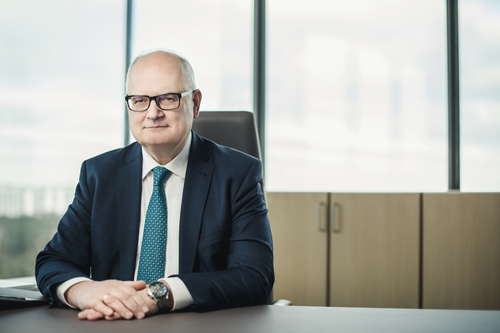
Prof. Habil. Dr. Algirdas Vaclovas Valiulis, President of the Council of the VILNIUS TECH Professors' Emeritus Club, does not hide his feelings when recalling the events of that time—it was a grim and difficult period, yet even in the prevailing darkness, a light could be seen.
The professor, who was then the Vice-Rector for Studies at VTU, recounts that before January 13th, the university, like the entire country, was filled with an uplifting, hopeful mood, a fighting spirit, and a sense of unity.
"I could compare the bright side of that period to love or hate—you don't know why those feelings come, how they come, or how long they last. At that time, a universal love prevailed—we passed it on to one another because we all thought the same way about the situation.
Although we knew how brutal this force was, that it could inflict great harm and spill blood, we thought everything would end well. No one expected such a terrible scenario and the use of repressive forces, but that's exactly how it turned out," shares Prof. Habil. Dr. A. V. Valiulis.
Even before the fateful night, the exam session for VTU students had been postponed, and volunteer vigils were organized at the Vilnius Intercity (long-distance) Telephone Exchange (Savanorių Ave. 28). However, no one officially planned mass vigils. The attitude was: whoever has the courage and desire can go; no one will stand in their way.
"I remember that on the evening of January 12th, around 10 PM, I was in Karoliniškės and passed the TV Tower by trolleybus—there was no sense of tension. Then I went to the Vilnius Intercity Telephone Exchange, where we were supposed to be on duty. The building was locked and surrounded by buses parked side-by-side—people had probably arrived in them from the Vilnius district or other cities. Since no one was allowed in, I went to the Radio and Television Committee building. There were a great many people there, probably from all over Lithuania—they were singing songs, lighting bonfires, and sharing sandwiches and drinks with each other. The atmosphere was very friendly and even cheerful," shares the Professor Emeritus of the Department of Mechanical and Materials Engineering.
At that time, it was impossible to predict that a tragedy would soon occur, so the professor returned home. However, upon seeing on television how paratroopers were seizing the Radio and Television Committee center, he and his son rushed to the Parliament and spent the entire, in his words, terrible night there. Although it wasn't freezing, it was cold, so in the library, all the stairs were covered with people who had come inside to warm up. The defenders of the building asked people over loudspeakers to move away from the Parliament building, as the surrounding crowd was obstructing visibility and the planned defense.
"On the morning of January 13th, it was announced near the library that blood was urgently needed for transfusions for those injured at the TV Tower. A small bus arrived, but it filled up quickly, and my son and I couldn't get in. Since we were from Antakalnis, we took a trolleybus to Žolyno Street and walked to the blood transfusion center," the President of the Council of the Professors' Emeritus Club shares his memories.
At that time, every person's role and contribution to defending freedom was important. According to him, the faculties themselves also planned to stand guard at strategically important sites on their own initiative. The Faculty of Mechanics, located on Basanavičiaus Street, was assigned to guard the Parliament. The professor himself guarded it and other sites for several nights.
He recalls that the staff organizers from the Faculties of Mechanics and Transport Engineering—Rimantas Garbinčius, Stasys Glebus, Leonas Vičiulis, and many other university employees—were particularly active at the university.
We can be proud not only of them but of all Lithuanians and residents of Lithuania, because one might never experience such determination and unity as existed then in a lifetime.
"For example, if there had been an attack on the telephone exchange, those unarmed students could have done nothing. It was more about moral support—the employees felt calmer knowing they were not alone. It was a common goal and struggle for Lithuania. If a national crisis were to arise today, would there be the same spirit that existed then? Would unarmed people again surround the Parliament with their bodies? That feeling of striving for independence was very deep, broad, and united all of Lithuania at that time," says Prof. Habil. Dr. A. V. Valiulis. "It is likely that this determination remains among the people, but government institutions should not just blame each other, but rather stop the petty squabbling and unite in the face of growing threats."
Prof. Dr. Alfonsas Daniūnas: "The Sacrifices Played an Important Role on Our Path to Independence"
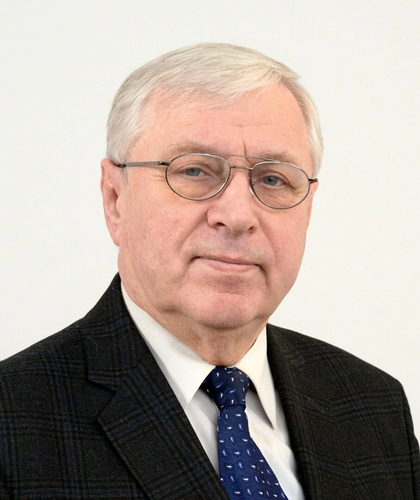
Also on duty at the Supreme Council–Reconstituent Seimas in January 1991 was Prof. Dr. Alfonsas Daniūnas, Chairman of the VILNIUS TECH Senate and former Rector, who was then a young lecturer at the Faculty of Civil Engineering, having recently started as an associate professor in the Department of Metal and Composite Structures. He does not hide the fact that although many small details of the events have slowly faded from memory over 35 years, the unity he witnessed both at the university and throughout the state is impossible to forget.
"The members of the community were united, patriotic, and determined to preserve independence. Of course, the university is a large organization, so there were people with different views, but overall, a sense of calm and focus prevailed. The people here are educated, enlightened, and have a strong spirit," he shares.
Prof. Dr. A. Daniūnas and a few colleagues were living in a university dormitory in Žirmūnai at the time, so they often saw the fenced-off area in the Šiaurės miestelis (Northern Town) district where military units were stationed. This gradually began to cause increasing anxiety, which intensified on January 8th, when the pro-Soviet organization 'Yedinstvo' tried to force its way into the Seimas.
"We felt that something might happen, although we hoped nothing terrible would occur. From that evening on, we went to the Seimas for eight consecutive days. At first, we just stood guard, watched, and listened for information, but later, news began to spread that the situation might worsen," the professor recounts.
Prof. Dr. A. Daniūnas and his colleagues were on duty at the Seimas on the evening of January 12th and during the fateful night of the 13th. He recalls that although Independence Square was packed, the number of people kept growing.
"The unity of the people was enormous, and the mood was uplifting and positive—everyone was determined to defend the sites. However, on the night of January 13th, the tension rose. Tanks and armored vehicles began moving towards the TV Tower, as reported by the Seimas. Even here, we heard muffled shots coming from Karoliniškės. Later, it was announced through a window that there were casualties, and we saw ambulances driving by," he says.
According to Prof. Dr. A. Daniūnas, a huge problem was the lack of information—since there were no mobile phones, people received news through loudspeakers or by word of mouth. What had actually happened at the TV Tower was still unknown at the time, but the crowd felt immense fear—they thought the Soviet soldiers would soon move towards the Seimas.
"The logic is simple: during a coup, you seize communication channels, in this case, radio and television, you occupy the bank and the government. Why didn't they dare to attack the Seimas? Perhaps their plans changed. However, I believe the huge crowd of people was the decisive factor. I am glad we went specifically to the Seimas—I feel it was the right step, even though our contribution was modest. If they had attacked the Seimas, I think there would have been many more casualties—there was simply nowhere to go," recalls Prof. Dr. A. Daniūnas.
On January 13th, he and his colleagues returned to stand guard at the Seimas, where the building was being reinforced with rebar, and bonfires blazed in Independence Square. However, the number of people was gradually decreasing—the immediate threat was subsiding, and a crowd of thousands was gathering at the Palace of Sports, where a commemoration for the 14 fallen Defenders of Freedom was being held.
"It is a great tragedy for those who died, among them our university's Faculty of Electronics student, Rolandas Jankauskas, whose memory was later immortalized with a memorial plaque. I remember that funeral, the lying-in-state at the Palace of Sports—it was a huge shock to the entire nation, which showed how people can unite. I have only seen such unity once in my life, because, thank God, we have not had any more crises that terrible.
That's how it is in history—when people die, major changes and historical turning points occur. Those sacrifices are very important on our path to independence. At that time, we were all just doing what we thought was necessary—we were where the fate of the state was being decided," states Prof. Dr. A. Daniūnas.
In January 1991, as the Soviet Union attempted to carry out a coup d'état in Lithuania, people from all over the country flocked to Vilnius to stand vigil at the capital's most strategically important sites: the Supreme Council, the Government Palace, the Central Telegraph, the Intercity Telephone Exchange, the Radio and Television Committee, the TV Tower, and other buildings.
The community of VILNIUS TECH (then Vilnius Technical University, or VTU) contributed to the defense of freedom by guarding the Intercity Telephone Exchange, to which volunteer lecturers and students hurried from the nearby first building of VTU, as well as by standing guard at other sites.
Although the peaceful Lithuanian resistance helped defend Lithuania's independence, it was marked by the blood of 14 compatriots, including the university's student Rolandas Jankauskas. Nevertheless, these sacrifices and Lithuanian patriotism, according to VILNIUS TECH professors Prof. Dr. A. Daniūnas and Prof. Habil. Dr. A. V. Valiulis, who were on duty at the Seimas, are immensely important: they play a fundamental role in Lithuania's struggle for independence.
Prof. Habil. Dr. A. V. Valiulis: "A Universal Love Prevailed at That Time"
Prof. Habil. Dr. Algirdas Vaclovas Valiulis, President of the Council of the VILNIUS TECH Professors' Emeritus Club, does not hide his feelings when recalling the events of that time—it was a grim and difficult period, yet even in the prevailing darkness, a light could be seen.
The professor, who was then the Vice-Rector for Studies at VTU, recounts that before January 13th, the university, like the entire country, was filled with an uplifting, hopeful mood, a fighting spirit, and a sense of unity.
"I could compare the bright side of that period to love or hate—you don't know why those feelings come, how they come, or how long they last. At that time, a universal love prevailed—we passed it on to one another because we all thought the same way about the situation.
Although we knew how brutal this force was, that it could inflict great harm and spill blood, we thought everything would end well. No one expected such a terrible scenario and the use of repressive forces, but that's exactly how it turned out," shares Prof. Habil. Dr. A. V. Valiulis.
Even before the fateful night, the exam session for VTU students had been postponed, and volunteer vigils were organized at the Vilnius Intercity (long-distance) Telephone Exchange (Savanorių Ave. 28). However, no one officially planned mass vigils. The attitude was: whoever has the courage and desire can go; no one will stand in their way.
"I remember that on the evening of January 12th, around 10 PM, I was in Karoliniškės and passed the TV Tower by trolleybus—there was no sense of tension. Then I went to the Vilnius Intercity Telephone Exchange, where we were supposed to be on duty. The building was locked and surrounded by buses parked side-by-side—people had probably arrived in them from the Vilnius district or other cities. Since no one was allowed in, I went to the Radio and Television Committee building. There were a great many people there, probably from all over Lithuania—they were singing songs, lighting bonfires, and sharing sandwiches and drinks with each other. The atmosphere was very friendly and even cheerful," shares the Professor Emeritus of the Department of Mechanical and Materials Engineering.
At that time, it was impossible to predict that a tragedy would soon occur, so the professor returned home. However, upon seeing on television how paratroopers were seizing the Radio and Television Committee center, he and his son rushed to the Parliament and spent the entire, in his words, terrible night there. Although it wasn't freezing, it was cold, so in the library, all the stairs were covered with people who had come inside to warm up. The defenders of the building asked people over loudspeakers to move away from the Parliament building, as the surrounding crowd was obstructing visibility and the planned defense.
"On the morning of January 13th, it was announced near the library that blood was urgently needed for transfusions for those injured at the TV Tower. A small bus arrived, but it filled up quickly, and my son and I couldn't get in. Since we were from Antakalnis, we took a trolleybus to Žolyno Street and walked to the blood transfusion center," the President of the Council of the Professors' Emeritus Club shares his memories.
At that time, every person's role and contribution to defending freedom was important. According to him, the faculties themselves also planned to stand guard at strategically important sites on their own initiative. The Faculty of Mechanics, located on Basanavičiaus Street, was assigned to guard the Parliament. The professor himself guarded it and other sites for several nights.
He recalls that the staff organizers from the Faculties of Mechanics and Transport Engineering—Rimantas Garbinčius, Stasys Glebus, Leonas Vičiulis, and many other university employees—were particularly active at the university.
We can be proud not only of them but of all Lithuanians and residents of Lithuania, because one might never experience such determination and unity as existed then in a lifetime.
"For example, if there had been an attack on the telephone exchange, those unarmed students could have done nothing. It was more about moral support—the employees felt calmer knowing they were not alone. It was a common goal and struggle for Lithuania. If a national crisis were to arise today, would there be the same spirit that existed then? Would unarmed people again surround the Parliament with their bodies? That feeling of striving for independence was very deep, broad, and united all of Lithuania at that time," says Prof. Habil. Dr. A. V. Valiulis. "It is likely that this determination remains among the people, but government institutions should not just blame each other, but rather stop the petty squabbling and unite in the face of growing threats."
Prof. Dr. Alfonsas Daniūnas: "The Sacrifices Played an Important Role on Our Path to Independence"
Also on duty at the Supreme Council–Reconstituent Seimas in January 1991 was Prof. Dr. Alfonsas Daniūnas, Chairman of the VILNIUS TECH Senate and former Rector, who was then a young lecturer at the Faculty of Civil Engineering, having recently started as an associate professor in the Department of Metal and Composite Structures. He does not hide the fact that although many small details of the events have slowly faded from memory over 35 years, the unity he witnessed both at the university and throughout the state is impossible to forget.
"The members of the community were united, patriotic, and determined to preserve independence. Of course, the university is a large organization, so there were people with different views, but overall, a sense of calm and focus prevailed. The people here are educated, enlightened, and have a strong spirit," he shares.
Prof. Dr. A. Daniūnas and a few colleagues were living in a university dormitory in Žirmūnai at the time, so they often saw the fenced-off area in the Šiaurės miestelis (Northern Town) district where military units were stationed. This gradually began to cause increasing anxiety, which intensified on January 8th, when the pro-Soviet organization 'Yedinstvo' tried to force its way into the Seimas.
"We felt that something might happen, although we hoped nothing terrible would occur. From that evening on, we went to the Seimas for eight consecutive days. At first, we just stood guard, watched, and listened for information, but later, news began to spread that the situation might worsen," the professor recounts.
Prof. Dr. A. Daniūnas and his colleagues were on duty at the Seimas on the evening of January 12th and during the fateful night of the 13th. He recalls that although Independence Square was packed, the number of people kept growing.
"The unity of the people was enormous, and the mood was uplifting and positive—everyone was determined to defend the sites. However, on the night of January 13th, the tension rose. Tanks and armored vehicles began moving towards the TV Tower, as reported by the Seimas. Even here, we heard muffled shots coming from Karoliniškės. Later, it was announced through a window that there were casualties, and we saw ambulances driving by," he says.
According to Prof. Dr. A. Daniūnas, a huge problem was the lack of information—since there were no mobile phones, people received news through loudspeakers or by word of mouth. What had actually happened at the TV Tower was still unknown at the time, but the crowd felt immense fear—they thought the Soviet soldiers would soon move towards the Seimas.
"The logic is simple: during a coup, you seize communication channels, in this case, radio and television, you occupy the bank and the government. Why didn't they dare to attack the Seimas? Perhaps their plans changed. However, I believe the huge crowd of people was the decisive factor. I am glad we went specifically to the Seimas—I feel it was the right step, even though our contribution was modest. If they had attacked the Seimas, I think there would have been many more casualties—there was simply nowhere to go," recalls Prof. Dr. A. Daniūnas.
On January 13th, he and his colleagues returned to stand guard at the Seimas, where the building was being reinforced with rebar, and bonfires blazed in Independence Square. However, the number of people was gradually decreasing—the immediate threat was subsiding, and a crowd of thousands was gathering at the Palace of Sports, where a commemoration for the 14 fallen Defenders of Freedom was being held.
"It is a great tragedy for those who died, among them our university's Faculty of Electronics student, Rolandas Jankauskas, whose memory was later immortalized with a memorial plaque. I remember that funeral, the lying-in-state at the Palace of Sports—it was a huge shock to the entire nation, which showed how people can unite. I have only seen such unity once in my life, because, thank God, we have not had any more crises that terrible.
That's how it is in history—when people die, major changes and historical turning points occur. Those sacrifices are very important on our path to independence. At that time, we were all just doing what we thought was necessary—we were where the fate of the state was being decided," states Prof. Dr. A. Daniūnas.
-
- Page administrators:
- Monika Daukintytė
- Monika Daukintytė
- Ugnė Daraškevičiūtė