


Home
For international students
Holiday Stress and Zero Time? A Trainer’s Advice on Keeping Your Shape and Spirits Up
2025-12-12
Holiday Stress and Zero Time? A Trainer’s Advice on Keeping Your Shape and Spirits Up
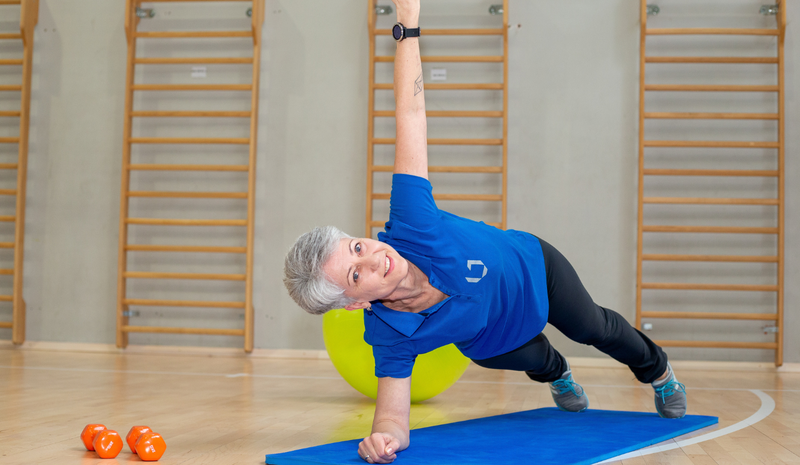
During the pre-holiday season, as we race through a marathon of shopping, events, and fairs, we often forget about ourselves. Due to a disrupted routine, we skip workouts, eat more calorie-dense foods, and the search for gifts causes headaches. To ensure the wait for the holidays becomes more pleasant rather than exhausting, Daiva Višinskienė, a trainer at the VILNIUS TECH Sports and Arts Center, shares tips on movement and combating stress.
– How would you advise people not to neglect physical activity during this stressful time?
– I would recommend choosing a pleasant but short activity. For example, dedicate at least 10–20 minutes a day to a walk while admiring Christmas decorations, take short dance breaks at home, or come up with games – like who can do the most squats, etc. Even light exercise at home works. The most important rule is: move for joy, not for burning calories!
– Do you have any favorite "holiday" movement rituals that you would recommend our readers try?
– At home, after setting the table, we like to dash out into the city for a bit to walk around the most beautiful, festively decorated streets.
There are other great options, for example: a Christmas hike with a thermos, choosing a different route every year; a walk with family or friends looking for nice spots to take photos; a "movement lottery" where you draw cards with tasks, or dancing to your favorite music. It is important to remember that this activity is not for sporting achievements, but for togetherness.
– How would you recommend using the winter season – the snow, the cold, nature – as additional motivation to get moving?
– When we get snow, joy and a better mood naturally take over. There are many outdoor activities: you can go sledding, build a snowman or other sculptures, or go for a hike. All these activities naturally involve movement.
– Gift hunting and traffic jams often cause tension. Do you have any "first aid" tips for stress relief? Is intense sport better for this, or conversely, slower practices like breathing exercises or mindfulness?
– Everything works, but it is very individual. Intense sport can be a good emotional release when you feel tired or tense, while breathing exercises help more when you are irritated and finding it hard to control your emotions.
– Why is physical activity such an important counterbalance in the fight against stress? How does uncontrolled tension affect our body and emotional state in the long run?
– Movement literally "burns up" stress hormones and encourages the release of feel-good hormones, thereby reducing tension. Physical activity affects both the body and the mind, so in the fight against stress, it is like a natural medicine.
– Often after the holidays, people feel heavy and "starting over" seems very difficult. How can one motivate oneself to return to a routine after New Year's without great suffering?
– Feeling heaviness is normal. The most important thing is not to pressure yourself, but to return to the routine gently, without guilt. You should start with your thoughts – don’t blame yourself. It’s important just to get moving and start with physical activity that is pleasant for you. Also, don’t set maximum goals: instead of an hour, work out for 20 minutes – that will already be a win that grows motivation for the next workout.
– In general, what physical activity would you recommend for the "typical" office worker who sits from 8 AM to 5 PM and only gets up for coffee or lunch? Where to start?
– First of all, take mini-breaks: stand up, walk at least a few dozen steps, take a few deep breaths, do light stretching exercises at your workplace. If possible, work standing up for at least 20–30% of the day. Record your small victories – give yourself a "plus" for every movement break.
– What message would you like to share with university students, lecturers, and staff before the holidays?
– Dedicate at least a 10-minute personal break to yourself – without a phone, without work. Choose what suits you specifically: for some it will be a walk, for others – breathing or stretching exercises, reading a book, or a few minutes of total silence. It must be pleasant, gentle, without any pressure. This is time just for YOU, even if there is very little of it.

-
- Page administrators:
- Monika Daukintytė
- Ugnė Daraškevičiūtė