Department of Reinforced Concrete Structures and Geotechnics
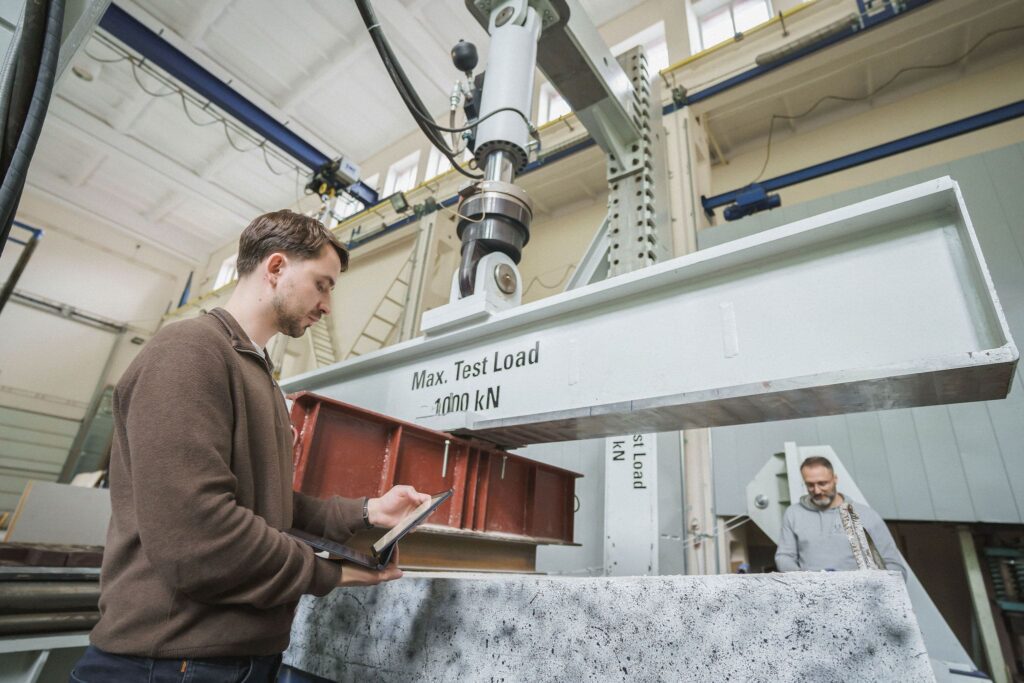
The Department is a leading research centre in Lithuania for reinforced concrete, masonry, and layered structures, conducting scientific research and contract-based projects.
Address: Saulėtekio Ave. 11, S2, Room 21 Phone: +370 5 274 5225 Internal phone: 9225 Email: stgk@vilniustech.lt

About the Department

Department History

Study Programmes

The Department provides one Bachelor’s programme in Civil Engineering with three specialisations: Building and Structural Design, Bridge Engineering, and Geotechnics. In addition, it offers two Master’s programmes: Building Information Modelling and Geotechnics.

Civil Engineering

Bachelor’s degree studies
Specialisations:

  • Building and Structural Design
  • Bridge Engineering
  • Geotechnics

Degree awarded: Bachelor of Engineering Sciences


Building Information Modelling

Master’s degree Studies

Degree awarded: Master of Engineering Sciences

Geotechnika

Master’s degree Studies

Degree awarded: Master of Engineering Sciences

Areas of Activity

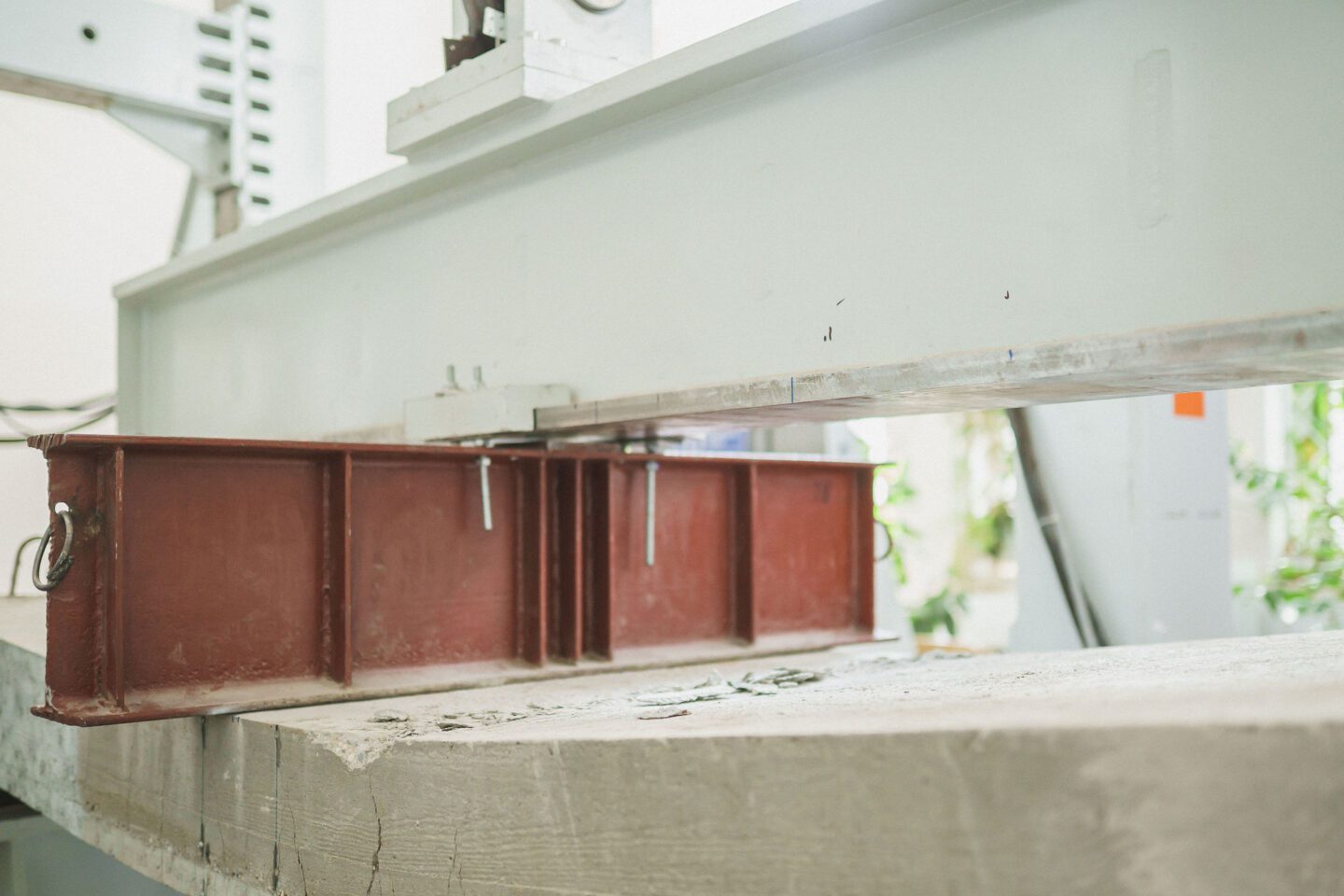
The Department and its research laboratories form part of the Civil Engineering Research Centre at the “Sunrise Valley” Science and Technology Park. The laboratories are fully modernised and equipped with modern universal equipment for structural testing.

  • Research Areas
    • Mechanics of reinforced concrete
    • Development and improvement of design methods for prestressed reinforced concrete structures
    • Development of composite materials, structural systems, and their calculation models
    • Mechanics of masonry structures and development of design methods
    • Research on structures and joints of reconstructed buildings and development of calculation methods
    • Development of regulatory documents for the design of structural systems
    • Harmonisation of the European Union and Lithuanian regulatory framework for structural design
    • Development of calculation models for reinforced concrete structures

    The Department, together with its research laboratories, is part of the Civil Engineering Research Centre of the “Sunrise Valley” Science and Technology Park. The laboratories have been fully modernised and equipped with advanced universal equipment for structural testing.

    The Department of Reinforced Concrete Structures and Geotechnics uses an educational licence for the GEO5 geotechnical software suite provided by Fine Company.

  • Scientific and Engineering Support for Industry
    • Development of new building materials and determination of their physical and mechanical properties
    • Improvement of research and calculation methods for reinforced concrete and masonry structures
    • Reconstruction and repair of masonry and reinforced concrete structures
    • Concrete and reinforced concrete technology
    • Selection and application of rational structural and technological solutions for single-family residential houses
    • Multi-storey buildings and their structural systems
    • Development, research, and design of low-energy structural solutions, including composite building products and structures with thermal insulation layers
    • Automated structural design
    • Development and design of building structures using small-scale elements (various blocks, lightweight beams, etc.)
    • Layered structural systems: development, research, and calculation methods
    • Structural analysis, stability, and reliability of structures
    • Behaviour of building materials and structures under high temperatures
    • Research and evaluation of the performance characteristics of masonry structures made from new types of units
    • Water management and underground structures, as well as other fields related to the design, testing, and application of reinforced concrete and other structural systems
    • Protection of structures from aggressive environmental effects and improvement of their durability
    • Adaptation of Eurocodes in Lithuania and preparation of standards and other regulatory technical documentation

Partners

The Department of Reinforced Concrete Structures and Geotechnics actively collaborates with social and industry partners.

  • Pegasus logotipas
  • Pegasus logotipas
  • Pegasus logotipas
  • Pegasus logotipas
  • Pegasus logotipas
  • Statybos fakulteto logotipas

Department Staff

The Department’s academic staff train future certified civil engineers, geotechnical engineers, and specialists in building information modelling.

Administration
  • Administration
  • Research Staff
  • Professors
Show more

Thesis abstracts

Years
Qualification
Clear selections
Aida Krivelytė — Assoc Prof Dr Justas Šlaitas
Multi-Apartment Residential Building, Utenos str. 41, Vilnius
The bachelor's thesis presents the design of a five-story residential apartment building located on Utenos Street in Vilnius. The thesis consists of three parts: architectural–constructional, structural, and technological....
2025 Bachelor's and Integrated Studies
  • 2025
  • Bachelor's and Integrated Studies
Multi-Apartment Residential Building, Utenos str. 41, Vilnius
Student: Aida Krivelytė
Supervisor: Assoc Prof Dr Justas Šlaitas
Department: Department of Reinforced Concrete Structures and Geotechnics
Thesis abstract (LT)
Bakalauro baigiamajame darbe projektuojamas penkių aukštų gyvenamosios paskirties daugiabutis pastatas Utenos gatvėje, Vilniuje. Baigiamąjį darbą sudaro trys dalys: architektūrinė–statybinė, konstrukcinė ir technologinė. Architektūrinėje dalyje pateikiamas pastato aprašymas, tūriniai ir planiniai sprendimai, atliekami šiluminės varžos skaičiavimai. Konstrukcinėje dalyje apskaičiuojamos pastatą veikiančios apkrovos, suprojektuojama vieno aukšto perdanga, dvi kolonos ir vienas pamatas bei paruošiami konstrukcijų brėžiniai. Pastato skaičiuojamasis modelis sudaromas naudojant „Scia engineering“ programinę įrangą. Trečiojoje dalyje sudaroma technologinė kortelė, skirta pirmojo aukšto monolitinių kolonų įrengimui. Grafinėje dalyje pateikiami architektūriniai brėžiniai (planai, fasadai, pastato pjūvis, mazgai ir detalės), konstrukcijų darbo brėžiniai (perdangos plokštės, kolonų ir pamato) bei pirmojo aukšto kolonų įrengimo technologinė kortelė. Darbo apimtis: 213 psl. teksto be priedų, 74 paveikslai, 58 lentelės ir 12 A1 formato brėžinių. Pridedami darbo priedai: HALFEN HDB ir SCHÖCK ISOKORB įdėtinių detalių skaičiavimų ataskaitos.
daugiabutis namas gelžbetoninės konstrukcijos betonas kolona perdangos plokštė pamatas.
Thesis abstract (EN)
The bachelor's thesis presents the design of a five-story residential apartment building located on Utenos Street in Vilnius. The thesis consists of three parts: architectural–constructional, structural, and technological. The architectural part includes a description of the building, volumetric and planning solutions, and thermal resistance calculations. The structural part involves the calculation of loads acting on the building, the design of one floor slab, two columns, and one foundation, as well as the preparation of structural drawings. The computational model of the building is developed using "Scia Engineering" software. The third part includes a technological card for the installation of the monolithic columns on the first floor. The graphical part contains architectural drawings (plans, elevations, building section, joints, and details), working drawings of structures (floor slab, columns, and foundation), and the technological card for the installation of the first-floor columns. Thesis consist of 213 pages of text (excluding appendices), 74 figures, 58 tables, and 12 A1-format drawings. The appendices include calculation reports for HALFEN HDB and SCHÖCK ISOKORB embedded components.
apartment building reinforced concrete structures concrete column floor slab foundation.
Arminas Navickas — Assoc Prof Dr Ronaldas Jakubovskis
Numerical Modeling of High-Performance Concrete Facade Panels
The master's thesis investigates the numerical modeling of ultra-high-performance concrete (UHPC) facade panels in order to evaluate the impact of different reinforcement fibers (steel and synthetic) on load-bearing...
2025 Masters
  • 2025
  • Masters
Numerical Modeling of High-Performance Concrete Facade Panels
Student: Arminas Navickas
Supervisor: Assoc Prof Dr Ronaldas Jakubovskis
Department: Department of Reinforced Concrete Structures and Geotechnics
Thesis abstract (LT)
Magistro darbe nagrinėjamas ypač stipraus betono (UHPC) fasado plokščių skaitinis modeliavimas, siekiant įvertinti skirtingų armavimo plaušų (plieninių ir sintetinių) įtaką laikomajai galiai ir deformacijų pasiskirstymui. Naudojant Atena 2D ir Dlubal RFEM baigtinių elementų programas, modeliai kalibruoti pagal eksperimentinius bandymus. Atlikta parametrinė analizė, įvertinant įvairius geometrinius ir medžiagų parametrus. Tyrimas svarbus dėl UHPC betono pritaikymo konstrukcijose, kur reikalaujamas didelis stiprumas, ilgaamžiškumas ir estetiškumas. Gauti rezultatai leidžia optimizuoti konstrukcijų projektavimą ir gamybą.
betonas deformacija fasadas įtempis modeliavimas plaušas UHPC.
Thesis abstract (EN)
The master's thesis investigates the numerical modeling of ultra-high-performance concrete (UHPC) facade panels in order to evaluate the impact of different reinforcement fibers (steel and synthetic) on load-bearing capacity and deformation distribution. Using the finite element programs Atena 2D and Dlubal RFEM, the models were calibrated based on experimental tests. A parametric analysis was performed to assess various geometric and material parameters. This research is significant due to the application of UHPC concrete in structures requiring high strength, durability, and aesthetics. The obtained results enable the optimization of structural design and production.
concrete deformation facade stress modeling fiber UHPC.
Arūnas Pliuskus — Assoc Prof Dr Vladimir Popov
Analysis of the Relationships Between Building Lifecycle Activities and BIM use Cases and Methods in the Planning and Design Stages
The Building Information Modelling (BIM) methodology is widely applied in the design, construction, and operation stages, however, the planning stage often remains insufficiently integrated into BIM processes. During...
2025 Masters
  • 2025
  • Masters
Analysis of the Relationships Between Building Lifecycle Activities and BIM use Cases and Methods in the Planning and Design Stages
Student: Arūnas Pliuskus
Supervisor: Assoc Prof Dr Vladimir Popov
Department: Department of Reinforced Concrete Structures and Geotechnics
Thesis abstract (LT)
Statinio informacinio modeliavimo (BIM) metodologija plačiai taikoma projektavimo, statybos ir naudojimo etapuose, tačiau planavimo etapas dažnai lieka menkai integruotas į BIM procesus. Planavimo etape dažnai reikia rengti ar koreguoti teritorijų planavimo dokumentus, o naudojami tradiciniai metodai apsunkina kaštų, laiko ir žmogiškųjų išteklių valdymą, mažina sprendimų pagrįstumą bei informacijos srautų tęstinumą tarp etapų. Darbo tikslas – atlikti statinio gyvavimo ciklo veiklų ir statinio informacinio modeliavimo taikymo atvejų ryšių analizę, atskleidžiant BIM taikymo atvejų ir BIM taikymo būdų integruotas sąsajas planavimo ir projektavimo etapuose, taikant statinio informacinio modeliavimo metodologiją. Darbe atlikta literatūros šaltinių ir normatyvinių teisės aktų analizė, procesų modeliavimas ir skaitmeninis eksperimentas. Darbe pasiūlytas BIM taikymo atvejų ir būdų sąsajų rinkinio modelis, paremtas LR statybos teisės aktuose apibrėžtais projekto vykdymo procesais ir veiklomis planavimo ir projektavimo etapuose. Šis modelis pritaikomas realiose situacijose, leidžia sklandžiau pereiti iš planavimo į projektavimo etapą. Rezultatai rodo, kad sistemingas BIM metodologijos naudojimas jau planavimo stadijoje, pradedant nuo teritorijų planavimo dokumentų rengimo, padeda optimizuoti sprendimų priėmimą, mažina rizikas ir leidžia automatizuoti projekto pritarimų ir statybos leidimų išdavimo procesus. Darbo pabaigoje pateikiamos išvados bei praktinės rekomendacijos dėl BIM metodologijos taikymo statybos projektuose planavimo ir projektavimo etapuose. Darbą sudaro 6 dalys: įvadas, literatūros analizė, siūlomo modelio analizė, skaitmeninis eksperimentas, išvados ir siūlymai, literatūros sąrašas. Darbo apimtis – 99 p. teksto be priedų, 25 iliustr., 16 lent., 46 bibliografiniai šaltiniai. Atskirai pridedami darbo priedai.
Statinio gyvavimo ciklo (SGC) planavimo ir projektavimo etapai BIM metodologija BIM taikymo atvejai BIM (modelio) taikymo būdai BIM integracija procesų modeliavimas
Thesis abstract (EN)
The Building Information Modelling (BIM) methodology is widely applied in the design, construction, and operation stages, however, the planning stage often remains insufficiently integrated into BIM processes. During the planning stage, it is often necessary to prepare or revise territorial planning documents, and the use of traditional methods complicates the management of costs, time, and human resources, reduces the rationality of decision-making, and disrupts the continuity of information flows between stages. The aim of this thesis is to analyse the relationships between Building Life Cycle activities and BIM Uses, revealing the integrated connections between BIM Uses and BIM Use Methods in the planning and design stages through the application of BIM methodology. The thesis includes the analysis of literature sources and normative legal acts, process modelling, and a digital experiment. A model of the integrated set of BIM Uses and Use Methods is proposed, based on the project implementation processes and activities defined in Lithuanian construction legislation for the planning and design stages. This model can be applied in real-life situations and enables a smoother transition from the planning to the design stage. The results show that the systematic use of BIM methodology already at the planning stage—starting with the preparation of territorial planning documents—helps optimise decision-making, reduce risks, and allows for the automation of project approvals and building permit procedures. The thesis concludes with findings and practical recommendations for the application of BIM methodology in construction projects during the planning and design stages. The thesis consists of six parts: introduction, literature review, analysis of the proposed model, digital experiment, conclusions and recommendations, and references. The total length of the thesis is 99 pages (excluding appendices), including 25 figures, 16 tables, and 46 bibliographic sources. The appendices are attached separately.
Planning and design stages of the Building Life Cycle (BLC) BIM methodology BIM Uses BIM Use Methods BIM integration process modelling.
Caleb Sini Bulus — Assoc Prof Dr Mykolas Daugevičius
Administrative Building with Residential Premises
This thesis focuses on the design and analysis of an Administrative Building with Residential Premises located in Visaginas, Lithuania (coordinates: 55°36'00.2"N 26°25'01.6"E). The structure is a three-story mixed-use...
2025 Bachelor's and Integrated Studies
  • 2025
  • Bachelor's and Integrated Studies
Administrative Building with Residential Premises
Student: Caleb Sini Bulus
Supervisor: Assoc Prof Dr Mykolas Daugevičius
Department: Department of Reinforced Concrete Structures and Geotechnics
Thesis abstract (LT)
Šiame baigiamajame darbe nagrinėjamas Administracinio pastato su gyvenamosiomis patalpomis projektavimas ir analizė, esantis Visagine, Lietuvoje (koordinatės: 55°36'00.2"N 26°25'01.6"E). Tai trijų aukštų mišrios paskirties pastatas, kuriame pirmame aukšte įrengtos komercinės ir administracinės patalpos, o viršutiniuose aukštuose – gyvenamieji butai. Architektūriniu požiūriu, projekte pabrėžiama funkcionalumas, prieinamumas ir tvarumas. Pirmame aukšte yra administraciniai biurai, konferencijų salė, bendro naudojimo patalpos bei gerai suplanuotos vertikaliosios komunikacijos sistemos, tokios kaip laiptinės ir liftas. Viršutiniuose aukštuose įrengti šiuolaikiški butai bei bendros erdvės, sudarančios patogią gyvenamąją aplinką. Konstrukciniu požiūriu, pastate naudojamas monolitinis gelžbetonis, o kolonos, perdangos ir sienos liejamos vietoje. Ši konstrukcija suprojektuota taip, kad užtikrintų ilgaamžiškumą bei atsparumą aplinkos poveikiui, tokiam kaip vėjas ar sniegas, būdingi šiam regionui. Projekte taip pat integruotos priešgaisrinės saugos priemonės ir avariniai evakuacijos keliai. Apskritai, šis projektas parodo architektūrinių ir konstrukcinių sprendimų visapusišką integraciją, sukuriant techniškai patikimą ir naudotojui pritaikytą pastatą, tinkantį mišrios paskirties plėtrai šiuolaikinėje miesto aplinkoje.
Raktažodžiai: Administracinis pastatas Gyvenamosios patalpos Mišrios paskirties plėtra Gelžbetonis Architektūrinis projektavimas Konstrukcinis projektavimas Tvarumas Gaisrinė sauga Visaginas (Lietuva).
Thesis abstract (EN)
This thesis focuses on the design and analysis of an Administrative Building with Residential Premises located in Visaginas, Lithuania (coordinates: 55°36'00.2"N 26°25'01.6"E). The structure is a three-story mixed-use building, combining commercial/administrative functions on the ground floor with residential apartments on the upper levels. Architecturally, the project emphasizes functionality, accessibility, and sustainability. The ground floor includes administrative offices, a conference room, shared facilities, and well-organized vertical circulation systems, such as staircases and an elevator. The upper floors house modern apartments and communal spaces, providing a comfortable living environment. Structurally, the building employs monolithic reinforced concrete, with in-situ cast columns, slabs, and walls, designed to ensure durability and resistance to environmental loads like wind and snow, common in the region. The design also integrates fire safety, emergency escape routes, Overall, this project demonstrates a holistic integration of architectural and structural disciplines, delivering a building that is both technically robust and user-centered, suitable for mixed-use development in a modern urban setting.
Administrative Building Residential Premises Mixed-use Development Reinforced Concrete Architectural Design Structural Design Sustainability Fire Safety Visaginas (Lithuania).
Dana Smagulova — Assoc Prof Dr Linas Juknevičius
Public Multi-Story Building in Palanga, Neries str. 44
The final bachelor’s thesis consists of three main parts: architectural, structural, and technological. It presents the design of a new five-story spa complex located at S. Nėries g....
2025 Bachelor's and Integrated Studies
  • 2025
  • Bachelor's and Integrated Studies
Public Multi-Story Building in Palanga, Neries str. 44
Student: Dana Smagulova
Supervisor: Assoc Prof Dr Linas Juknevičius
Department: Department of Reinforced Concrete Structures and Geotechnics
Thesis abstract (LT)
Baigiamasis bakalauro darbas susideda iš trijų pagrindinių dalių: architektūrinės, konstrukcinės ir technologinės. Jame pristatomas naujas penkiaaukštis SPA kompleksas S. Nėries g. 44, Palangoje. Pastate yra viešosios, poilsio ir apgyvendinimo funkcijos: pirmame aukšte – registratūra, baras, restoranas ir lankytojų patalpos; antrame ir trečiame – sveikatingumo zonos ir viešbučio kambariai; ketvirtame ir penktame – tik viešbučio kambariai, įskaitant specialias patalpas neįgaliesiems. Pastatas suskaidytas į keturis blokus su deformacinėmis siūlėmis, leidžiančiomis konstrukcijoms judėti nepriklausomai. Darbe nagrinėjamas pietinis stačiakampis blokas (ašių 4’–11’ ir A’–E’). Architektūrinėje dalyje apskaičiuota šiluminė izoliacija stogui, išorinėms sienoms ir grindų perdangai, atsižvelgiant į regioninius klimato veiksnius. Konstrukcinė sistema – monolitinis karkasas su vietoje liejamomis perdangomis ir kolonomis, remiamas dviem laiptinėmis ir trimis liftų šachtomis, kurios veikia kaip standumo branduoliai. Konstrukcija suprojektuota be pagrindinių ar antrinių sijų. Sukurtas 3D modelis SCIA programoje, naudojant 2D plokštuminius elementus perdangoms ir sienoms bei 1D elementus kolonoms. Atlikta konstrukcinė analizė tipinei perdangai, kolonai ir polių grupei. Technologinėje dalyje aprašyta penkto aukšto monolitinės perdangos įrengimo organizacija, reikalingi įrenginiai ir medžiagos, kokybės kontrolė, saugos reikalavimai, darbų apimtys, darbo sąnaudos bei techninė-ekonominė analizė. Darbas susideda iš aštuonių dalių: įvadas, bendrieji duomenys, architektūrinis ir konstrukcinis projektavimas, technologiniai sprendimai, darbo sauga, aplinkos apsauga, skaičiavimai ir išvados. Darbo apimtis: 197 puslapiai, 98 paveikslai, 53 lentelės ir 11 brėžinių.
SPA kompleksas architektūrinis projektavimas konstrukcinė sistema monolitinis rėmas vietoje liejamos perdangos kolonos standumo branduoliai SCIA Engineer konstrukcijų modeliavimas perdangų kolonų ir polių projektavimas.
Thesis abstract (EN)
The final bachelor’s thesis consists of three main parts: architectural, structural, and technological. It presents the design of a new five-story spa complex located at S. Nėries g. 44, Palanga, Lithuania. The building accommodates public, recreational, and accommodation functions: the first floor includes reception, lounge bar, restaurant, and visitor facilities; the second and third floors combine wellness areas with hotel rooms; the fourth and fifth floors consist solely of hotel rooms, with dedicated rooms for people with disabilities on each floor. The building is divided into four blocks separated by deformation joints to allow structural independence and accommodate thermal movements. This thesis focuses on the southern rectangular block (from Axis 4’–11’ and A’–E’). The architectural part includes thermal insulation calculations for the roof, exterior walls, and ground floor slab, taking into account the regional climatic conditions. The structural solution is a frame system composed of monolithic, cast-in-place slabs and columns, supported by two stairwells and three elevator cores that also function as stiffness elements. The structure is designed without primary or secondary beams. A 3D model was developed in SCIA software using 2D plate elements for slabs and bearing walls, and 1D elements for columns. Structural analysis was performed for a typical slab (as a flexural element), a column (as a compression member), and a pile group foundation. The technological part presents the organization of the installation process for the monolithic slab on the fifth floor. It covers the required materials and equipment, quality control, safety requirements, quantity of works, labor costs, and technical-economic indicators. The thesis consists of eight parts: introduction, general data, architectural and structural design, technological solutions, occupational safety, environmental protection, estimated calculations, and conclusions. The work includes 197 pages, 98 figures, 53 tables, and 11 drawings.
Spa complex architectural design structural system monolithic frame cast-in-place slabs columns stiffness cores SCIA Engineer structural modeling slab column and pile foundation design.
Daniel Leonov — Assoc Prof Dr Arnoldas Šneideris
Youth Hostel, Santaros str. 3, Vilnius
The final thesis designs a Youth Hostel with an underground parking lot, which will be built on Santaros Street, Vilnius. The building consists of five main functional zones:...
2025 Bachelor's and Integrated Studies
  • 2025
  • Bachelor's and Integrated Studies
Youth Hostel, Santaros str. 3, Vilnius
Student: Daniel Leonov
Supervisor: Assoc Prof Dr Arnoldas Šneideris
Department: Department of Reinforced Concrete Structures and Geotechnics
Thesis abstract (LT)
Baigiamajame darbe projektuojami Jaunimo nakvynės namai su požemine automobilių stovėjimo aikštele, kurie bus statomi Santaros gatvėje, Vilniuje. Pastatą sudaro penkios pagrindinės funkcinės zonos: kambarių erdvės, erdvė virš rūsio, rūsio erdvė, požeminė automobilių stovėjimo aikštelė ir administracinės patalpos Statybos rūšis priklauso naujai statybai, kategorija – ypatingasis statinys. Objekte planuojama nuomoti kambarius jaunimui gyventi. Darbą sudaro trys dalys: architektūrinė – statybinė, konstrukcinė ir technologinė. Architektūrinėje – statybinėje dalyje aprašomi projektuojamo pastato architektūriniai ir inžinerinės sistemos sprendimai, atsparumas ugniai, sklypo charakteristikos, taip pat atliekami atitvarų šiluminės varžos skaičiavimai ir numatoma vidaus aplinkos garso klasė. Konstrukcinėje dalyje nagrinėjamas, „Scia Enginner“ baigtinių elementų programa sudarytas erdvinis projektuojamo pastato modelis. Modeliuojamos pastatą veikiančios apkrovos ir sudaromi apkrovų deriniai. Pagal gautas įrąžas suprojektuota tarpaukštinė perdangos plokštė, stačiakampio skerspjūvio kolona ir polinis pamatas po ja. Technologinėje dalyje sudaryta rūsio monolitinių kolonų įrengimo technologinė kortelė. Darbo apimtis: 189 puslapiai, 91 lentelės, 84 paveikslai, 19 literatūros šaltinių. Grafinė dalis: 11 A1 formato brėžinių lapai.
Jaunimo nakvynės namai automobilių stovėjimo aikštele monolitinė gelžbetoninė besijė perdangos plokštė gelžbetoninė kolona polinis pamatas rūsio gelžbetonio kolonų įrengimas.
Thesis abstract (EN)
The final thesis designs a Youth Hostel with an underground parking lot, which will be built on Santaros Street, Vilnius. The building consists of five main functional zones: room spaces, space above the basement, basement space, underground parking lot and administrative premises. The type of construction belongs to new construction, category – special construction. The facility is planned to rent rooms for young people to live in. The work consists of three parts: architectural – construction, structural and technological. The architectural – construction part describes the architectural and engineering system solutions of the designed building, fire resistance, plot characteristics, as well as calculations of the thermal resistance of the partitions and the expected sound class of the internal environment. The structural part analyzes the spatial model of the designed building, created using the Scia Engineer finite element program. The loads acting on the building are modeled and load combinations are created. Based on the obtained stresses, an interfloor overlap slab, a rectangular cross-section column and a pile foundation under it were designed. In the technological part, a technological card for the installation of basement monolithic columns was compiled. Scope of work: 189 pages, 91 tables, 84 figures, 19 references. Graphic part: 11 sheets of A1 format drawings.
Youth hostel parking lot monolithic reinforced concrete floor slab reinforced concrete column pile foundation installation of reinforced concrete columns in the basement.
Daniel Verobej — Assoc Prof Dr Mykolas Daugevičius
Multi-Apartment Residential Building Gluosniu str. Klaipeda
A new multi-apartment residential building is being designed on the Gluosnių Street plot in Klaipėda. The building project consists of a complex of two multi-apartment buildings connected by...
2025 Bachelor's and Integrated Studies
  • 2025
  • Bachelor's and Integrated Studies
Multi-Apartment Residential Building Gluosniu str. Klaipeda
Student: Daniel Verobej
Supervisor: Assoc Prof Dr Mykolas Daugevičius
Department: Department of Reinforced Concrete Structures and Geotechnics
Thesis abstract (LT)
Projektuojamas naujos statybos daugiabutis gyvenamasis namas Gluosnių gatvės sklype, Klaipėdoje. Pastato projektą sudaro dviejų daugiabučių namų kompleksas, sujungtas per bendrą požeminį automobilių parkingą. Padarius deformacinį pjūvį, projektuojamas vienas daugiabutis namas, kuris veikia kaip atskiras deformacinis blokas ir visai neperima apkrovų nuo kito statinio. Projektuojamas pastatas, neįskaitant požeminio aukšto, yra šešių aukštų, su numatyta viena laiptine ir lifto šachta. Požeminis automobilių stovėjimo aikštelės aukštas projektuosis iš monolitinio gelžbetonio konstrukcijų, o nuo pirmo aukšto, pastatą sudarys laikančios mūro sienos su surenkamom gelžbetoninėm plokštėm. Baigiamasis darbas susidarys iš architektūrinės-statybinės, konstrukcinės ir technologinės dalies. Architektūrinėje-statybinėje dalyje bus aprašomi architektūriniai pastato sprendiniai, konstrukcinėje dalyje bus skaičiuojamos pastatą veikiančios apkrovos, kurias suvedus į pastato skaitmeninį modelį, bus gautos konstrukcijas veikiančios įrąžos. Pagal gautas įrąžas projektuosis požeminio aukšto monolitinė sijinė perdanga, kolona ir po ją pamatas. Technologinėje dalyje bus aprašyta pastato monolitinių kolonų įrengimo technologija.
Monolitinio gelžbetonio konstrukcijos laikančios mūro sienos deformacinis pjūvis deformacinis blokas pastato skaitmeninis modelis.
Thesis abstract (EN)
A new multi-apartment residential building is being designed on the Gluosnių Street plot in Klaipėda. The building project consists of a complex of two multi-apartment buildings connected by a common underground parking lot. After making a deformation section, one multi-apartment building is being designed, which acts as a separate deformation block and does not take over the loads from the other building at all. The designed building, excluding the underground floor, has six floors, with one staircase and elevator shaft. The underground parking lot floor will be designed from monolithic reinforced concrete structures, and from the first floor, the building will consist of load-bearing masonry walls with prefabricated reinforced concrete slabs. The final work will consist of an architectural-construction, structural and technological part. The architectural-construction part will describe the architectural solutions of the building, from the structural part, the loads acting on the building will be calculated, which, when entered into the digital model of the building, will result in the stresses acting on the structures. Based on the obtained stresses, a monolithic beam floor, a column and a foundation under it will be designed. The technological part will describe the technology for installing monolithic columns in the building.
monolithic reinforced concrete structures load-bearing masonry walls deformation section deformation block digital model of the building.
Danielis Matukaitis — Prof Dr Darius Bačinskas
Analysis of the Effects Caused by Theoretical Load Models on the Reinforced Concrete Decks of Highway Bridges
As vehicle mass and traffic intensity increase, standardized load models, such as the Eurocode LM1 load model, are used to assess the safety of bridge structures. However, these...
2025 Masters
  • 2025
  • Masters
Analysis of the Effects Caused by Theoretical Load Models on the Reinforced Concrete Decks of Highway Bridges
Student: Danielis Matukaitis
Supervisor: Prof Dr Darius Bačinskas
Department: Department of Reinforced Concrete Structures and Geotechnics
Thesis abstract (LT)
Didėjant transporto priemonių masei ir eismo intensyvumui, siekiant įvertinti tiltų konstrukcijų saugumą, taikomi standartizuoti apkrovos modeliai, pavyzdžiui, eurokodo LM1 apkrovos modelis, tačiau šie modeliai neretai yra pertekliniai, nes neatspindi realių vietinių transporto apkrovų. Tampa ypač svarbu taikyti realiomis sąlygomis pagrįstus skaičiavimo metodus. Baigiamojo darbo tikslas – įvertinti kintamosios apkrovos modelio LM1 mažinimo koeficientų įtaką tipinių gelžbetoninių automobilių tiltų įrąžoms atliekant skaitinę analizę ir pateikti rekomendacijas dėl automobilių tiltų apkrovų modelių apkrovas koreguojančių koeficientų taikymo šių tiltų projektavimui Lietuvoje. Tyrimo metu įvertinta, kaip skirtingi LM1 apkrovos modelio mažinimo koeficientai veikia lenkimo momentų ir skersinių jėgų reikšmes sijose be ir su pažaidomis ir kaip tai paveikia sijų išnaudojimą. Magistro baigiamasis darbas susideda iš šešių dalių: įvado, trijų skyrių, bendrųjų išvadų ir literatūros sąrašo. Analizei atlikti buvo taikomi skaitiniai (naudojant kompiuterinę programą SoFiSTiK) ir analitiniai (LST EN 1992-1-1:2005; STR 2.05.05:2005) metodai. Darbo apimtis – 100 p. teksto be priedų, 165 pav., 6 lentelės, 31 bibliografinis šaltinis. Atskirai pridedami darbo priedai.
apkrovos koregavimo koeficientai dviatramė perdanga nekarpyta perdanga pagrindinė sija normalinio ir įstrižojo pjūvio išnaudojimas.
Thesis abstract (EN)
As vehicle mass and traffic intensity increase, standardized load models, such as the Eurocode LM1 load model, are used to assess the safety of bridge structures. However, these models are often overly conservative and do not reflect actual local traffic loads. Therefore, it becomes especially important to apply calculation methods based on real conditions. The aim of this master's thesis is to evaluate the influence of reduction factors applied to the LM1 variable load model on the stress responses of typical reinforced concrete road bridges by performing numerical analysis, and to provide recommendations for the application of load adjustment coefficients in bridge design in Lithuania. The study assesses how different reduction factors of the LM1 load model affect bending moments and shear forces in beams with and without damage, and how these factors influence the utilization of the beams. The master's thesis consists of six parts: an introduction, three main chapters, general conclusions, and a list of references. The analysis was carried out using both numerical methods (with the SoFiSTiK software) and analytical methods (based on LST EN 1992-1-1:2005 and STR 2.05.05:2005). The thesis comprises 100 pages of text (excluding appendices), 165 figures, 6 tables, and 31 bibliographic sources. The appendices are provided separately.
load adjustment coefficients beam bridge continuous beam bridge main beam utilization of bending moment and shear sections.
Danielius Bojarovičius — Prof Dr Juozas Valivonis
Multi-Apartment Residential Building on Ozo str. 41, Vilnius
In the final bachelor's thesis, a five-storey residential apartment building with an annex. The building is located in the western part of Vilnius, in Šeškinė district, Ozo street...
2025 Bachelor's and Integrated Studies
  • 2025
  • Bachelor's and Integrated Studies
Multi-Apartment Residential Building on Ozo str. 41, Vilnius
Student: Danielius Bojarovičius
Supervisor: Prof Dr Juozas Valivonis
Department: Department of Reinforced Concrete Structures and Geotechnics
Thesis abstract (LT)
Baigiamajame bakalauro darbe projektuojamas penkių aukštų gyvenamasis daugiabutis pastatas su anstatu. Pastatas yra Vilniaus mieste, Šeškinės mikrorajone, Ozo gatvėje 41. Baigiamąjį darbą sudaro trys darys: architektūrinė-statybinė, konstrukcinė bei technologinė. Architektūrinėje dalyje pateikiamas pastato aprašymas, tūriniai-planiniai sprendimai, atliekami šiluminės varžos skaičiavimai. Konstrukcinėje dalyje apskaičiuojamos pastatą veikiančios apkrovos, sudaromi pavojingiausi deriniai. Parengiamas skaičiuojamasis pastato modelis naudojant baigtinių elementų programą „SCIA Engineer“. Pagal gautas įrąžas suprojektuojami trys elementai – monolitinė gelžbetoninė perdangos plokštė, kolona bei pamatas, parengiami šių elementų darbo brėžiniai. Trečioje dalyje sudaroma technologinė kortelė skirta tipinio aukšto monolitinių kolonų įrengimui. Grafinėje dalyje pateikiami architektūriniai brėžiniai (planai, fasadai, pjūviai, mazgai bei detalės), konstrukcijų darbo brėžiniai (perdangos plokštės, kolonos bei pamato) ir tipinio aukšto monolitinių kolonų įrengimo technologinė kortelė. Darbo apimtis: 188 psl. teksto be priedų, 75 paveikslai, 30 lentelių ir 18 A1 formato brėžinių. Pridedami darbo priedai: HALFEN HIT įdėtinių detalių skaičiavimų ataskaitos, inžinerinis geologinis tyrinėjimas.
Daugiabutis gyvenamasis pastatas gelžbetoninės konstrukcijos perdangos plokštė kolona pamatas.
Thesis abstract (EN)
In the final bachelor's thesis, a five-storey residential apartment building with an annex. The building is located in the western part of Vilnius, in Šeškinė district, Ozo street 41. The final work consists of three parts: architectural-construction, constructional and technological. In the architectural part a description of the building and volumetric-planned solutions are provided, thermal resistance calculations are performed. In the structural part the loads are calculated and the most dangerous combinations are formed. A computational building model is made using the finite element program „SCIA Engineer“. According to the internal forces, three elements are designed - a slab, column and foundation, and work drawings of these elements are prepared. In the third part, a technological card is created for the installation of monolithic columns of a typical floor. The graphic part consists of architectural drawings (plans, facades, cross-sections of the building, nodes and details), working drawings of structures (floor slab, columns and foundation) and a technological card for the installation of monolithic columns of a typical floor. Thesis consists of: 188 pages. text without appendixes, 75 figures, 30 tables and 18 A1 drawings. Attached work appendices: HALFEN HIT embedded details calculation reports, engineering geological exploration.
Residential apartment building reinforced concrete structures slab column foundation.
Deimantė Žilionytė — Prof Dr Juozas Valivonis
Residential Apartment Building at Bitenu str. 1, Vilnius
In the final bachelor's thesis, a stepped five- and six-storey residential apartment building with an open parking lot on the ground floor and first floor is designed, the...
2025 Bachelor's and Integrated Studies
  • 2025
  • Bachelor's and Integrated Studies
Residential Apartment Building at Bitenu str. 1, Vilnius
Student: Deimantė Žilionytė
Supervisor: Prof Dr Juozas Valivonis
Department: Department of Reinforced Concrete Structures and Geotechnics
Thesis abstract (LT)
Baigiamajame bakalauro darbe projektuojamas laiptuoto penkių ir šešių aukštų tūrio gyvenamasis daugiabutis pastatas su cokoliniame ir pirmajame aukšte įrengta atvira automobilių stovėjimo aikštele, statinio kategorija - ypatingasis statinys. Pastatas projektuojamas vakarinėje Vilniaus miesto dalyje, Pilaitės mikrorajone, Bitėnų gatvėje. Baigiamąjį darbą sudaro trys dalys: architektūrinė-statybinė, konstrukcinė ir technologinė. Architektūrinėje-statybinėje dalyje pateikiami pastato, sklypo aprašymai, atliekami šiluminės varžos skaičiavimai. Konstrukcinėje dalyje apskaičiuojamos pastatą veikiančios apkrovos, sudaromi pavojingiausi deriniai. Naudojant komercinę baigtinių elementų programą „SCIA Engineer" parengiamas skaičiuojamasis pastato modelis . Pagal gautas įrąžas projektuojami keturi elementai - besijė perdangos plokštė, balkono plokštė, kolona ir pamatas, parengiami šių elementų darbo brėžiniai. Trečioje dalyje sudaroma technologinė kortelė skirta monolitinių kolonų įrengimui. Grafinėje dalyje pateikiami architektūriniai brėžiniai (planai, fasadai, skersiniai pastato pjūviai, mazgai bei detalės), konstrukcijų darbo brėžiniai (perdangos plokštės, balkono, kolonos bei pamato) ir monolitinių kolonų įrengimo technologinė kortelė. Darbo apimtis: 219 psl. teksto be priedų, 82 paveikslai, 117 lentelių ir 13 A1 formato brėžinių. Pridedami darbo priedai: HALFEN HIT įdėtinių detalių skaičiavimų ataskaitos.
Daugiabutis gyvenamasis pastatas gelžbetoninės konstrukcijos monolitinė perdangos plokštė kolona balkono plokštė seklusis pamatas.
Thesis abstract (EN)
In the final bachelor's thesis, a stepped five- and six-storey residential apartment building with an open parking lot on the ground floor and first floor is designed, the building belongs to the category of special buildings. The building is located in the western part of Vilnius, in Pilaitė district, Bitėnų street. The final work consists of three parts: architectural-construction, constructional and technological. In the architectural-construction part descriptions of the building and construction site are provided, thermal resistance calculations are performed. In the structural part the loads are calculated and the most dangerous combinations are formed. Using the commercial finite element program "SCIA Engineer" a computational building model is made. According to the internal forces, four elements are designed - a slab, a balcony slab, a column and a shallow foundation, work drawings of these elements are prepared. In the third part, a technological card is created for the installation of monolithic columns. The graphic part consists of architectural drawings (plans, facades, cross-sections of the building, details), working drawings of structures (slab, balcony slab, columns and foundation) and a technological card for the installation of monolithic columns. Thesis consists of: 219 pages of text without appendices, 82 figures, 117 tables and 13 A1 drawings. Attached work appendices: HALFEN HIT embedded details calculation reports.
Residential apartment building reinforced concrete structures monolithic slab column balcony slab shallow foundation.

Useful links